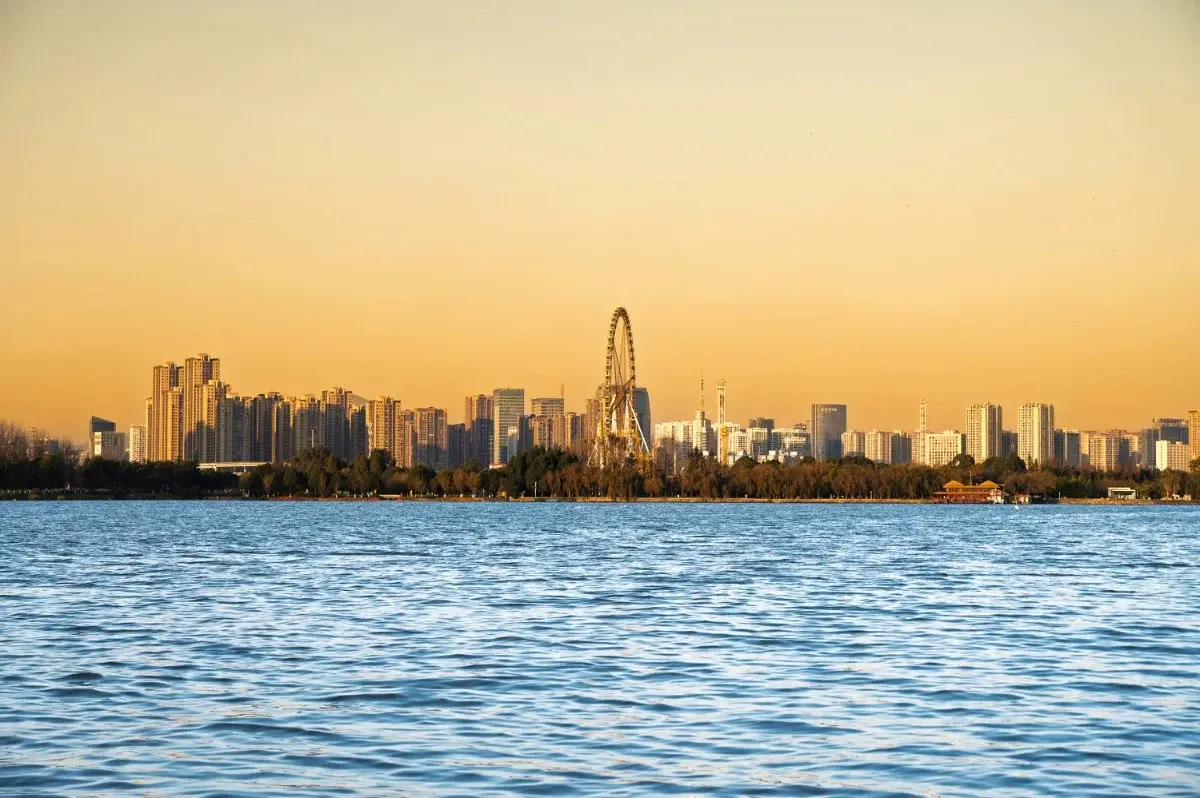
Living cost, at a glance
≈$222/mo
≈$167/mo
≈$499/mo
≈$721/mo
≈$666/mo
There's a saying about Yunnan — "chickens sold on a string, four seasons of clothing worn at once, eggs that can be strung and carried" — the kind of thing locals repeat half-proudly, half as a warning that the normal rules don't quite apply here. It's a fair way in. Yunnan borders Vietnam, Laos, Myanmar and Tibet. It's home to 25 of China's 55 recognized ethnic minorities. And it produces something no other Chinese province can: real, plateau-grown Arabica coffee. I've spent 25 years buying, roasting and arguing about coffee beans that came from everywhere except here. This is the province that finally earned a seat at that table — and I've never once set foot in it.
01 — North Americans here
Where Kunming's North American community actually lives?
Kunming doesn't have one expat district the way Shunyi is Beijing's — it has several small ones, and which one you land in says more about why you're here than where you'd prefer to live.
| Area | Who clusters there |
|---|---|
| Green Lake (Cuihu), central Kunming | Students, TEFL-certified English teachers, university-affiliated researchers — anchored by foreign-owned cafés like the long-running Salvador's and Paul's Café, next to Yunnan University and Yunnan Normal University |
| Xishan district, around Kaiyuan | NGO and nonprofit workers — a modest but persistent community-development and public-health NGO scene since the 2000s, working on issues from migrant-worker support to environmental advocacy |
| Beichen, northern Kunming | Families with children, clustered near the city's small international-school options — the same anchor-school logic as Beijing's Shunyi, at a much smaller scale |
Teaching English is still one of the more common reasons a North American ends up in Kunming specifically, rather than a bigger coastal city. The Green Lake and Xishan crowds overlap in practice, but they're not the same crowd — one runs on café culture, the other on office hours.
This section is compiled from expat-community forums, teaching-recruitment guides, and NGO directories rather than any census or survey — treat it as a directionally accurate picture of where these communities tend to gather, not a precise headcount. Kunming's foreign population is small enough, relative to Beijing or Shanghai, that any of these clusters could shift meaningfully in a few years.
02 — The rent number
Kunming's rent, against a "Spring City" reputation that oversells it
Start with the aggregators. Numbeo's Kunming data is thinner than most cities on this site — 120 entries from 10 contributors over the past year, last updated mid-July 2026. So treat these as directional rather than precise:
Kunming's place in the five kinds of cheap — read the full framework →
Those monthly figures also hide a seasonal pattern worth knowing. Because Kunming functions as both a summer-escape and a winter snowbird destination, rental demand spikes twice a year — June–August as furnace-city residents arrive for the cool summer, and November–February as northeast retirees settle in for the mild winter. Mid-season months (March–May, September–October) are the cheapest window, and the shoulder-season discount is real. The annual baseline figures above are exactly that: a baseline, not what you'll pay if you arrive in July or January.
Those monthly figures leave out the first-week shock: deposits, agent commissions, visa medicals, and the basic kit to make a flat livable. The real cost of your first month →
Rent, meal, transit, and salary figures: Numbeo, read mid-August 2026, converted at ¥7.2 = $1 — the same benchmark used across every city on this site. Numbeo's Kunming page has a notably thin sample (120 entries, 10 contributors over the past year) compared to larger cities in this series; treat these as a rough read, not a precise one. Numbeo doesn't track a 2-bed figure for Kunming directly, only 1-bed (¥1,600) and 3-bed (¥3,667, city center) — the 2-bed figure above is derived by taking the midpoint between those two, not an independently sourced number, and should be treated as a reasonable estimate rather than a precise one. A cross-check against livingcost.org's independent estimate (average cost of living $625/mo, median after-tax salary $837) puts Kunming's affordability in a similar range, lending some confidence to the Numbeo read despite its thin sample.
How you live day-to-day shapes the bill more than the city itself →
What it costs to keep the lights on
Kunming meters electricity, water, and gas by annual cumulative usage rather than by the calendar month — the same basic quirk Beijing has, only here it applies to all three utilities instead of just electricity. There's no seasonal (wet/dry season) price difference. The year-round annual tier is the only schedule. Kunming's mild climate also means no separate winter-heating gas allowance — unlike Beijing or Dalian, there's no cold season harsh enough to need one.
Households of 6 or more registered residents can apply for an extra 1,560 kWh/year at the 0.36 rate — bring a household register or residence permit to the power company's service counter. Source: Yunnan/Kunming power tariff schedule, effective 2026.
Metered monthly but settled annually. A separate booster-pump fee (for buildings needing pressurized supply) is billed by the property management company at cost, not government-set — it isn't included here. Rates above apply to Kunming's core urban districts (Wuhua, Panlong, Guandu, Xishan, Chenggong); outlying districts like Dongchuan, Jinning, and Anning may run their own schedules. Source: Kunming municipal water tariff schedule, effective 2026.
Current price cycle runs April 1, 2026 – March 31, 2027. Households of more than four get the Tier 1 allowance extended by 90 m³/year per extra person; low-income households get a further discounted rate (¥1.64/m³) on the first 120 m³/year. Source: Kunming Municipal Development and Reform Commission.
Standardized comparison figure, applied the same way across every city on this site: 220 kWh electricity + 15 m³ water + 25 m³ gas per month — annualized (2,640 kWh / 180 m³ / 300 m³ per year) against the tiers above, then divided back to a monthly figure since all three utilities are annually metered here. That works out to roughly ¥87 electricity + ¥67 water + ¥74 gas ≈ ¥228 (≈$32)/month — close to Beijing's ¥239, and for the same reason: no winter-heating premium baked in either way.
Heating, AC, visa renewals, and the other monthly drains hidden from the spreadsheet →
These utility rates are low because the pipes, wires, and decades of capital behind them were subsidized long before you arrived. The real cost of cheap water, power, and transit →
03 — What sits on a Kunming table, and where it comes from
Tea country, coffee country, two homegrown flavors, one province.
Yunnan isn't "spicy" or "sour" the way a single Chinese province usually gets filed under one flavor. It's the most ethnically diverse province in the country — 25 of China's 55 official minorities call it home — and it sits at a genuine crossroads: Vietnam, Laos and Myanmar to the south, Tibet to the northwest. Both directions show up on the plate, and they don't agree with each other at all.
To the south, Dai cuisine brings the sour-spicy, herb-heavy register that gives Yunnan food its reputation for being more assertively sour and spicy than most of China. The Dai are linguistically and culturally close to the Tai peoples of northern Thailand. In spirit, the food is closer to a Chiang Rai kitchen than a Beijing one. To the northwest, toward Shangri-La, the food turns Tibetan outright: barley, yak butter and milk, cheese and yogurt, potatoes or flatbread standing in for rice. Two ends of one province, built on almost nothing in common.
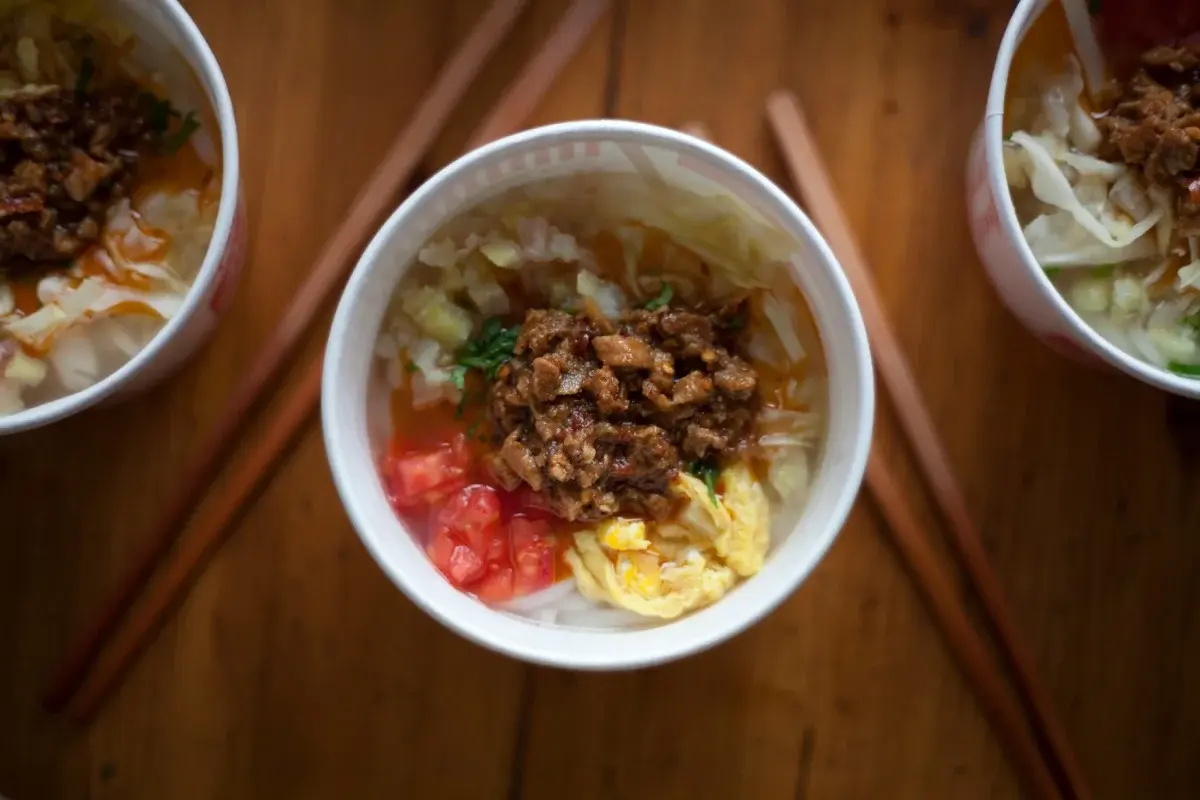
Crossing-the-bridge rice noodles are the dish that ties it together, eaten everywhere from roadside stalls to formal restaurants. Wild mushrooms are the other constant — Yunnan's forests carry more than 600 edible varieties, and several hundred of those actually show up in local markets. It's not one cuisine. It's several, sharing a province and mostly staying in their own lane.
Tea: two ends of one leaf
Yunnan is a major tea province, though not the only one — what sets it apart is pu'er, which is really two different drinks wearing the same name. Sheng (raw) pu'er is lighter and more floral, closer to green tea in feel; shu (ripe, fermented) pu'er is darker and heavier, the earthier end of the spectrum. Dianhong — Yunnan black tea — sits somewhere else again, carrying a floral note that neither pu'er style really has.

Coffee: the only province that can grow it
Here's the part I actually know firsthand. I've bought coffee professionally since 2001, and for most of that career, Yunnan wasn't really in the conversation — China's coffee shelves ran on Brazilian, Colombian and Ethiopian beans, the way most of the world's did. That's shifted, and not slowly. Yunnan is the only Chinese province with growing conditions that can reliably produce Arabica — high-altitude, low-latitude terrain along the old coffee belt near 24°N. It now accounts for roughly 98% of everything the country grows.
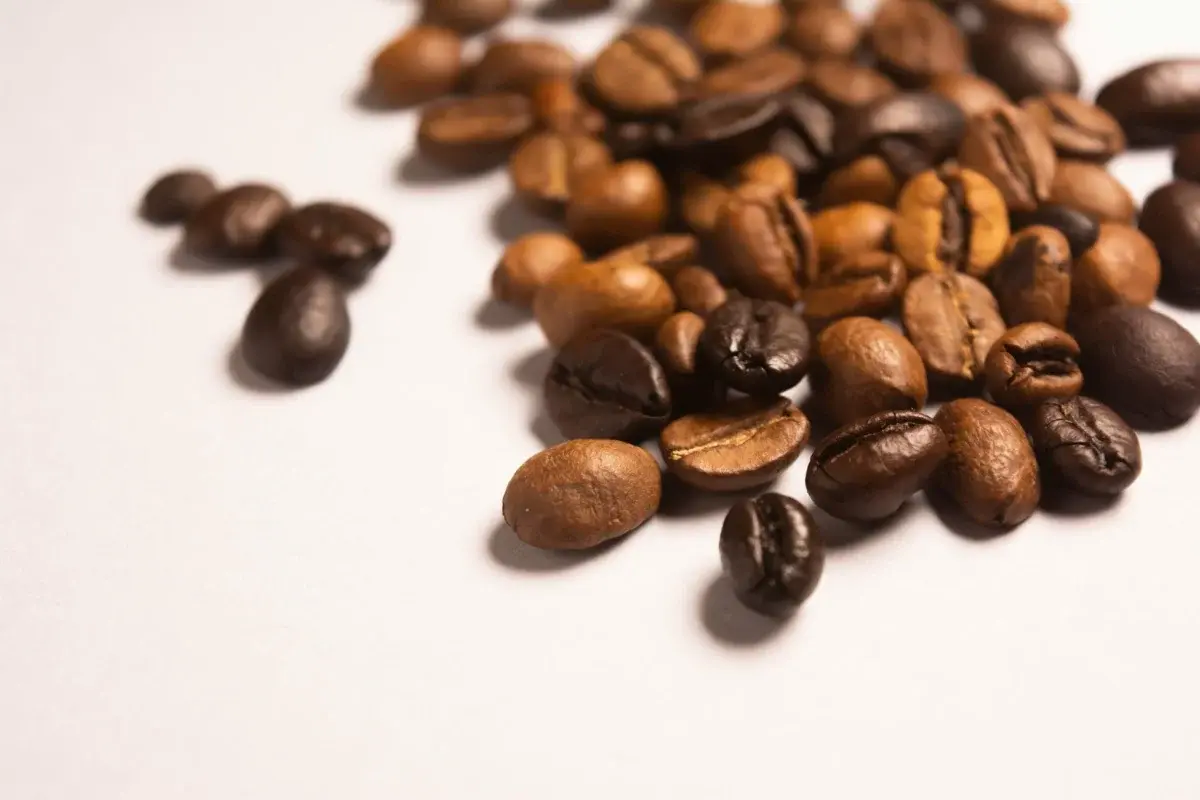
What makes the Yunnan bean distinctive — smooth, mellow acidity, a lighter bitterness than you'd expect, a long, clean finish — used to be a hard sell against the bigger, more established origins. Consumption downgrading changed the math. As budgets tightened and domestic chains like Luckin and Manner scaled up, Yunnan's beans became the obvious lower-cost, still-respectable choice. Quality has genuinely improved alongside the demand. I don't have solid numbers on export volume, but domestically, the shelf space keeps growing, and so does the number of small roasters and founders building a business around it.
One honest caveat: domestic Chinese coffee consumption still runs mostly on imported beans from Brazil, Colombia and Ethiopia. Yunnan is the rising domestic story, not yet the dominant one — it's earned real shelf space, not the whole shelf.
The café scene itself, not just the beans
What's easy to miss from outside is how far this has gone at street level. Kunming now has an estimated 2,000+ cafés, including chains — the city has naturally sorted into four recognizable café districts: Green Lake (Cuihu), Caiyunli (Tiepi Alley), Park 1903, and the shoreline around Dianchi Lake. Most of these aren't chains. The dominant model is what locals call zhulirenzhi — "proprietor-run" — tiny, opinionated shops where the owner picks the beans, sets the menu, and the whole place reflects one person's taste rather than a corporate playbook. Wenlin, the single densest pocket, went from 16 cafés to more than 70 in about two years (2023–2025), which is less a trend than a genuine land rush.
A hand-poured cup at one of these independent shops runs somewhere around ¥40. That's not cheap by Kunming standards — closer to a small indulgence than a daily habit. But it's nowhere near what a comparable pour-over would cost in a North American third-wave café. For anyone used to café culture as a fixture of daily life rather than an occasional treat, Kunming delivers on density and character even if it doesn't deliver rock-bottom prices.
Café count, district clustering, and Wenlin's growth figures: Kunming municipal and provincial press reporting, 2025. Hand-drip pricing is a general estimate drawn from review-aggregator listings, not an averaged menu survey — treat it as directional.
Yunnan's ~98% share of national coffee output and its 2024 production/export figures: industry and trade reporting, as of 2025–2026. Treat the 98% figure as directionally stable rather than exact — provincial output share can shift year to year as other regions' pilot programs (Hainan, southern Guangxi) mature.
None of that — the tea, the coffee, the borrowed flavors from three directions — happens by accident. It's all downstream of the same plateau geography that gives Kunming its other defining trait: a climate mild enough to grow Arabica in the first place.
04 — "Eternal spring," and what that actually means
The "Spring City" climate: what the nickname doesn't tell you.
Kunming sits at roughly 1,900 meters on the Yunnan-Guizhou plateau, and that elevation is the entire trick behind the "Spring City" nickname. At this latitude, sea-level cities bake in summer. Kunming doesn't, because it isn't at sea level — average temperatures hover in a narrow band year-round, without the brutal summer or bitter winter that most Chinese cities at similar latitudes deal with.
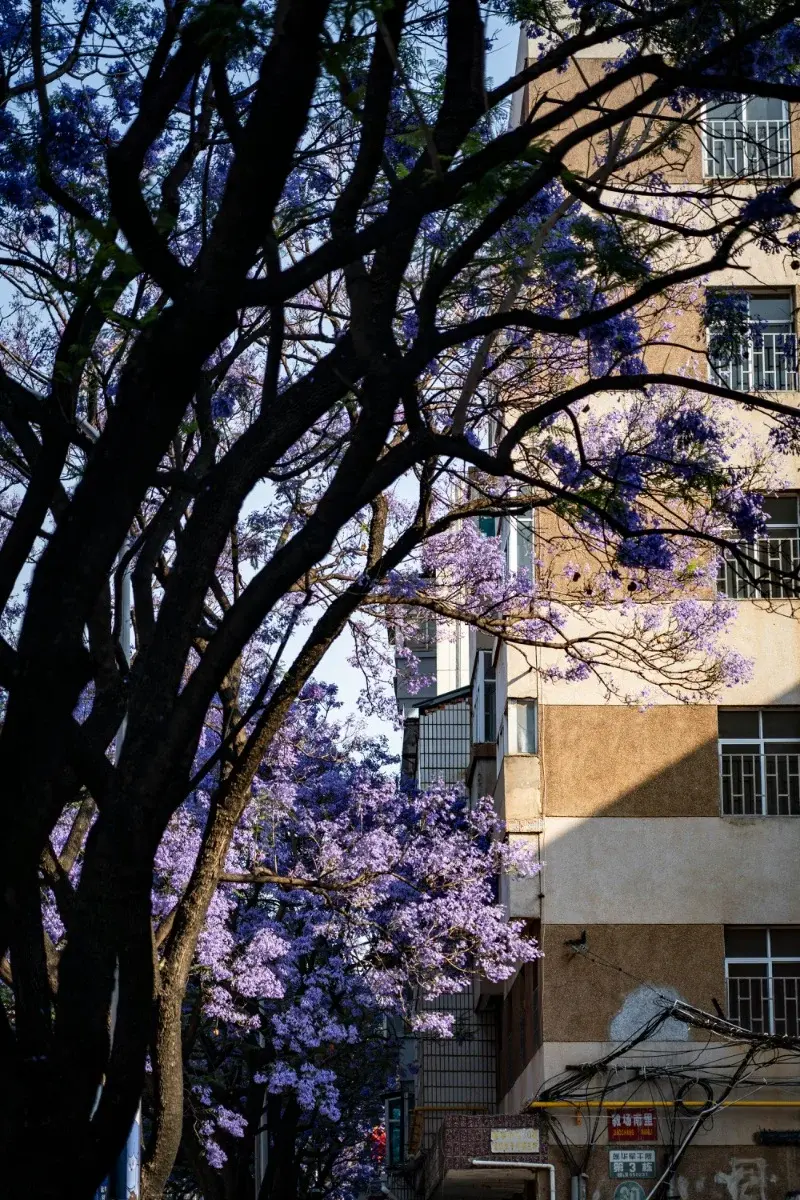
The trade-off is the day/night swing, not the season-to-season one — a 10°C+ difference between morning and afternoon is normal even in summer, so layering matters more than heavy coats ever do. UV exposure is also higher than the mild temperatures suggest, purely a function of thinner air at altitude; sunscreen matters here in a way the "mild climate" branding doesn't advertise.
Against the reputation
"Eternal spring" is accurate, but it undersells the discipline required — the flowers bloom year-round because nothing here gets extreme, not because the city is doing anything special. It's geology and elevation, not luck.
And that mild plateau climate does something structural worth flagging: it makes Kunming one of the rare Chinese cities that functions as both a summer-escape destination — pulling people out of the furnace cities to the east and south — and a winter snowbird destination for retirees escaping the frozen northeast. One city, two opposite migration seasons, almost no downtime. Most migration hubs in China serve one direction; Kunming serves both, which shapes everything from rental demand to the café scene.
That same plateau geography that keeps the weather mild also keeps Kunming naturally boxed in — no coastline, no flat approach in most directions. That's part of why getting around, and getting to and from the city, works the way it does.
05 — Getting around
Getting around Kunming: metro, buses, and shared bikes.
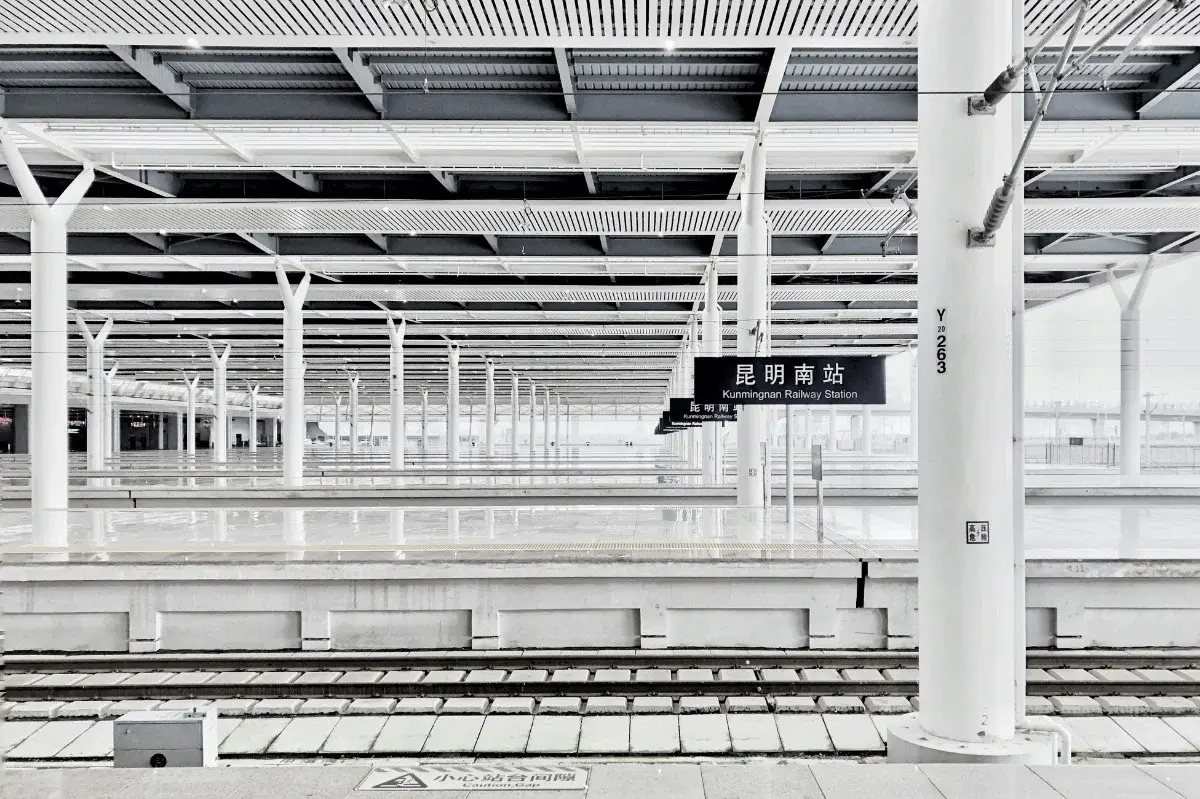
Kunming Metro runs 6 lines across roughly 166 kilometers, with over 100 stations, as of late 2022 — the network has likely grown somewhat since, but a fully current figure wasn't available at time of writing. Fares run on the same distance-based, jump-tier model used across most Chinese metro systems, and were last revised in April 2025:
| Distance | Fare |
|---|---|
| 0–4 km | ¥2 |
| ~4–8 km | ¥3 |
| ~8–13 km | ¥4 |
| ~13–19 km | ¥5 |
| 53 km and beyond | ¥9 (max fare) |
Network length and station count: reported figures as of November 2022 — the most recent consistent citywide total found; treat as a floor, not a current count. Fare schedule effective April 15, 2025, per Kunming Metro Operations and the municipal transport bureau. Registered transit-card holders get a 10% discount on the listed fares; riders 60–69 get 20% off, 70+ ride free.
We haven't been able to source a metro map for Kunming that we're confident redistributing. For the current network layout, go straight to the operator: Kunming Rail Transit Group — official site →
The real cost behind cheap metro fares →
Buses, shared bikes, and ride-hailing
Outside the metro, buses run on the same low, flat-fare model used across most Chinese cities. They cover far more ground than the rail network reaches. Kunming's transport authority has been actively rerouting bus lines to feed into metro stations rather than compete with them on long, parallel routes.
Shared bikes are unusually well-suited to Kunming specifically: the central basin the city sits in is notably flat, unlike the hilly terrain that limits shared-bike usefulness in Dalian, Qingdao, or Chongqing. The city runs roughly 120,000 shared bikes and e-bikes citywide — a 2024 municipal cap, after the market was allowed to grow unchecked for a few years. They're split across the same national trio of apps — Meituan, Hello, and Didi's Qingju — that shows up in every city on this site. Ride-hailing is as ordinary here as anywhere else in urban China, and likely the default for anyone without a local transit card in the first few weeks.
06 — Questions people actually ask
Quick answers
Is Kunming expensive to live in?
No — a city-center one-bedroom runs roughly $222/month against an average take-home of about $806/month. That's a rent-to-income ratio near 28%, among the lowest of any city on this site, well below Xi'an's 29% and far below Shanghai or Beijing.
Why is Kunming called the Spring City?
Kunming sits at roughly 1,900 meters on the Yunnan-Guizhou plateau, and that elevation cancels out what would otherwise be a much hotter latitude — average monthly temperatures stay in a narrow 8–20°C band year-round, without a harsh winter or brutal summer.
Is Yunnan the only place in China that grows coffee?
Yes, effectively. Yunnan is the only Chinese province with growing conditions suited to Arabica coffee, and it accounts for roughly 98% of the country's total output. Domestic coffee consumption still runs mostly on imported Brazilian, Colombian, and Ethiopian beans, but Yunnan's small-bean coffee has gained real shelf space over the past decade.
What is the difference between sheng and shu pu'er tea?
Sheng (raw) pu'er is lighter and more floral, closer to green tea. Shu (ripe, fermented) pu'er is darker and heavier — the earthier end of the spectrum. Both come from the same Yunnan large-leaf tea variety, processed differently.
How do you get around Kunming without a car?
The metro runs 6 lines across roughly 166 kilometers, with fares from ¥2 to ¥9 depending on distance. Buses reach further than the rail network does. And Kunming's flat central basin — unlike hilly Dalian, Qingdao, or Chongqing — makes it one of the more bike-friendly cities on this site, with roughly 120,000 shared bikes and e-bikes citywide.
If you're thinking of going
Kunming, for a first visit or a long stay.
- Best season: spring and autumn. The "eternal spring" climate keeps temperatures mild year-round, but UV at 1,900 m is stronger than the thermometer suggests. Layer for the 10°C+ day/night swing; heavy coats are rarely needed.
- Getting online: sort a China travel eSIM before you fly — data works the moment you land, no local SIM needed.
- Getting there: Kunming Changshui International Airport connects across China and Southeast Asia; high-speed rail from Kunming South links Chengdu, Guiyang, and beyond.
- Staying a while: a city-center one-bedroom runs about ¥1,600/month (≈$222) — but expect to pay 35–70% more if you arrive during the June–August summer-escape or November–February snowbird peaks. Shoulder seasons (March–May, September–October) are the cheapest window. Budget for the real first-week bill — deposits, agents, and setup →
- Worth knowing: there's no indoor central heating, but the mild climate means you rarely miss it. The flat basin also makes shared bikes and e-bikes unusually practical.
- Not sure Kunming is the right fit? Browse cities by what you actually care about — climate, food, cost → Or take the seven-question quiz and get a personalized shortlist →
Before you go
Get the next city, when it's ready
One short email when a new guide goes live — the real numbers, and the life behind them. Written by someone who lives in China and does the math in yuan.
No spam. One click to unsubscribe.