Living cost, at a glance
≈$409/mo
≈$236/mo
≈$596/mo
≈$1,005/mo
≈$832/mo
Rent from the §01 ledger. The non-rent line is Wise's own compiled "estimated monthly cost of living, excluding rent" for Dalian (single person, 2026) — it already folds in food, transport, utilities and everyday extras as one figure, and matches this page's own opening claim that about $1,000/month covers a city-center one-bedroom plus everything else. Converted at ¥7.2 = $1.
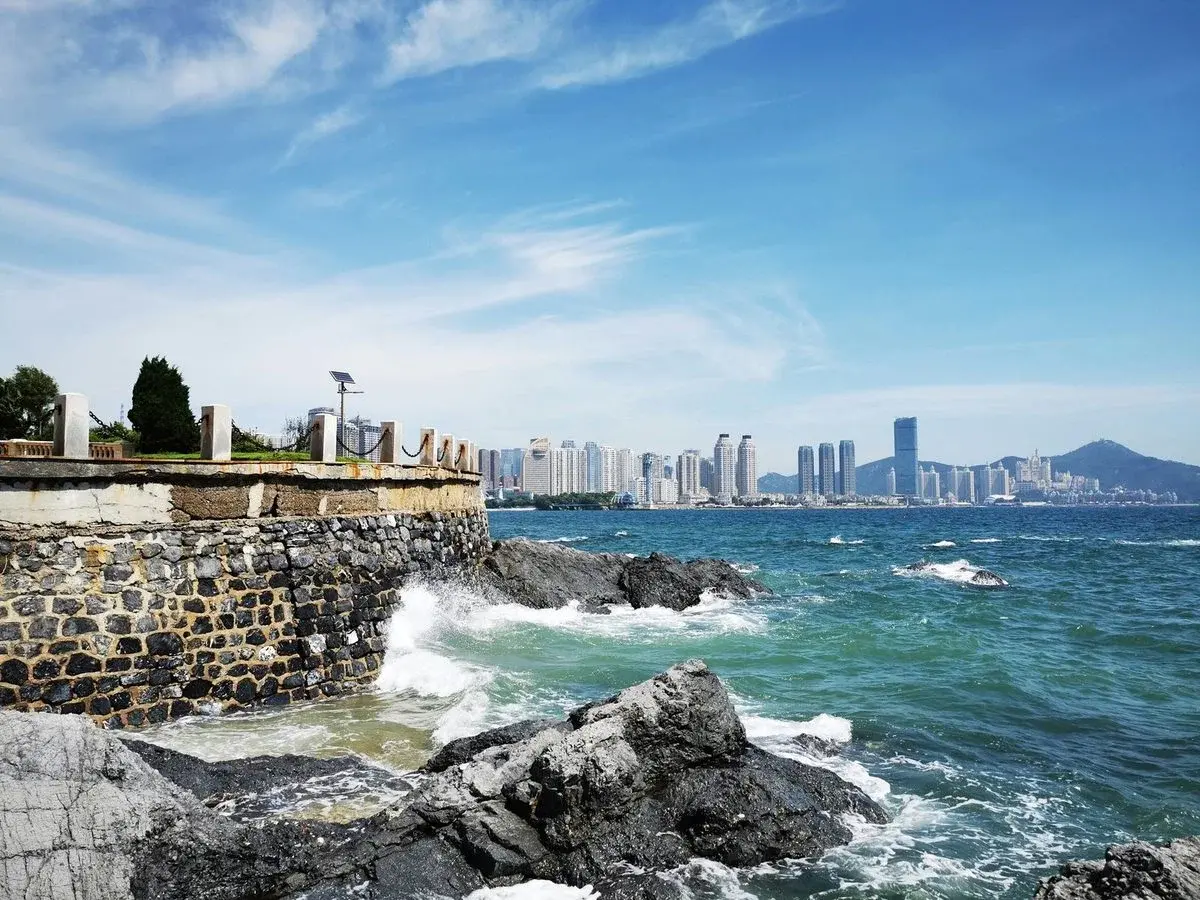
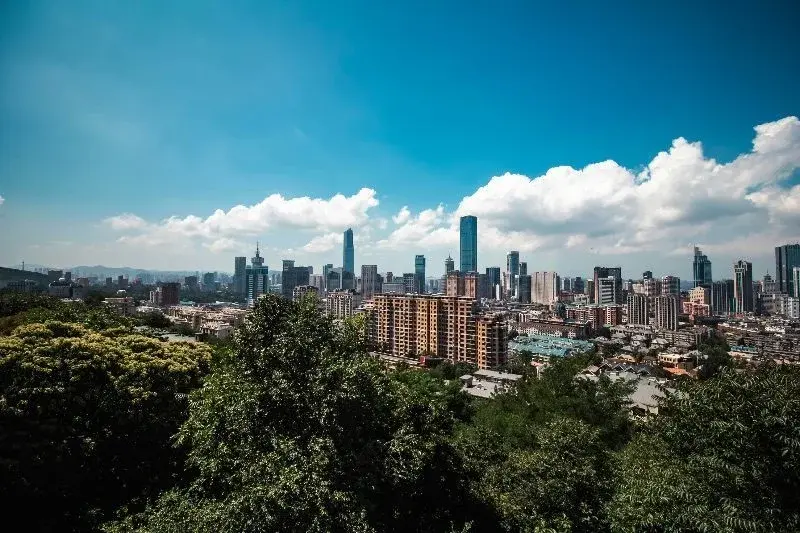
The first thing a visitor from North America usually notices about Dalian isn't the price of anything. It's how clean it is. Swept streets, orderly traffic, a long seafront, and — for a Chinese industrial city of six million — a startling amount of blue sky. The prices come second. And when they land, they land hard.
That blue sky comes with a climate most Chinese cities can't claim. The sea keeps summer mild — average highs in the mid-to-upper 20s°C in July and August, with historically fewer than 15 days a year topping 30°C. That's enough to rank Dalian among China's top domestic summer-retreat destinations. (Recent summers have run a few degrees warmer and pushed that count higher — 2024 and 2025 both saw closer to 20 days above 30°C — worth flagging honestly rather than pretending the old normal still holds exactly.) Winter is the trade-off: January averages run from about -1.6°C down to -6°C depending on the district, with occasional dips toward -20°C. Cold enough that the citywide heating system in §03 isn't optional.
A whole winter of heating, paid once. Five pounds of fresh mussels for the price of a Seattle coffee. A furnished two-bedroom apartment, in the city, for less than many Americans pay for a parking spot. This is real, and the numbers below are sourced. But the cost-of-living websites never tell you the second half of the story — and it's the more interesting half. Let's do the numbers first.
If you earn dollars, about $1,000 a month covers a one-bedroom in the city, food, transit, and utilities for one person — roughly 5× cheaper than a similar life in Seattle, this site's closest US match for Dalian. If you earn a local salary, this isn't "cheap" at all. Average take-home pay here is about $1,090/month, in a city whose economy has grown slowly for years. Both numbers are true. The rest of this page is about holding them together.
01 — The monthly numbers
What one person actually spends.
The city-center rent number will hit you first. A one-bedroom in Dalian runs about $409 a month, roughly 37% of the median after-tax wage of $1,090. That's the visible cost. But if you stop there, you've missed what Dalian actually charges. The real gate isn't the rent bill; it's the city's stalled economy. Dalian was built on Japanese and South Korean investment, manufacturing, and software outsourcing. Over the past decade, that model has eroded. The city stayed tied to heavy industry while the rest of the country sped up. The low prices are not a bargain the city chose to offer. They are the residue of an economy that stalled. Cheap for you, if you earn dollars. Not cheap for the people who live here.
These are typical Dalian figures, not one person's budget — pulled from public cost-of-living data and checked against local reality. Amounts are in Chinese yuan (RMB), with US dollars at roughly ¥7.2 to $1.
Sources: Wise, Numbeo, and Nomads.com city data (2026), cross-checked with local prices. Utilities uses this site's own standardized calculation, not a Wise/Numbeo figure — see below. Converted at ¥7.2 = $1.
What that ¥244 a month for electricity, water, and gas actually buys
All three are tiered — use more, pay more per unit. And all three are paid annually here, on a January-to-December cycle. Same convention as Beijing and Shanghai, not Chengdu's monthly billing.
| Tier | Annual usage | Rate |
|---|---|---|
| 1 | 0–2,640 kWh/yr≈220 kWh/month equivalent | ¥0.50/kWh |
| 2 | 2,641–3,720 kWh/yr≈221–310 kWh/month equivalent | ¥0.55/kWh |
| 3 | 3,720+ kWh/yr≈311+ kWh/month equivalent | ¥0.80/kWh |
| Tier | Annual usage | Rate |
|---|---|---|
| 1 | 0–180 m³ | ¥2.30/m³ |
| 2 | 181–240 m³ | ¥3.45/m³ |
| 3 | 241+ m³ | ¥6.90/m³ |
Plus a separate residential sewage charge of about ¥0.95/m³ on top of the tiered water price — the two are billed as distinct line items here, not bundled into one number the way some cities do it.
| Tier | Annual usage | Rate |
|---|---|---|
| 1 | first tier | ¥3.40/m³ |
| 2 | second tier | ¥4.08/m³ |
| 3 | third tier | ¥5.10/m³ |
These are Jinpu New Area's rates — one of Dalian's largest districts, and the clearest published figures we found — but gas is supplied by several different municipal and district operators here (Wafangdian's rate, for instance, runs closer to ¥4/m³ flat), so treat this as representative rather than a single citywide number. We're not aware of a unified, current, citywide tier schedule that supersedes the district-level ones.
Electricity: Dalian Development and Reform Commission published residential schedule, annually settled (January–December cycle). Water and sewage: Dalian municipal water utility published rates, current 2026. Gas: main urban districts (中山, 西岗, 沙河口, 甘井子 — served by China Resources Gas), tiered ≤600 m³/yr at ¥3.40, 600–900 m³/yr at ¥4.08, above 900 m³/yr at ¥5.10; Lüshunkou and Wafangdian run different, non-tiered or differently-tiered schedules. Converted at ¥7.2 = $1.
Standardized comparison figure, applied the same way across every city on this site: 220 kWh electricity + 15 m³ water + 25 m³ gas per month, a single-occupant baseline that excludes winter heating, run against each city's own published tiered rates above. At Dalian's rates that's ¥110 electricity + ¥49 water + ¥85 gas ≈ ¥244 (≈$34)/month — the 300 m³/yr gas assumption sits comfortably inside Dalian's first tier (≤600 m³/yr), so this is a clean tier-1 calculation, not an estimate across a tier boundary. This replaces the earlier ¥370 figure, which came from a Wise/Numbeo bundled estimate reflecting a larger household's typical usage.
Your daily choices shape the bill more than the city does →
What the everyday basics cost, beyond the seafood counter
| Item | RMB | USD |
|---|---|---|
| PorkLean cut, retail | ≈¥11.5/500g | ≈$1.59 |
| BeefRetail average | ≈¥34.8/500g | ≈$4.84 |
| EggsRetail average | ≈¥5.9/500g | ≈$0.82 |
| Vegetables15-item basket, retail average | ≈¥2.9/500g | ≈$0.40 |
Pork, beef, eggs, and vegetables: Dalian Municipal Development and Reform Research Center's weekly retail-price monitor of 25 staple goods — genuinely Dalian-specific, week of June 8–12, 2026. This is the everyday, non-seafood half of the grocery bill; the seafood board below is where the real story is.
Line by line it looks almost too good. But two of these deserve their own section, because they're where Dalian stops being a spreadsheet and starts being a place: the seafood, and the heating.
02 — The part North Americans don't believe
Seafood is not a luxury here. It's Tuesday.
Dalian sits on the Bohai and Yellow Seas, and seafood is simply what people eat at home — not a special occasion. Locals prize the regional catch: swimming crab (fēixiè), the sweet chìjiǎhóng crab, the famous and pricey Bohai hairtail, oysters, mantis shrimp, sea urchin, sea cucumber. Imported king crab and salmon show up too. Here's what a market run actually costs:

None of this is a tourist experience. It's a normal grocery trip for a normal family. If there's one number on this whole page that captures why Dalian feels the way it does, it's the seafood.
Worth being specific about who actually eats this way, though. It's the locals — people who grew up here treat seafood as an everyday protein. The way another city might treat pork or tofu, not a special-occasion splurge. Transplants from inland China, by contrast, mostly keep the eating habits they arrived with. Seafood stays a side dish or an occasional treat rather than becoming the daily default, even after years of living somewhere it's this cheap and this available. Cheap abundance changes what a city can eat. It doesn't automatically change what people already grew up wanting to eat.

One catch: the summer fishing ban
There's a detail that surprises visitors and reassures them at the same time. To protect marine stocks, Dalian observes a fishing moratorium from May 1 to September 1 each year — no boats go out. During those months, the fresh seafood on the market is farmed rather than wild-caught, alongside imports. So the abundance you see isn't the result of stripping the sea bare; it's managed. It also means the wild local catch is best from early autumn onward, when the boats return. (Imported king crab and salmon stay available year-round — though import tariffs make them noticeably pricier here than in some other markets.)
03 — A cost you've never had to think about
Heat for a whole winter, billed once
Here's something that genuinely confuses North Americans: in northern China, heat is centralized and seasonal. You don't get a monthly gas bill that spikes in January. Instead, the city heats entire neighborhoods on a fixed schedule, and you pay one flat charge for the season.
Dalian central heating
Nov 5 → Apr 5 · ¥26 per m² · one payment for the whole winter. For a typical 85㎡ apartment, that's roughly ¥2,200 (≈$305) — paid once, and then you're warm from early November to early April. Commercial space runs about ¥32/m². No thermostat anxiety, no monthly spikes.
To someone from Chicago or Toronto used to dreading the winter gas bill, the idea of "paying for heat once and forgetting about it" is quietly radical. It's also a reminder that "cost of living" isn't just numbers — it's how a place is organized.The costs that don't show up in the table →

04 — The honest part
So why is Dalian this affordable?
This is where most cost-of-living pages stop, and where the real story starts. Dalian is cheap for a reason, and it isn't a happy one. The city was built as an outward-facing economy — leaning heavily on Japanese and South Korean investment, manufacturing, and a software-outsourcing park that once aimed to become "China's Bangalore." Mostly serving the Japanese and Korean markets.
Over the past decade, that model has eroded. As Chinese manufacturers replaced much of the Japanese and Korean production that Dalian depended on, foreign firms drew down. The city stayed tied to heavy industry — shipbuilding, chemicals — while the private economy that powers China's south largely passed it by. The Yangtze and Pearl River deltas, Chengdu-Chongqing, the central provinces — they all kept growing. Dalian didn't. The city's population has been drifting away. It crossed a trillion yuan in GDP last year, but it has grown slowly for a long time, and it shows.
The low prices aren't a bargain the city chose to offer. They're the residue of an economy that stalled while the rest of the country sped up.
And this is the second half of the truth. Dalian is cheap for you, if you earn dollars. It is not cheap for the people who live here. Measured against a Seattle salary, everything is a steal. Measured against a local wage in a city where incomes have grown slowly for years, these same costs are a real weight. Both things are true at once, and holding them together is the only honest way to read the numbers.
For a North American considering a slower, cheaper, calmer base — remote worker, long-stay traveler, someone curious about ordinary Chinese life — that stalled-economy discount is exactly the appeal. Clean streets, sea air, an unhurried pace, and a dollar that stretches remarkably far. Just don't mistake "cheap for me" for "cheap for everyone."The stagnant kind of cheap →
05 — Who's actually here, if you're arriving from North America
The city's existing foreign community explains itself — and it isn't North American
§04 named the real reason Dalian is cheap: an outward-facing economy, built on Japanese and South Korean investment, that has slowed for a decade. That same history is visible directly in who lives here. Dalian has roughly 12,000 permanent foreign residents citywide — a genuinely small number for a city of six million. The large majority of them are Korean and Japanese, not North American, concentrated in three places:
| Area | Why here | Who you'll find |
|---|---|---|
| Jinpu New Area formerly the Economic & Technical Development Zone | China's first state-approved development zone of its kind, opened 1984 — drew Canon, Mitsubishi, Toshiba and other major Japanese firms first, then Korean, American and European investment (Intel's $2.5B wafer fab among them) | Corporate-dispatch staff, mostly Korean and Japanese, some American and European |
| High-Tech Zone | Dalian's newer software and tech-investment district, downstream of the same outward-facing development strategy | Tech and outsourcing-sector staff |
| Universities DUT and others | Dalian's university cluster draws foreign faculty and a modest international-student population | Foreign teachers, international students |
For a North American specifically, that means arriving into a foreign community that wasn't really built with you in mind. There's no embassy district here the way there is in Beijing, no decades-old consular anchor like Chengdu's Tongzilin. What North Americans there are tend to be corporate transfers at a smaller multinational, university-hired English teachers, short-term business or leisure visitors, and a small population of international students. All of them folded into a much larger Korean-and-Japanese expatriate scene rather than forming a scene of their own.
This section describes Dalian's foreign-resident population and where it's known to cluster — compiled from municipal reporting on registered foreign residents and the development-zone investment history, not a formal census specific to nationality breakdowns within each district. Treat the figures as directionally right rather than a precise headcount.
06 — Getting around a hilly, foreign-built city
The oldest trams in China, and a metro built to climb.
The same outward-facing history that built Dalian's factories also built its rails. The city has run trams continuously since 1909 — a Russian-drafted, Japanese-built line — which makes Dalian the only city in mainland China where tram service has never once been interrupted. Route 201 still runs a handful of cars manufactured in Japan between 1935 and 1938. Rebuilt, but still in daily service alongside the modern low-floor cars on Route 202. Fare on either line runs ¥1–2, cash or card, no different from an ordinary bus. It's a genuine rarity: an antique and a working transit line, at the same time.

A hilly city, and the bikes that never showed up
Dalian is one of only three Chinese cities — alongside Qingdao and Chongqing — where hills kept shared bikes from ever really catching on nationally the way they did on flatter ground. The slopes that make this a scenic seafront city are the same slopes that make a shared bike a bad bet on most streets here. The full national picture is in Shared Bikes.
The metro, by contrast, works with the terrain rather than against it: 6 lines, about 237 kilometers, and 99 stations, with a further line under construction. Fares run by distance, in the same ¥2-and-up range as most Chinese systems. Outside the rail and the trams, ride-hailing and buses fill in the rest — ordinary, unremarkable, the way it is in most of urban China.
We haven't been able to source a metro map for Dalian that we're confident redistributing. For the current network layout, go straight to the operator: Dalian Metro Group — official route map →
Leaving Dalian by rail has its own quirk, and it isn't a small one. Dalian sits at the tip of a peninsula, and the direct rail line to Shanghai has to route around the whole curve of Bohai Bay — a trip of roughly 10.3–10.8 hours, second class running about ¥907.5. That's slower and, per kilometer, noticeably pricier than Beijing–Shanghai — about 64% higher — despite the longer ride. For that specific route, flying is almost always the better trade.
Metro network size and station count: Dalian Metro reporting, 2023–2025. Tram history and rolling stock: Dalian Public Transit Group and municipal transit history. Fares from published tram and metro fare schedules. Dalian–Shanghai rail routing time and fare, and the comparison against Beijing–Shanghai: published rail schedules and fares.
07 — The city's actual calling card
Not seafood. Not the coastline. The stadium.
If you only know one thing about Dalian by the end of this page, it should probably be this: it's a football city, and right now it isn't close. Dalian Yingbo, playing out of the Suoyuwan Stadium — capacity 63,000 — drew an average home crowd of 58,268 across the 2025 Chinese Super League season. First in the country, first in Asia, and by some counts inside the top 15–20 clubs on the planet by average attendance. Ahead of plenty of storied European names. That average is close enough to the stadium's own ceiling that most home fixtures are, for practical purposes, sellouts. Tickets routinely disappear within minutes of going on sale. In the first half of 2026 the average climbed again, to roughly 61,000, more than double the next-highest home average in Asia. A weekend fixture routinely clears 60,000; even a midweek, non-marquee match usually pulls somewhere between 35,000 and 55,000. The single-match record so far is 62,330 — essentially every seat in the building.
None of this existed in any organized way three years ago. The city's previous top-flight club folded in early 2024 under unpayable debt. Yingbo climbed from the second tier to the first in three seasons flat, riding a fan base that apparently never actually left. Local officials now say the honest constraint isn't demand, it's stadium capacity: "60,000 is Suoyuwan's ceiling, not Dalian's." The atmosphere itself has become something close to a national symbol — the one home crowd Chinese football points to when it wants to argue the sport still has a pulse in this country.
If you're ever in the city on a match weekend, this is the one item on this page worth rearranging a trip around. The number on a spreadsheet doesn't do it justice; the sound in the stadium might.
Attendance figures and stadium capacity: official Chinese Super League season data (2025) and first-half 2026 reporting, via Chinese sports press (Sohu, Netease, Sports.cn, Xinhua). Club history and stadium-capacity remarks: Xinhua reporting, October 2025.
08 — Questions people actually ask
Quick answers
How much does rent cost in Dalian?
A furnished one-bedroom in the city center runs about ¥2,945/month (≈$409); the same size in the suburbs drops to roughly ¥1,700 (≈$236). A two-bedroom in the center ranges ¥3,000–5,000 (≈$415–695).
Is heating included in Dalian's utility bill?
No — it's billed separately, once a season. Central heating runs Nov 5 to Apr 5 at ¥26/m², so an 85㎡ apartment pays about ¥2,200 (≈$305) total for the entire winter, rather than a monthly gas bill.
Is Dalian actually cheap, or just cheap for foreigners?
Both are true, separately. Measured against a North American salary, Dalian is a steal. Measured against local wages — average take-home pay is around $1,090/month — the same costs are a real weight for residents, because the local economy has grown slowly for years.
How do you get around Dalian?
A tram network running continuously since 1909 (fare ¥1–2), plus a 6-line, roughly 237-kilometer metro charging by distance from ¥2. Hilly terrain kept shared bikes from catching on here.
Why is seafood so cheap in Dalian?
Local supply overlaps directly with local demand rather than relying on imports. A fishing moratorium runs May 1 to September 1 each year; during that window, fresh seafood on the market is farmed rather than wild-caught.

If you're thinking of going
Dalian, for a first visit or a long stay
- Best season: late spring through autumn. Summers are mild and coastal; winter is cold but every indoor space is heated (see above).
- Getting online: sort a China travel eSIM before you fly — data works the moment you land, no local SIM needed.
- Getting there: Dalian has its own international airport and high-speed rail up the coast.
- Staying a while: a furnished city-center 2-bed runs ¥3,000–5,000/month. Short-stay options are easy to book online.
- Catch a match if the schedule lines up. A Dalian Yingbo home fixture at Suoyuwan Stadium is, by attendance alone, one of the biggest football atmospheres on the planet — check the CSL calendar before you book your dates.
- Still deciding? Not sure this is the right fit? Try the city match tool → ; Answer 7 questions to find a better match →