
Every November, as temperatures across Northeast China plunge toward -30°C, a mass migration begins. Flights from Harbin, Changchun and Shenyang to the south fill up. Retirees, families, and increasingly remote workers pack up for weeks or months in warmer climates. They are known as migratory birds, and their numbers are staggering.
The term "snowbird" is not unique to China. In North America, it describes more than a million retirees who spend winters in Florida or Arizona. Europe has its own version: the "swallows" who depart the UK and Scandinavia for Spain's Costa Blanca. China's version is distinct in scale and structure, and it has grown into a phenomenon that reshapes entire city economies for half the year.
After analyzing the data across multiple destinations, I found the impact of this migration is not uniform. In some cities, it transforms the local economy so completely that businesses pivot around the winter months. In others, the effect barely registers beyond the tourist districts. The difference comes down to one question: are people coming to live or just to visit?
On paper, snowbird migration looks like a tax-free weather hack. In practice, it is rarely a zero-cost one.
For a deeper look at the recurring costs that hit foreign residents year-round, see my breakdown of hidden recurring costs.
Where snowbird migration took root
From what I have gathered from municipal data and travel reports, the phenomenon began around 2005, when reports of northern elderly traveling to Hainan for the winter first appeared. By 2025, it had grown into a mass movement. According to the 2024-2025 China Travel Elderly Care Big Data Analysis Report, the total number of elderly travel and care visits reached 84.3 million between July 2024 and June 2025 — a year-round figure, not the winter-migration count alone.
For residents of Heilongjiang, Jilin and Liaoning, winter is an ordeal. Harbin's winter averages -17.3°C, with record lows of -42.6°C. Heating costs are substantial: according to the Harbin Municipal Development and Reform Commission, central heating runs from October 20 to April 20 at roughly ¥38 per square metre, about ¥3,250 (≈$452) for a typical apartment. The health and economic data I reviewed consistently points in one direction: for many Northeast seniors, heading south is not about comfort, it is about prolonging life.

| Indicator | Data |
|---|---|
| Phenomenon began | ~2005 |
| National elderly travel & care visits (2024.7–2025.6) | 84.3 million |
| China's 60+ population (end 2025) | 323 million (23% of total) |
| 60–69 age group share of travel market | ~71% |
| Northeast population loss (2010–2020) | 10.98 million |
| Heilongjiang population loss (2010–2020) | 6.46 million |
| Northeast-origin people living outside region | ~622,000 |
| Northeast snowbird participants (single-province estimate) | ~500,000 / year |
| Harbin-origin snowbirds in Sanya | ~250,000 (80% of Sanya's NE snowbirds) |
Sources: 2024-2025 China Travel Elderly Care Big Data Analysis Report; National Bureau of Statistics of China, 2025; 6th & 7th National Censuses (2010, 2020); Ministry of Public Security household registration data, 2025; Heilongjiang provincial campaign report, 2025; Sanya Municipal Tourism Bureau estimates.
Across all the cities I researched, I kept seeing the same four groups participating in this seasonal rhythm, though their motivations and lifestyles are quite different.
The largest group by far is retirees from the Northeast, Heilongjiang, Jilin, and Liaoning. These are the people I hear about most often when talking to locals in Sanya. Many are pensioners on fixed incomes, and the arithmetic is brutally simple: a winter of heating and medical costs in the north can easily exceed the cost of a winter's rent in the south. Some eventually buy property down south and stop returning north altogether. I have met people who have not seen a real winter in a decade.
Northern inland retirees from Beijing, Tianjin, and Inner Mongolia form a second group. They seek to avoid both cold and smog-prone winter months, and many have the financial means to spend several months in cleaner, warmer air.
Domestic digital nomads and semi-self-employed people are a newer but fast-growing segment, particularly since the pandemic. They are younger, more flexible, and often earning from location-flexible work. They tend to stay shorter than retirees, often just the coldest two or three months, and favor destinations with reliable internet and a social scene.
A small but growing fourth group is foreign residents on long-term permits, teachers, researchers, corporate assignees, and retirees who observe the domestic pattern and hope to copy it. What many do not fully realise is that foreigners face substantially heavier administrative barriers compared to Chinese citizens. This is the single most important distinction I keep emphasising to anyone asking me about this lifestyle:
Chinese citizens face almost no internal-movement bureaucracy. For foreign permit-holders, every address change triggers mandatory residence registration. A low-hassle lifestyle for domestic snowbirds becomes repeated paperwork overhead for foreigners.
Two rental ecosystems: tourist short-month vs. residential 12-month lease
This is the most important framework I use when advising people weighing snowbird migration. Two distinct rental markets operate side-by-side in most southern cities, and understanding the difference is essential to understanding the real cost of this lifestyle.
The two rental markets
Market one: the tourist / holiday short-monthly market is marketed for stays of one to six months. It is subject to sharp seasonal price swings, and it is the pool most snowbird-migrating people end up shopping inside. Prices spike during the peak winter migratory season — a furnished one-bedroom that rents for ¥2,500/month in low season can jump to ¥6,000–8,000/month in December through February. These figures are drawn from local listing observations across multiple platforms, cross-checked mid-2026.
Market two: the standard residential 12-month lease is built for permanent local residents. Pricing is largely insulated from holiday-season demand. This is where you find the lowest per-month rates, but committing to a full year in one city defeats the purpose of seasonal migration.
The core pain-point I repeatedly observe: hopping cities every few months locks you almost entirely into the premium short-monthly market. The favourable long-lease pricing sits permanently out of reach for anyone who moves with the seasons.
For a practical guide to how renting actually works across Chinese cities, see the renting systems page.
Winter tourism is "pulse" demand, a two-week Spring Festival spike. Hotels and restaurants inflate; the impact is sharp, localized, and temporary. A hotel room that costs ¥300/night in November can hit ¥1,200 in February.
Snowbird living is "continuous" demand, three to six months. It inflates residential rental markets across entire neighborhoods. That is not a hotel rate. That is a residential apartment, and the two economies overlap in cities like Sanya, where snowbird and tourist demand coincide, driving prices up across the board.
The two economies are fundamentally different: one is a two-week spike, the other is a four-month plateau. Cost-of-living tables that average across the whole year capture neither.
Winter migratory destinations: a side-by-side snapshot
The destinations themselves have changed dramatically. A decade ago, the answer was simple: Sanya. Today, the snowbird map has expanded in ways I did not expect when I started this research.
Sanya remains the gold standard — tropical, 21°C in January, with well-established snowbird infrastructure. It draws the largest numbers by far, but the price tag reflects that demand. I have seen rents more than double between summer and winter, and the entire city seems to pivot around the seasonal influx. For a full cost breakdown of Sanya, see the Sanya city page.
Kunming, the "Spring City," offers something different: mild weather without the humidity, lower rents, and almost no seasonal rental spike. The city sits at about 1,900 metres elevation, which gives it that spring-like climate year-round. It has become particularly popular among foreign residents, and the café scene there reflects that shift. The full Kunming city page covers living costs and foreign community details in more depth.
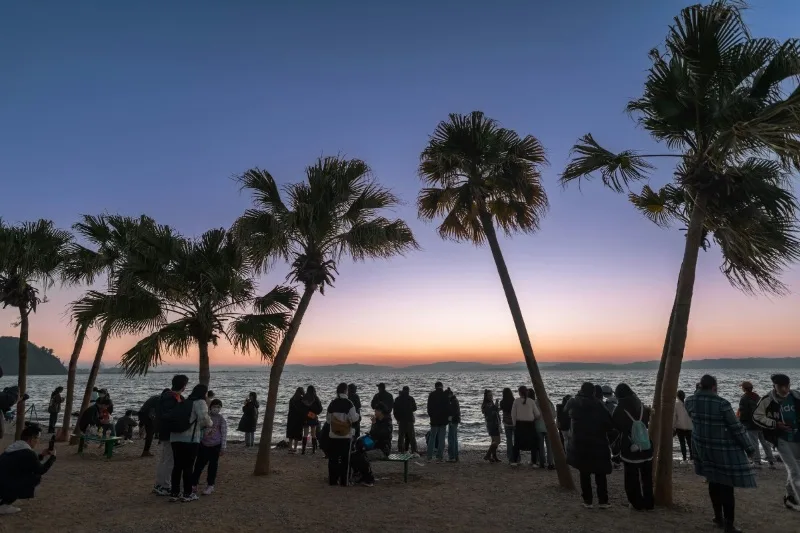
Beihai in Guangxi has quietly become a major snowbird hub. It is coastal, milder than the north, and significantly cheaper than Sanya. I have seen reports of renters finding sea-view apartments for a fraction of what they would pay further south. The trade-off is a smaller expat community and fewer amenities.
Huizhou in Guangdong is the most talked-about "Sanya alternative" in recent years. Over 100,000 winter migrants passed through in early 2025, and the city has actively courted them. The appeal is straightforward: coastal living at a fraction of Sanya's cost, with easy access to Guangzhou and Macau.
Tengchong in Yunnan is quieter, more laid-back, with hot springs. It attracts a smaller but dedicated snowbird crowd — people who want peace, not parties. Some winter rentals there include hot spring access, which is a unique draw.
Xiamen is subtropical and photogenic, with winter temperatures around 10–18°C. It attracts a smaller, longer-term foreign crowd rather than mass northeastern migration. According to Xiamen Siming District government records, the city's foreign community is concentrated in the Guanren neighborhood, 1,536 registered residents from 46 countries, which makes it a different kind of snowbird experience entirely. The Xiamen city page breaks down the island vs. mainland rent split in detail.
Zhanjiang, Jinghong, and Fangchenggang are rising stars, cheaper still, less crowded, and attracting the price-sensitive segment of the snowbird population.
Harbin is the mirror image of all these destinations. It is the city people flee from, not head to. But it is also a major winter tourism destination, and the economic impact is completely different.
Hotel prices spike dramatically: a room that costs ¥600 in late February costs ¥3,252 in mid-January. Flights from Guangzhou to Harbin for New Year's are up 56% in price compared to November. But residential rents and grocery prices barely move. Tourists stay in hotels and leave. They do not compete with locals for housing. Hotels up, groceries flat: that's the signature of a tourism-driven economy, not a snowbird one.
Harbin's winter crowds leave nothing behind but hotel revenue. Sanya's stay for months, and their rent is your rent.
Table 1 — Major snowbird destinations
All rent figures in the tables below are illustrative observations from local short-term winter listings across multiple platforms, cross-checked mid-2026. They are not formal survey averages. Actual prices shift by building, floor, season and negotiation skill.
| Sanya | Kunming | Beihai | Xiamen | |
|---|---|---|---|---|
| Setting & climate | Tropical coast, beaches, winter 18–28°C | High-elevation "Spring City," landlocked, 8–20°C | Subtropical coast, fine sand, winter 15–22°C | Subtropical coast, scenic bays, winter 10–18°C |
| Winter rent (1-bed) | ¥6,000–8,000 (peak) / ¥2,500 (low) | ¥1,800–2,800 | ¥1,200–2,000 | ¥2,200–3,500 |
| Core strengths | Mature snowbird ecosystem; swim outdoors in winter; many partial-year leases | Developed city amenities; good internet & healthcare; avoids coastal humidity | Very budget-friendly; huge stock of winter-only rentals; slow coastal lifestyle | Wonderful coastal scenery; reliable infrastructure; concentrated expat enclave |
| Notable drawbacks | Severe Dec–Feb inflation; heavy tourist crowds; higher living costs | Most landlords prefer full-year leases; limited short-term supply | Limited bilingual services; few expat-oriented coworking spaces | Almost no dedicated snowbird rental stock; most landlords insist on 12-month contracts |
| Foreign community | Small, seasonal (Russian/Western retirees) | Most diverse, most mature | Very small | Concentrated (Guanren, 1,536 residents, 46 countries) |
Note: Sanya's peak-season rent represents December–February; low-season is May–October. Hainan province as a whole receives over 1 million snowbird elderly annually, according to the Hainan Provincial Department of Civil Affairs.
Table 2 — Emerging & niche destinations
| Huizhou | Tengchong | Zhanjiang | Jinghong | |
|---|---|---|---|---|
| Setting & climate | Subtropical coast, winter 15–22°C | Inland high-elevation, hot springs, 10–18°C | Coastal gulf, less touristed, winter 15–22°C | Inland tropical, rainforest, winter 15–25°C |
| Winter rent (1-bed) | ~¥1,400 | ¥1,500–3,000 | ¥1,300–2,200 | ¥1,400–2,300 |
| Core strengths | Fast-growing "Sanya alternative"; easy access to Guangzhou & Macau | Hot-spring amenities; quiet laid-back pace; wellness-oriented | Quiet, less crowded; stable local market | Warm without coastal humidity; rich ethnic culture |
| Notable drawbacks | Very limited foreign community | No sea access; no high-speed rail; extremely limited English support | Very little snowbird-focused rental stock; sparse expat facilities | Small-city scale; limited international healthcare & remote-work infrastructure |
| Foreign community | Almost none | Almost none — no English-speaking services outside hotels | Almost none | Almost none — some Yunnan-based travelers, no resident expat cluster |
Note: Guangxi province received over 3.8 million elderly long-stay visitors in 2025, according to the Guangxi Provincial Department of Civil Affairs. Cities without dedicated deep-dive pages on this site (Beihai, Zhanjiang, Jinghong, Tengchong) have far fewer bilingual resources. Every city-to-city relocation still requires mandatory address-registration paperwork for foreign permit-holders. Converted at ¥7.2 = $1. Harbin is included as a reference point only, it is the origin, not the destination. A city-center one-bedroom there rents for ¥3,040/month (Numbeo, mid-2026), but winter heating adds ¥3,250/season as a lump sum, per Harbin Municipal Development and Reform Commission pricing. Its winter climate averages -17.3°C.
Hidden recurring costs beyond the train fare
Many people considering this migratory lifestyle only budget for high-speed-rail train fares between cities. From what I observe, the real overhead lives elsewhere.
Visa and address-registration administrative friction. Each city-to-city move forces fresh address-registration formalities. Repeated seasonal relocations pile up continuous paperwork work. A fair number of expats turn to agents for support, bringing recurring service fees. This is a cost that domestic Chinese snowbirds simply do not face.
The lease-length penalty: giving up long-term-lease discounts. Nearly every city's cheapest per-month apartment rates are reserved for tenants committing to a full 12-month contract. When you hop locations every few months you consistently pay short-term-rental premiums. Moving also creates tangible logistical friction: you need to transport or store heaters, dehumidifiers and household goods as you shift cities.
Climate-driven utility overhead that follows you city-to-city. Your monthly power spend shifts with local climate regardless of where you settle. Northern locations bring lump-sum seasonal central-heating bills plus potential supplementary electric heating during transitional weeks. Damp southern locations require consistent power draw for space heaters or dehumidifiers throughout cool-wet seasons. Hot coastal cities demand heavy air-conditioning load stretching across long summer months. Utility-cost swings are driven by local climate conditions, not your lease type. They hit snowbird tenants and year-round local residents equally.
The non-financial toll: losing local community and stable routine. Money is only one side of the equation I keep bringing up in conversations with expat residents. Every relocation resets your local social circle, coworking connections, trusted handymen, cleaners and regular service providers. Building that network takes multiple months. Constantly starting over creates a quiet quality-of-life tax that will never appear on any budget spreadsheet.
The Five Kinds of Cheap framework explains why the same rent number means something different in Harbin than in Kunming.
How to choose your winter base as a foreign resident
If you are considering a winter stay in China, here is what I have learned from comparing these cities side by side.
The most important thing I can tell you is this: do not trust the average cost tables. They will tell you Sanya is affordable because they average the whole year. But the December to February rent spike is real, and it is brutal. If you want Sanya, I would strongly recommend locking in a six-month lease or timing your stay to start in November and leave before the peak.
Non-rent costs also add up faster than you would expect. Flights from the northeast to the south can double or triple during the December to February peak. Utilities, food, and the cost of maintaining your northern home while you are away all need to be factored in. And if you are a foreign resident, visa-administrative friction is real: every address change triggers mandatory residence registration.
Short-term rentals come with their own premiums. In my experience, if you can commit to six months, you will almost always get a better rate than a three-month stay. The landlords in snowbird-heavy cities like Sanya and Beihai know the seasonal rhythm and price accordingly.
So which city is right for you? That depends on what you are looking for.
If you want a mature international community with diverse foreign residents across multiple neighborhoods, Kunming is the clear winner. The climate is genuinely comfortable. The cost is reasonable, a city-center one-bedroom runs about ¥1,800–2,800/month in winter. And the foreign community is the most diverse and established of any city on this list, spread across different neighborhoods: students and teachers around Green Lake, NGO workers in Xishan, families near the international schools in Beichen. I have met people in Kunming who have stayed for years, not just one winter.
If you want a concentrated expat enclave where you can walk into a café and hear English spoken at the next table, Xiamen's Guanren community is worth the premium. The city is beautiful, subtropical and photogenic, with winter temperatures around 10–18°C. The food is excellent. But the island geography creates a hard land ceiling, and you pay for it: an island one-bedroom runs ¥2,500–3,200/month. This is the trade-off for having 1,536 foreign residents from 46 countries in one neighborhood.
If you are looking for a seasonal beach escape rather than a year-round base, Sanya delivers exactly what it promises: tropical weather, reliable warmth, and the most developed snowbird infrastructure in the country. I have seen it work well for people who want three months of t-shirts and ocean views. But the winter rent premium is steep, the tourist crowds can be overwhelming, and the city's economy pivots so completely around the seasonal influx that it feels like a different place in the summer. For long-term living, I would think twice.
If your priority is budget and you do not mind being the only foreigner in your neighborhood, Beihai and Huizhou are excellent value. The rents are low, the winters are mild, and the coastal lifestyle is genuine and unpretentious. The foreign community is almost non-existent in both, but if you are self-sufficient and comfortable navigating daily life in Chinese, you can live well here at a fraction of the cost elsewhere.
If you want hot springs, peace, and a slower pace of life, Tengchong is worth considering. It is quieter and more laid-back than any other destination on this list. The geothermal activity gives it a unique draw, and some winter rentals include hot spring access. It attracts a smaller but dedicated snowbird crowd — people who want to escape not just the cold but also the crowds.
Harbin, as I have said throughout this piece, is where snowbirds come from, not where they go. I include it only as a reference point, a reminder of why the migration exists in the first place. For snowbirds, it is the origin, not the destination.
If you are still unsure which city fits you best, take the seven-question city matching quiz. For a personalised estimate of your monthly budget, try the should-you-move calculator.
My final takeaway: Do not rely on average cost tables. They cannot answer the only question that matters: "What will my winter escape actually cost me as a snowbird?" You need to look at seasonal data, factor in the non-rent costs, and be honest about what kind of experience you are actually looking for. For most foreign residents I have talked to, Kunming offers the best balance. But the right answer depends on what you value, and how much you are willing to pay for it.