Living cost, at a glance
≈$423/mo
≈$243/mo
≈$588/mo
≈$1,010/mo
≈$831/mo
Rent from the §01 ledger. The non-rent line is Wise's own compiled "estimated monthly cost of living, excluding rent" for Harbin (single person, 2026). This is a more granular breakdown than the single ¥4,720 all-in figure already published in §01; both are legitimate estimates built by different methods — see that section for the site's original figure and sourcing. Converted at ¥7.2 = $1.
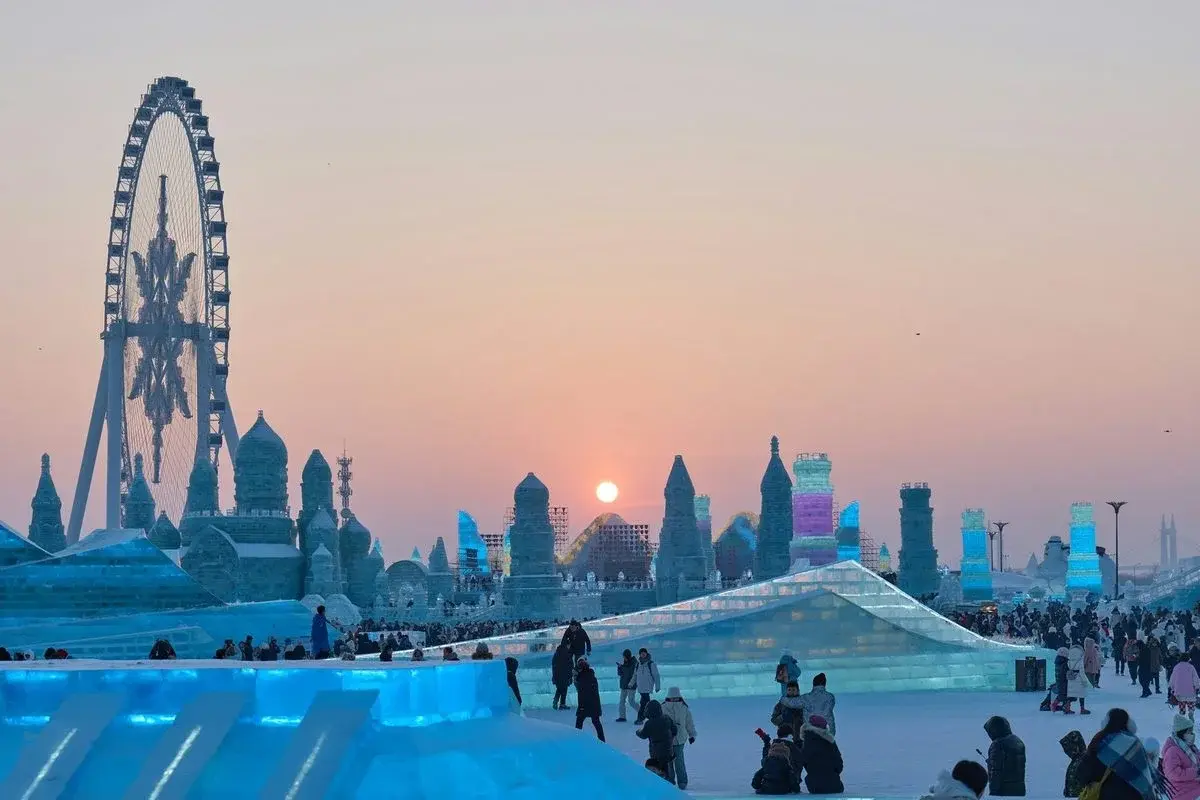
The engineering is the part nobody tells you. In late November, when the builders want to start, the Songhua River is not yet solid enough to cut, it's still drifting slush. Harvesting can't begin until early December, when the ice passes thirty centimetres, and by then it's too late to open on time.
So Harbin cheats winter by keeping some.
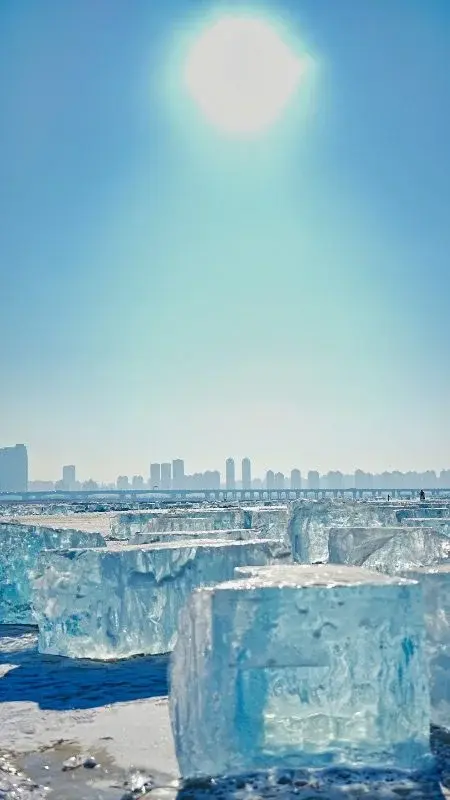
Read that again, because it isn't only about a theme park. This is a city that learned to save the one thing it has in overwhelming surplus, and spend it slowly. Everything below — the six-month heating bill, the empty apartments, the salaries that never caught up, makes more sense once you've seen the ice.
01 — The monthly numbers
The cheapest city we've measured.
The city-center rent number will hit you first. A one-bedroom in Harbin runs about $423 a month, roughly 49% of the median after-tax wage of $857. That is the worst rent-to-income ratio in this entire series, worse than Chengdu's 36%, worse than Dalian's 37%. The city is cheap the way a closing-down sale is cheap: prices fall because demand is leaving, not because life got easier for the people staying. The real cost of Harbin is not the rent. It is the economy. Heilongjiang province lost 8 million people in fifteen years. The young leave. The old stay. The winter lasts half the year. The heating is billed once, for the whole season. And the ice festival is the city's attempt to sell what everyone else counts as a liability.
Typical 2026 costs for one person, in yuan and US dollars at roughly ¥7.2 to $1.
These figures are the city-level baseline, but how you live day to day moves the final number more than the city itself. Three lifestyle budget tiers →
Sources: Livingcost.org, Numbeo, and compiled 2026 market data. Converted at ¥7.2 = $1. The 2-bed rows are this site's own estimate — interpolated at the midpoint between the 1-bed and 3-bed city-center figures, with the outside-center 2-bed figure derived using the same center-to-suburb ratio the 1-bed figures show. Not an independently sourced number; treat it as directional.
What the ledger above doesn't capture: the deposit, agency fee, visa medical, and household kit that hit before month one. The real bill in week one goes well beyond rent →
At $655 a month all-in, Harbin is cheaper than Chengdu and considerably cheaper than Dalian. If you earn dollars, it's close to free.
What the rest of the utility bill looks like
Electricity, water, and gas are all separate from the heating bill in §03, and all tiered. Like most cities in this series that see real winters, they're settled annually rather than month to month.
| Tier | Annual usage | Rate |
|---|---|---|
| 1 | 0–2,040 kWh/yr≈170 kWh/month equivalent | ¥0.51/kWh |
| 2 | 2,041–3,120 kWh/yr≈171–260 kWh/month equivalent | ¥0.56/kWh |
| 3 | 3,120+ kWh/yr≈260+ kWh/month equivalent | ¥0.81/kWh |
| Tier | Annual usage | Rate |
|---|---|---|
| 1 | 0–150 m³ | ¥2.40/m³ |
| 2 | 151–250 m³ | ¥3.60/m³ |
| 3 | 250+ m³ | ¥7.20/m³ |
| — | Shared-meter / unmetered | ¥2.60/m³ flat |
Harbin's household baseline for these tiers is 5 people, not the 4 used in most other cities on this site — worth noting if you're comparing across the series. The shared-meter rate here isn't simply the tier-1 rate; it's tier-1 plus a ¥0.20/m³ markup, a slightly different mechanism than most other cities use for the same exception.
| Tier | Annual usage | Rate |
|---|---|---|
| 1 | 0–288 m³covers ≈96% of households | ¥2.94/m³ |
| 2 | 289–360 m³120% of tier 1 | ¥3.53/m³ |
| 3 | 361+ m³150% of tier 1 | ¥4.41/m³ |
In effect since June 1, 2019, with no confirmed rate change as of August 2026. Covers the main urban districts (道里, 南岗, 道外, 香坊, 平房, 松北) — Acheng district prices separately. Households with 5+ registered residents get an extra 55 m³ added to the tier-1 threshold per additional person. Low-income and subsistence-allowance households pay a flat ¥2.00/m³, no tiers. Non-residential users billed at the residential rate (schools, military) and households using gas for independent heating (as opposed to the municipal district heating in §03) both pay a separate blended rate, ¥3.24/m³ (the average of tiers 1 and 2), rather than the standard tiers.
Electricity: Harbin municipal residential tiered schedule, annually settled. Water: Harbin municipal water utility, 2016 policy (still current per 2024–2025 reporting). Gas: Harbin Development and Reform Commission notice, effective June 1, 2019, cross-checked and corrected from an earlier ¥2.80/m³ tier-1 figure on this page. Converted at ¥7.2 = $1.
Standardized comparison figure, applied the same way across every city on this site: 220 kWh electricity + 15 m³ water + 25 m³ gas per month, a single-occupant baseline that excludes winter heating, run against the tiers above. At Harbin's rates that's ¥115 electricity + ¥39 water + ¥74 gas ≈ ¥228 (≈$32)/month, the 300 m³/yr gas assumption crosses just past the tier-1 threshold (288 m³/yr), so most of the gas bill sits at the ¥2.94 rate with a small sliver at ¥3.53.
What the everyday basics cost, at the market
| Item | RMB | USD |
|---|---|---|
| PorkRetail average | ≈¥13.8/500g | ≈$1.91 |
| EggsRetail average | ≈¥4.9/500g | ≈$0.69 |
| Vegetables22-item basket, retail average | ≈¥2.4/500g | ≈$0.33 |
| Beef | Not shown — see note | |
Pork and eggs: Harbin Municipal Development and Reform Commission market-patrol data, New Year's period, early 2026. Vegetables: same commission, February 13, 2026, a few weeks apart from the pork/egg reading, both genuinely Harbin-specific rather than provincial. We couldn't find a comparably sourced Harbin-specific beef figure and left it blank rather than substitute a number that wasn't really answering the question. We also didn't force an imported item onto this table, nothing about Harbin's own supply chain made one item the obvious choice. Converted at ¥7.2 = $1.
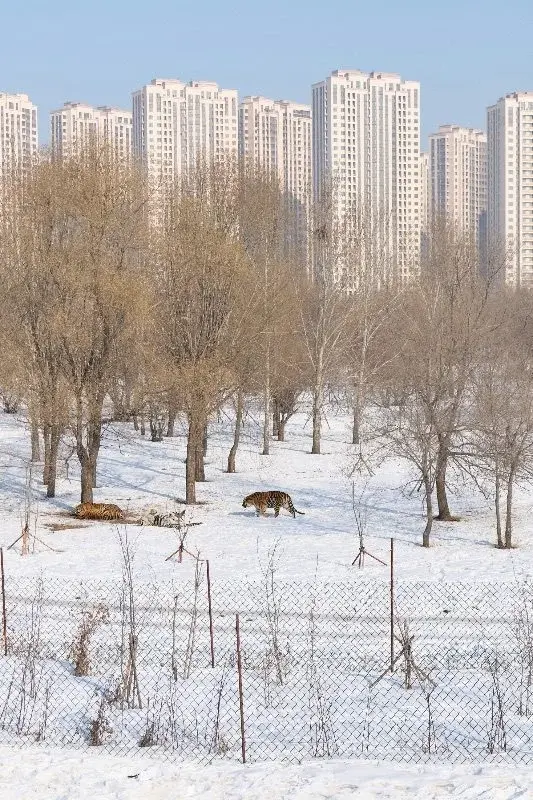
Now look at that median take-home figure again.
02 — The honest part
The cheapest city is also the hardest one.
Median take-home pay in Harbin is about $857 a month, lower than Chengdu's, lower than Dalian's. And a one-bedroom in the centre costs more here than in Chengdu. Do the only division that matters:
Half of everything a typical Harbin worker takes home goes to rent, the worst ratio in this series by a wide margin. The city is cheap the way a closing-down sale is cheap. Prices fall because demand is leaving, not because life got easier for the people staying.
Cheap is not the same as affordable. Harbin is the clearest proof of that I know.
03 — The bill winter sends
Six months of heat, paid once.
In northern Chinese cities, entire districts get heat on a municipal schedule, and you pay by floor area, once for the whole season. Dalian, on the coast, runs its heating from 5 November to 5 April. Harbin runs it from 20 October to 20 April — a month longer — and charges around half again as much per square metre.
Harbin central heating
Oct 20 → Apr 20 · ≈¥38 per m² · one payment for the season. For a typical 85m² apartment that's roughly ¥3,250, about $452 — more than a month's rent, handed over before the first snow. Then you're warm for half a year. Commercial space pays more. (Rates are set municipally and adjust over time.)
And the heat is not a compromise. Indoor temperatures sit around 25°C. In deep winter people at home wear short sleeves; some of them eat ice lollies while doing it. Outside the window, it's thirty below.
That seasonal heating charge is only the most visible of the costs that don't fit neatly into a monthly spreadsheet. The monthly costs you won't find in the table →
04 — What −30°C actually does
An 83-degree year.
The number that stops visitors is not the winter low. It's the spread.
Harbin is not a frozen city. It is a city with a violent summer bolted onto a brutal winter, and about three weeks of spring in between. Locals also live with a daily swing of twelve to fifteen degrees between dawn and afternoon.
Cold at this scale rearranges ordinary life in ways that never make the guidebooks. A phone doesn't shut down, but its battery gives up less than half of what it promises. Stay out too long and it's your nose and your feet that go first. The Songhua freezes to more than a metre; from mid-December to mid-January, people drive across it. And the winter coat that signals you've done well in life is not a parka, across Heilongjiang and Jilin, it's mink.
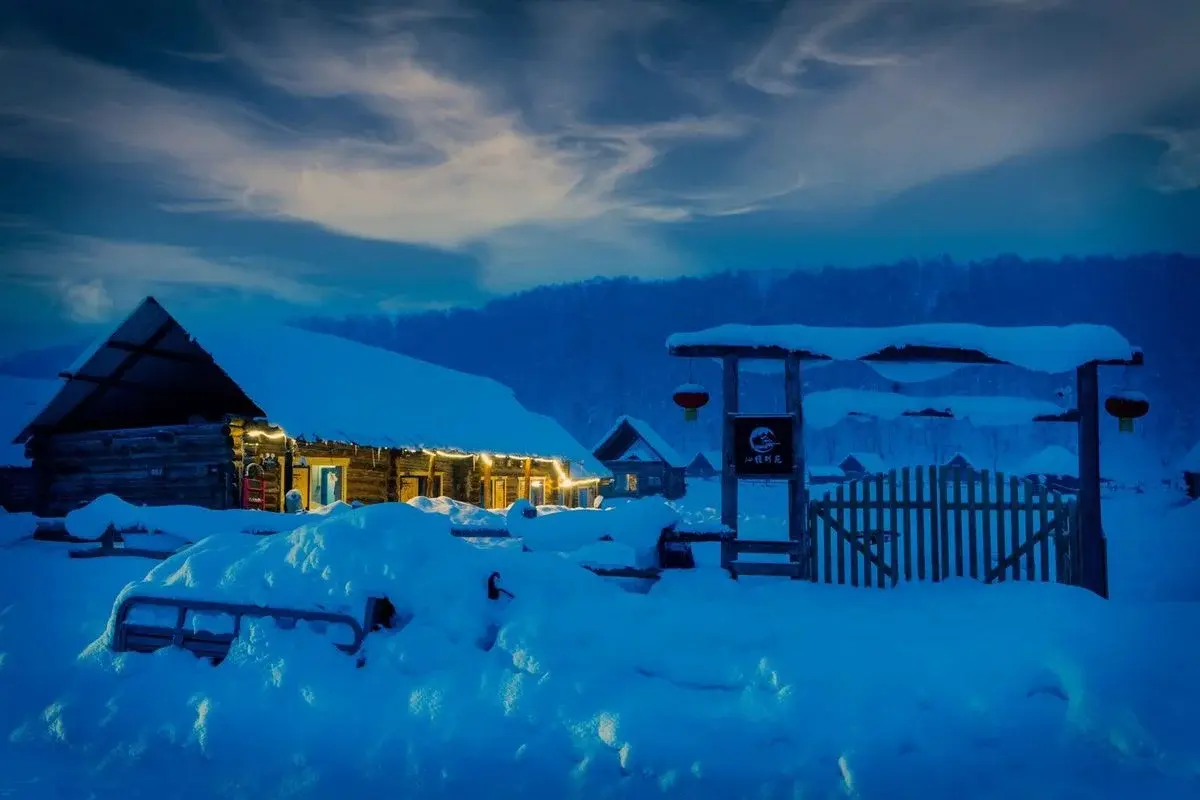
猫冬 — "to cat the winter"
There's a word for the season here. Māo dōng means, roughly, to hole up like a cat: to stop going out and wait the winter through. It began as agricultural fact, a farmer in Heilongjiang cannot work frozen ground, and hardened into a culture. Cards, mahjong, long meals, and the drinking that northeasterners are famous for across China. Six months indoors with the people you know.
Once you understand māo dōng, the food makes sense too.
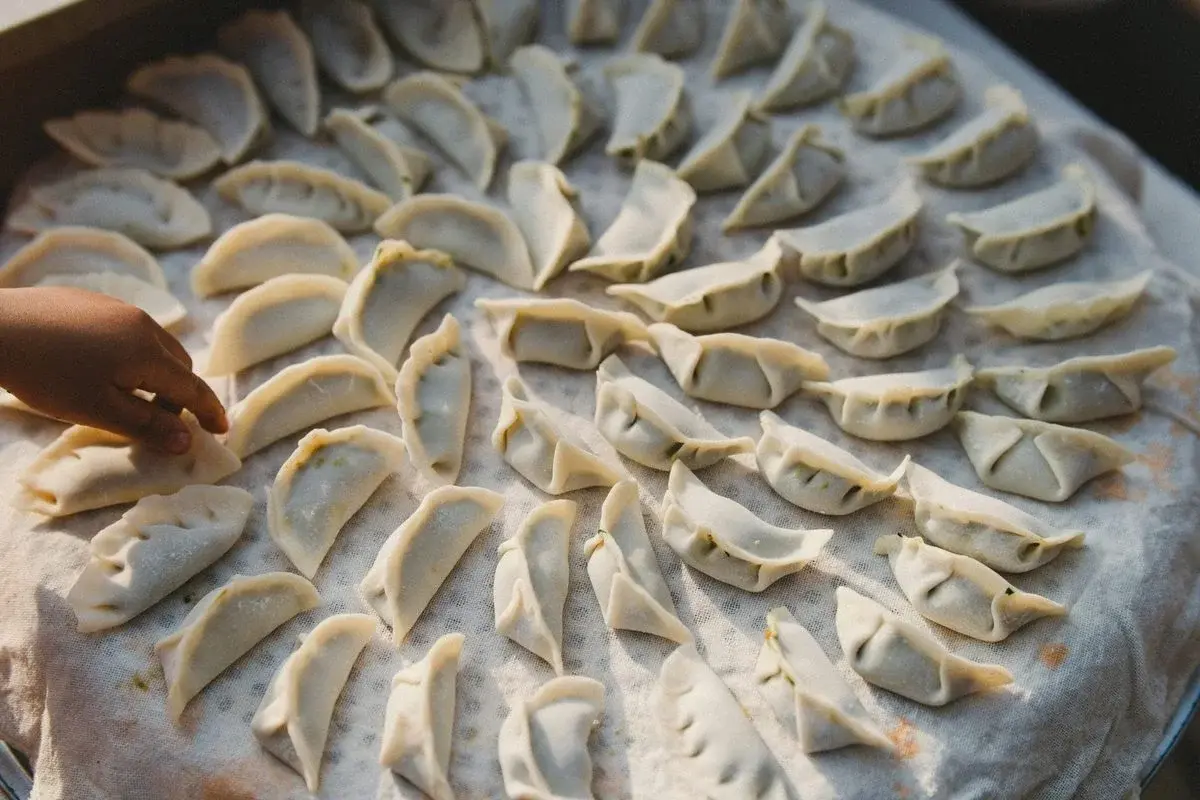
Harbin's cooking is famous for two things: it is cheap, and the portions are absurd. Thirty to fifty yuan ($4–7) at a small restaurant and you leave uncomfortably full. Two people can share a single dish and struggle to finish it. The signatures are hóngcháng — a smoked red sausage descended from Russian recipes — guō bāo ròu, sweet-sour fried pork, clay-pot stews, and dumplings by the dozen. On Central Street, tourists queue in February for the Modern ice lolly, eaten outdoors, at minus twenty. Nobody finds this strange. Even the drink has a foreign birth certificate: Harbin Beer, China's oldest beer brand, was first brewed here in 1900 by a Polish-Russian merchant, decades before most of the country had tasted the stuff. For the same reason the architecture two sections from now looks the way it does.
05 — A metro built to survive what §04 just described
China's first cold-region metro, and it partly reuses a Cold War tunnel.
Every engineering problem so far comes down to the same question: how do you build anything in a place that spends half the year below freezing? Harbin's metro answers it directly. Opened in 2013, it's China's first rail system built specifically for a severe-cold region. Part of its route runs through the "7381" civil-defense tunnel network, dug during the Sino-Soviet border tension of the 1970s and repurposed decades later rather than built from scratch. Today the network runs 3 lines, about 92 kilometers, and 78 stations.
We haven't been able to source a metro map for Harbin that we're confident redistributing. For the current network layout, go straight to the operator: Harbin Metro Group — official site →
Network size and station count: Harbin Metro Group reporting, as of November 2024. Fare schedule per municipal transit pricing rules. Converted at ¥7.2 = $1.
Outside the rail, the national trio of shared-bike apps: Meituan, Hello, Didi's Qingju, thins out in deep winter for the obvious reason. Ride-hailing and taxis pick up the slack. Buses still carry most of the city's daily trips, running the same routes through minus-thirty that they run through July.
The ¥2 base fare and the low utility rates in §01 don't happen by accident — they're the visible tip of decades of capital investment and permanent maintenance subsidy. The real cost behind these low prices →
06 — Where the European bones came from
The most European city in China, and why?
Harbin does not look like anywhere else in China, and the reason is a railway.
In 1898 the Russian Empire extracted a concession from a weakened Qing court and chose a thinly settled bend of the Songhua as the hub of the Chinese Eastern Railway. The city was planned and built by Russians, in a Russian-administered railway zone. The line opened in 1903, and Europeans came with it. After 1905, and in far greater numbers after the Russian Revolution, Harbin filled with émigrés. At its height, 160,000 foreign residents from 33 countries, with sixteen nations operating consulates and thousands of foreign firms and banks. It became the financial and transport centre of Northeast Asia.
The Russian émigré community was unusually educated, scholars, doctors, journalists, musicians. In cultural and scientific influence, the Harbin diaspora is generally ranked behind only Paris and Prague. The city acquired Byzantine domes, Baroque facades, Art Nouveau shopfronts and a nickname: the Little Paris of the East. It is still the only city in China where six religions have coexisted.
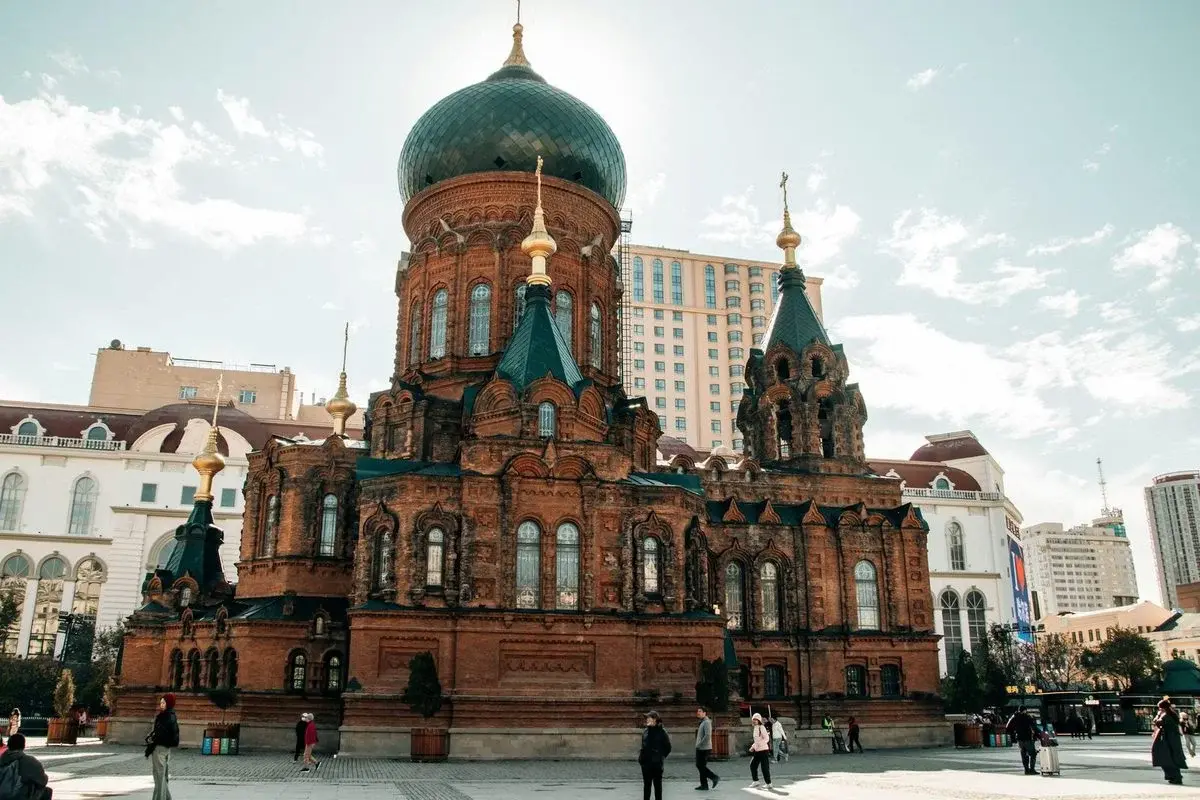
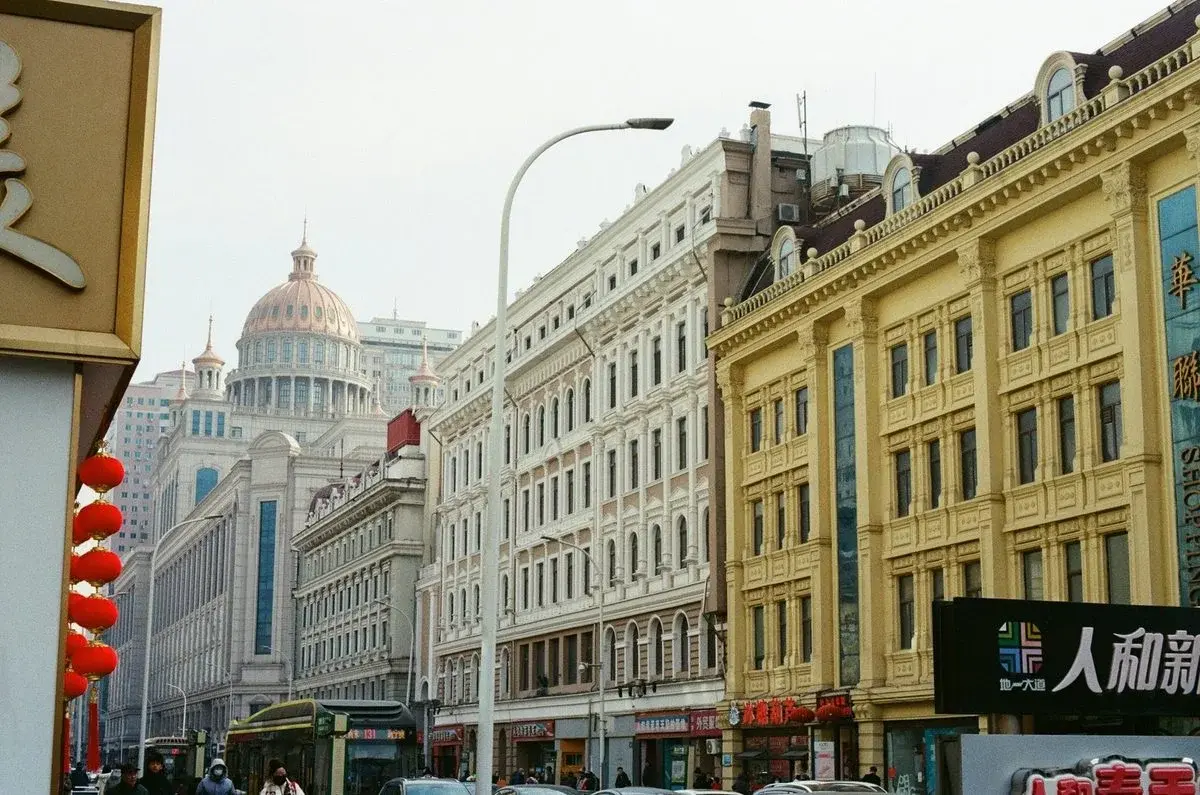
It is worth saying plainly what that nickname sat on. The European splendour of Harbin's old streets grew out of a colonial railway concession secured by unequal treaty, a forward base for extracting the resources of the Northeast, not a gift. Japan then occupied the city from 1932 to 1945. The architecture is genuinely beautiful and the history is genuinely ugly, and a visitor is allowed to hold both.
07 — What's left of that history today
160,000 foreign residents, once. Today, almost none — and almost none of them North American.
§06 described Harbin at its peak: 160,000 foreign residents from 33 countries, sixteen consulates, a city that ran on foreign capital and foreign administration. That population is gone, and it hasn't been meaningfully replaced, least of all by North Americans. This is the one page in this series where the honest answer to "where do foreigners live" is closer to they mostly don't, and when they're here it's rarely for long.
| Where | Why | Who, briefly |
|---|---|---|
| HIT campus Nangang District | The Harbin Institute of Technology–Saint Petersburg State University joint campus, roughly 1,500 students, mostly Chinese and Russian | Occasional exchange students and visiting faculty, rarely North American |
| China–Russia Expo grounds | An annual trade fair — the 2026 edition drew exhibitors from 46 countries and regions, though overwhelmingly Russian in focus and delegation size | Short-term trade and business visitors, in the city for a week, not a life |
| Nangang & Daoli the old European quarter | Where what little long-term foreign presence still exists tends to land — the same streets described in §06, at a tiny fraction of their former population | A handful of language teachers and short-contract consultants |
Harbin's own outward-facing energy today runs north, toward Russia, not east across the Pacific. That's the province's "opening north" trade strategy, the Russia-focused free-trade zone services, the expo itself. A North American who does end up here is more likely to be passing through for a week of trade meetings, a short teaching contract, or a university exchange semester than settling in. That's not a gap in this research. It's the same story §08 is about to tell in economic terms, you just see it first in who does and doesn't choose to live here.
This section describes Harbin's genuinely small foreign presence as best it can be documented, there's no consular or municipal foreign-resident count for this city comparable to what other cities in this series publish, which is itself part of the story. Treat this as a qualitative account, not a headcount.
08 — Why it's this cheap
A province that has been emptying for forty years.
Between the 2010 and 2020 censuses, Heilongjiang province lost 6.46 million people, from 38.3 million to 31.9 million, a fall of 16.9%, the steepest in China. By 2025 the figure was around 30 million: roughly eight million people gone in fifteen years. The province last recorded net in-migration more than forty years ago. Nearly a quarter of those who remain are over sixty.
The usual explanation: it's too cold, explains nothing. It was equally cold in 1960, when people were arriving.
The economy was built from the top down
The Northeast was China's industrial firstborn. Its factories were financed by central plan, their output allocated nationally, their prices set by the state. It worked, for decades the region's living standards led the country. But the entire circuit ran through the plan, not through local markets or private capital.
When reform opened prices to competition, the coastal provinces had something the Northeast did not: a private economy that grew out of kinship networks. Relatives raised the startup money, fellow townsmen traded market intelligence, clan reputation stood in for a written contract. In the Northeast, the social unit that organised a life was the work unit — the danwei. It supplied the job, the housing, the clinic, the school and the pension.
Two or three generations grew up inside that arrangement. When it receded, the muscle for private enterprise had never been built. The young left for the south, where the jobs were. Their parents stayed, and got old.
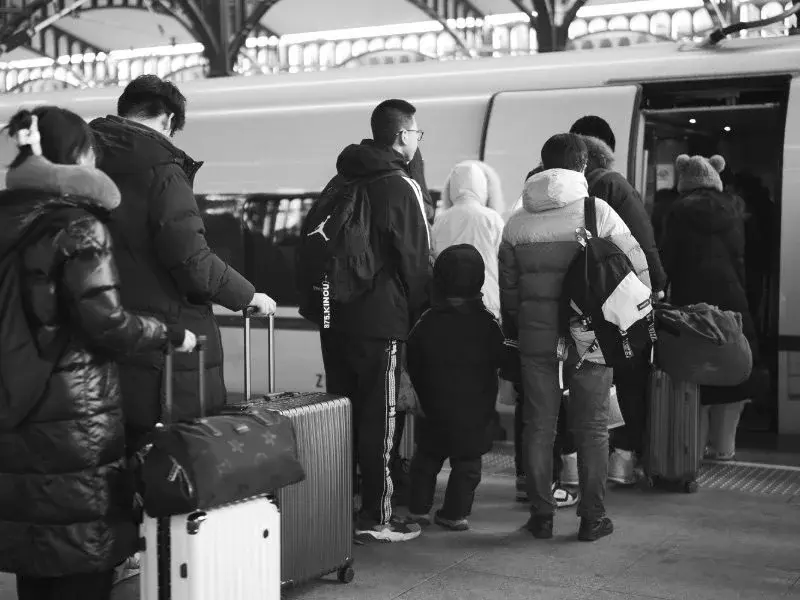
That's why the rent-to-income ratio is 49%. Wages track a stalled economy; housing costs don't fall as fast as wages do.
"Sanya, Heilongjiang Province"
The migration has a comic coda that is not really comic. Every winter, hundreds of thousands of northeasterners fly to Hainan island, to Sanya, to Beihai, to Xishuangbanna, and stay until spring. So many that Sanya is jokingly called Heilongjiang's thirteenth city. Harbin hospitals have opened branches there. Many snowbirds eventually buy an apartment and simply stop going back. The joke and the census are describing the same event. For a deeper look at China snowbird migration: real costs and trade-offs for expats.
09 — What the city did about it
It sold the winter.
Here is the part I find genuinely moving, and I say that as a northeasterner who left.
Harbin had one asset in unlimited supply, and it was the asset everyone else counted as a liability. So the city industrialised its own cold. The Ice and Snow World now covers 810,000 square metres, a Guinness record as the largest ice and snow theme park on earth. During the 2024 New Year holiday, Harbin received over three million visitors, up 441% on the year before; tourism revenue rose nearly eight-fold.
None of that fixes the census. Eight million people do not come home because the ferris wheel is beautiful. But a city that spends a decade being described as a rust-belt casualty and then, one winter, becomes the most talked-about place in the country, that city has done something with what it had.
The blocks in the storage yard are last year's river, waiting in the dark for the cold to come back. It's not a bad way to describe the place.
10 — Questions people actually ask
Quick answers
How much does rent cost in Harbin?
A one-bedroom in the city center runs about ¥3,040/month (≈$423); outside the center it's about ¥1,750 (≈$243), the cheapest rent in this entire series.
Is Harbin's low cost of living good news for the people who live there?
Not really, it's the cheapest city measured on this site, and also one of the hardest to earn a living in. Median take-home pay is about ¥6,170/month (≈$857), and the low prices reflect a shrinking regional economy, not a deliberate discount.
How is heating billed in Harbin?
Like other northern Chinese cities, heat is centralized and billed once for the whole season, roughly six months of continuous heat, paid in a single charge rather than a monthly gas bill.
How cold does Harbin actually get?
Cold enough to swing 83 degrees Celsius between the coldest winter lows and warmest summer highs, one of the widest annual temperature ranges of any major city in this series.
Why does Harbin have an ice festival?
Facing a shrinking, aging local economy, the city turned its harshest asset — the winter itself — into an export. The ice festival monetizes the cold rather than just enduring it.
If you're thinking of going
Harbin, for a visit or a long, cheap, very cold stay.
- When: the Ice and Snow World runs roughly mid-December to late February. January is the cold, and the point. Summer is warm, green, and almost nobody's idea of Harbin.
- The cold: dress for −25°C and shorter exposures than you think. Every indoor space will be around 25°C, so wear layers you can shed instantly.
- Your phone: expect less than half the battery life. Keep it inside your coat, not in an outer pocket.
- Getting online: sort a China travel eSIM before you fly.
- Getting there: Harbin Taiping International Airport, plus high-speed rail south to Changchun and Shenyang — a different network from the one the Russians built here in 1903, but running through much of the same corridor.
- Staying a while: a centre one-bedroom runs about ¥3,000/month — but check whether heating is included, and for which months.
- Still deciding? Not sure if Harbin is the right fit? Browse cities by what matters to you → or answer 7 questions to find your city →