Living cost, at a glance
≈$396/mo
≈$208/mo
≈$517/mo
≈$913/mo
≈$725/mo
Xiamen's rent doesn't fit the standard city-center/outside-center frame used elsewhere on this site: see §02 for why island vs. mainland is the real divide here. Rent rows are midpoints of the §01 ledger's ranges; the non-rent line is Wise's own compiled "estimated monthly cost of living, excluding rent" for Xiamen (single person, 2026). Converted at ¥7.2 = $1.
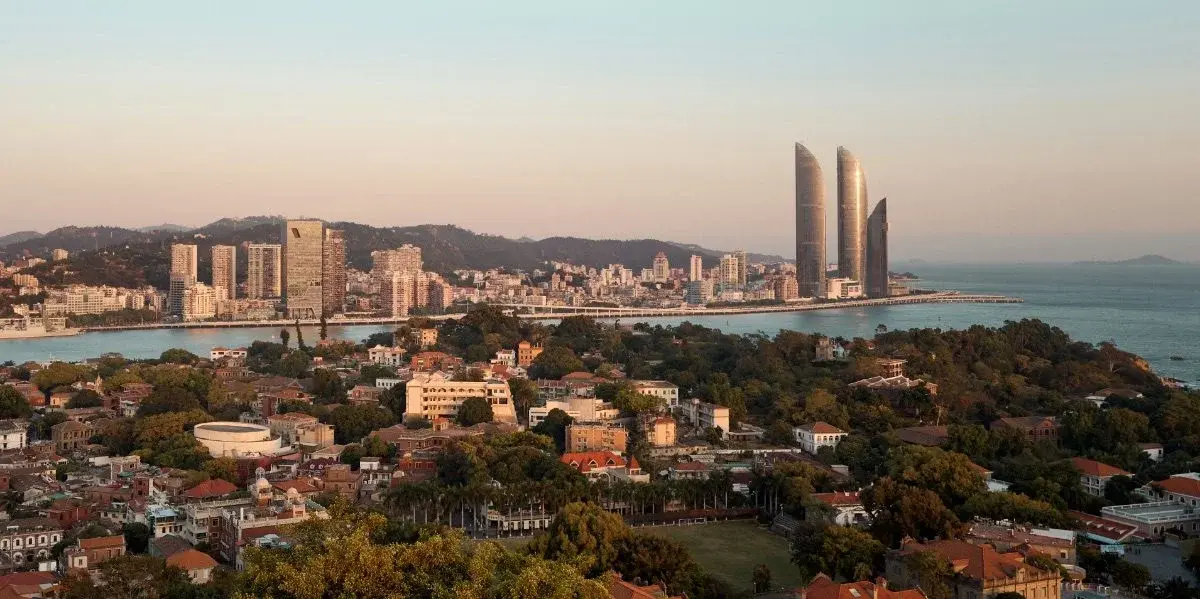
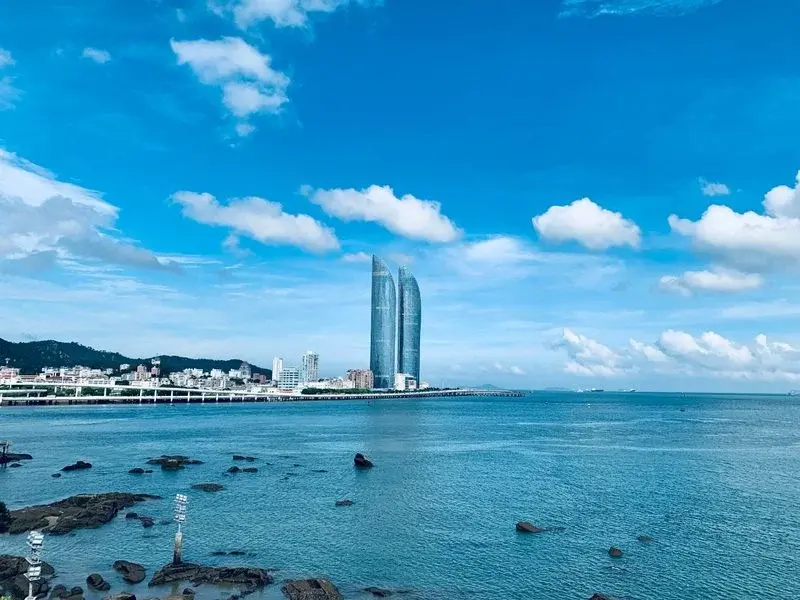
Search "most beautiful city in China" in English and Xiamen shows up on the first page of results, usually next to a photo of Gulangyu's red roofs or the curved twin towers downtown. The city has spent decades building that reputation on purpose: garden city, romantic seaside, a place people go on their honeymoon rather than for work. It has worked. It has also made the city expensive in a way its own wages don't support.
This page is written from a distance. The author has never lived in or visited Xiamen, and that's stated plainly rather than papered over. What follows is built from official stats, published rent data, and local reporting, cross-checked wherever the numbers didn't line up. When something couldn't be pinned down to one current figure, we left it flagged instead of faking certainty.
The short version: on paper, an average Xiamen wage isn't dramatically different from plenty of other Chinese cities. But rent and property prices keep showing up among the least affordable in the country relative to income: worse, by some measures, than Beijing or Shanghai. Both of those things are true about the same city, and the rest of this page is an attempt to hold them both in your head at once.
01 — The monthly numbers
Xiamen's monthly costs: what one person actually spends.
Xiamen's rent-to-income ratio has repeatedly ranked among the worst in China: a one-bedroom on the island costs about ¥2,850 (≈$396) per month, while the average monthly wage is roughly ¥10,133 (≈$1,407) — that's about 28% of gross income, though historical measures have put the burden even higher. These are typical Xiamen numbers, pulled from public rental listings and cost-of-living data — not one person's private budget. Everything's in Chinese yuan (RMB), with US dollars at roughly ¥7.2 to $1. Xiamen's rent data is unusually split by geography, which is why the ranges below are wider than on most city pages on this site. See §02 for why.
Rent ranges compiled from Anjuke and Zhihu tenant-reported listings (2022–2025 reporting, cross-checked), not a single-point Numbeo figure: Xiamen's own market is genuinely this bifurcated. Meal and transit prices from public cost-of-living data, 2025–2026. Utilities uses this site's own standardized calculation: see below. Converted at ¥7.2 = $1. For an authoritative single number, check Numbeo's Xiamen page directly.
Utilities — that gap we flagged is now filled
An earlier version of this page couldn't track down a current, city-wide tiered rate schedule for Xiamen's electricity, water, and gas with enough confidence, so we said so instead of guessing. That's fixed now: all three are tiered, sourced straight from Xiamen's municipal price authority.
| Tier | Monthly usage | Rate |
|---|---|---|
| 1 | 0–230 kWh | ¥0.4983/kWh |
| 2 | 231–420 kWh | ¥0.5483/kWh |
| 3 | 421+ kWh | ¥0.7983/kWh |
| — | Shared-meter (合表) | ¥0.5330/kWh flat |
| Tier | Monthly usage | Rate |
|---|---|---|
| 1 | 0–18 m³ | ¥2.20/m³+ ¥1.00/m³ sewage |
| 2 | 18–40 m³ | ¥3.30/m³+ ¥1.00/m³ sewage |
| 3 | 40+ m³ | ¥6.60/m³+ ¥1.00/m³ sewage |
Subsistence-allowance and extreme-hardship households, with valid certification, pay the tier-1 water rate regardless of usage (sewage still added on top).
| Tier | Annual usage | Rate |
|---|---|---|
| 1 | 0–252 m³ | ¥3.41/m³ |
| 2 | 252–360 m³ | ¥4.092/m³ |
| 3 | 360+ m³ | ¥5.115/m³ |
In effect since December 20, 2024. Low-income, subsistence-allowance, and other registered hardship households pay a flat ¥3.274/m³ instead of the tiers. Schools, elder-care, and childcare institutions billed at residential rates pay the average of tiers 1 and 2. Non-residential users (a separate category from the above) pay a capped ¥3.946/m³, adjusted periodically since July 2025.
Electricity: Xiamen Development and Reform Commission's published residential tariff policy interpretation (《厦门市水电价格政策解读》). Water: Xiamen Water Group's published fee schedule. Gas: Xiamen Development and Reform Commission notice on residential piped-gas pricing, published December 6, 2024, effective December 20, 2024; non-residential ceiling price per a separate notice, effective July 2025. Converted at ¥7.2 = $1.
Standardized comparison figure, applied the same way across every city on this site: 220 kWh electricity + 15 m³ water + 25 m³ gas per month, a single-occupant baseline that excludes winter heating, run against the tiers above. At Xiamen's rates that's ¥110 electricity + ¥48 water + ¥88 gas ≈ ¥246 (≈$34)/month. What the ledger never shows: recurring costs that slip past the spreadsheet →
What the everyday basics cost
| Item | RMB | USD |
|---|---|---|
| PorkLean cut, retail | ≈¥13/500g | ≈$1.81 |
| Local seafoodEveryday catch, not luxury species | ¥15–40/500g | ≈$2–5.55 |
| EggsRetail average | ≈¥6/500g | ≈$0.83 |
| VegetablesRetail average, mixed basket | ≈¥3.50/500g | ≈$0.49 |
We couldn't track down a Xiamen-specific municipal weekly price monitor: the kind Dalian, Chongqing, and a few other cities on this site publish. These figures are a Fujian-region retail estimate, flagged as such instead of pretending they're a precise city-level source.
Wet-market prices: regional retail estimates, cross-checked against Fujian provincial commerce data where available, 2025–2026. Converted at ¥7.2 = $1.
The numbers above look almost ordinary next to other second-tier Chinese cities. Rent is what breaks the pattern — and the reason is the shape of the city itself. Your daily choices shape the bill more than the city itself does →
02 — The part the postcards don't show
Xiamen's two cities, one name: island vs. mainland.
Xiamen isn't one continuous city — it's an island core (Siming and Huli districts, fully urbanized for over a decade) connected by bridges and a subsea tunnel to four mainland districts (Jimei, Haicang, Tong'an, Xiang'an) that are still filling in. The population splits almost evenly, but day-to-day life doesn't:
District population: Xiamen Municipal Statistics Bureau 2024 sample population survey, released early 2025.
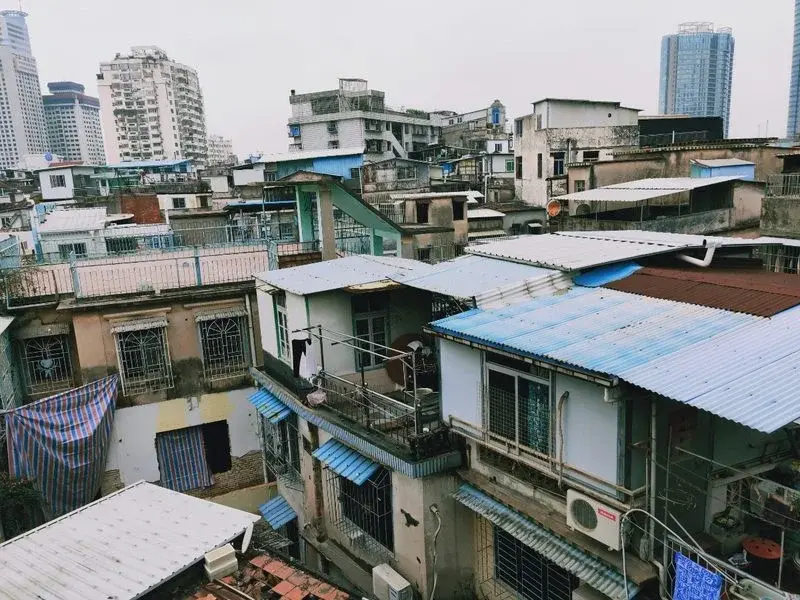
Siming and Huli — the island — hit 100% urbanization years ago and have basically no land left to build on. That scarcity is what drives the rent gap in §01: a one-bedroom on the island can cost more than double the same unit forty minutes away across a bridge. Older island neighborhoods sit wedged right up against new towers, landlords carving single rooms into shared units to squeeze more rent out of a fixed footprint. A pattern local reporting has documented again and again in Siming's older housing stock.
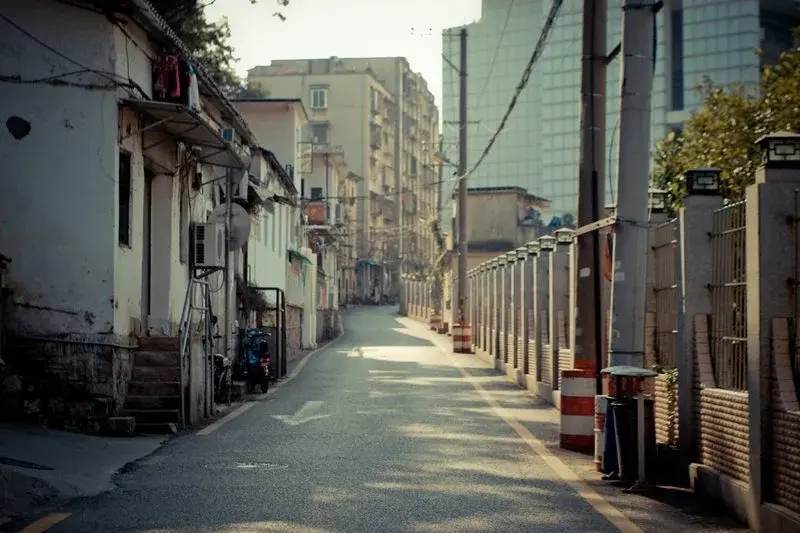
The mainland districts are the pressure release. Jimei — home to a cluster of universities and, not coincidentally, the first district to cross a million residents — gives you meaningfully more space for meaningfully less rent, at the cost of a longer commute back to the island's jobs and nightlife. For anyone actually planning to move here rather than visit, which side of that bridge you end up on matters more than almost anything else on this page.
03 — Paid for the view
Xiamen's rent-to-income math doesn't add up.
This is the section that sets Xiamen apart from most of the other "affordable" Chinese cities on this site. On paper, Xiamen's wages are respectable but not exceptional: in 2022, average annual wages for employees at non-private urban units came to roughly ¥121,600: a normal, mid-tier figure for a coastal city its size. Rent and property prices don't follow that mid-tier income at all.
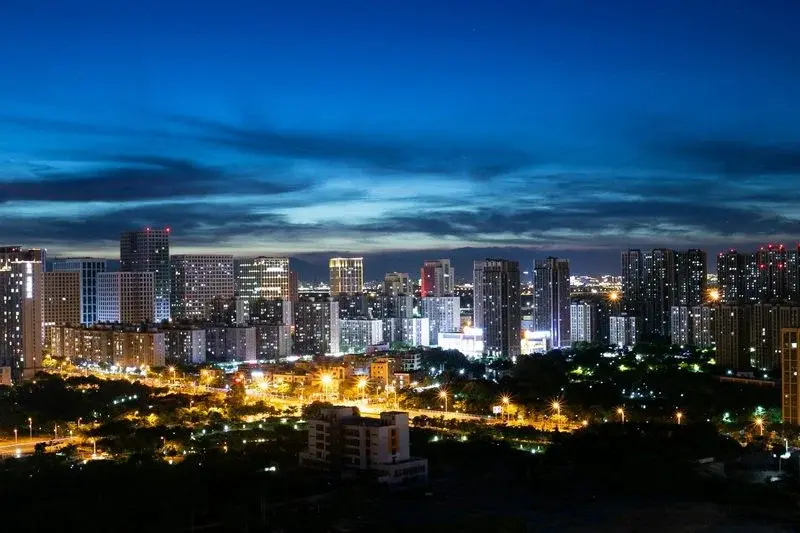
Local reporting has flagged the mismatch over and over. A widely cited 2017 industry study put Xiamen's rent-to-income ratio at 36%: fifth-highest in the country at the time. Later reporting, comparing income-to-property-price ratios in 2022, found that on salary alone, a year of work in Xiamen bought less housing than a year of work in Beijing or Shanghai: behind only Shenzhen nationally. These aren't this year's numbers, and we're citing them with their dates attached instead of pretending they're current. But the structural cause — limited island land, tourism-driven demand, moderate wages — hasn't gone anywhere. More recent reporting on Xiamen's urban-village clearance and housing-support programs suggests the underlying pressure is still very much alive. Xiamen is the “tourism-premium” kind of cheap: read the full five-kinds framework →
Xiamen's economy pays a normal coastal-city wage. Xiamen's property market prices like it's trying to keep up with Shenzhen. Nobody's income adjusted for that gap — it just gets swallowed by rent.
The city government has responded with a genuinely substantial housing-support system — subsidized "one free bed" housing for new graduates job-hunting, discounted rent-to-buy paths for public-service workers and enterprise talent, and public rental housing at a fraction of market rate. It's a real, documented policy response to a problem the city isn't pretending doesn't exist. The fact that it exists at this scale is itself evidence of how real the underlying pressure is.
2022 average wage: Xiamen Municipal Bureau of Statistics/Fujian provincial data, published notice. Rent-to-income and income-to-property figures: 2017 and 2022 industry/media reporting (Yiju Research Institute; Chinese financial and lifestyle press), cited with original dates rather than presented as current. Housing-support programs: Xiamen Municipal Housing and Urban-Rural Development Bureau reporting, 2024–2025.
04 — The honest part
Why Xiamen is priced this way: geography, brand, and wages
That's the question those housing-support programs are effectively an admission of: a government doesn't build subsidized housing at scale for a problem that isn't real. Three things stack on top of each other to create it. First, geography: Xiamen is a Special Economic Zone built mostly on an island with a hard land ceiling, and the mainland districts that could relieve the pressure are still catching up on infrastructure and jobs. Second, the brand: decades of deliberate positioning as China's most romantic, photogenic coastal city — Gulangyu's UNESCO listing, the "garden city" marketing, the honeymoon-destination reputation — has kept property demand high regardless of what the local job market can actually afford.
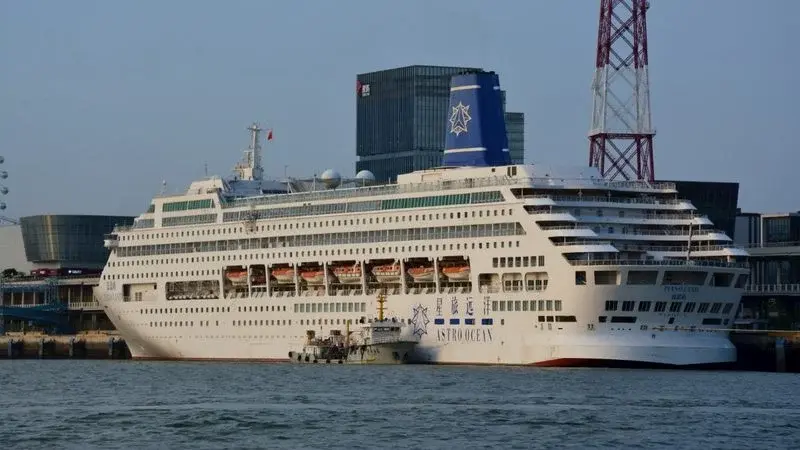
Third, the job market underneath all of this is thinner than the skyline makes it look. Xiamen's economy leans on tourism, ports and logistics, electronics manufacturing, and services: solid industries, but without the concentration of high-paying tech and finance jobs that let Shenzhen or Shanghai residents actually absorb their own high rents. Local reporting has described a shortage of well-paid formal jobs again and again, pushing a visible share of the working population toward food delivery, ride-hailing, and other gig work. The same informal economy that shows up in most Chinese cities, but hitting a noticeably thinner wage base here.
And this is the second half of the truth, the same shape it takes on every city page on this site: Xiamen is genuinely cheap if you're paid in dollars. Rent that eats a third of a local salary is a rounding error against a North American remote-work income. But measured against what the city itself pays its own residents, this is one of the tighter squeezes on this site — closer to Shenzhen's story than to Dalian's or Chengdu's.
For a North American weighing a slower coastal base, that gap is exactly the appeal: genuine natural beauty, mild winters, good food, real infrastructure — at prices that only look reasonable because you're not the one earning the local wage. Just don't mistake "affordable for me" for "affordable, period." Who's already made that same calculation, and where they've landed, is worth naming specifically.
05 — Who's actually here, if you're coming from North America
Xiamen's foreign enclave sits on the expensive island.
Guanren Community, in the Yundang subdistrict of Siming District — the historic island core §02 already flagged as the most expensive district in the city — is Xiamen's largest concentrated foreign-resident settlement, nicknamed the "mini UN": 1,536 registered foreign residents from 46 countries and regions. In July 2021 the city's own Foreign Talent Service Station opened a branch right inside the community, so residents can handle paperwork and access services without leaving the neighborhood.
One example from local reporting: a Filipino teacher at Minhua International School, working with the community on a children's mental-health project during the pandemic, said the neighborhood service station was the reason he could get space and support for the project without fighting city bureaucracy from scratch. It's a small data point, but a real one — evidence the community infrastructure isn't just a press-release claim.
The location itself makes §02's point again from a different angle: Guanren didn't end up in a cheap, spacious mainland district — it sits in the most land-scarce, highest-rent part of the whole city. A North American corporate transfer or long-term retiree settling in Xiamen is, in effect, making the exact same "postcard tax" trade this entire page is about: paying island-core prices for island-core convenience, same as anyone else competing for that same limited land.
This section describes where Xiamen's foreign, largely North American, professional and retiree population is known to concentrate: compiled from municipal and local-news reporting, not a formal nationality-specific census. Treat the figures as directionally right rather than a precise headcount. Note: some third-party summaries place Guanren in Huli District; multiple official sources (Xiamen's own administrative registry, Siming District government records) confirm it sits in Siming's Yundang subdistrict, and that's the figure used here.
06 — Getting around a city split by the sea
Xiamen's transportation: crossing the water.
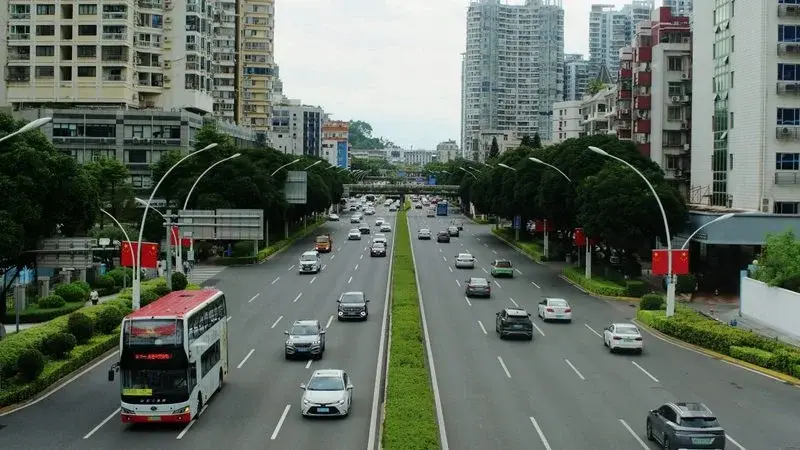
Whichever side of that affordability gap you land on, day-to-day life here starts with the same fact: because Xiamen is genuinely two halves joined by infrastructure rather than one continuous city, "getting around" here means, first and foremost, getting across. Five road bridges (Xiamen, Jimei, Xinglin, Haicang, and Xiang'an Bridges) and two subsea tunnels (Xiang'an and Haicang) carry the bulk of daily traffic between the island and the mainland, alongside Xiamen BRT — a dedicated elevated busway, one of China's earliest — and Xiamen Metro.
The metro network, in numbers
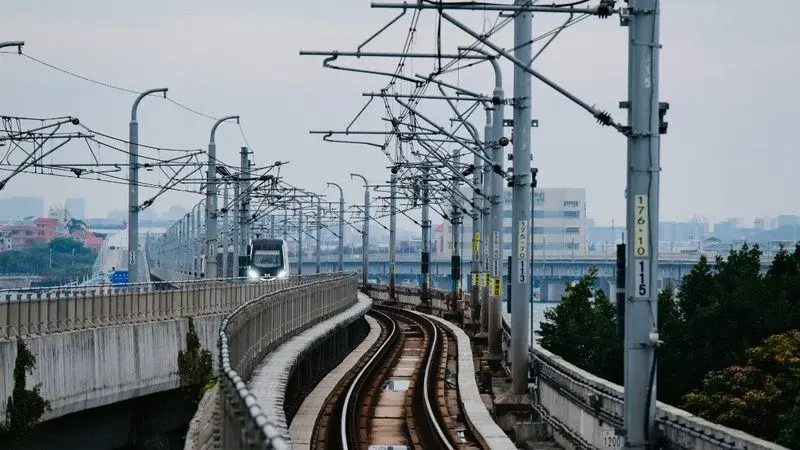
As of early 2025, three lines are open — Line 1, Line 2, and the first section of Line 3 — covering 98.4 km and 77 stations, carrying roughly 730,000 riders a day. Three more lines (4 and 6, plus Line 3's remaining sections) are under construction, another 123 km, which will eventually bring the network to six lines. Line 1 is the one that matters most for the island/mainland split in §02: it runs from downtown Siming straight out to Jimei, crossing the strait on its own dedicated rail bridge.
What a ride actually costs
Xiamen Metro and BRT both use distance-based fares instead of a flat rate. The fare climbs in steps as the trip gets longer, tapering off per kilometer the farther you go:
| Distance | Rate | Fare |
|---|---|---|
| 0–4 km | Flat starting fare | ¥2 |
| 4–12 km | +¥1 per 4 km(rounded up) | ¥3–4 |
| 12–18 km | +¥1 per 6 km | ¥5 |
| 18–28 km | +¥1 per 10 km | ¥6 |
| 28–43 km | +¥1 per 15 km | ¥7 |
| 43+ km | +¥1 per 20 km | ¥8 and up |
A one-way trip across the whole system tops out around ¥8–9. Tapping in with the e-Tong transit card gets a 10% discount over single-ride tickets; students, seniors, and several other groups get further reductions or free rides in off-peak windows.
Fare structure: Xiamen Municipal Development and Reform Commission's published metro fare notice, still in effect as of 2025–2026 reporting. Network size and ridership: Xiamen Rail Transit Construction & Development Group, early-2025 figures.
For the actual route map — which lines connect where, and which stations transfer — the operator's own site is the one to use instead of anything reproduced here, since the network is still expanding:
Xiamen Metro's official site — Xiamen Rail Transit Construction & Development Group Co., Ltd. (operator's site, Chinese-language; navigate to 站点线路 / "Station & Line" for the current route map, since the network is still expanding and deep links to that page have changed before)
A cable car that isn't really commuter infrastructure
Near Wanshi Botanical Garden, a cable car crosses a stretch of water and hillside — genuinely useful for getting up the mountain, and it does technically move people from one side to the other, the way Chongqing's cross-river cable cars do. But it's built and priced as a tourist attraction, not a transit line: the fare and capacity aren't set up for daily commuting the way the bridges and metro are. Worth riding once for the view. Not how anyone actually gets to work.
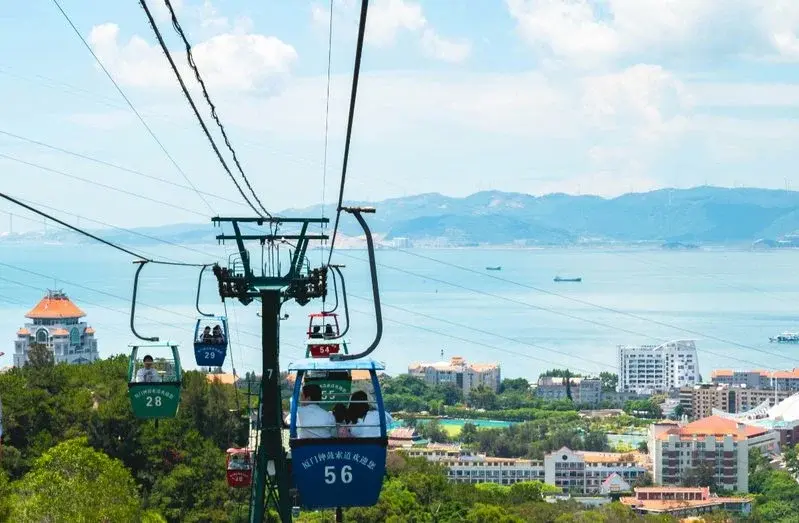
Outside the bridges, tunnels, BRT, and metro, ride-hailing and city buses fill in the rest, much like anywhere else in urban China: both payable through Alipay alongside the transit card. What's distinctive here isn't any single mode. It's that the city's entire transportation planning history, for decades, has been organized around one central question: how do you connect an island that can't grow to mainland districts that can. Those low fares hide the real cost of building and maintaining it all →
Bridge, tunnel, BRT, and metro network details: Xiamen Municipal Transportation Bureau and Xiamen Rail Transit Construction & Development Group published materials, 2024–2025.
07 — Why the postcard exists in the first place
Xiamen's postcard identity, built on purpose.
All those bridges, tunnels, and rail lines exist to serve a city that has invested just as deliberately in its image as in its infrastructure. Xiamen's romantic reputation isn't an accident of good scenery: it was cultivated. Gulangyu, the small car-free island just offshore, was a 19th-century treaty-port foreign settlement, and its surviving colonial-era mansions earned it UNESCO World Heritage status in 2017. Xiamen is also one of China's most significant qiaoxiang — hometowns of overseas Chinese — with generations of emigrants sending money and, eventually, architectural styles back from Southeast Asia. That's part of why the city's older buildings look the way they do.
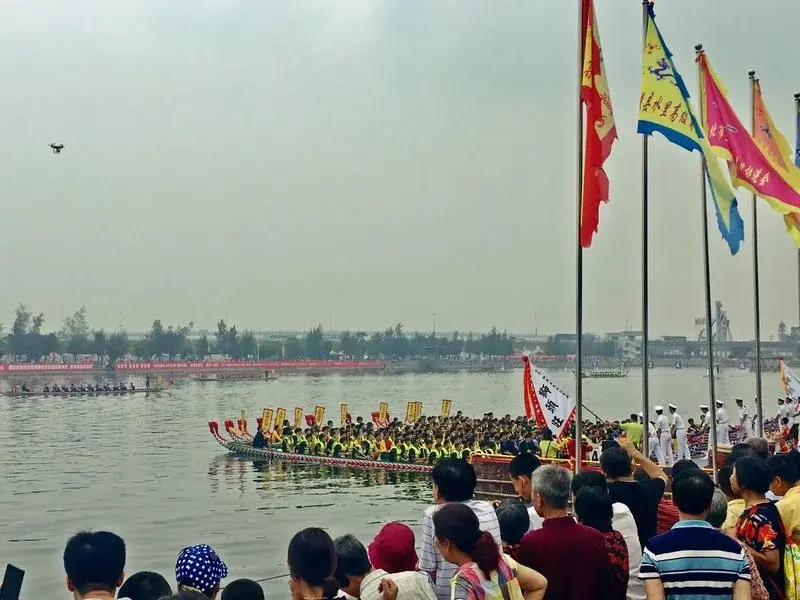
That heritage got packaged, deliberately and successfully, into a modern tourism brand: "garden by the sea," a honeymoon and student-trip destination, a city that photographs better than almost anywhere else in China. It worked well enough that property buyers and renters treat Xiamen the way they'd treat a resort market — paying for the setting, not just the square footage — which loops straight back to §03's math.
What's actually on the plate
Xiamen's food culture is its own branch of southern Fujianese cuisine, with a Taiwanese accent from centuries of back-and-forth across the strait, and it's some of the cheapest, most consistently good street food anywhere on this site. A few dishes worth knowing before you're standing in front of a stall menu you can't read: satay (shacha) noodles, a spiced peanut-and-seafood broth that's nothing like Southeast Asian satay despite the name; oyster omelets, fresh oysters and sweet potato starch fried until the edges crisp; misua paste, a savory noodle-and-seafood soup thickened almost to a stew; and, for the adventurous, tusundong: a chilled gelatin made from marine peanut worms, a genuine local delicacy rather than a tourist dare. None of this costs more than a few yuan a plate at an actual neighborhood stall.
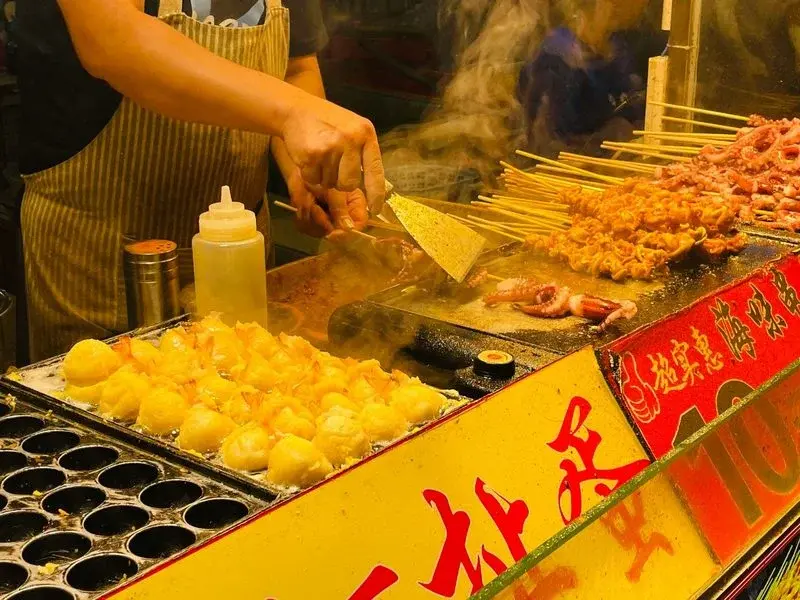
None of that makes the identity fake. Xiamen's food culture, its dragon boat festivals, its wet-market seafood, its old Minnan architecture. These are real and lived-in, not built for tourists. What's worth being honest about is that the same qualities that make the city genuinely lovely are the ones the property market has figured out how to charge for.
Dish descriptions and culinary history: standard reporting on southern Fujianese (Minnan) cuisine and Xiamen's own published tourism and cultural materials.
08 — Questions people actually ask
Quick answers
How much does rent cost in Xiamen?
A one-bedroom on the island (Siming or Huli district) runs roughly ¥2,500–3,200/month furnished; the same size off-island (Jimei, Haicang, Tong'an, Xiang'an) drops to about ¥1,200–1,800. A two-bedroom on the island ranges ¥3,800–5,500; off-island, ¥2,200–3,200.
Is Xiamen actually cheap to live in?
Not for the people who actually live there. Xiamen's rent-to-income ratio has repeatedly ranked among the worst in China even though local wages sit at a mid-tier level, because property and rent prices are pushed up by the city's tourism brand and limited developable land.
What's the difference between island Xiamen and mainland Xiamen?
Siming and Huli districts sit on Xiamen Island itself and have been fully urbanized for over a decade. Jimei, Haicang, Tong'an, and Xiang'an sit on the mainland side, connected by bridges and a tunnel, with lower rent, more space, and a still-developing urban core.
How do you get between island and mainland Xiamen?
Several bridges (Jimei, Xinglin, Haicang) and the Xiang'an subsea tunnel carry most of the traffic, alongside Xiamen Metro lines that now cross onto the island. A separate cable car near Wanshi Botanical Garden crosses a stretch of water, but it's a tourist attraction more than daily commuter infrastructure.
Why is Xiamen's rent so high relative to wages?
Xiamen is a Special Economic Zone with limited land — an island core plus a handful of mainland districts — and a tourism-driven brand that keeps property demand high. Official average wages look moderate, but property and rental prices follow first-tier-city levels that the income can't keep up with.
If you're thinking of going
Xiamen, for a first visit or a long stay
- Best season: spring and autumn. Summers are hot, humid, and fall within typhoon season (roughly June–September); winters are mild by Chinese standards.
- Getting online: sort a China travel eSIM before you fly — data works the moment you land, no local SIM needed.
- Getting there: Xiamen Gaoqi International Airport connects widely within China and to parts of Southeast Asia; high-speed rail links up the coast toward Fuzhou, Shanghai, and beyond.
- Staying a while: decide island vs. mainland before you decide anything else — it's the single biggest variable in what you'll pay and how you'll live. See §02. Budget for the real first-week bill — deposits, agents, and setup →
- Worth the trip regardless: Gulangyu (go early, before the day-trip crowds), the wet markets away from the tourist streets, and — per the fine print in §06: the Wanshi cable car, ridden once, for the view rather than the commute.
- Not sure Xiamen is the right fit? Browse cities by what you actually care about — climate, food, cost, pace → Or take the seven-question quiz and get a personalized shortlist →