Seven cities, rates from ¥2.40 to ¥5.00 per m³: what the number doesn't tell you.
Start with the bill: water is tiered almost everywhere in China, and every one of these seven cities' rates lands well under a dollar per cubic meter for ordinary household use.
| City | Tier 1 | Tier 2 | Tier 3 |
|---|---|---|---|
| Beijing | ¥5.00 · $0.694 | ¥7.00 · $0.972 | ¥9.00 · $1.250 |
| Shanghai | ¥3.62 · $0.503 | ¥5.00 · $0.694 | ¥6.00 · $0.833 |
| Guangzhou | ¥2.93 · $0.407 | ¥4.40 · $0.611 | ¥6.81 · $0.946 |
| Shenzhen | ¥4.26 · $0.592 | ¥6.63 · $0.921 | ¥12.94 · $1.797 |
| Harbin | ¥2.40 · $0.333 | ¥3.60 · $0.500 | ¥7.20 · $1.000 |
| Dalian | ¥3.25 · $0.451 | ¥4.40 · $0.611 | ¥7.85 · $1.090 |
| Xiamen | ¥3.20 · $0.444 | ¥4.30 · $0.597 | ¥7.60 · $1.056 |
China's residential water rates range from ¥2.40 per m³ in Harbin to ¥5.00 per m³ in Beijing, with Shenzhen's Tier 3 reaching ¥12.94 per m³ for heavy users.
Combined per-m³ rates (water plus sewage and, where applicable, other bundled fees), residential schedules, drawn directly from each city's own published deep-dive page on this site, converted at the site's standard ¥7.2 = $1. See each city's own page for the exact components and household-size assumptions behind these figures — they aren't built the same way twice; more on that in §01.
Notice Shenzhen's Tier 3: at ¥12.94/m³, it's roughly three times its own Tier 1 rate, and the steepest jump-up of any city in this table. A household that blows through its allowance pays a real penalty, not just a nudge. That's one thing a price table alone can show. Here's what it can't: the water in that Beijing pipe likely didn't fall as rain anywhere near Beijing — more on where it actually came from in §02 — and a cheap, technically-compliant tap is not the same thing as a tap you'd drink from directly, which is §03's entire subject. Price is the easy third of this story; the other two are why this page exists.
01 — The rate itself
How the bill is built: bundled vs separated, tiered vs flat.
Electricity in China is a clean, comparable number — three tiers, one price per kWh, the same basic shape in every city on this site. Water isn't. Every one of the seven cities in the table above prices water with a genuinely different internal structure:
| City | How it's structured |
|---|---|
| Beijing | Supply + resource tax + sewage, bundled into one composite rate |
| Shanghai | Supply and drainage billed and shown as two separate figures |
| Guangzhou | Water and sewage listed as two distinct line items |
| Shenzhen | Water + sewage + garbage collection, all three combined into one figure |
| Dalian | Tiered water rate, plus a flat separate sewage charge on top |
| Xiamen | Water tiered; sewage flat at ¥1.00/m³ regardless of tier |
Household-size assumptions vary too. Most cities price these tiers around a 4-person household, but Harbin and Xiamen both use 5. In several cities, larger households can apply for a raised allowance per additional registered resident. None of this is a defect in any single city's system. It's just genuinely less standardized than electricity, and worth knowing before you compare two cities' numbers as if they were built the same way.
This structure — metered, tiered, billed by a municipal utility — is recent enough that plenty of people alive today grew up without it at all.
02 — Geography
North holds 19% of water, south holds 81%: China's hydrological split.
China holds about 6% of the world's freshwater and about 18–20% of its population. That already makes the national per-capita average low — roughly 2,000 m³ per person per year, about a third of the global average. But that national number hides a split so extreme it doesn't read as one country's water problem so much as two.
The north holds only about 19% of China's water resources while carrying a much larger share of its population and farmland. That leaves the region with roughly 40% of the already-low national average. The south holds the other 81%, at a per-capita level about 1.5 times the national figure.
In the terms hydrologists actually use — under 3,000 m³ per person per year is mild scarcity, under 2,000 is moderate, under 1,000 is severe, under 500 is extreme — Beijing and Tianjin have at points measured in the low hundreds of cubic meters per person. That puts them in the same bracket as some of the driest countries on Earth, not just "a dry Chinese city."
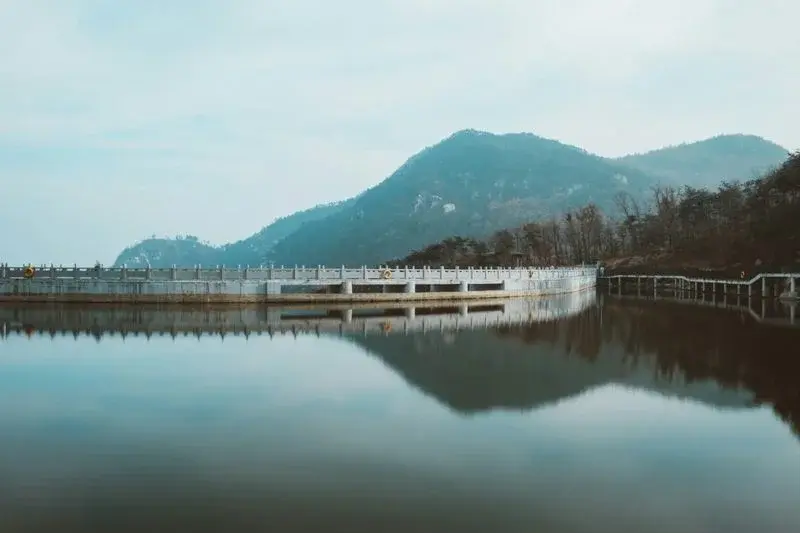
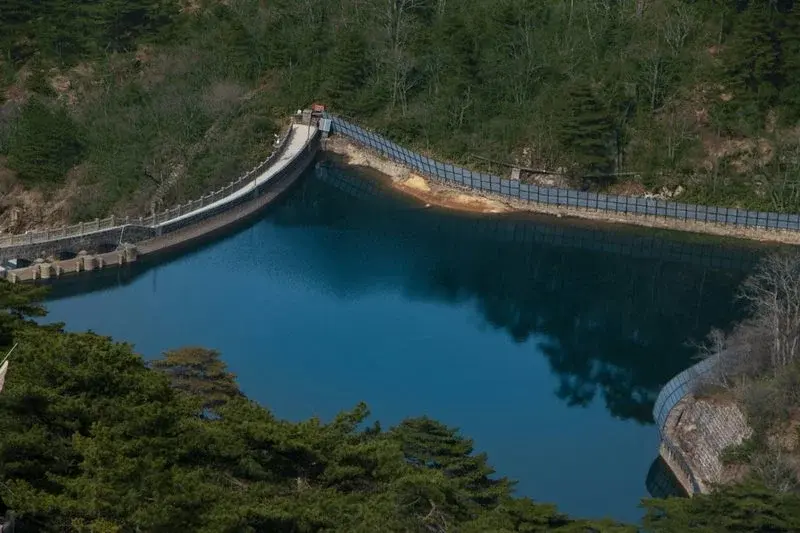
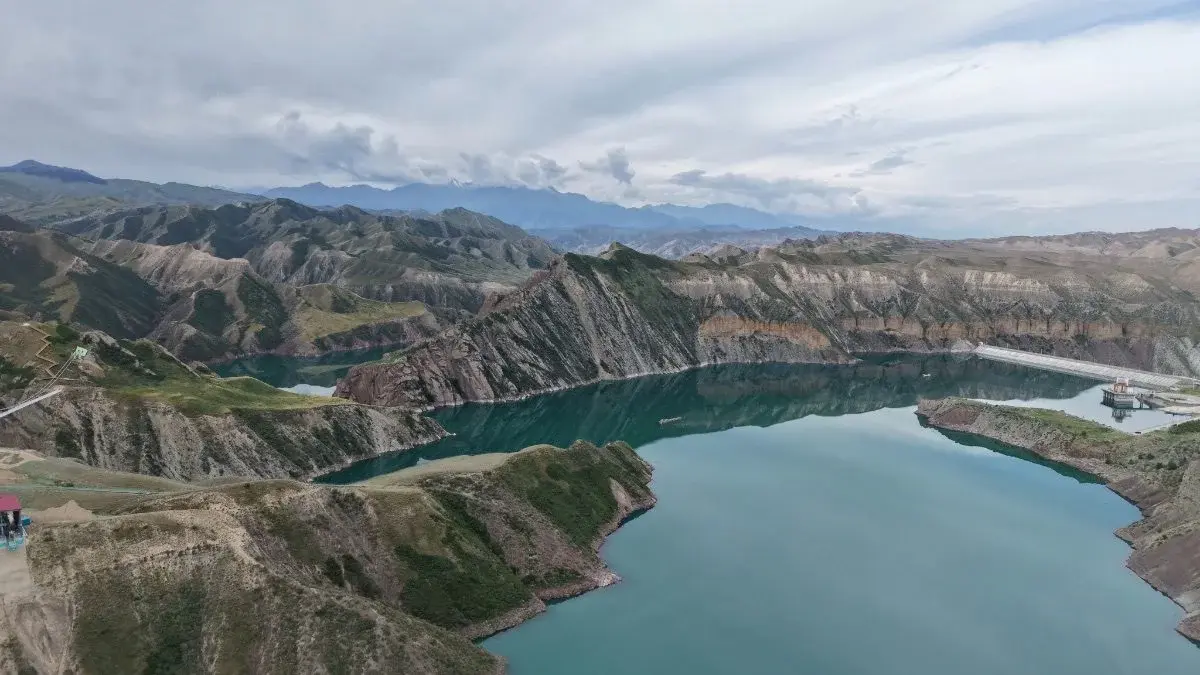
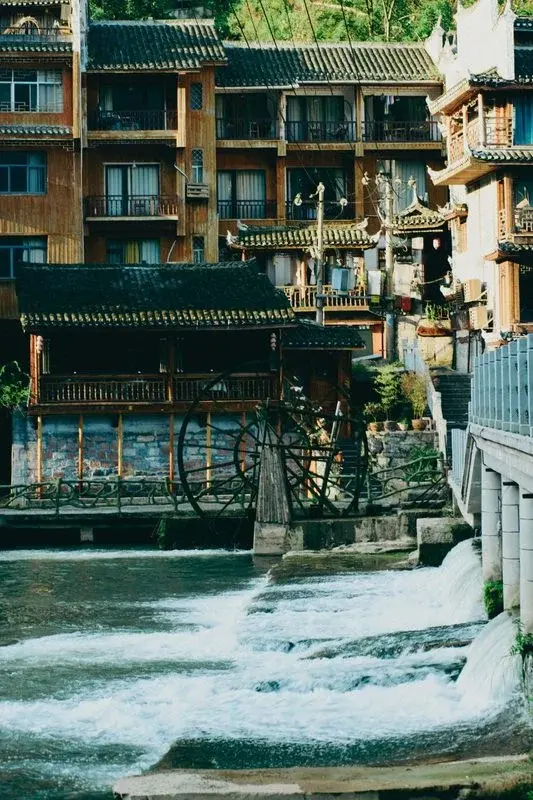
Two of the thousands of reservoirs that make China's water system work at all — storing wet-season rain against the dry months, and against the north's much larger structural shortfall. Illustrative; exact locations not independently confirmed. Left photo by Xiaolong Wong; right photo by Zhihao Ge.
The national-scale fix is the South-to-North Water Diversion Project (南水北调) — engineered canals moving Yangtze River basin water hundreds of kilometers north. Since the project's Eastern and Central routes reached full operation, they've moved a cumulative total of over 88 billion m³ of water, directly helping more than 195 million people. The Central route alone has delivered over 78 billion m³ to Beijing, Tianjin, Hebei and Henan combined. More than 16 million Beijing residents now drink water that started in the Yangtze basin, and it makes up over 70% of the city's urban water supply. In Tianjin, diverted water accounts for nearly all of the main urban area's supply.
The project changed more than volume, too. Beijing's tap water hardness dropped from 380 mg/L before the diversion to 120 mg/L after — a real, measurable improvement in what actually comes out of the tap, not just how much of it there is. The real cost of cheap water is settled elsewhere →
03 — Potability
Tap water meets national standard, but boiling remains the default.
By China's own national standard — 生活饮用水卫生标准 (GB 5749-2006), 106 separate quality indicators, revised to be roughly as strict as the US EPA's own standard — tap water leaving a Chinese treatment plant is, on paper, drinkable. City tap water generally meets that standard: independent estimates put compliance at above 85% in urban areas, though rural water quality is much less consistent.
Almost nobody actually drinks it straight from the tap anyway, and the reason isn't the treatment plant — it's everything downstream of it. China's piped water network is old and, in many cities, leaky: national reporting has put the average breakage/leak rate across the country's water mains above 15%, with some cities' networks running past 70%. Aging pipes, rooftop storage tanks, and general wear between the plant and the faucet all leave room for what water engineers call secondary contamination — rust, sediment, bacteria — after the water has already passed inspection once.
The workaround predates the pipes themselves
Boiling water before drinking it is older than any modern treatment plant in China — a folk practice for killing waterborne pathogens long before anyone had a germ theory to explain why it worked. One story that gets passed around, sourced to a university lecture rather than a primary document (so treat it as an interesting aside, not a verified fact): 19th-century Chinese immigrant laborers in California reportedly had markedly lower rates of certain waterborne illnesses than their neighbors. Some later put that down to their habit of boiling water — one of several threads that fed into the modern water-treatment industry's history. Whether or not that's true in that specific case, the underlying logic is sound. It's exactly why the habit never went away in China even as treatment technology improved.
The practical result is a real, growing market built entirely around not trusting the tap. Bottled water now makes up close to a third of household drinking-water consumption nationally (roughly 30% in 2020, an estimated 33% by 2023). China's home water-purifier market was worth about ¥20.5 billion in 2023, growing at nearly 9% a year. None of this is optional color for a cost-of-living site — if you move to a Chinese city, budget for a kettle that gets real daily use, and expect bottled or filtered water to be a genuine, recurring line item in a household budget the way it generally isn't in most of the US or Canada.

04 — How this compares to the West
Beijing vs New York: 6.7x price gap, and the potability difference.
| City / utility | Effective rate | Vs. Beijing tier 1 (¥5.00) |
|---|---|---|
| Beijing — tier 1 | ¥5.00/m³ (≈$0.694) | baseline |
| Beijing — tier 3 | ¥9.00/m³ (≈$1.250) | 1.8× |
| New York (combined water + sewer) | ≈$4.62/m³ | ≈6.7× |
| New York — water only | ≈$1.78/m³ | ≈2.6× |
New York's combined water and sewer rate is 6.7 times higher than Beijing's Tier 1 rate. But the bigger difference: New York tap water is drinkable straight from the faucet, while Beijing's generally is not.
New York rates from the NYC Water Board's own FY2026 published rate schedule ($5.05 per 100 cubic feet water-only, $13.07 combined water + sewer, effective July 1, 2025), converted from CCF to m³ and then to USD-equivalent comparison at the site's standard rate. Same computation method used on this site's compare pages for utility comparisons.
On price alone, this looks like the same story as electricity — Chinese rates running a fraction of an American city's. But §03 is the more important difference for anyone actually planning a move: a New Yorker's tap water is, by default, safe to drink straight from the faucet. A Beijing resident's, by the near-universal local convention, is not — regardless of which of these numbers ends up on the monthly bill. Price and potability are two separate axes here, and this site would be doing readers a disservice by only reporting the one that makes China look better.
05 — Questions people actually ask
Quick answers
How much does tap water cost in China?
It's tiered like electricity, but the components differ by city: some bundle supply, a resource tax, and sewage treatment into one composite rate (Beijing), others bill them as separate line items (Shanghai, Guangzhou, Dalian), and one combines water, sewage, and garbage collection into a single figure (Shenzhen). First-tier combined rates across seven major cities run from about $0.33 to $0.69 per cubic meter.
Why is northern China so short on water?
Northern China holds only about 19% of the country's water resources despite a much larger population share, leaving the region with roughly 40% of the national per-capita average. Beijing and Tianjin have at times measured among the most water-scarce major population centers in the world, far below the internationally recognized severe-scarcity line of 500 m³ per person per year.
What is the South-to-North Water Diversion Project?
A set of engineered canals moving water from the water-rich Yangtze River basin in the south to the water-short North China Plain. Since full operation began, the Eastern and Central routes have moved a cumulative total of over 88 billion m³, directly helping more than 195 million people — including over 70% of Beijing's urban water supply.
Can you drink tap water straight from the tap in China?
Not recommended, even though water leaving a treatment plant generally meets China's national drinking-water standard. The gap is mostly in the delivery network — aging pipes, rooftop storage tanks, and secondary contamination between the plant and the tap — which is why boiling before drinking remains the default nationwide.
How does China's water price compare to North America?
Much cheaper per cubic meter — New York's combined water and sewer rate works out to roughly $4.62/m³, versus well under $1/m³ for the first tier in most major Chinese cities. The bigger practical difference is potability: most US and Canadian tap water is drinkable straight from the tap, which Chinese tap water generally is not.