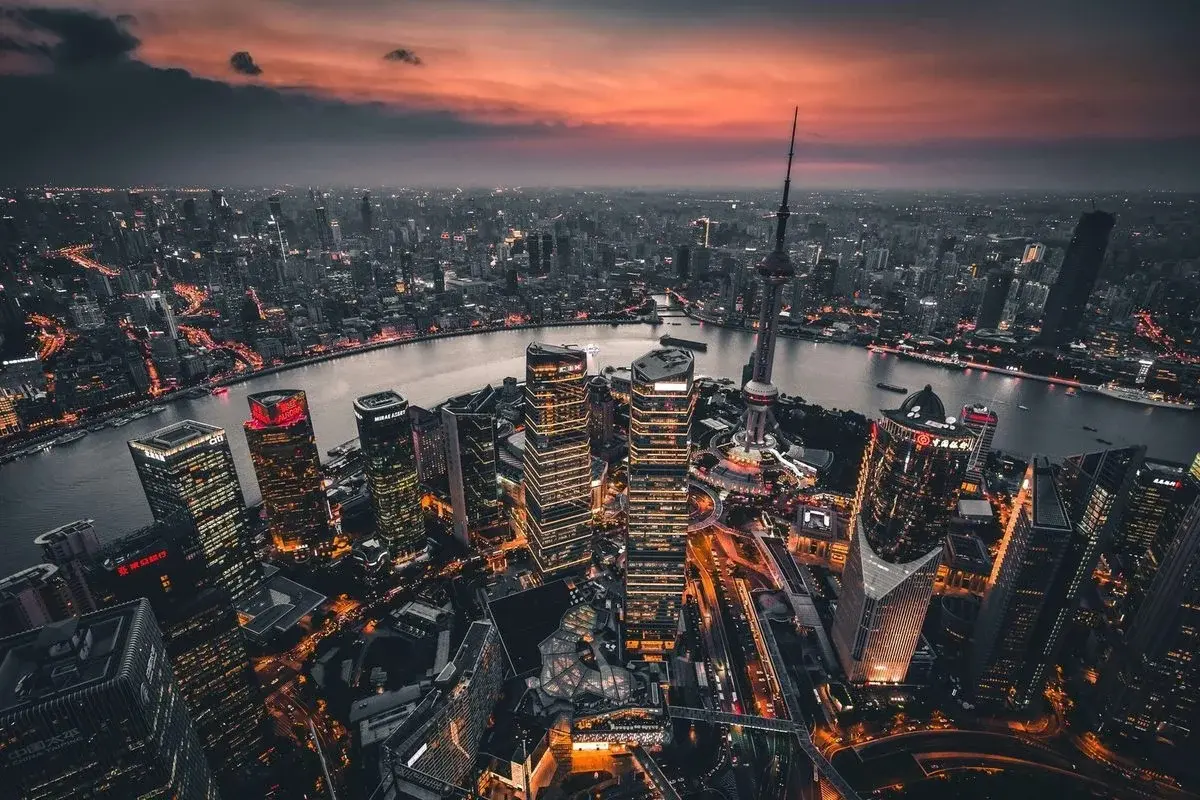
Living cost, at a glance
≈$972/mo
≈$528/mo
≈$581/mo
≈$1,553/mo
≈$1,109/mo
Rent from the §01 ledger. The non-rent line is Numbeo's own compiled "estimated monthly costs, excluding rent" for Shanghai (single person, pulled Aug 2026). Note the city-center all-in figure ($1,553) actually exceeds the ¥10,015 (≈$1,391) median wage from §01 — a second, independent confirmation of that section's own point that the "median" doesn't describe anyone actually living centrally. Converted at ¥7.2 = $1.
The first time I rode the Shanghai metro was January 1999. I'd just come off the train at Shanghai Railway Station — then the end of the line — and everyone was pressed together, waiting. The doors opened and the seats on both sides filled in a single motion; a man crossed the car and dropped into the last free one before I'd finished registering it was free. It was my first time in the city and my first time on a subway anywhere, and what I felt wasn't rudeness. It was speed. That's the word for Shanghai I've never been able to put down: not rich, not grand — fast.
Thirteen years later I moved here to work, and I stayed five years. This is not a travel piece. What follows is the math of living in the most expensive city in China — today's numbers, honestly sourced. My own years are here only as ballast: to keep the numbers attached to a body, and to show you where the tidy figure breaks.
01 — The number, and why it lies
A city-center one-bedroom costs about 70% of the median wage. That figure is real, and it is a fiction.
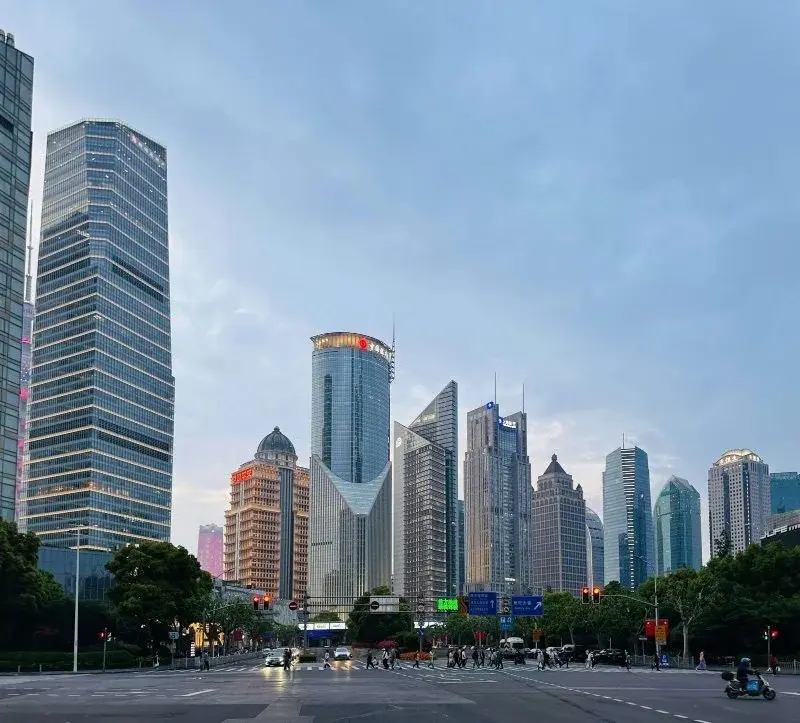
Shanghai splits down the middle, literally. The Huangpu River separates old Puxi — the historic core, the colonial-era lanes, the shopping streets most visitors picture — from Pudong, the financial district built on reclaimed farmland that had almost no skyline before 1990. Housing follows the same split: renovated shíkùmén lane houses and 1980s–90s walk-ups sit a few blocks from glass high-rises. Rent moves by neighborhood and building age more than by any single citywide figure. That's the backdrop for the one number everyone actually wants:
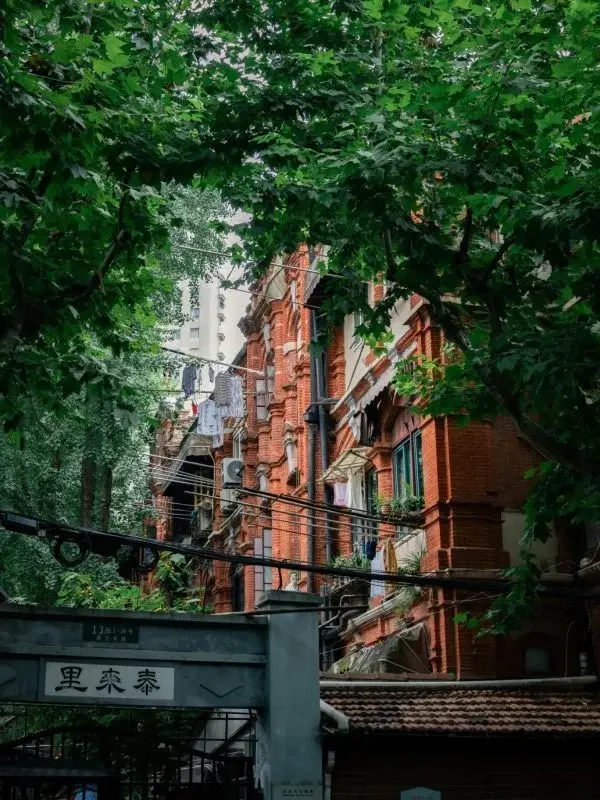
Start with what the aggregators say. A one-bedroom in the central districts — Jing'an, Lujiazui, the lanes off the old French Concession — runs around ¥7,000 a month (about $972). The median after-tax salary sits near ¥10,015 (about $1,391). Put those together and rent eats roughly 70% of income — the worst ratio in this entire series, worse than Harbin's already brutal 49%.
| Shanghai rent, by size | City centre | Outside centre |
|---|---|---|
| 1-bed | ¥7,000 ($972) | ¥3,800 ($528) |
| 2-bed (estimated) | ≈¥11,200 (≈$1,556) | ≈¥5,900 (≈$819) |
| 3-bed | ¥15,400 ($2,139) | ¥8,000 ($1,111) |
1-bed and 3-bed figures: Numbeo contributor data. The 1-bed city-centre number is the one used throughout this piece, captured earlier in 2026; the other three were pulled in July 2026 — Numbeo's crowd-sourced figures shift over time, so treat the set as roughly, not perfectly, contemporaneous. Numbeo has no native 2-bed category for Shanghai; the 2-bed row is a simple midpoint between the 1-bed and 3-bed figures in the same location, not an independently sourced number.
In every other city I've written about, one number tells the story. Shanghai is the one place where that number lies to you — because the population it averages is split in two. Almost nobody actually lives at the middle.
| City | 1-bed, center | After-tax median | Rent ÷ wage |
|---|---|---|---|
| Xi'an | $311 | $1,089 | 29% |
| Chengdu | $374 | $1,050 | 36% |
| Harbin | $423 | $857 | 49% |
| Shanghai | $972 | $1,391 | ~70%* |
*Paper figure. Rents and median wage: Numbeo and cross-checked cost-of-living trackers, mid-2026, converted at ¥7.2 = $1. See sources below.
What those monthly figures hide is the first-week wall: two months' deposit, agent fees, and visa medicals can swallow an entire month of savings before you sleep a night here. See what the real first-week bill looks like →
The median wage gets dragged down by the millions who build and serve Shanghai — the riders, the line workers, the market sellers. Most of them will never rent that central one-bedroom at all. Meanwhile a single professional in a Lujiazui tower can spend ¥28,000–45,000 a month, and for them the same rent is closer to a quarter of income. So the honest answer to "what share of your wage is rent in Shanghai?" is: somewhere between 6% and over 100%, depending entirely on which Shanghai you're in. This is the one city in the series that isn't cheap for anyone — see the full framework →
This is the founding premise of this whole site, run in reverse. Everywhere else I've argued that a number means nothing until you know whose income it sits next to. Shanghai is the city where there is no single "whose."
02 — What's cheap, and what isn't
Shanghai charges you to take part in it. It barely charges you to exist.
Start with the menu. Local Shanghainese cooking — Benbang cuisine — is known for exactly the opposite of what you'd guess from the delicate portions. Its signature is nóng yóu chì jiàng, "thick oil, red sauce": dishes braised long and glossy in soy sauce and sugar until the surface goes almost lacquered — red-braised pork belly, eight-treasure duck, soy-braised eel. It's rich, sweet, and saucy, not light.
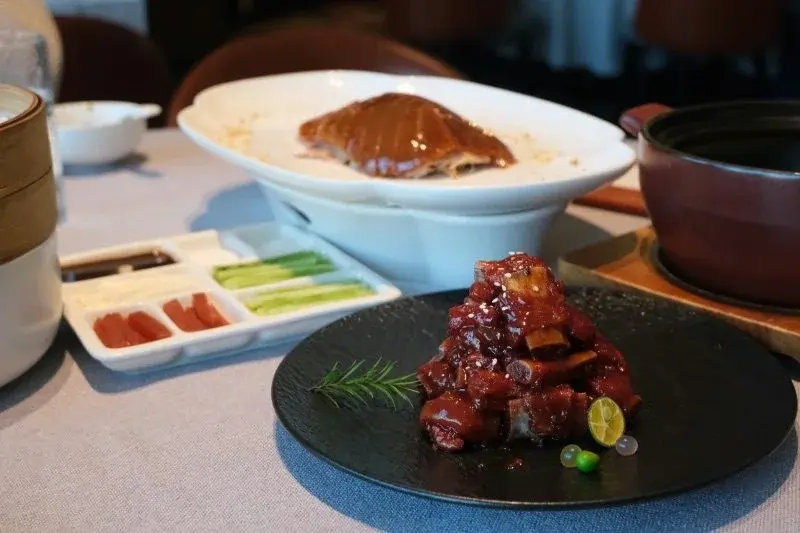
What that richness sits inside of, though, is genuinely small. For anyone with money, eating in Shanghai edges toward performance. The clearest example is xiè bā jiàn — the "eight crab tools," a small set of implements built for nothing but taking a hairy crab apart, and, done well, leaving the empty shell reassembled back into the shape of the crab it came from. That same instinct shows up on an ordinary restaurant table: the plate is often wide enough for a Northern banquet, but what's on it sits in a small, careful arrangement dead center, ringed by bare porcelain. It's the exact opposite reflex from a Northern Chinese table, where the dishes — and the portions on them — just keep arriving until there's no room left to set another one down.
And yet almost none of that ceremony happens in an actual home kitchen. The default in Shanghai isn't cooking — it's someone else's stove. A striking number of locals barely cook at all, especially the elderly. They lean on the neighborhood noodle shop, steamed-bun stall, or street-side dàpáidàng counter instead — and the city has built a cheaper, more organized version of that same habit just for them. Well over 1,600 "community elder canteens" (社区长者食堂, zhǎngzhě shítáng) now operate citywide: subsidized, senior-focused canteens serving three meals a day at roughly ¥15 (≈$2) per person, with an extra 10–20% off for anyone over 60 or 65. They're not a poverty measure; they're closer to a civic amenity, the same category as a park bench, and the food is genuinely good. Younger residents lean the same direction for a different reason. A food-delivery app or the cheap restaurant next to the office does what a home kitchen would elsewhere. This is one of the birthplaces of China's delivery-app economy for a reason: the habit of eating out, or eating in from somewhere else, was already there before the apps arrived.
That eating-out landscape runs on imported labor as much as imported flavor. Shanghai's food is often carried in by the same migrants its median wage erases.
And one bar tab, for what it's worth: in a neighborhood restaurant, a bottle of Snow beer was ¥5 — a yuan less than the ¥6 I was used to at home. It stuck with me, but it's one man's bar tab, not a price index.
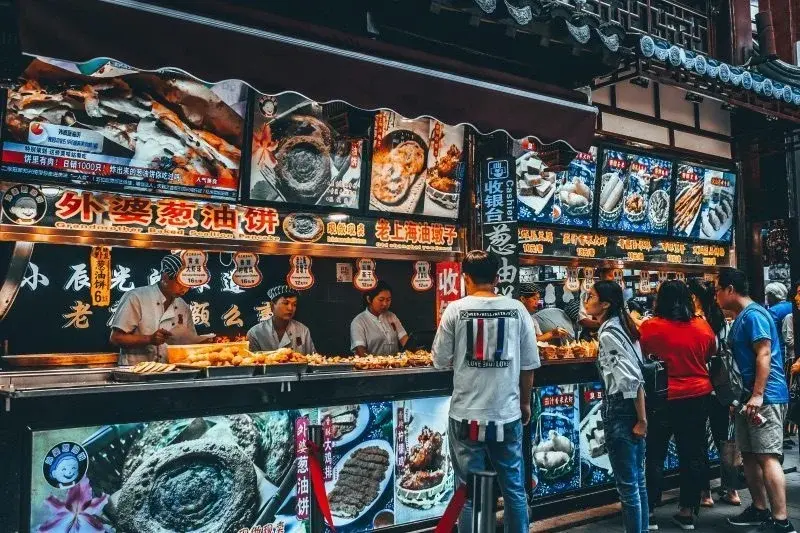
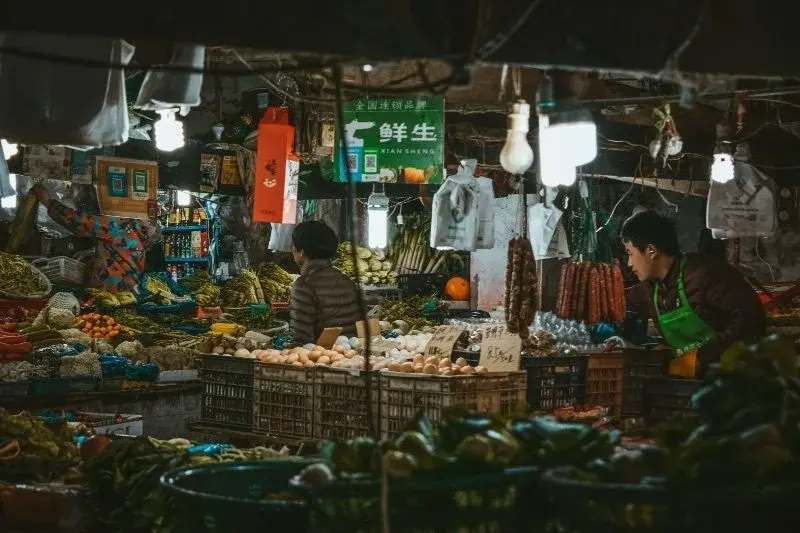
So what does it actually cost, for the minority who still light their own stove? Go to the wet market itself, and none of the restaurant-table performance carries through to the ingredients. The bottom layer of daily life is priced almost the same as anywhere else in China, per the city's own retail price monitoring in mid-2026:
Beef: Jing'an District government price bulletin, July 10, 2026 — shown here is the 牛腩 (stewing) cut; a leaner 牛腱子肉 cut ran higher, around ¥46.9/500g the same day. Salmon has no current retail figure available in public sources as of this writing; the number shown is a wholesale-market price from January 2025, the most recent figure found, converted from ¥/斤 — treat it as a dated approximation, not today's price.
That's close enough to what I paid in Dalian that the difference barely registers. Convenience stores and supermarkets run frequent deep discounts; brand clothing sometimes goes cheaper here than in smaller cities. If you shop at the market and cook at home, Shanghai is not meaningfully more expensive than a third-tier city. The premium isn't on survival. It's on participation: on rent, on eating out, on getting across town, on being social and visible in the city. Your daily choices shape the bill more than the city itself → And underneath all of it sits one input cost that quietly sets every other price:
The city's high rent is the base cost every business carries. So it shows up again in every bowl of noodles and every taxi fare. Rent is the tax underneath all the other taxes.
Utilities follow the same logic — and against American or European bills, all three are cheap. The US residential average ran about 18–19¢ per kWh in 2026; even Shanghai's top electricity tier works out to roughly 13¢, and the bottom tier is under 9¢. These low utility rates rest on decades of capital investment and permanent subsidy — the real cost is hidden upstream → Gas and water price the same tiered way:
The combined figure is what shows up on the bill as the "comprehensive water price." Drainage is charged on 90% of metered supply, on the assumption that a tenth of what comes in never goes back down the pipe. Tier thresholds were missing from this table until a later pass cross-checked them against the Shanghai Municipal Development and Reform Commission's 市民价格信息指南 (2026 edition); that same cross-check found the sewage component quoted there as a flat ¥1.53/m³ rather than the ¥1.70/m³ shown above — we're showing the originally-sourced figure and flagging the conflict rather than silently picking one.
Standardized comparison figure, applied the same way across every city on this site: 220 kWh electricity + 15 m³ water + 25 m³ gas per month, a single-occupant baseline that excludes winter heating, run against the tiers above (using the ¥1.70 drainage figure). At Shanghai's rates that's ¥136 electricity + ¥52 water + ¥75 gas ≈ ¥263 (≈$37)/month.
The rate that isn't on this table
Older buildings on a shared building-wide meter — never converted to one meter per household — skip the tiers entirely and pay a flat ¥3.78/m³ for water, no matter how little or how much they use. It's not a better or worse deal on paper. It's a proxy for the building itself: whether it was worth someone's money, at some point, to run a separate pipe to your door.
Benbang cuisine's "thick oil, red sauce" description is from the national intangible-cultural-heritage listing for Shanghai's traditional cooking technique. Gas and water tariffs: Shanghai Municipal Development and Reform Commission's published rate guide, 2025–26 edition. US electricity comparison: U.S. Energy Information Administration, residential average, 2026. Pork, eggs, and greens: Shanghai Development and Reform Commission daily/旬 price monitoring, early–mid July 2026. Beef: Jing'an District government price bulletin, July 2026. Salmon: dated wholesale-market reporting, January 2025 — flagged above as not current. Community-canteen figures: municipal civil affairs reporting and press coverage of individual canteens, 2024–25; treat the ¥15 average as indicative, not a menu price. These are posted standards and reported averages, not a bill — household size, building type, and which canteen you walk into will move the real number.
For a cross-site comparison point (used the same way on every city page here): Numbeo puts an inexpensive restaurant meal in Shanghai at ¥30 (≈$4.17) and a one-way local transit ticket at ¥4 (≈$0.56), read early August 2026. That's noticeably above the community-canteen figure just mentioned — the gap is the same one this whole page is about, between the ¥15 canteen lunch and the restaurant meal a visitor or a better-paid resident would actually order.
03 — Where the top salary comes from
Two districts, one machine: today's cash paying for tomorrow's bet
The ¥28,000–45,000-a-month professional from the last section works somewhere specific. Two places, mostly. Between them, they explain how Shanghai produces salaries high enough to make that split possible.
Jinqiao
A national development zone opened in 1990, one of Pudong's earliest — low, wide factory blocks, foreign manufacturers (Kodak among them) building real things. Industry on one side of the road, housing on the other.
Manufacturing base · cash flowZhangjiang
A science park a few kilometers south — office towers instead of factories, research labs instead of production lines, chips and pharma and software. Fewer machines, more whiteboards. The place a city goes to invent what it will sell next.
R&D · the next betThe way I came to see it: Jinqiao earns today's money so Zhangjiang can figure out how to earn more tomorrow.
It's the logic of a company's own accounts — today's operating margin funds tomorrow's R&D — scaled up to two postal codes. It's also, in miniature, the story China tells about itself. Factory floor to research floor: the world's workshop trying to climb into the world's laboratory.
04 — Who's actually here, if you're arriving from North America
Biyun and Lianyang weren't named in §03. They're the reason Jinqiao had a foreign workforce to house.
§03 named Jinqiao as the place that made "today's money" for Shanghai's foreign manufacturers — Kodak and others, real factories on one side of the road. What it didn't say: starting in 1992, the city built two dedicated residential communities right next to it, specifically to house the wave of foreign employees those factories brought in. Shanghai's foreign-resident geography runs in three historical generations, and two of them sit directly inside this page's own map:
| Area | Why here | Who you'll find |
|---|---|---|
| Biyun & Lianyang Pudong, adjacent to Jinqiao | Built starting 1992 specifically to house Jinqiao's foreign manufacturing workforce; Biyun alone now has about 14,000 permanent residents and houses nearly half of the foreign executives at Shanghai's Fortune 500 operations — most of them working across Jinqiao, Lujiazui, and Zhangjiang, the exact three places this page already names | Corporate executives, manufacturing and R&D staff, mostly European and American |
| Gubei Changning District | Shanghai's first foreign-oriented district, built from the 1980s — today the single most concentrated foreign-resident area in the city, with 16 countries' consulates and multiple international schools; Japanese and Korean residents make up roughly 60% of it | A large, longer-settled Japanese and Korean community, plus a smaller Western contingent |
The split has a clean logic once you see it. Gubei is older, government-planned from the top down, and still runs mostly Japanese and Korean. Biyun and Lianyang are the generation built specifically for the Jinqiao/Zhangjiang economy this page already describes, and they run mostly European and American. That means a North American professional following the same career path this author did, into Jinqiao or Zhangjiang, would very plausibly have ended up living a few minutes from where he actually did.
This section describes where Shanghai's foreign, largely North American and European, professional population is known to concentrate — compiled from municipal urban-planning history and community reporting, not a formal nationality-specific census. Treat the figures as directionally right rather than a precise headcount.
05 — Getting across town
The metro that wasn't there yet, and the one that's everywhere now
Coverage has always been uneven at the edges of Shanghai's metro map — new development zones routinely opened years before the rail caught up to them.
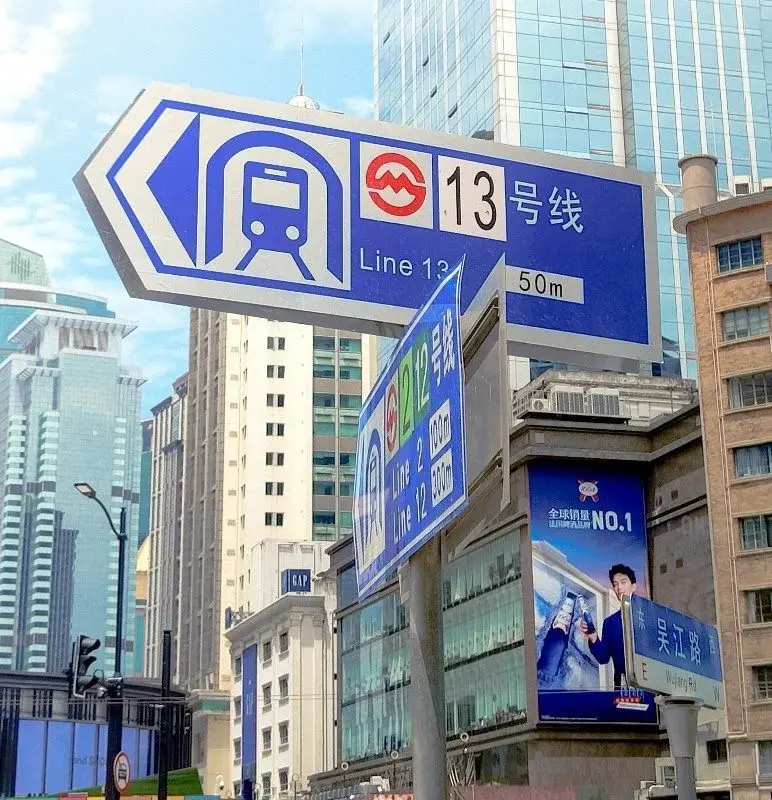
For the actual network layout, the operator's own map is the right source: Shanghai Shentong Metro Group — official network map →
| Distance | Fare |
|---|---|
| 0–6 km | ¥3 |
| 6–12 km | +¥0.4 / km |
| 12–22 km | +¥0.6 / km |
| 22 km+ | +¥0.8 / km |
Distance-based fare tiers, Shanghai Shentong Metro Group; converted at ¥7.2 = $1.
By the end of 2025 the network had reached 21 lines, about 906 kilometers, and 523 stations. It's the longest system in the world, and it arrived in Jinqiao just as I was leaving it. Outside the rail, the familiar tricolor of Meituan, Hello, and Didi's Qingju bikes covers the sidewalks. But Shanghai is one of the few Chinese cities that has deliberately never allowed shared e-bikes, a 2017 safety rule that still holds. Ride-hailing has moved further than my own memory of it too. Back then, "calling a car" meant Didi's original taxi-hailing layer, not the private-driver network people mean by the term today. Buses fill in behind all of it. They're the workhorse for routes the metro hasn't reached yet, especially out in the newer suburban districts.
Network stats: Shanghai Shentong Metro Group, Dec 2025. Full national picture: Getting Around a City.
06 — The commuter's ledger
My single largest monthly expense was leaving Shanghai
Here is my own budget, from my years in Pudong — a finance manager reading his own accounts. My salary rose from ¥30,000 to ¥40,000 a month. That put me at the top of that split, not the bottom. I shared a newly renovated 110㎡ two-bedroom in Jinqiao. I took the sunny room, so I paid a little more. And every Friday night I flew home to Dalian, and every Monday I flew back.
One person's real budget, 2012–2017. Airfare varied wildly trip to trip; ~¥50,000/year is the honest average. Converted at ¥7.2 = $1.
The metro barely registers because I almost never used it — only the two airport legs each week. The rest of the time I rode the same mountain bike mentioned earlier. Everything it cost me to actually be in Shanghai — rent, food, getting around — came to about ¥5,600 a month. I spent nearly three-quarters of that again, every month, flying out.
The ratio that actually matters
For a large slice of Shanghai's high earners, the city is a place you go to earn, not a place you live. Ten years on, I can't name a single mall near my old flat. The useful number in Shanghai isn't rent-to-income. It's exit-cost-to-income — and mine was higher.
07 — The costs that never hit the ledger
You pay for the weather in a currency the spreadsheet can't see
Shanghai sits just south of the Qinling–Huai River line, the old boundary that decides which Chinese cities get municipal winter heating. Shanghai doesn't. So the winter cold — never severe outdoors, January averages around 4°C, rarely much below freezing — becomes a damp indoor cold you pay for in a different currency.
It's the exact inverse of Harbin, where a season of municipal heat costs about $452 paid in one lump — and buys an indoor winter warm enough for short sleeves and a popsicle while the air outside freezes your breath. The milder city is the more miserable one indoors. Warmth isn't about the weather. It's about who built the pipes. The costs that never show up in the spreadsheet — heating, AC, visa renewals, property fees →
What the air conditioner actually costs, by the book
None of that heating and cooling is free, and Shanghai prices electricity the way most of China does: in tiers. Use more, pay more per unit — not a flat rate. Here's the published standard, not my old bill; my own usage window is thirteen years gone.
Time-of-use households pay less overnight (22:00–06:00) and the same or a small peak surcharge by day; the table shows the flat non-time-of-use rate, which is what most households are still billed on. Standard tariffs from the Shanghai Municipal Development and Reform Commission's published rate guide, current as of the 2025–26 edition — verify before budgeting against them. Gas and water run on the same tiered logic; see the kitchen section, above.
Summer sends the bill the other way. On paper it doesn't look extreme — Shanghai's annual average is a mild 17°C, and July, the hottest month, averages around 28–29°C. What that average hides is the sauna in the middle of it. 2013 was Shanghai's hottest summer on record. Xujiahui station hit 40.8°C and broke a 145-year record, part of roughly 49 high-heat days.
08 — The honest brake
What a five-year stay doesn't make me
Three things keep the tidy story honest. First, that median wage is a phantom. Pin your read to the ¥28k–45k professional or to the market seller, never to the average of the two. Second, survivorship: the Shanghai-drifters who make it are the ones you see. The ones who ran out of runway have already gone home, and they don't show up in the rent figures. Without real family wealth or a genuinely good job, buying in is close to impossible — harder now, I'd guess, than in my time.
Third, and heaviest: the people who build and serve Shanghai can pour a decade of work into it and still not become Shanghainese. The hukou household-registration system means the city's labor and the city's belonging are different things you have to qualify for separately. That's the line where the obvious Western comparison breaks. It's exactly why the next piece sets Shanghai against the city it most resembles from the water, and least resembles underneath.
From the river they look like the same city. That's the trap. What separates them isn't the skyline. It's who gets to stay.
09 — Questions people actually ask
Quick answers
How much does rent eat into a Shanghai salary?
About 70% of the median wage for a city-center one-bedroom — a real number, and, according to the page's own framing, also a fiction, because no single median wage actually describes who's paying Shanghai rent.
Is Shanghai expensive for everyone, or just for some people?
It's the one city in this series that isn't cheap for anyone — high rent functions as a tax underneath every other price, showing up again in restaurant meals and taxi fares rather than staying contained to a housing line item.
How much do groceries cost in Shanghai?
Roughly ¥38.9/500g for beef, ¥18.7 for lean pork, ¥5.6 for eggs, and ¥2.5 for leafy greens like bok choy — imported salmon runs around ¥80/500g.
What's the biggest cost of living in Shanghai, according to someone who's lived there?
According to the author, who lived there five years, the single largest monthly expense was leaving — a comment on how much the city's pull costs to walk away from, not a literal moving-cost line item.
Does five years of living in Shanghai make someone an expert on it?
The page is explicit that it doesn't — the author's own honest-brake section addresses directly what five years does and doesn't qualify him to claim.
If you're thinking of going
Shanghai, for someone earning here
- Cook, and the city gets cheap fast. The wet-market-and-kitchen layer is close to the national baseline. The Shanghai premium lives almost entirely in rent, restaurants, and getting around — the cost of taking part, not the cost of getting by.
- Budget for the exit, not just the entry. If your life or family is elsewhere, the recurring cost of leaving on weekends can rival your rent. Count it before you sign.
- Winter is an indoor problem. No municipal heating, damp cold, and window sealing that varies wildly by building. Ask about it. It won't be on the listing.
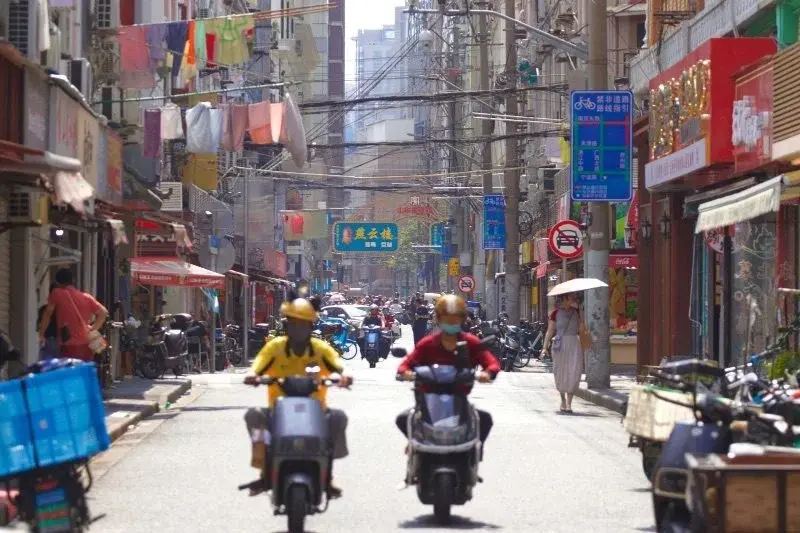
- The commute may not be the metro. Fares are among the highest in the country, but plenty of people never touch it — an electric bike is the real Shanghai rush hour.
- Not sure Shanghai is the right fit? Browse cities by what you care about → or answer seven questions for a personalized recommendation →
The bottom line
Should you live in Shanghai?
Sure — why not? I mean that plainly. Shanghai stands with any city in the world for convenience and comfort: malls, supermarkets, parks, a metro that reaches everywhere, and a street-level safety that let me walk home at any hour without a second thought. The cost is high, but measured against North America it isn't even that. What Shanghai charges you for isn't staying alive. It's taking part — and, if you weren't born to it, belonging. I'd do the five years again. I'd also, again, fly home every Friday.