Living cost, at a glance
≈$1,055/mo
≈$548/mo
≈$549/mo
≈$1,604/mo
≈$1,097/mo
Rent from the §02 ledger. The non-rent line is Numbeo's own compiled "estimated monthly costs, excluding rent" for Beijing (single person, pulled Aug 2026). It already folds in food, transport, utilities and everyday extras as one figure, so it's a different, broader number than the individual meal/transit/utility reference points in §02/§04. Converted at ¥7.2 = $1.
Beijing is the capital of administration and education rather than commerce; Shanghai and Shenzhen took that role. It grew up as the seat of a planned economy, where the things that mattered weren't for sale. They were handed out: a work unit, a grain ration, a household registration, a place in the system that decides your child's future. That logic predates the shops that later filled the city, and it still shapes how Beijing hands out what it has.
What follows is the math of the most powerful city in China, with today's numbers sourced as honestly as I can manage. I've passed through Beijing on and off since 1988 without ever living there, and those visits appear here only where they ground a number in something real.
01 — Foreign residents and where they land
The three neighborhoods where Beijing's foreign residents live
The allocation logic above governs Chinese nationals. A North American on a work visa never touches it. Foreign residents use a separate track instead, largely walled off from the rest of the city, and it clusters in three neighborhoods:
| Area | Why here | Who you'll find |
|---|---|---|
| Shunyi | Gated villa compounds, anchored by the International School of Beijing and Dulwich College | Corporate-relocation and diplomatic families |
| Liangmaqiao | The embassy district proper, with a dozen missions within walking distance, plus schools like the Canadian International School of Beijing (day tuition ≈¥77,000–310,000/yr) | Embassy staff and households |
| Sanlitun | Bar-and-CBD strip a short ride south of Liangmaqiao | The same diplomatic and expat-management crowd, off the clock |
None of these three is accidental. Each exists because an institution got there first (an embassy, an international school, a multinational headquarters), and the housing and services grew up around it.
Add it up and the people inside this circuit are mostly diplomatic staff and their families, expat managers at multinationals and foreign-invested firms, and the international-school teachers who educate both groups' kids, a small, specific crowd paying a different price for the city than the rent numbers in §02. Shunyi and Liangmaqiao rents sit well above the citywide one-bedroom figures, closer to a mid-sized North American suburb than what locals call "Beijing rent," with six-figure annual school tuition, per child, piled on top. Sections 05 and 06 cover the much larger, much older allocation system built around household registration (hukou), the one most of the city lives inside. Foreign residents never touch that system at all; for them, the price of admission is a passport and an employer, not a registration slip.
This section maps where a foreign, largely North American, professional and diplomatic population tends to cluster and roughly who they are, pulled together from public reporting on Beijing's international-school and diplomatic-district geography, not a formal census. Treat the neighborhood names as roughly right, not a precise headcount.
02 — Rent, utilities and what they add up to
A city-center one-bedroom costs ¥7,596, about 73% of the median wage
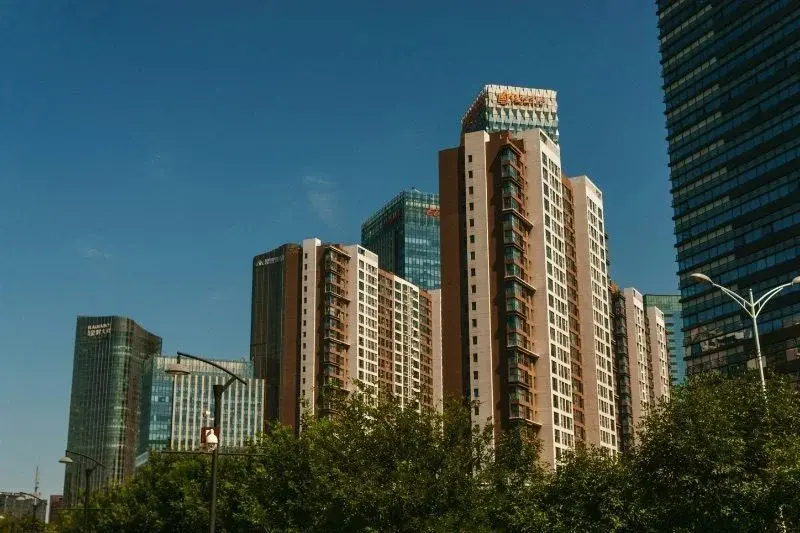
A one-bedroom in Sanlitun or the CBD runs about ¥7,596 a month, roughly 73% of the median after-tax wage. Rent is the visible cost. The number that decides whether your child gets a school seat doesn't appear on any bill: a hukou gets a child in over 90% of the time; without one, under a third. The same rule gates university admission, where Beijing's 74.5% rate compares with Shandong's 38.3%.
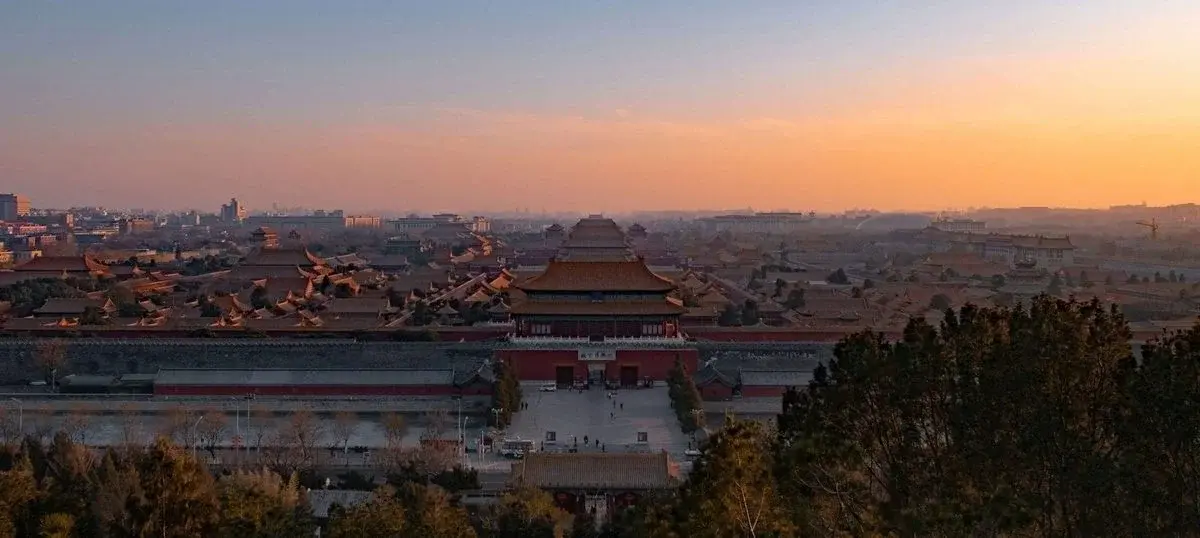
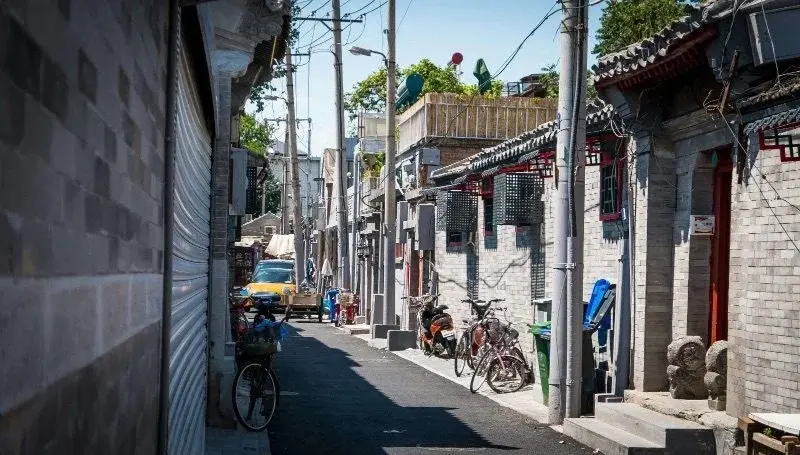
Beijing's housing still carries the imprint of that same sorting logic. The old inner districts, Dongcheng and Xicheng, hold what's left of the courtyard homes and Soviet-era work-unit compounds; Chaoyang and Haidian, built up later, are where the CBD towers and the university-tech belt sit; everything past the outer ring roads is newer, cheaper, and further out. Rent follows that geography almost exactly. That's the backdrop for the number everyone wants:
Rent, in the center and outside it, for the two apartment sizes most people compare against their own city:
1-bed rent and median salary: Wise and Numbeo, mid-2026, converted at ¥7.2 = $1. The 2-bed city-center range comes from local rental-market guides rather than Numbeo/Wise, which don't track a 2-bed figure for Beijing. Treat it as more directional than the 1-bed number above it. We couldn't find a comparably sourced 2-bed outside-center figure and are leaving it blank rather than estimating one. Meal and transit figures are Numbeo's "Meal, Inexpensive Restaurant" and "One-Way Ticket, Local Transport" for Beijing, read early August 2026, the same benchmark used across every city on this site so the numbers are comparable city to city.
By rent-to-wage, Beijing clears the first bar for "expensive." In most cities that ratio is the story. Here it's the smallest part. Which kind of cheap this is →
| City | 1-bed, center | After-tax median | Rent ÷ wage |
|---|---|---|---|
| Xi'an | $311 | $1,089 | 29% |
| Chengdu | $374 | $1,050 | 36% |
| Harbin | $423 | $857 | 49% |
| Shanghai | $972 | $1,391 | ~70% |
| Beijing | $1,055 | $1,431 | ~73% |
Rents and median wage: Numbeo and cross-checked cost-of-living trackers, mid-2026, converted at ¥7.2 = $1. Treat as indicative ranges. See sources below.
In Shanghai the market sells you the expensive thing: pay the rent and the city is yours. In Beijing the most expensive things are allocated, not sold — a household registration, a school seat, a place in the system that decides your child's future. You can't rent your way to them, and they carry no listed price, because they aren't for sale.
Everywhere else on this site I argue that a number means nothing until you know whose income it sits next to. Beijing breaks even that rule. Its real price doesn't sit next to your income. It sits next to your eligibility.
What it costs to keep the lights on, on top of rent
Electricity, water, and gas are billed by usage tier, not by registration status. A hukou holder and a beipiao renter pay the exact same published rates, the one corner of this city that genuinely doesn't care who you are. All three are metered by the calendar year rather than the month, which is Beijing's quirk in this series.
Households on a shared building-wide meter, not yet converted to one meter per household, pay a flat ¥0.5103/kWh (or ¥0.5003 on higher-voltage supply) instead of the tiers, the same shared-meter pattern as Shanghai's water billing, just applied to power here. Source: Beijing Municipal Development and Reform Commission.
Each of these is a composite price: the base water fee, the water resource tax and the sewage treatment fee are combined into one per-cubic-meter rate. That's the same idea as Shanghai's supply-plus-drainage split, just with a third component and not broken out publicly by tier. Source: Beijing Municipal Water Authority. Households of six or more registered residents get the tier thresholds raised rather than the price cut, with an extra 30m³ added to each tier's ceiling per additional person.
These are the general-use tiers (cooking, hot water). Households that heat with a gas wall-furnace through the winter, which is common outside the reach of municipal district heating, are metered on a separate, much larger seasonal allowance; the two schedules aren't comparable line for line. Source: Beijing Municipal Development and Reform Commission, effective 2025–26.
Standardized comparison figure, applied the same way across every city on this site: 220 kWh electricity + 15 m³ water + 25 m³ gas per month, a single-occupant baseline that excludes winter heating, run against the tiers above. At Beijing's rates that's ¥107 electricity + ¥75 water + ¥57 gas ≈ ¥239 (≈$33)/month.
Your daily choices shape the bill more than the city does →
Beijing vs Shanghai: one tier cheaper, one tier pricier
Beijing's bottom electricity tier undercuts Shanghai's (¥0.49 vs ¥0.62/kWh), but its bottom water tier runs well above it (¥5.0 vs ¥3.45/m³). Two capitals, and the subsidy lands in a different place in each.
03 — Food costs
Beijing has no canonical cuisine, and a very long list of snacks
Beijing has no cuisine of its own, not the way Sichuan or Guangdong do. Jing cai (京菜) is a recognized label, but it was never one of the country's canonical Eight Great Cuisines; that northern seat belongs to Shandong, whose chefs staffed the imperial kitchens for centuries. What Beijing has instead is a long list of snacks.
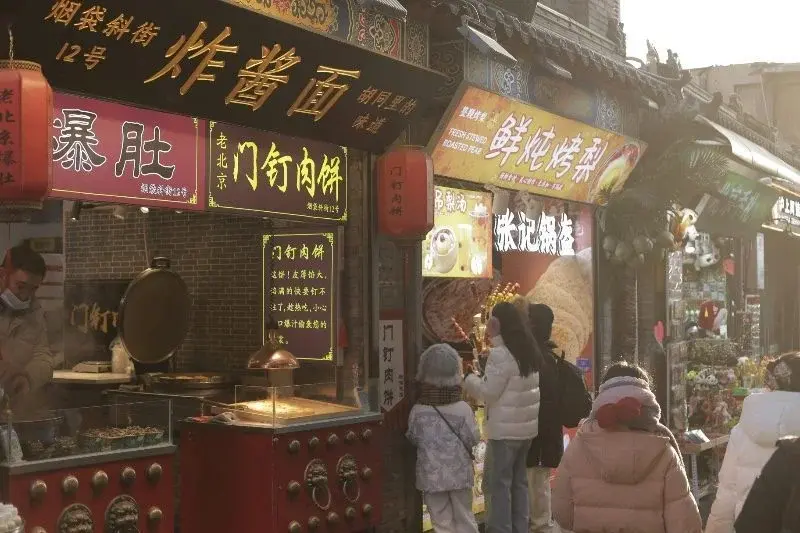
| Dish | What it is |
|---|---|
| Zhajiangmian 炸酱面 | Wheat noodles, fermented soybean-paste sauce |
| Baodu 爆肚 | Quick-scalded tripe |
| Lüdagunr 驴打滚 | Glutinous-rice roll, soybean flour |
| Douzhir 豆汁儿 | Fermented mung-bean drink, since the Liao dynasty |
All four are beloved and cheap, and none is formal enough for a state dinner. Douzhir alone carries real pedigree: it was brought into the palace under the Qianlong Emperor in 1754, after courtiers were sent to check whether it was clean enough for the throne.
Only two dishes from that list make it to a real dinner table: roast duck, and shuan yangrou (涮羊肉, hotpot mutton in sesame paste), older than the duck's fame by centuries. Jing jiang rou si (京酱肉丝, shredded pork in sweet bean sauce) is a smaller, everyday third.
Roast duck goes back to the Ming court; two schools still split the city's duck houses, Bianyifang's closed-oven method (1416) against Quanjude's hung-oven method (1864), which became the state-banquet standard. Quanjude's reputation has taken a beating at home lately. Plenty of locals say they don't eat there anymore, and steer newcomers toward smaller, cheaper places instead. A whole duck today runs ¥200–300, split among a table.
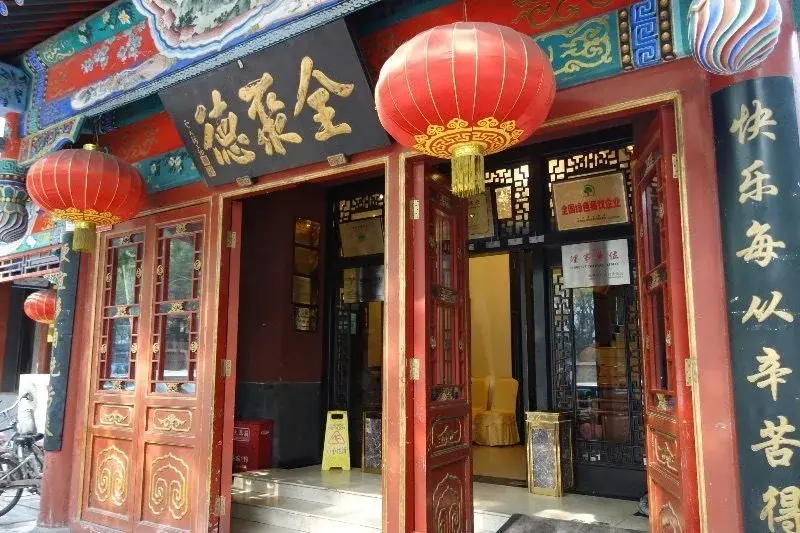
Duck houses and hotpot are the ceremonial layer, the Beijing you eat when you're celebrating something. An ordinary weeknight runs on something else, and who's doing the cooking has been shifting. The city has built out a large network of subsidized senior canteens, mainly for older residents who can't easily cook for themselves anymore. Delivery apps have gotten expensive enough lately that plenty of younger office workers have started eating there too, at the same low price, right alongside the pensioners the counters were built for. Most young people still cook at least sometimes; the "no one under thirty cooks anymore" line is mostly a delivery-app talking point.
Underneath all of it, the ingredients themselves are nothing special. Weekly retail averages from the city's own price-monitoring center:
Beef, pork, eggs, and vegetables: Beijing Municipal Price Monitoring Center (beijingprice.cn), week of July 13–19, 2026. Salmon has no current retail figure in public sources; the number shown is a chilled-salmon wholesale price from Beijing's Xinfadi market, dated January 2025, the most recent Beijing-specific figure found, and a wholesale rather than retail price. Treat it as an approximation, not today's number.
04 — Getting around
The metro is priced, not allocated
The metro works differently from everything above. The fare is flat, published, and sold to anyone who can pay. No registration is checked at the gate. The real cost behind these low prices → By late 2025 the citywide network had reached roughly 909 kilometers across some thirty operating lines
| Distance | Fare |
|---|---|
| 0–6 km | ¥3 |
| 6–12 km | ¥4 |
| 12–22 km | ¥5 |
| 22–32 km | ¥6 |
| 32 km+ | +¥1 / 20 km |
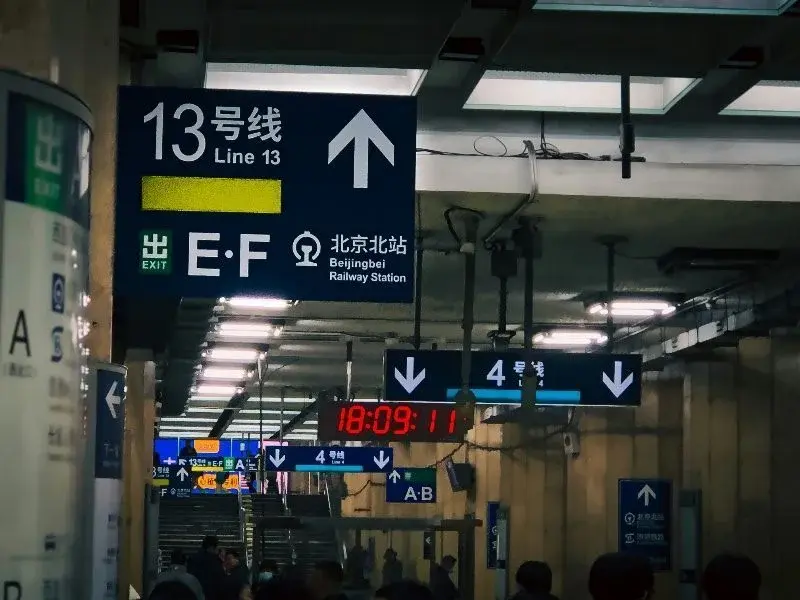
We haven't been able to source a metro map for Beijing that we're confident redistributing. For the current network layout, go straight to the operator: Beijing Subway — official network map →
Network length and line count: citywide rail transit total across all operators (Beijing Subway, Beijing MTR, and others), including maglev, tram, and suburban rail lines, as of mid-2026. The operating company's own figures cover only its portion of the network, so treat any single operator's stated total as a subset of the citywide number. Fare schedule effective since December 2014, unchanged since. Converted at ¥7.2 = $1.
Outside the rail, the same national trio of shared-bike apps, Meituan, Hello and Didi's Qingju, covers the city's wide, flat avenues, ride-hailing is as ordinary here as anywhere else in urban China, and buses still handle a good share of trips the newer outlying lines haven't reached. All of it is priced rather than allocated, the rare corner of Beijing that doesn't ask who you are before letting you in.
05 — Hukou and the people it excludes
Living in Beijing without a hukou
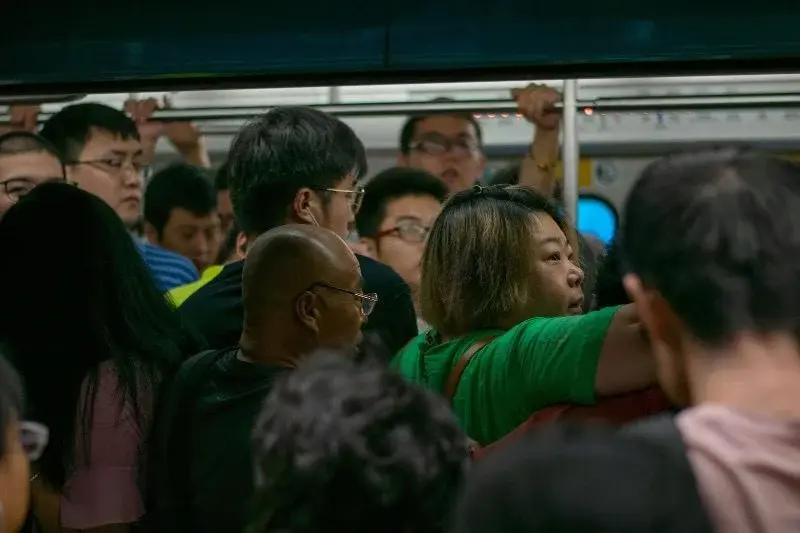
The people who build and run Beijing, the beipiao or drifters north, power its economy while being shut out of its allocations. The gap is policy rather than accident: Beijing public kindergartens admit registered local children at rates above 90%, while children without a Beijing hukou get in less than a third of the time. Same city, same taxes paid into it, two different doors.
I got an early taste of that split myself.
That's the beipiao condition in miniature: you can give a city your labor without it ever giving you a place in return.
06 — What a school seat costs
School seats in Haidian, and what they cost a family
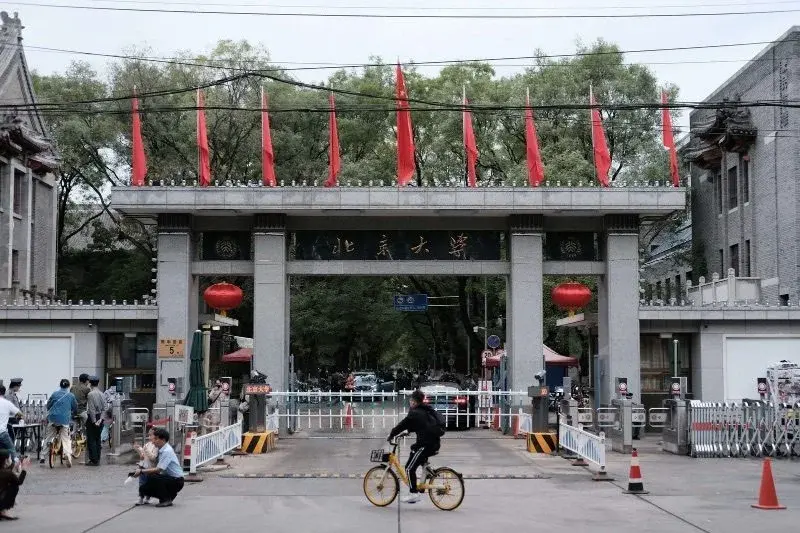
An ordinary week in Beijing costs a family less in rent than in the education competition, concentrated in Haidian district, where the country's densest cluster of universities sets the tempo. There's a joke: a five-year-old with a 4,000-word English vocabulary — is that enough? In America, plenty. In Haidian, not nearly. The premium the city charges is the cost of getting your child into that system, and it isn't paid in yuan.
The prize is rationed by where you're registered. In 2025 Beijing's undergraduate admission rate was the country's highest at 74.5%, against Shandong's 38.3% and Henan's 41.1%. A Beijing candidate is nearly twice as likely to reach university as a Shandong one, and at the top the gap widens to roughly 26 times Henan's admission rate to Tsinghua and Peking University. Getting the Beijing hukou that unlocks this is less about qualifying than timing: points pile up over years of contributions, and a child's school age doesn't wait for the score to clear. Locals have a phrase for it: běipiāo de zhōngdiǎn shì Tiānjīn, "the endpoint of a Beijing drifter is Tianjin." It's a fallback rather than a downgrade, since Tianjin's own points scheme clears faster and its admission rate is the country's second-best after Beijing and Shanghai.
Keep the story honest in both directions. The "make it in Beijing" stories are survivorship bias — the strivers who cleared the points threshold are the ones you meet; the ones who ran out of runway went home and don't show up in the numbers. None of this is a verdict on anyone. It's a description of a system that assigns, by rule, what other places leave to price.
07 — Questions people ask
Quick answers
How much does a one-bedroom apartment cost in Beijing?
A city-center one-bedroom runs about ¥7,596/month (≈$1,055); the same size outside the center drops to about ¥3,946 (≈$548). A two-bedroom in the center ranges ¥6,000–9,000 (≈$833–1,250).
Why isn't rent the real cost of living in Beijing?
No. Rent alone eats about three-quarters of the median wage, but the deeper cost is access: the school seats and university admission that a Beijing hukou unlocks and money cannot buy.
How much does the Beijing metro cost?
A flat, published fare schedule — ¥3 for 0–6km, rising to ¥6+ past 32km — unchanged since December 2014. It's the one part of the city priced the same for everyone, no registration required.
Why does where you're registered matter more than what you earn in Beijing?
Public kindergartens admit registered local children over 90% of the time, versus under a third for children without a Beijing hukou. University admission works the same way — Beijing's undergraduate admission rate (74.5%) is nearly double Shandong's or Henan's.
Is Beijing worth the cost for someone moving from abroad?
Foreign nationals apply through a separate international-admissions track that hukou doesn't touch, so the sharpest version of this trade-off mostly hits Chinese nationals trying for local registration, not incoming expats.
Before you move
What to sort out before moving to Beijing
- Price the admission, not the apartment. Rent is the visible cost and it is steep, but the number that will shape your years here is registration: the hukou, and the school access that rides on it. Model that before you model the lease.
- Existing is cheap; taking part is not. As in Shanghai, the wet-market-and-kitchen layer is close to the national baseline. The Beijing premium lives in rent, in getting across a very large city, and above all in what it takes to get a child into the system.
- If you're not registered here, factor in the second track. Non-hukou families face separate, higher hurdles for schooling and for buying property. Those aren't line items you can pay down; they're gates you either pass or you don't. Know where you stand before you commit.
- The city is enormous. "Central" covers a lot of ground, and your commute is a lifestyle decision. An address near a Metro line is worth more than an extra room.
- Still deciding? Not sure this is the right fit? Try the city match tool → Answer 7 questions to find a better match →
The verdict
Who Beijing works for
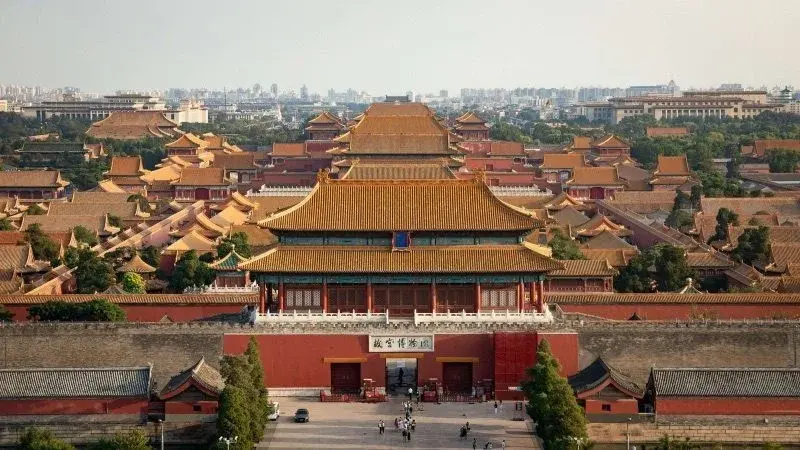
If you can get admitted, yes, and gladly. The history is under your feet, the transit reaches everywhere, the streets are safe at any hour. What it charges for is entry, a seat in the system that sorts everyone the moment they arrive.
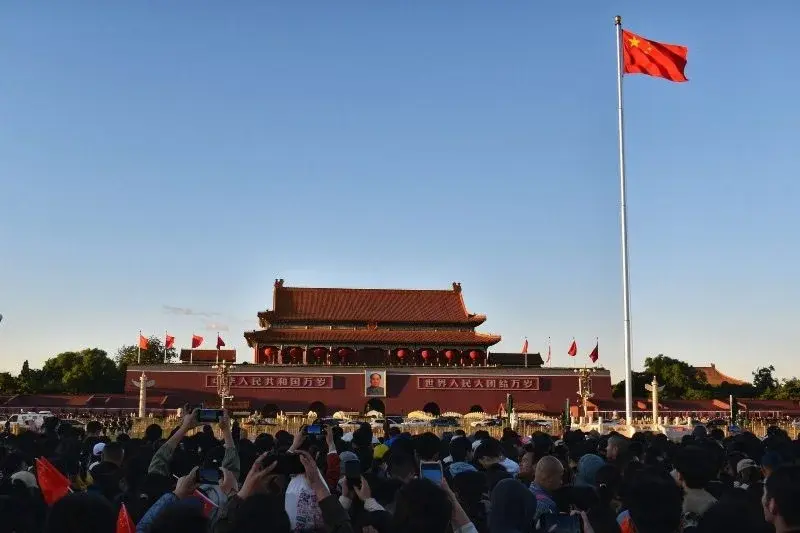
On my last visit, with my own family, we got up at 2:30 in the morning to watch the flag raised over Tian'anmen — late enough that we only reached the middle of the crowd, and saw almost nothing past the flagpole. I'd watched that flag go up before. My children hadn't.
You can't buy a closer spot, and no one will assign you one. A family with no Beijing hukou and no seat in its schools will still set an alarm for half past two to watch a flag rise over the center of the country.