

Put the two capitals side by side and they're structurally alike. Neither is its nation's largest commercial city — that title belongs to Shanghai and New York. Both are company towns for a single industry, and in both the industry is power: in Beijing the seat of party and state, ringed by the country's densest cluster of universities; in Washington the federal government, and the lobbying, law, and consulting firms that orbit it. Both pile a thin layer of high salaries on top of a wide base of the people who keep the place running. And both, in the end, center family life on the same thing — getting a child through the right school door.
So it's tempting to treat them as the same story in two languages. On the thing that actually decides a family's future there, they are — right up to the gate. Then they split completely. That split is the whole point of this page.
 Beijing
 Washington
01 — The money doesn't even cancel
Beijing vs Washington: $1,055 vs $2,400 rent, 73% vs 41% of wages.
The headline numbers first. Beijing's city-center one-bedroom runs $1,055 a month, roughly 73% of the median after-tax wage of $1,431. Washington's center one-bedroom runs $2,400 a month, about 41% of its median after-tax wage of $5,800. On rent alone, Washington is the easier city. But that is the first clue that rent was never the real question. The real gate is what decides a child's school. Beijing gates it by household registration, hukou, a rule you qualify for or you don't. Washington gates it by home price, a mortgage you pay or you don't. Same schoolhouse door, two different readers. A rulebook, or a price tag.
Start with the headline numbers, in each city's own currency and in dollars for comparison.
estimated both sides — see note¥6,000–9,000 · $833-1,250≈$3,300
estimated both sides — see note—≈$2,300
Beijing 1-bed rent and after-tax pay: Wise and Numbeo, mid-2026, at ¥7.2 = $1 — directly sourced. Beijing's 2-bed city-center range comes from local rental-market guides rather than Numbeo/Wise, which don't track a 2-bed figure for Beijing; we couldn't find a comparably sourced 2-bed outside-center figure and leave it blank rather than estimate one. Washington's 1-bed city-center figure and after-tax pay are district market reports and a representative individual figure (see footer); Washington's 1-bed outside-center, and both 2-bed rows, are derived from the same district reports' citywide-average spread rather than pulled as standalone tracked figures — treat those three cells as directional, not as precise as the two directly-sourced numbers above them.
Two things worth flagging before moving on. Beijing's own average take-home pay ($1,431) doesn't actually clear this page's own all-in monthly estimate ($1,600–1,650, see the summary bar above) — the same phantom-median pattern the "if you're choosing" notes below spell out: an "average" wage that undershoots real cost even before you've paid rent. And for the mechanics of actually finding and signing a Beijing lease — deposits, agent fees, the paperwork — see Renting an Apartment in China.
Most comparisons on this site end with the multiples roughly canceling out — high costs offset by high wages, so the squeeze feels similar on both sides. Beijing and Washington don't cancel, and they don't tilt the way you'd expect. Washington's center rent runs more than double Beijing's, but Washington incomes run about four times higher, so a Washington earner spends a far smaller share of pay on rent. If this were a contest about affordability, Washington would simply win — run your own numbers and the math won't surprise you.
Which is exactly the point. The Beijing deep-dive argues that rent was never Beijing's real price. Line the two capitals up on rent and Washington looks easier — because the thing Beijing actually charges for never shows up in the rent column at all. To find where these cities really differ, start with what these two economies actually run on — then follow it straight to the gate itself.
Same city, different lifestyle — the bill gap can be even bigger →
02 — Two company towns for power
Beijing vs Washington: two company towns for power.
In both capitals paychecks come from being close to power, not from making or selling things. Washington's largest employers are the federal government and the firms that feed on it — the consultancies, contractors, and law shops whose product is access and know-how. Beijing's high salaries come from the ministries, the headquarters, the state enterprises, and the universities that credential the people who run them. Neither city is a factory town. Both are credential towns, where what you're really paying to be near is a system that decides who gets ahead.
And beneath the towers, both cities keep a wide ordinary layer they quietly push people out of — the workers who build and serve the capital without ever being counted as part of it.
Both capitals also put the same kind of roof over their own ceremony — a dome, built to be seen from a distance and to say the same thing: this is where the decisions get made.
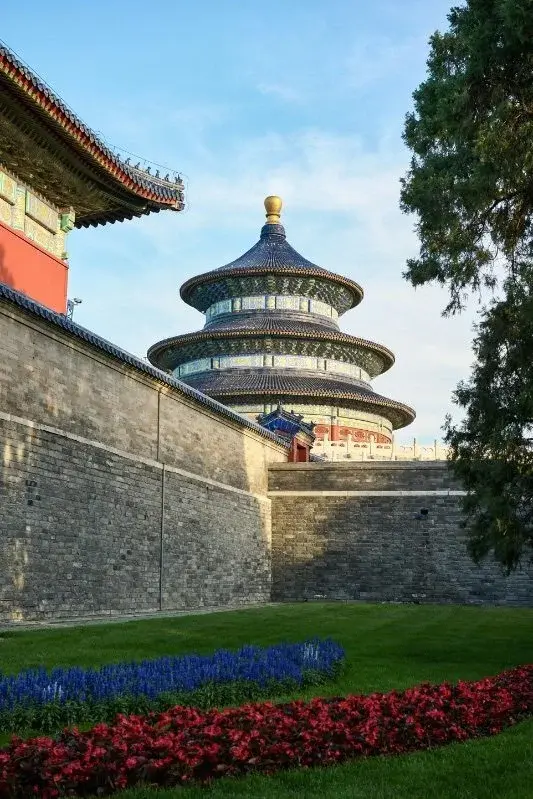 Beijing
 Washington
But neither dome is where an ordinary family actually competes. That happens somewhere much less photogenic: a school-district map.
03 — The same arms race, in two languages
Beijing vs Washington: the same school arms race in both capitals.
Ask what the good life costs a family in either city and you get the same answer: a school. In Beijing, it all concentrates in Haidian district, where the country's thickest cluster of universities — Tsinghua among them — sets the pace. Parents drill five-year-olds toward a race that a Beijing registration makes winnable. The province-level odds are stark: Beijing's undergraduate admission rate is the nation's highest at 74.5%, against Shandong's 38.3%. Beijing's rate into the top two universities runs about 26 times Henan's. (If you're pricing out what a Chinese university actually costs once a family clears that gate, the university cost calculator has real tuition and housing figures for Tsinghua and 40 other schools.)
In Washington the same race runs across the river, in the Virginia and Maryland suburbs. There, every home address is assigned to a specific school pyramid — two houses on opposite sides of one street can feed different schools — and the house price openly reflects the school it unlocks. Local real-estate agents describe it without blinking as a "hidden tax" baked into the mortgage, the premium for buying into a top pyramid. Above that sits another contest: Thomas Jefferson High School, the region's crown magnet, ranked around fifth in the nation, admits by competitive application — residency gets your child the right to apply, never the seat itself. It's Haidian in another language.
04 — The gate
Beijing vs Washington: the gate — rulebook vs price tag.
This is where the twin capitals stop being twins. Both ration a good school. Look at how — at what each gate actually checks before it opens.
 Beijing
 Washington
Beijing
A rule
the gate reads your household registration
hukou · settlement points 117.33 in 2025
A good public school follows your Beijing hukou, not your bank balance. Registered local children enter public kindergartens at rates above 90%; children without a Beijing hukou, less than a third of the time. And you cannot simply buy the hukou — the points threshold to earn one climbs three to four points a year. You qualify, or you don't.
You can be wealthy here and still not pass.
Washington
A price
the gate reads your home price
the school is in the mortgage
A good public school follows your address, and the address is for sale. Buy the house in the right pyramid — a median that runs past $800,000 in Fairfax County, well over a million in its premium corridors — and the school comes with it. No registration to qualify for. The gate is money, plain and simple, and money is the one thing that opens it.
You can be anyone here — if you can afford the ZIP.
Both capitals sort your child at the schoolhouse door. One door reads your registration. The other reads your bank balance.
05 — The everyday layer
Beijing vs Washington: the everyday layer — groceries, transit, utilities.
Gates decide who gets in. Meters, receipts, and a phone bill decide what an ordinary week costs once you're inside — and on this layer the two capitals aren't nearly as far apart as their rent numbers suggest.
Utilities and groceries
Beijing tiered/annual; Pepco flat/monthly¥0.49–0.79 · $0.07–0.11≈$0.254
Beijing electricity, water, and wet-market figures are the same directly-sourced numbers already published on the Beijing deep-dive — Beijing Municipal Development and Reform Commission (electricity, gas), Beijing Municipal Water Authority (water), and the Beijing Municipal Price Monitoring Center (pork, beef, eggs, week of July 13–19, 2026). Washington electricity is Pepco's own published all-in residential rate (not tiered, unlike Beijing's); Washington water and sewer is DC Water's own FY2026 combined rate, converted from $/Ccf to $/m³, with the district's flat CRIAC, PILOT, and metering fees layered on top and not folded into the per-m³ figure shown. Washington grocery, dining, and telecom figures are Numbeo/CityCost averages for the district, mid-2026; for what a Beijing mobile plan and broadband actually involve day to day, see Getting Connected in China. *Washington's pork and beef rows use a national or region-wide average rather than a Beijing-comparable wet-market cut, flagged in the row itself, not just here; Beijing's egg and dining figures are converted from the deep-dive's own per-500g/whole-dish sourcing to a rough dozen-equivalent and per-meal-for-two basis for comparability, and should be read as directional, not exact.
The surprise in this layer
Not everything here converges — it splits by how the price gets set. Rate-regulated basics stay tight: electricity runs about 2.8× apart, water about 2.1×, and wet-market pork and beef sit under 1.7× (eggs are nearly identical). But give the price to a private retail market instead of a utility board, and the gap widens fast — a mid-range dinner for two runs about 3.4× apart, and an unlimited mobile plan runs roughly 10× apart, the widest gap on this entire page, wider than rent, wider than the wage gap itself. Whatever gets metered by a government tariff schedule stays close. Whatever gets sold by a competing carrier or restaurant doesn't.
Getting around
None of that touches the one bill that arrives whether you cook or eat out, or the one ride that gets a resident to work every morning — the same metro-and-ride-hailing system that gets a Beijing commuter around the city at a fraction of what driving costs.
Beijing Subway route length and station count: Wikipedia infrastructure entry citing Xinhua, 2023–24; annual ridership is the most recent full-year figure available (2023). WMATA route length, station count, and annual rail ridership are 2025 figures from Wikipedia's Washington Metro entry — the two systems' most recent full-year ridership totals are two years apart, not simultaneous, and are presented as such rather than smoothed together. Beijing's monthly spend is a rough calendar-month estimate built from its own published tiered single-fare structure; Washington's is WMATA's Monthly Unlimited Pass at the standard commuter fare tier (32× the selected single-fare level), a different kind of figure — a subscribed unlimited product rather than a summed per-ride estimate — since Beijing has no equivalent unlimited product to compare it against directly.
Beijing's subway is the longest network in the world. It carries more riders in a year than Washington's carries in fifteen. But get on either one for a regular commute, and the fare gap (roughly 5×) sits closer to the wage gap (about 4×) than to the rent gap (about 2.3×). A subway ride, like a phone plan, is priced by whatever a competing market will bear, the same way rent is. It's only the school seat, a few paragraphs up, that refuses to be priced at all.
Meters and fares run all year. One thing doesn't: both capitals turn pink for about two weeks each spring, and neither can help making a small production of it.
 Beijing
 Washington
Neither city's spring changes the argument this page is actually making, though — and before closing, that argument needs three caveats.
06 — The honest brake
Beijing vs Washington: three honest caveats.
First, the two gates do not exclude the same way, and I won't pretend they're morally equal. A price gate shuts people out by wealth — but a family priced out of Fairfax keeps every civic right, can vote, and can move to another good district or another state entirely. A rule gate shuts people out by registration, and no amount of money or moving vans lets you walk around it. This page compares the mechanism of sorting, not the fairness of it.
Second, the analogy has real limits of scale. A Beijing hukou is a national legal status that bundles schooling, home-buying, and healthcare together; a US school district is a local line you can cross by signing a different mortgage. One is a wall around a life; the other is a toll on a house. Don't stretch the comparison past the schoolhouse door.
Third, and this is a limit on me: I have never lived in Beijing — I've passed through it since 1988 — and I have never set foot in Washington. The Washington side of this page is read entirely from data: the district's own school-boundary rules, the market reports, the agents' own words. Weigh that column as research, not a sidewalk.
Both capitals put a gate on the good life. In one, you qualify for it. In the other, you pay for it.
If you're choosing between them
Deciding on more than rent
- Rent won't settle it — and it points the wrong way. On rent-to-income Washington is clearly the lighter city. If cost of living is all you weigh, that's your answer. But in neither capital is rent the real price of the life you're buying.
- Find your gate before you sign anything. In Washington the school is in the mortgage: identify the pyramid, then the price, and know that the top magnet is still a separate competition. In Beijing the school is in the household register: if you're not locally registered, the gate is eligibility, not money.
- Know which population you'd join. In both capitals the median wage is a phantom. Your real cost of living depends entirely on whether you arrive with the salary — or the registration — that clears the gate.
07 — Questions people actually ask
Quick answers
How does Beijing rent compare to Washington DC rent?
A city-center one-bedroom runs ¥7,596/month (≈$1,055) in Beijing vs about $2,400 in Washington. Rent eats roughly 73% of Beijing's after-tax pay versus about 41% in Washington — Washington is actually the easier city on rent alone.
Why isn't Beijing cheaper than Washington despite lower rents?
Not once you factor in wages. Rent runs cheaper in Beijing, but Washington incomes run about four times higher, so a Washington earner spends a smaller share of pay on rent than a Beijing earner does.
What decides whether a family gets a good school in Beijing vs Washington?
Beijing gates a good school by household registration (hukou); Washington gates it by home price and ZIP code. Different mechanisms, same underlying sorting.
Is the real cost of living in Beijing about rent?
No — rent was never Beijing's real price. The real cost is access, gated by registration rather than money.
Is everyday life similar in Beijing and Washington?
Closer than the schooling gate suggests — the everyday layer of groceries, transit, and routine costs is where these two capitals actually run close, in contrast to the sharply different school-access mechanism.