
Getting online in China: the sequencing problem nobody warns you about.
Landing without a working phone connection is rarely about signal or hardware — it's a sequencing problem. Real-name registration, verification codes sent to a number you don't have yet, hotel Wi-Fi that wants a Chinese phone number before it'll let you online — several of these steps quietly depend on each other, and the order you tackle them in matters more than most people expect.
01 — Day one: three ways to get online
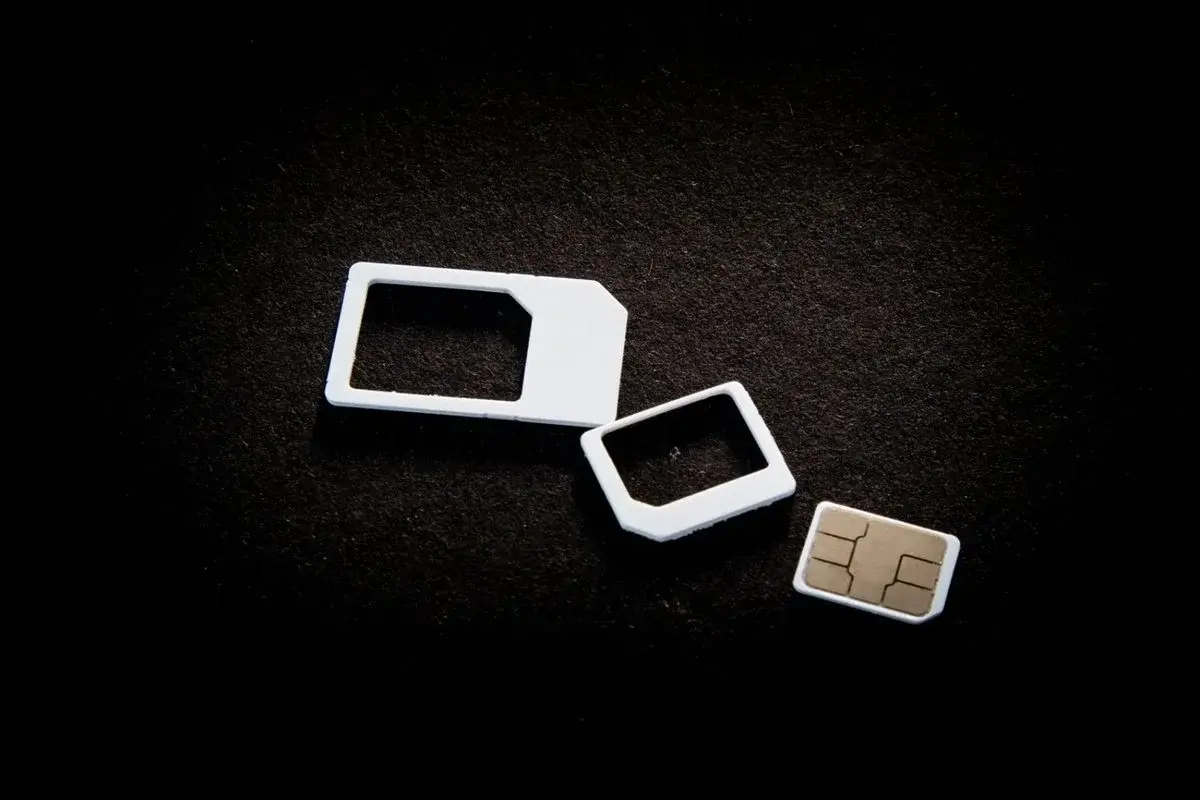
Three ways to connect: roaming, eSIM, or local SIM from ¥39/month.
International roaming
Simplest option for a stay of a few days — no setup, but the most expensive per gigabyte by a wide margin.
eSIM
Set up before departure, active the moment you land. Data-only in most cases — check whether a package includes a real local number before assuming it does.
Local SIM card
Requires passport-based real-name registration, but by far the least expensive option for anyone staying more than a week or two.
The honest rule of thumb: under a week, roaming or eSIM saves you the hassle. Beyond that, the savings from a local SIM start to add up fast, and the registration step is a one-time cost, not a recurring one.
02 — The three carriers, and how ordinary life actually uses them
China Mobile, Unicom, or Telecom: no single best, only what fits.
China's mobile market runs on three state-owned carriers: China Mobile (中国移动), China Unicom (中国联通), and China Telecom (中国电信). China Mobile has the widest overall coverage, including rural and remote areas. China Unicom tends to have the strongest urban data speeds and, anecdotally, the most foreigner-friendly reputation among the three. China Telecom is generally the most competitively priced and has historically stronger coverage in southern China.
My own case: I've carried the same China Mobile number for about two decades — it's my anchor line, currently bundled with a family-number add-on and a home broadband package. But when I lived in Shanghai during the city's 3G-to-4G transition, China Unicom's data speed there was noticeably faster than China Mobile's, so I bought a second Unicom SIM purely for data while keeping the Mobile number as my primary line. Neither carrier was "better" — one was faster for what I needed, right then, in that city.
Real-name registration is the step that differs most from what a local tenant experiences: foreign nationals register with a passport, sometimes alongside visa or accommodation information, and you do it in person — at an airport counter, an official carrier storefront, or occasionally through a partner kiosk. You can't currently complete this online with a foreign passport in most cases. Budget time for it; it's rarely instant, and queue times vary by location.
A quick note on VPNs: getting a working phone connection and accessing services normally blocked in mainland China are two separate topics. This page only covers the former.

03 — The Wi-Fi that's already there
Free Wi‑Fi is everywhere, but it needs a Chinese phone number first.
Hotels, cafés, and airports overwhelmingly offer free Wi-Fi. The catch that surprises a lot of new arrivals: many networks gate access behind an SMS verification code sent to a Chinese phone number — which is exactly the thing you may not have yet on day one. This is the practical reason getting a local SIM card early is usually worth doing before you rely on public Wi-Fi as your main connection, rather than the other way around.
04 — If you're staying: home broadband
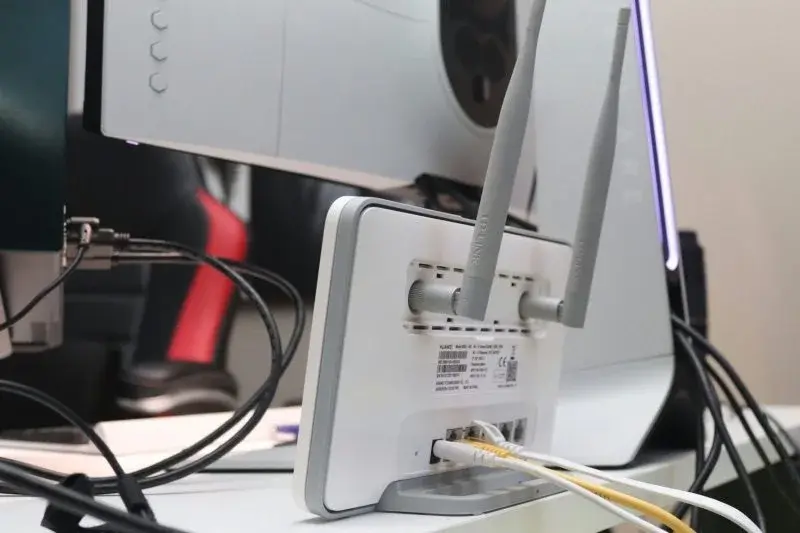
Home broadband: fiber is fast, bundled plans save more.
All three carriers install residential fiber broadband, and installation itself is typically fast — often within a few days of signing up, sometimes free, sometimes a modest one-time setup fee depending on the building. The bigger decision is between a standalone broadband line and a bundled package tied to an existing mobile number.
Bundled packages — the same logic behind the "family number plus broadband" combination I've carried on my own China Mobile account for years — are usually the better deal if you're already a customer of that carrier: the broadband portion effectively rides on a discount that a standalone line doesn't get. For someone with no existing mobile relationship to any carrier, a standalone line is simpler to wrap your head around, if not always the cheapest per megabit.
China Mobile is generally the least expensive option for standalone fiber; China Telecom tends to run more expensive but with a reputation for more consistent line quality, particularly in southern China; China Unicom sits in between, with a regional edge in parts of northern China.
05 — What all of this actually costs
What connectivity costs: from ¥39/month SIM to ¥360/year broadband.
Local monthly plans start at ¥39 with 50GB data; home broadband runs ¥360‑900 per year depending on speed and carrier.
| Scenario | Rough cost |
|---|---|
| International roaming | Highest per-GB cost of any option; varies entirely by home carrier |
| eSIM, short trip | Prepaid data packages, priced by days and GB — check for voice/SMS separately |
| Airport / tourist SIM | Short-term data + limited calling, priced at a premium versus in-city rates |
| Local monthly plan, entry tier | ≈¥39/month — around 50GB data, ~150 minutes calling |
| Local monthly plan, mid tier | ≈¥99/month — noticeably more data and minutes than entry tier |
| Local monthly plan, top tier | ≈¥199/month — 150GB+ data, 700 minutes, often bundled with broadband |
| Standalone home broadband, 300Mbps | ≈¥360–720/year depending on carrier and region |
| Standalone home broadband, 1000Mbps | ≈¥600–900/year depending on carrier and region |
| Bundled mobile + broadband | Broadband portion often deeply discounted versus standalone pricing |
These are rough snapshots, not a price list. Carrier promotions, regional pricing, and plan names change often and by wide margins — sometimes tens of percent within the same year. Confirm current pricing directly through a carrier's app or storefront before signing anything; nothing on this page is a quote.
Those low monthly and annual rates rest on infrastructure built and maintained at a very different scale — the real cost of that infrastructure is settled elsewhere →
A slice of the past — "top up your balance, get a free phone"
I've changed my own number twice over the years, both times chasing a promotion where topping up your account balance by a set amount got you a free handset — once on China Mobile, once on a China Unicom CDMA line, back when CDMA was still a live standard here. It wasn't really about the phone; carriers were using device subsidies to lock in longer-term balance commitments, a pattern that's largely faded as phone subsidies moved elsewhere in the market. A small artifact of how mobile pricing used to work, not how it works now.
06 — Before you sign up for anything
A short checklist
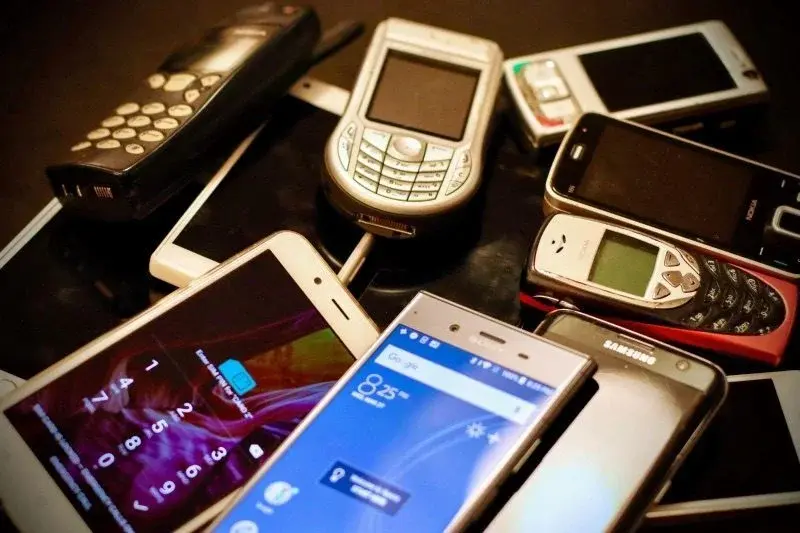
- Confirm your phone is unlocked before trying to use any Chinese SIM — carrier-locked phones from certain markets won't accept it.
- Bring your passport to any in-person SIM registration — and, for some carriers, be ready to show visa or accommodation information.
- Check if an eSIM package includes an actual phone number, not just data — many don't.
- Ask about the contract length before signing up for a broadband package — bundled deals often carry a minimum term, and breaking it early can cost more than the discount was worth.
- Ask whether the router/ONT box needs to be returned at the end of a broadband contract — policies vary by carrier and city.
The bottom line
What this page is actually for
This isn't a claim that any one carrier is objectively best — the honest answer, as with most systems on this site, is that it depends on where you are and how long you're staying. What I can say is that the sequencing matters more than people expect: get a working number early, and most of the other friction — Wi-Fi logins, verification codes, home broadband setup — sorts itself out in the order it should.
07 — Questions people actually ask
Quick answers
What are the three ways to get online in China as a new arrival?
A physical SIM, an eSIM, or roaming — which one makes sense depends almost entirely on how long you're staying.
Is one Chinese mobile carrier better than the others?
No single “best” exists among China Mobile, China Unicom, and China Telecom — the right one depends on where you are and what you're doing, not a universal ranking.
Is free Wi-Fi easy to use in China?
It's genuinely everywhere, but the catch isn't technical — it's how you're asked to prove you're a person, usually a phone-number verification step, before it connects.
Is home broadband fast in China?
Yes — fiber is fast and common. The real decision for a resident is single-line service versus a bundled package with mobile and TV.
Has the author of this page dealt with China's mobile carriers personally?
Yes — over the years the author changed phone numbers twice chasing promotions where topping up account balance by a set amount included a free handset, a pricing pattern that's largely faded from the market now.