¥3 water bottles to ¥300,000 car deposits: what mobile pay actually does?
It sounds like advertising copy, I know. But after living here long enough, I stopped hearing it as hype and started treating it as a literal packing list. When I leave my apartment in the morning, I check for three things: keys, mask, phone. That’s it. No wallet. No transit card. No folded bills for emergencies. Just a phone, and a QR code that unlocks almost everything — from a subway gate to a temple donation box.
And here’s the part that matters for this site: it’s not just convenient. It’s actually cheaper. Not because the apps give you discounts (though sometimes they do), but because the entire system — the payment rails, the e-commerce pipes, the logistics network underneath — runs on scale and automation that would be impossible without universal mobile payment. I’ll get into that below. But first, the basics.
00 — The real math
Why cashless life is cheaper: no fees, no change, no friction?
China's mobile payment volume hit ¥58.8 trillion in 2016, up 382% in a single year. Today, a ¥3 water bottle from a street vendor costs exactly ¥3 with no fees.
Let me start with a number that surprised me when I first thought about it. I can buy a ¥3 bottle of water from a street vendor, pay with my phone, and the transaction costs me exactly ¥3. No rounding up because the vendor doesn’t have change. No "minimum ¥10 for card" rule. No foreign-transaction fee on a purchase that small. The vendor pays no monthly POS terminal rental. There is no middleman clipping a percentage just for moving digits around.
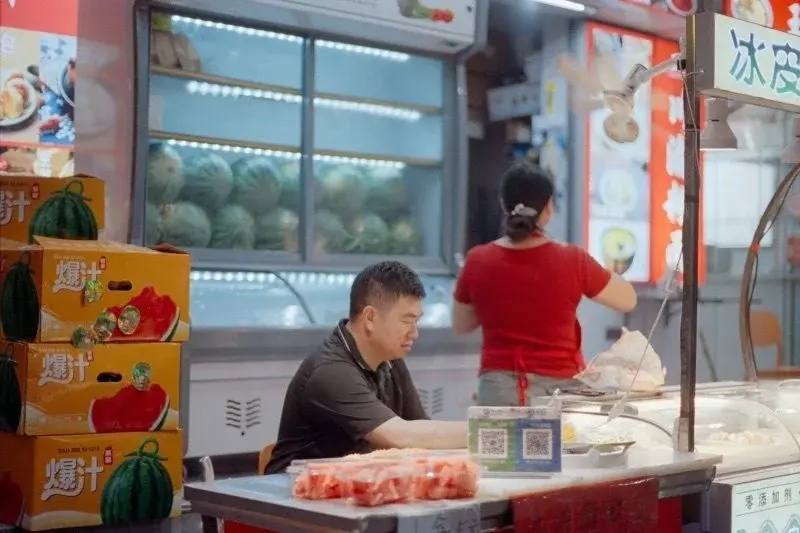
That’s the first layer: mobile payment removes friction costs at the bottom end. In most countries, small transactions are expensive — either for the buyer (cash only, no change) or for the seller (card fees, terminal rental). In China, a QR code printed on a piece of paper and taped to a fruit cart handles the same transaction at essentially zero marginal cost. I’ve bought ¥1.5 steamed buns with my phone. Try doing that with a credit card anywhere else.
But the second layer is what really supports this site’s theme. Mobile payment in China isn’t just a payment method — it’s the foundation of an e-commerce and logistics machine that is, by most measures, the most efficient on earth. Here’s what I mean:
Scale
Over a billion people on the same two payment rails. That uniformity means every app, every merchant, every delivery driver operates on the same standard. No fragmented systems, no incompatible wallets.
Automation
China’s warehouse and sorting networks are heavily automated — robotic arms, AGV carts, AI-powered route optimization. The payment data feeds directly into inventory systems, creating a闭环 (closed loop) that moves goods faster.
Labor density
There are roughly 4.5 million delivery workers in China. That sounds like a cost, but it’s actually a feature: same-day or next-day delivery is the default, not a premium. The payment app is the dispatch center.
System integration
Pay for dinner, book a train, hail a ride, order groceries, pay your utility bill — all inside one or two apps. The time saved is a cost saving. I don’t need five separate apps with five separate logins and five separate fee structures.
The result? I can order dinner delivered to my door in 25 minutes for less than I’d pay for a sandwich at a convenience store in London. I can buy a high-speed rail ticket, pay for it, and board the train without ever touching a printer or a counter. That speed and cheapness doesn’t happen in a vacuum. It happens because the payment layer is universal, instant, and essentially free for everyday use.
A quick note on fees for visitors: As of 2026, both Alipay and WeChat Pay waive the cross-border fee on transactions under ¥200. Above that, you’re looking at roughly 3%. So your daily coffee, metro ride, and lunch are effectively free of platform charges. It’s only the big-ticket items — a fancy dinner, a hotel stay, a shopping spree — where the fee kicks in. Even then, 3% is often less than what your bank would charge for an international card swipe.
01 — The system behind the scan
Alipay vs WeChat Pay: two apps, interchangeable for 95% of life.
Alipay and WeChat Pay run this show. I use both daily, and if you asked me to pick a favorite, I’d shrug. They’re interchangeable for about 95% of life.
Their origin stories are fun, though, and they explain why neither one killed the other. Alipay started in 2004 as an escrow service inside Taobao — basically a way to hold your money until the package actually arrived, because back then nobody in China trusted a stranger on the internet. WeChat Pay came from the opposite direction: a 2014 Lunar New Year feature where you could send digital red envelopes (红包) inside chat threads. It went viral over one single holiday. Tens of millions of bank cards got linked in a matter of days.
I remember that red-envelope craze. My family group chat was exploding with notifications. My aunt, who still called me to ask how to turn on her phone, was sending ¥20 packets at midnight. That’s how fast the adoption happened — not because of a government push, but because sending money became a social game.
By 2016, annual mobile payment volume in China had already hit ¥58.8 trillion, up 382% in a single year. Both apps have spent the decade since converging on the same daily-life footprint. Today, the choice between them is mostly a shrug. I have Alipay set as my default for e-commerce because it feels natural there, and WeChat Pay for restaurants because I’m usually already in the WeChat app. But that’s just habit.
02 — How far it actually reaches
Where mobile pay reaches: street stalls, temples, and rent payments?
Mobile payment in China covers everything from a ¥3 street-stall water bottle to a ¥300,000 car deposit. QR codes appear on temple donation boxes and buskers' guitar cases.
I used to think mobile payments were for small stuff — coffee, taxis, groceries. Then I paid my rent through Alipay. Then I watched a friend put down a ¥300,000 deposit on a new car using nothing but his phone. The range is absurd.
Here’s a partial list of what I’ve personally paid for with my phone in the last month alone: subway rides, bus fares, DiDi rides, grocery delivery, restaurant meals, convenience store snacks, a doctor’s appointment, a prescription refill, my electricity bill, a high-speed rail ticket, a movie ticket, a shared bike rental, and a donation at a temple. Oh, and I tipped a street musician. He had a QR code on his guitar case.
It shows up in places that feel like they shouldn’t have a QR code at all. I’ve seen temples post one right on the donation box, next to the slot for coins. I’ve seen beggars hold up laminated cards instead of cups. Neither struck me as weird in the moment, which says something about how normal this has become. If a place accepts money, there’s a QR code.
And here’s the thing that ties back to the "cheap and fast" theme: because payment is frictionless, commerce itself becomes frictionless. I can order fresh groceries at 10pm and they arrive by 7am. I can buy a train ticket five minutes before departure and board with nothing but my face and my phone. The payment layer is what makes the rest of the machine possible. Without universal, instant, zero-friction payment, you don’t get same-day delivery at those prices. You don’t get restaurant meals delivered for ¥25. The whole ecosystem rests on this foundation.
03 — Three ways to pay
Three ways to pay: scan, be scanned, or use your face.
Knowing how far it reaches is one thing. Actually completing a transaction is another, and there’s more than one way to do it. I use all three regularly, depending on where I am.
You scan the merchant
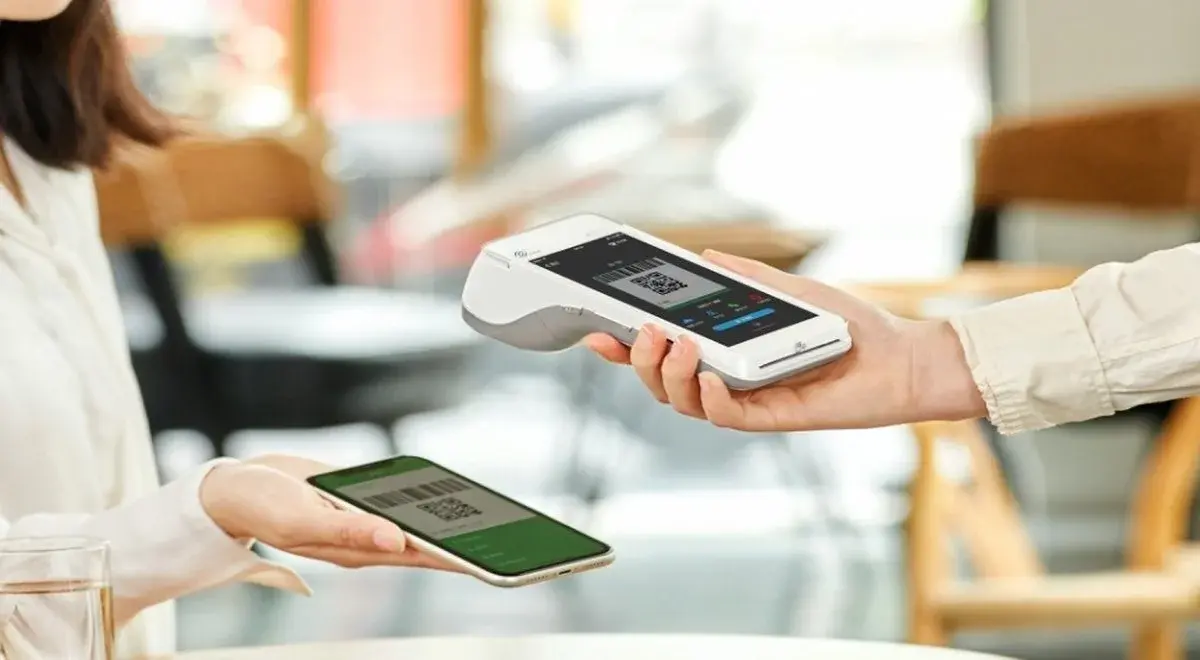
This is the classic. Common at small shops and street stalls — a printed QR code sits on the counter. I open my app, scan it, enter the amount, done. Takes about five seconds.
The merchant scans you
More common at supermarkets and convenience stores. I display my payment code, the cashier scans it at the register. Faster for lines because I don’t have to type anything.
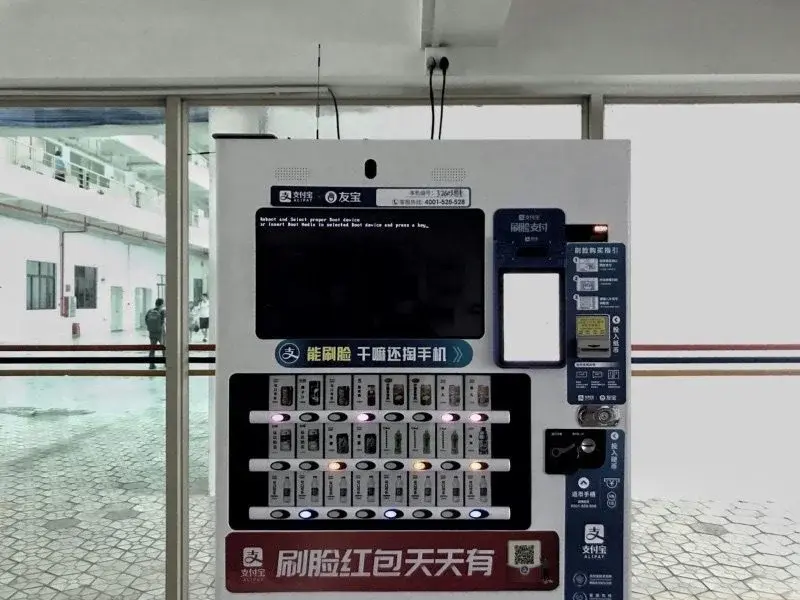
Facial recognition is the third option, and the one that needs no phone at all. At some large chain supermarkets and self-checkout terminals, I just look at the camera, enter the last few digits of my phone number, and the payment completes. It isn’t available everywhere, so it’s a convenience I occasionally run into — not something I plan around. But when it works, it feels like the future.
04 — Where the money actually comes from
How the money moves: app as interface, bank as vault?
People often ask me, "So you keep a balance in the app?" And I have to explain: no, not really. These apps don’t hold my money the way a prepaid card does. The mechanism is closer to PayPal — the app is linked to my bank card, and every transaction is just the app telling my bank to move money. The app itself is the interface, not the vault.
That holds true even for big purchases. When my friend paid that ¥300,000 car deposit, the money didn’t sit in Alipay. The app initiated the transfer, but the actual clearing happened through the bank’s own system. Whatever limit you hit is your card’s ceiling, not the app’s. For visitors, though, there are platform-imposed caps on foreign cards — more on that in the setup section.
05 — Setting it up as a visitor
Setting up as a visitor: passport, foreign card, 10 minutes.
I get this question constantly from friends planning trips: "Do I need a Chinese bank account?" The answer, as of 2026, is a firm no. Both apps accept foreign cards directly, and the setup is honestly easier than I expected.
Here’s what you actually need: your passport, a phone number that can receive SMS (your home number works fine), and a supported card. Visa, Mastercard, American Express, JCB, Discover, and Diners Club all work. I’ve walked friends through this over coffee, and the whole thing takes about ten minutes.
The process is roughly the same for both apps: download, register with your phone number, verify your identity with a passport photo and a quick facial scan, then link your card. Approval is usually automatic and takes minutes. The one hiccup I see most often is a fraud block from your home bank — a quick call mentioning "Alipay" or "WeChat Pay" fixes it.
Fees: This is where it gets good for daily life. Both platforms waive the cross-border fee on transactions of ¥200 or less. That covers your coffee, your metro ride, your street-food lunch. Above ¥200, you’re looking at roughly 3%. Plus whatever your own bank charges for foreign transactions — so bring a no-foreign-fee card if you have one.
Limits: The platforms raised these significantly in 2024-2025. For verified foreign-card accounts, Alipay generally allows up to ¥6,000 per transaction and ¥50,000 monthly. WeChat Pay is in the same ballpark for most major international cards. For everyday tourist spending, you’ll never touch those ceilings. They only matter if you’re trying to pay a luxury hotel bill or a big shopping spree in one go.
Alipay Tour Pass: If you’re on a short trip, Alipay offers a prepaid wallet specifically for visitors. You top it up from your foreign card, and the balance is valid for 90 days. Any leftover money gets refunded automatically. I usually recommend this for first-timers — it simplifies things and keeps your spending visible in one place.
What about Apple Pay? I use Apple Pay online sometimes — it works on shopping sites and in some apps. But it’s not part of the QR-code ecosystem that runs daily retail in China. It uses NFC contactless, like tap-to-pay back home, and acceptance for foreign-issued cards is patchy. When it does work, the exchange rate is often worse than what Alipay gives you. I tell friends: treat Apple Pay as a backup, not a plan. Google Pay isn’t an option at all — Google’s services aren’t accessible in mainland China.
My honest advice? Install both apps before your flight. Verify your passport in both. Link the same card to each. Test a small payment at a convenience store before you’re hungry and in a hurry. And carry ¥300-500 in cash as backup — not because you’ll need it often, but because "almost everywhere" is not "everywhere," and a dead phone battery is still a thing.
06 — What changed when cash left
Pickpockets vanished; malware charging cables appeared.
Setting up the app is the easy part. What’s worth knowing once it’s your daily wallet is what actually changed underneath everyday life since cash mostly disappeared. I’ve noticed two big shifts — one I love, one I have to actively guard against.
The good news
Pickpockets have largely disappeared. When almost nobody carries cash, there’s nothing in a pocket worth stealing. I used to keep my wallet in my front pocket on crowded subways. Now I don’t even carry one. A trade that used to be common on packed trains and busy streets has, in most cities, simply stopped paying enough to exist. I can’t remember the last time I heard someone complain about being pickpocketed.
The flip side is a newer kind of risk, and it’s one that caught me off guard the first time I heard about it. Because these apps are tied directly to bank cards, your phone becomes a target — and one attack vector doesn’t involve hacking the app at all. It involves the physical cable you plug into your phone.
Scammers have been known to plant malware on power banks or charging cables left in public places. You plug in to charge, and the device compromises your phone instantly. I know, it sounds paranoid. But Shenzhen police have issued public warnings about this, and I’ve seen the reports myself. It’s rare, but the downside is catastrophic.
A practical rule I follow: I never use a power bank or charging cable of unknown origin — especially one that turns up conveniently on a train station bench or gets handed to me by a stranger. I bring my own power bank everywhere. If I must use a public charging point, I use a charge-only cable (one with the data pins removed), and I never tap "trust this device" if a prompt appears. It’s a small habit that eliminates a large risk.
The bottom line
手机在手,天下我有 — and that same hand deserves a little more caution than a wallet ever did
I’m not saying mobile payment is safer or smarter than cash everywhere in the world. I’m saying that in China, it has replaced cash so completely that you need to understand it just to function — and once you do, the convenience and cost savings are hard to give up.
The ¥3 water bottle with no fee. The doctor’s appointment paid while sitting in the waiting room. The train ticket bought on the platform five minutes before departure. These aren’t edge cases. They’re Tuesday. And they’re possible because the payment layer is universal, instant, and essentially free for normal use.
If this changes how you pack for a trip to China — or how carefully you treat a "free" charging cable — then I’ve done my job.
07 — Questions people actually ask
Quick answers
Do I need a Chinese bank account to use Alipay or WeChat Pay?
No. As of 2026, you can link international Visa, Mastercard, Amex, JCB, or Discover cards directly. You only need your passport and a phone number that receives SMS.
Is it cheaper to use mobile pay than cash in China?
For daily spending under ¥200 per transaction, there is no platform fee at all. Above that, a roughly 3% cross-border fee applies to foreign cards. Even with the fee, the convenience and lack of forex hassle usually make it cheaper in practice than carrying large amounts of cash or using international cards directly.
What can you actually pay for with mobile payments in China?
Nearly everything — from a ¥3 bottle of water to apartment rent, hospital bills, high-speed rail tickets, street food, temple donations, and even buskers' QR codes. If money changes hands, there's probably a QR code for it.
Can you pay without holding a phone?
Yes, in some places. Facial recognition payment works at some supermarkets and self-checkout terminals. You look at the camera, enter the last few digits of your phone number, and you're done.
Do you need a Chinese phone number to set up Alipay or WeChat Pay?
No. Your home phone number works fine as long as it can receive an SMS verification code. A Chinese SIM helps with app reliability but is not required for setup.
What are the spending limits for foreign cards?
Alipay generally allows up to ¥6,000 per single transaction and ¥50,000 monthly. WeChat Pay is similar for most international cards. Both raised limits significantly in 2024-2025. For everyday tourist spending, you’ll never hit them.
Did mobile payments make China safer or riskier?
Both. Pickpocketing has dropped sharply because nobody carries cash. But phone-based scams and malware-loaded charging cables have emerged as new risks. The trade-off is real, and worth knowing about.