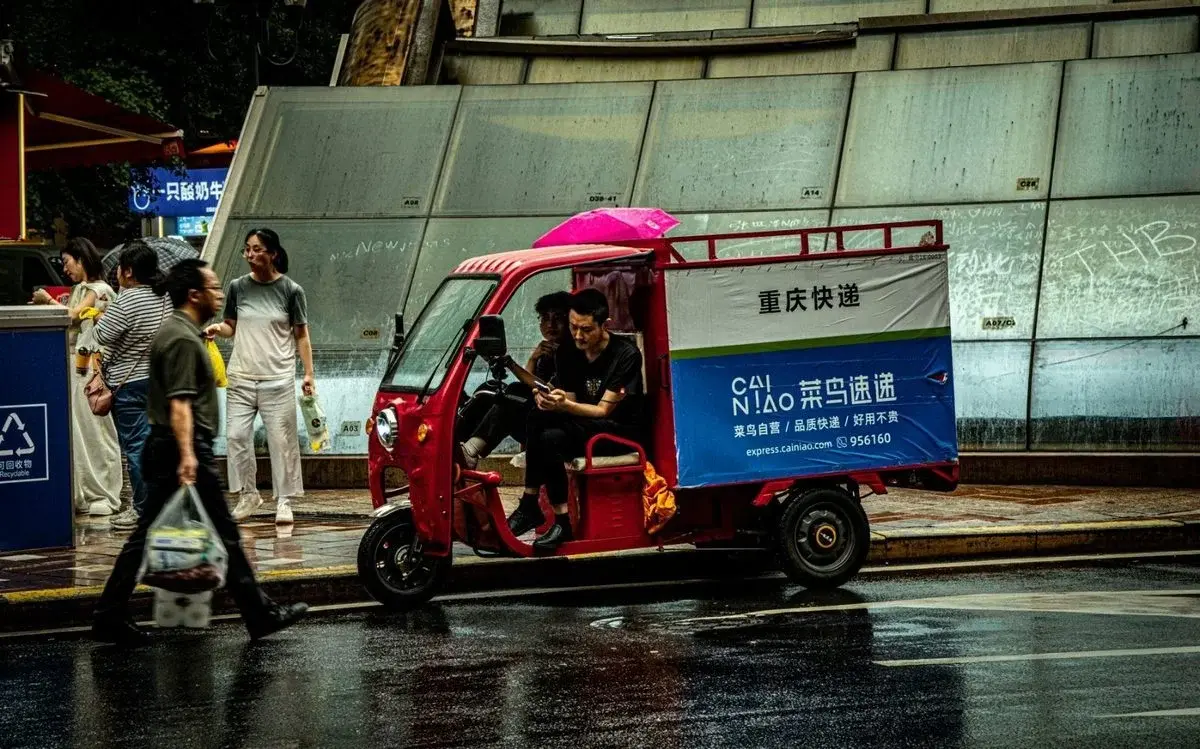
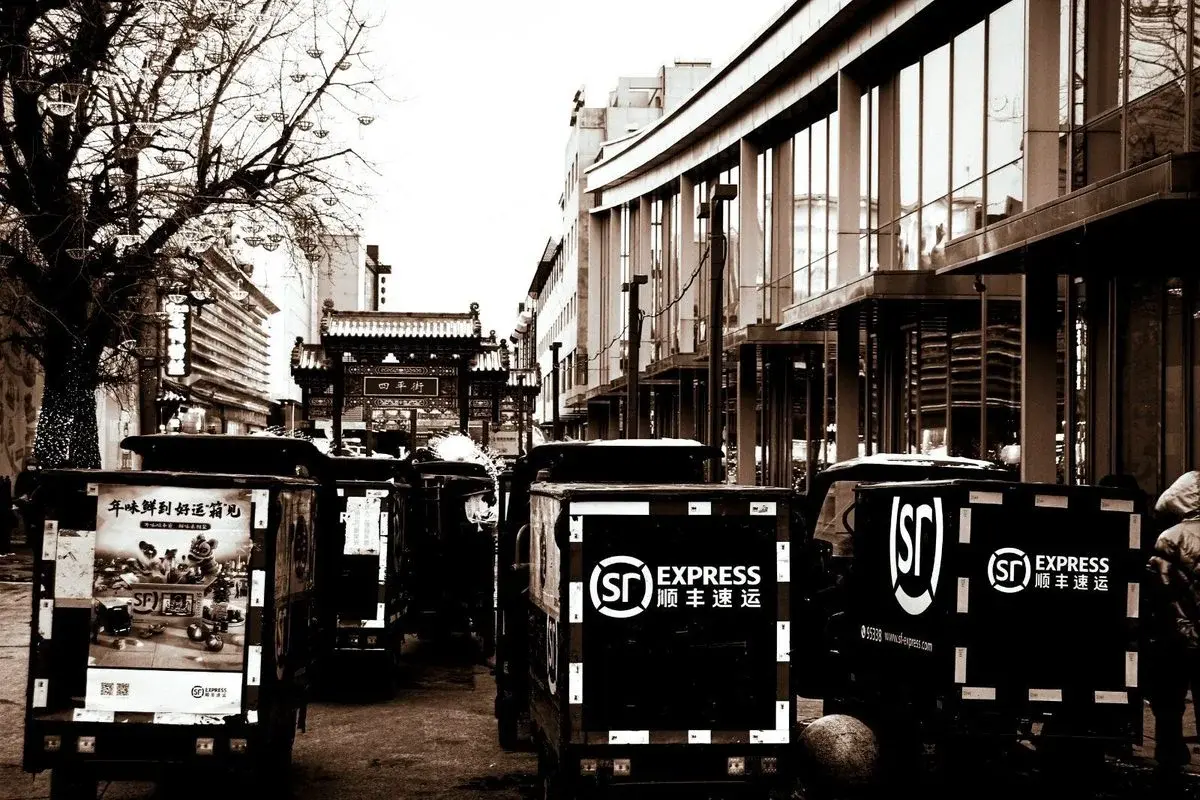
From Saturday errands to 15-minute delivery: how online shopping changed daily life.
When I lived in the UK, online shopping meant ordering on Tuesday and hoping it showed up by Friday. If I needed medicine, I walked to Boots. If I needed groceries, I carried bags home on the tube. That felt normal because it was normal — until I moved back to China and realized how much mental overhead I'd been carrying around.
Here, ordering medicine puts it at my door in fifteen minutes — not next-day, not "same day if you order before noon," but faster than I could get dressed and walk to the pharmacy myself. Groceries arrive within the hour. And the warehouse chains like Sam's Club and Walmart have their own delivery apps where I can walk the aisles, fill a cart, and have the whole haul brought to my door for less than I'd pay for parking in most Western cities.
That convenience has a real economic value. When you don't need a car for errands, don't pay for parking, don't burn Saturday mornings in queues, and don't pay marked-up retail prices at a physical store, the cost of living drops in ways that don't always show up in spreadsheets. This is the life behind the numbers.
01 — Three speeds, not one
Three speed tiers: instant retail, next-day standard, and multi-day bulk.
Most people outside China hear "fast delivery" and picture Amazon Prime: order today, get it tomorrow, maybe pay extra for the privilege. That was my mental model too. But China's e-commerce isn't just faster than that — it's operating on an entirely different map. There isn't one "fast"; there are three separate infrastructures running in parallel, and which one you're using changes what you can order, how much you pay, and whether your ice cream is still frozen when it arrives.
| Tier | Typical window | What it's for |
|---|---|---|
| Instant retail | 15–60 min | Medicine, groceries, convenience-store items, last-minute needs |
| Next-day standard | Overnight | Most ordinary purchases — clothing, electronics, household goods |
| Multi-day / bulk | 2–5 days | Larger items, cross-region shipping, less common goods |
The instant tier is the one that still surprises me after three years here. It runs on tiny neighborhood warehouses parked inside delivery range of your apartment, stocked with the few thousand items people actually reach for on short notice. The same riders who deliver your lunch on Meituan or Ele.me pick up from these micro-warehouses. It's not "e-commerce, but faster" — it's closer to a corner store that happens to have an unlimited backroom and an army of scooters outside.
02 — The infrastructure behind the speed
100,000 parcels per hour: the robot warehouses behind the speed.
China's automated sorting hubs process up to 100,000 parcels per hour with 99.99% accuracy, compressing delivery times from days to hours.
None of this speed happens by accident. A few months ago I came across footage of a Cainiao sorting hub during Singles' Day — hundreds of small AGV robots scurrying across the floor like mechanical beetles, lifting parcels and dropping them into chutes faster than any human could read a label. I thought it was a promotional video. Then I checked the numbers: those systems peak at 100,000 parcels per hour with a sorting accuracy of 99.99%. This isn't experimental tech. This is Tuesday.
JD's unmanned warehouse in Kunshan runs a similar playbook — over 300 robots handling more than 200,000 parcels a day, a facility that used to need 500 people now running on fewer than 60. The automation doesn't just cut labor costs; it compresses the time between "I clicked buy" and "a rider has it on his scooter" to the point where same-day delivery becomes the default, not the premium tier.
And here's why this matters for the cost of living: when a warehouse sorts 200,000 packages with 60 people instead of 500, the per-package cost collapses. That saving gets passed down — not always to the consumer directly, but through free-shipping thresholds so low they're practically meaningless, and delivery fees that often round to zero. The robots make the cheap possible.
03 — What's for sale, and where
What it costs: ¥59 free shipping, ¥88 memberships, 30-60% less than the West.
I used to think "online shopping" meant buying objects. In China, I use the same apps to book a plumber, buy a software license, and order concert tickets. Three broad categories flow through the same checkout: physical goods (still the biggest by volume), services you book like products (housekeeping, appliance installation), and virtual goods delivered instantly. But the real shock for me wasn't the variety — it was the price.
Last month I bought a set of kitchen knives — decent brand, delivered in two days. Total cost: ¥89, about $12. A comparable set on Amazon US would run me $35–40 plus shipping. That's not a fluke; it's the baseline. Because China manufactures most of what it sells, because platform competition is brutal, and because logistics costs are compressed by automation and scale, most everyday goods here cost 30–60% less than their Western equivalents — and they arrive faster.
What sits behind all three categories is a genuinely segmented market, not one dominant app doing everything. Different platforms specialize:
| Category | Platforms | What it's for |
|---|---|---|
| General goods | Taobao, Tmall, JD, Pinduoduo, Suning | Everyday physical products, largest by volume |
| Livestream commerce | Douyin, Kuaishou, Xiaohongshu, WeChat Channels | Video-driven, impulse-heavy, fastest-growing |
| Food delivery | Meituan , Ele.me | Restaurant meals, minutes not hours |
| Instant retail & groceries | Meituan Instant, JD Daojia, Hema, Dingdong | Fresh groceries and daily items, 15–60 min |
| Local services | 58.com | Housekeeping, repairs, local classifieds |
| Travel & hotels | Ctrip, Fliggy, Qunar | Flights, hotels, trip bookings |
| Niche & authentication | Poizon | Sneakers, streetwear, verified resale |
| Tickets & events | Damai | Concerts, shows, live events |
| Secondhand | Xianyu, Zhuanzhuan | Offloading things people no longer want |
That's still not an exhaustive list — it's illustrative of a broader pattern: there's a dedicated platform for nearly every category of purchase, each one built and optimized around the specific thing it sells rather than trying to be everything to everyone. Taobao, Tmall, JD, and Pinduoduo remain the largest by total sales, and for most ordinary purchases they're still my default. But the growth curve has shifted — traditional platforms have settled into low-single-digit growth, while livestream-driven platforms have posted double-digit growth for several years running, according to brokerage research covering late 2025. They didn't start as shopping apps; they started as places people were already spending hours scrolling, and commerce got built directly into that attention. The secondhand layer (Xianyu) is less something I've used directly and more something I watch friends use: passing along household items they'd otherwise have thrown out.
What it actually costs to shop this way
Free shipping isn't universal, and the threshold to get it varies by platform. But by Western standards, the bar is shockingly low. Pinduoduo ships free on almost everything, even a single ¥1 item. JD's own-operated store lowered its threshold to ¥59 (a flat ¥6 fee applies below that); Tmall Supermarket sits at ¥88; fresh groceries run a separate, higher threshold — typically ¥99, with a flat ¥12 fee below it.
| Membership | Typical price | What it removes |
|---|---|---|
| JD PLUS | ¥299/yr list, ¥99–149/yr on promotion | The ¥59 free-shipping minimum, entirely |
| Taobao 88VIP | ¥88/yr (¥888/yr below a spending threshold) | 5% off Tmall Supermarket, plus bundled streaming and food-delivery perks |
| Sam's Club (standard) | ¥260/yr | Access to warehouse pricing and home delivery |
| Sam's Club (Premium) | ¥680/yr | Same, plus monthly delivery-fee vouchers and cashback |
Paid membership only tends to pay for itself past a certain shopping frequency — the same math as any subscription, just applied to groceries instead of streaming.
What that delivery fee actually looks like, one store's version. Sam's Club's Dalian location — the branch I use — runs three separate delivery tiers, each with its own threshold: Express (极速达) waives the ¥15 first-15kg delivery fee on orders over ¥99, delivered within an hour; Scheduled (定时达) waives its ¥15 first-20kg fee on orders over ¥299, starting the next day but letting me pick the exact hour it arrives; and Bonded Global Purchase (保税全球购) — mostly imported cosmetics, supplements, and medicine — ships free on orders over ¥199, within a 1kg limit. Three thresholds, three different promises about when it shows up, all from the same membership.
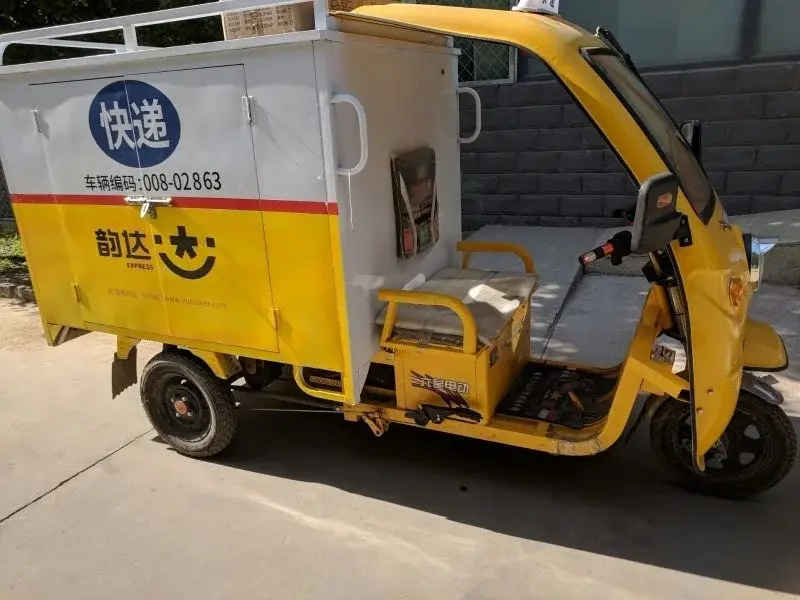
04 — How far it actually reaches
199 billion packages, 98.5% rural coverage: the scale of China's delivery network.
In 2025, China's courier networks handled roughly 199 billion packages. I had to sit with that number for a moment. The entire United States — with a population about a quarter of China's — processes somewhere around 20 billion. China moves ten times as many parcels per person. On the country's single busiest day, deliveries peaked at 777 million packages in 24 hours. The infrastructure isn't just bigger; it's operating at an entirely different order of magnitude.
| Metric | 2025 figure |
|---|---|
| National package volume | ~199 billion, +13.6% YoY |
| Per-capita packages/year | 141.6 |
| Average delivery time (nationwide) | 51.2 hours |
| 72-hr on-time rate, key regions | 87.0% |
| Rural delivery network coverage | 98.5% |
China's courier network handled 199 billion packages in 2025, reaching 141.6 packages per person and covering 98.5% of rural villages.
Figures from China's State Post Bureau and Ministry of Transport 2025 annual reporting, released January 2026.
The exceptions — and why they're closing
The honest caveat used to be: Xinjiang, Tibet, Hainan, and a handful of other remote regions — shipping excluded, or a steep surcharge attached. That warning used to sit printed directly on product pages. It was real — the sheer distance and thin population density made free shipping there a genuine money-loser for sellers.
What's changed is the sentence is disappearing in real time, not staying fixed. Since 2022, platforms have been actively building around the problem — consolidated-shipping models that batch orders into regional hubs before the last long leg, and local warehouses set up directly inside Xinjiang and similar regions to skip the long haul entirely. Xinjiang alone now has roughly 8,000 village-level logistics stations, covering close to 90% of villages. Consumers in Tibet have started receiving free-shipped goods from as far as Hainan. None of this means the gap is fully closed — some surcharges still apply in the most remote pockets — but "excluded" is quickly becoming the wrong word for what's actually a fast-shrinking exception.
05 — The tradeoff in the livestream aisle
The livestream tradeoff: faster to buy, easier to regret.
Livestream shopping runs on a different psychology than anything I grew up with. A limited-time discount ticks down on screen, a host talks through the item in real time, and you buy inside that pressure — closer to an impulse than a comparison. I've done it. The product information is thinner than a standard listing: fewer specs, fewer angles, less of the detail that lets you actually know what you're getting.
The faster the decision, the less I actually knew what I was deciding on. That's not a bug — it's the tradeoff the format was built for.
My own return rate on livestream purchases is higher than on regular listings, and everyone I know who works in that space says the same. It isn't defective; it's just a different contract. You trade certainty for entertainment and speed.
06 — When what arrives isn't what you ordered
When what arrives isn't what you ordered: platform dispute process.
In April 2026, I bought a used laptop through a livestream sale. What arrived didn't match the listing — wrong specs, scratched screen, the kind of details the host had glossed over. When I raised it with the seller, they insisted the mismatch was somehow my fault. I filed a dispute directly with the platform, uploaded photos, and waited.
The refund hit my account in under 48 hours, plus compensation for the return shipping. The seller didn't agree to it; the platform forced it. That's the part worth noting: the backstop isn't the seller's goodwill. It's a dispute process that exists independently of whether they want to cooperate. I've used it twice in three years. Both times, the buyer won.
07 — Getting it to your door
Four delivery methods: door, shelf, locker, and pickup station.
Most of the time nothing goes wrong, and the ordinary question is simply how the package gets to you. I've had all four of these happen to me:
| Method | What it looks like |
|---|---|
| Direct to door | Rider hands it to you, or knocks and leaves |
| Building/complex shelving | Left on an open shelf at the lobby or gate |
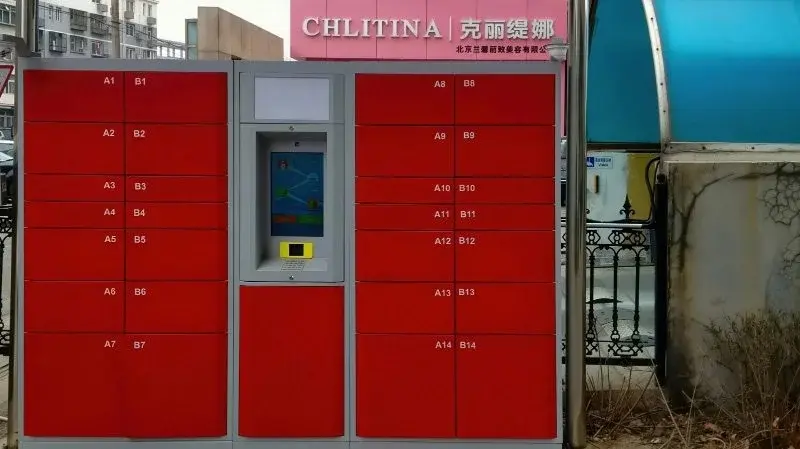
| Smart lockers | Code- or QR-based pickup, no staff needed |
| Cainiao pickup stations | Staffed local counter, held until picked up |
The detail that still disorients foreign residents — it certainly disoriented me when I first came back — is that packages left in the open, on a lobby shelf or a rack by the gate, mostly just stay there. I've had ¥2,000 electronics sit unattended for six hours. A stack of parcels on a building's ground floor is normal and unremarkable, not a risk anyone thinks twice about. I don't know if it's density (too many cameras, too many people around), culture, or some combination, but the default assumption is trust, not theft. That alone removes a layer of mental overhead I didn't know I was carrying.
08 — Who's actually carrying this
Millions of couriers: the workforce behind 199 billion packages.
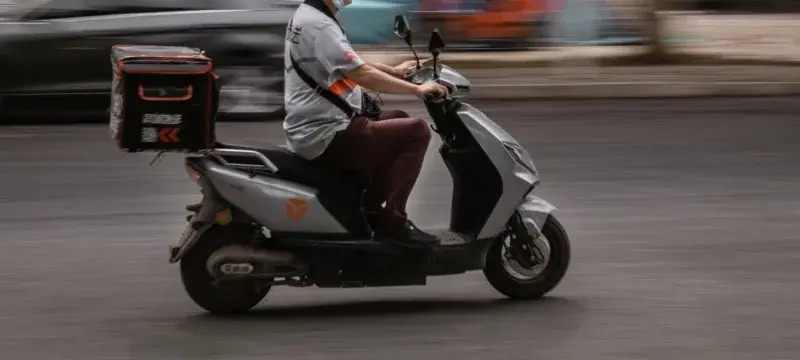
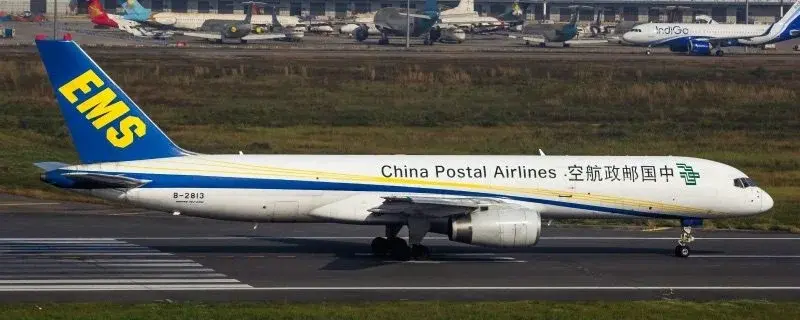
It's easy to notice the app and forget the person on the scooter. China's State Post Bureau puts the delivery workforce in the millions — riders, sorters, station staff — moving those 199 billion packages a year. I've watched a guy show up at my door in a thunderstorm with a ¥12 order of dumplings, water streaming off his helmet, and hand it over like it was nothing. It isn't nothing.
That workforce density matters economically, not just morally. Because there are so many riders competing for routes, the marginal cost of a delivery collapses. Platforms can offer ¥0 shipping on a ¥1 item because the rider is already going to that neighborhood anyway. The density makes instant delivery profitable at a scale that would be impossible elsewhere. The cheap prices and the fast speeds both run on the same thing: millions of people doing jobs that haven't been automated away yet.
The bottom line
Convenient enough that I stopped noticing: the real value of online shopping.
I don't think about delivery anymore. Three speeds cover anything I want, coverage reaches nearly the entire country, and the system is reliable enough that an unattended package is just where it goes. The real tradeoff isn't in the infrastructure — it's in the livestream aisle, where entertainment replaces information and you lean on the dispute process when the product doesn't match the pitch. For the most part, it does.
What still strikes me when I visit friends abroad is the mental overhead. They own cars partly for errands. They plan Saturdays around grocery runs. They pay for parking, wait three days for a delivery, and worry about porch pirates. I don't do any of that. The convenience here doesn't just save money — it buys back time. And when you're calculating the real cost of living somewhere, time is the number most people forget to include. How you live day-to-day matters more than which city you pick →
09 — Questions people actually ask
Quick answers
How fast can online shopping delivery actually be in China?
Fast enough that medicine can arrive in fifteen minutes — not next-day, not same-day, but faster than walking to the pharmacy. China's online shopping system spans three distinct speed tiers: instant retail (15–60 minutes), next-day standard, and multi-day bulk. Most Western consumers haven't experienced the first tier at all.
Does online shopping delivery reach everywhere in China?
Nearly everywhere, and the exceptions are shrinking faster than most people realize. Rural coverage now sits at 98.5%, and even remote regions like Xinjiang are getting free-shipped goods that used to carry steep surcharges. The logistics network is actively expanding into areas that were previously excluded.
How much do you need to spend for free shipping in China?
It depends on the platform, but the thresholds are shockingly low by Western standards. Pinduoduo ships almost everything free, even a single ¥1 item. JD's own store requires ¥59+, Tmall Supermarket sets the line at ¥88, and paid memberships like JD PLUS (¥99–149/yr on promotion) remove minimums entirely. Compared to Amazon Prime's subscription model, the baseline here is already "free."
Is livestream shopping in China worth the hype?
It's a real tradeoff — faster to buy, but easier to regret. The format is built for impulse purchases, not careful comparison. I've bought through livestreams myself, and my return rate is higher than on standard listings. It's entertainment commerce: great for discovering deals, risky for big-ticket items where you need full specs.
What happens if what arrives isn't what you ordered?
The platform steps in. I've filed two disputes in three years — both times, the platform sided with me and forced a refund independent of the seller's objections. The backstop is institutional, not personal, and it's one reason I feel comfortable buying high-value items online here.
How many packages does China's delivery system move in a year?
Roughly 199 billion packages annually — about ten times the per-capita volume of the United States. Single-day peaks hit 777 million. That scale, combined with heavy automation in sorting hubs and millions of couriers on the ground, is what makes the speed and low cost possible.