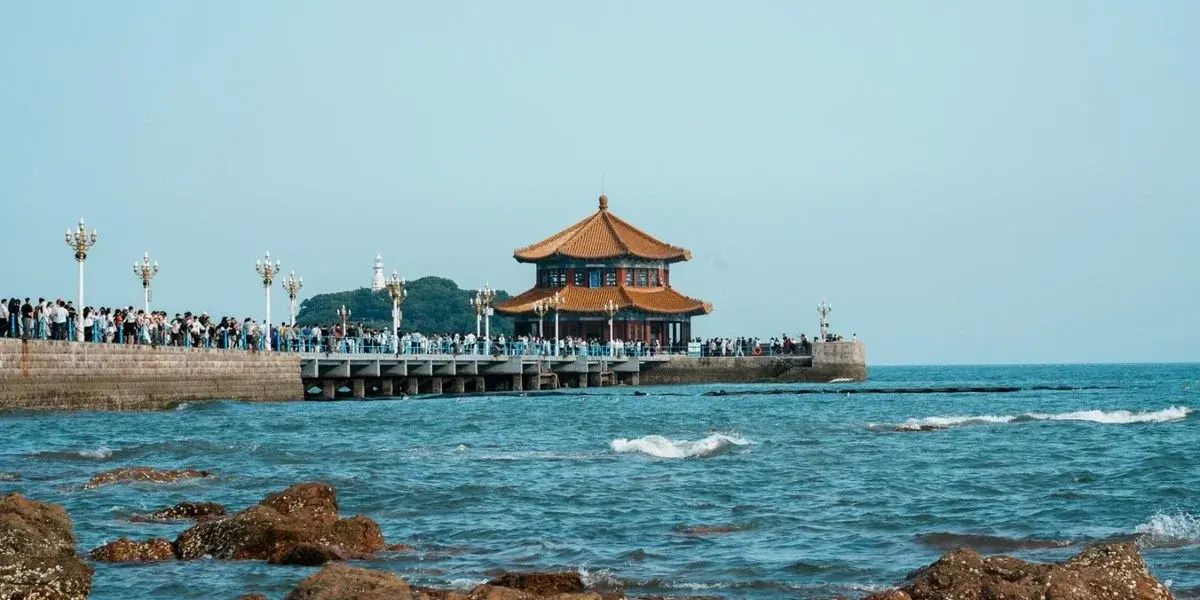
Living cost, at a glance
≈$389/mo
≈$175/mo
≈$471/mo
≈$860/mo
≈$646/mo
Rent from the §01 ledger. The non-rent line is Wise's own compiled "estimated monthly cost of living, excluding rent" for Qingdao (single person, 2026). Converted at ¥7.2 = $1.
Qingdao held the title of German colonial concession for seventeen years — 1897 to 1914 — and has spent the eleven decades since turning that short window into its entire public identity: red-tile villas, a globally exported beer, a naval harbor, and a reputation as one of the few Chinese cities most visitors describe, unprompted, as romantic. None of that reputation is manufactured out of nothing. All of it is real, sourced, and considerably older than the "seventeen years" framing makes it sound, because the German-built streets and the brewery both simply kept operating under every government that came after.
This is not a travel piece. What follows is the math and history of a mid-tier coastal city with an outsized reputation — today's numbers and dates, honestly sourced. My own connection to the city is thin and stated upfront: one engineered afternoon inside the old town around 2003, a company training years later that never actually reached the city itself, and a handful of airport transits. Where that limits the view, the text says so. The personal material appears only as texture, not as the spine of the piece.
01 — The number, and what it buys
Qingdao rent: ¥2,800/mo in the center, 39% of the median wage.
The headline numbers for Qingdao are clear: a city-center one-bedroom runs about ¥2,800 (≈$389) per month. The blended after-tax median wage is about ¥7,200 (≈$1,000) per month. That rent-to-income ratio — roughly 39% — places Qingdao among the more affordable cities in this series: cheaper than Nanjing or Shanghai, and only slightly above Chengdu. This page is built from public data and reporting, with the author's single afternoon visit woven in as texture, not as the primary source.
A modern one-bedroom in Qingdao's premium coastal core — Badaguan, Zhan Qiao, the old German concession streets around Zhongshan Road — runs ¥2,600–3,200 a month, call it ¥2,800 (about $389) in the middle. Local wage data is messier than the coastline: private-sector employees average close to ¥5,700 a month pretax (2024), while a blended, cross-industry estimate for 2025 puts the citywide average closer to ¥7,500–8,000 pretax. Split the difference, take out tax, and a reasonable after-tax median lands near ¥7,200 (about $1,000). That puts rent at roughly 39% of income — a shade worse than Chengdu's 36%, but comfortably better than Nanjing's 59% or Shanghai's ~70%, and squarely in the affordable half of this series. Qingdao is the brand-premium kind of cheap — read how it fits the full framework →
| City | 1-bed, center | After-tax median | Rent ÷ wage |
|---|---|---|---|
| Xi'an | $311 | $1,089 | 29% |
| Chengdu | $374 | $1,050 | 36% |
| Qingdao | $389 | $1,000 | ~39%* |
| Harbin | $423 | $857 | 49% |
| Nanjing | $694 | $1,181 | ~59% |
| Shanghai | $972 | $1,391 | ~70% |
*Paper figure. Rent range: Anjuke, 58.com and independent rental guides for Shinan and Zhan Qiao districts, mid-2026. Wage: Qingdao Municipal Bureau of Statistics 2024 private-sector average, blended with a 2025 citywide estimate; after-tax figure is this author's estimate, not an official number. Converted at ¥7.2 = $1. See sources below.
That's a genuinely good ratio, and it complicates the city's reputation a little. Qingdao markets itself internationally on romance and seaside leisure. But the underlying math for the people who actually live here looks more like a comfortable second-tier coastal city than a luxury resort town. Examined honestly, that's exactly what it is.
Qingdao's affordability isn't the interesting story here, though. The interesting story is why a mid-tier Chinese coastal city ended up with German-built streets, a globally exported beer, and a reputation as one of the country's few unambiguously romantic cities — all three the direct residue of a lease that lasted less time than a typical American mortgage.
The full rent picture, in the center and outside it
The 1-bed city-center figure is the same Anjuke/58.com-derived number used above. Wise doesn't independently track a Qingdao 1-bed outside-center figure at this same level of local specificity, so the outside-center row applies Wise's own city-to-suburb ratio for Qingdao to the local-listing center figure — a derived number, not an independent reading. The 2-bed rows come directly from Wise (the midpoint of their own 1-bed and 3-bed figures for Qingdao), a different source from the anchor above; treat the 2-bed numbers as a different data source's view of the city, not on the same footing as the anchor. Meal and transit figures are Numbeo's "Meal, Inexpensive Restaurant" and "One-Way Ticket, Local Transport" for Qingdao, read early August 2026 — the same benchmark used across every city on this site. Converted at ¥7.2 = $1.
Your daily choices shape the bill more than the city itself →
What the rest of the utility bill looks like
Electricity, water, and gas are all tiered. Unlike most cities in this series, Qingdao settles electricity monthly, not annually — and residents can opt into time-of-use pricing on top of the tiers, like in Nanjing.
| Tier | Monthly usage | Rate |
|---|---|---|
| 1 | 0–210 kWh | ¥0.5469/kWh |
| 2 | 211–400 kWh | ¥0.5969/kWh |
| 3 | 400+ kWh | ¥0.8469/kWh |
| — | Shared-meter (合表) | ¥0.555/kWh flat |
Households can opt into time-of-use pricing on top of the tiers: tier-1 peak (8am–10pm) ¥0.5769/kWh, off-peak (10pm–8am) ¥0.3469/kWh outside the November–March heating season, dropping to ¥0.3469/kWh (an even deeper discount) during it. Tiers 2 and 3 add the same peak/off-peak spread on top of their own base rates.
| Tier | Annual usage | Rate |
|---|---|---|
| 1 | 0–144 m³ | ¥2.50/m³ |
| 2 | 145–204 m³ | ≈¥5.00/m³ |
| 3 | 204+ m³ | ≈¥10.00/m³ |
Tiers 2 and 3 were widened from a 1:1.5:3 to a 1:2:4 price ratio in a February 2026 reform (applied first in the West Coast New Area, now aligned with the central three-district rate) — tier 1 didn't move, only the gap above it did. About 87.5% of households stay inside tier 1 in an ordinary year.
| Tier | Annual usage | Rate |
|---|---|---|
| 1 | 0–228 m³ | ¥3.54/m³ |
| 2 | 229–348 m³ | ¥4.12/m³ |
| 3 | 348+ m³ | ¥4.99/m³ |
Households without access to central heating who heat independently with gas get a different, more generous two-tier schedule instead: ¥3.54/m³ up to 1,200 m³/year, then ¥4.12/m³ above that — no third tier at all. It's the same "independent heating" exception this site has found in several northern cities, sized around a much larger cold-season gas load.
Electricity: Shandong provincial tiered residential schedule, applied citywide, billed monthly. Water: Qingdao municipal residential schedule, tier ratio widened February 2026. Gas: Qingdao Municipal Development and Reform Commission, main urban three districts (Shinan, Shibei, Licang), most recent adjustment August 2023, still current. Converted at ¥7.2 = $1.
Standardized comparison figure, applied the same way across every city on this site: 220 kWh electricity + 15 m³ water + 25 m³ gas per month, a single-occupant baseline that excludes winter heating, run against the tiers above (electricity on Qingdao's own monthly tiers, water and gas on their annual ones). At Qingdao's rates that's ¥121 electricity + ¥45 water + ¥92 gas ≈ ¥258 (≈$36)/month.
These utility rates are low because the pipes, wires, and decades of capital behind them were subsidized long before you arrived. The real cost of cheap water, power, and transit →
What the everyday basics cost, beyond the seafood counter
| Item | RMB | USD |
|---|---|---|
| EggsRetail average | ≈¥4.85/500g | ≈$0.67 |
| Vegetables19-item basket, retail average | ≈¥3.47/500g | ≈$0.48 |
| Pork | Not shown — see note | |
Eggs and vegetables: Qingdao Price Certification and Monitoring Center's own weekly report, week of May 23–29, 2026 — genuinely city-specific. We couldn't find a comparably sourced Qingdao-specific retail pork figure and left it blank rather than substitute a provincial or national number. The seafood pricing above is where this city's food-cost story actually lives; this table just covers the basics that aren't seafood. Converted at ¥7.2 = $1.
02 — Seventeen years, and what they left behind
Germany's 17-year lease and what it left behind in Qingdao.
In 1897, using the murder of two German missionaries as pretext, Germany forced a 99-year lease on Qingdao and the surrounding Jiaozhou Bay from the Qing government. It held the territory for barely a sixth of that term: Japan seized it in 1914 during the opening weeks of the First World War, ending German rule for good. Seventeen years, start to finish — shorter than the run of a typical American 30-year mortgage, and yet those seventeen years did more to define Qingdao's identity than the century-plus of Chinese administration on either side of them.
In that short window, German planners laid out a European-style town on the peninsula: wide streets, drainage systems well ahead of their time, and the red-tile-roofed villas that still define neighborhoods like Badaguan today. A German naval garrison built the port infrastructure that made Qingdao a serious harbor. And in 1903, German and British investors founded the Germania-Brauerei — the brewery that became Tsingtao Brewery. It used the old postal romanization of Qingdao's name as its permanent export brand, still sold under that spelling in more than 100 countries today.
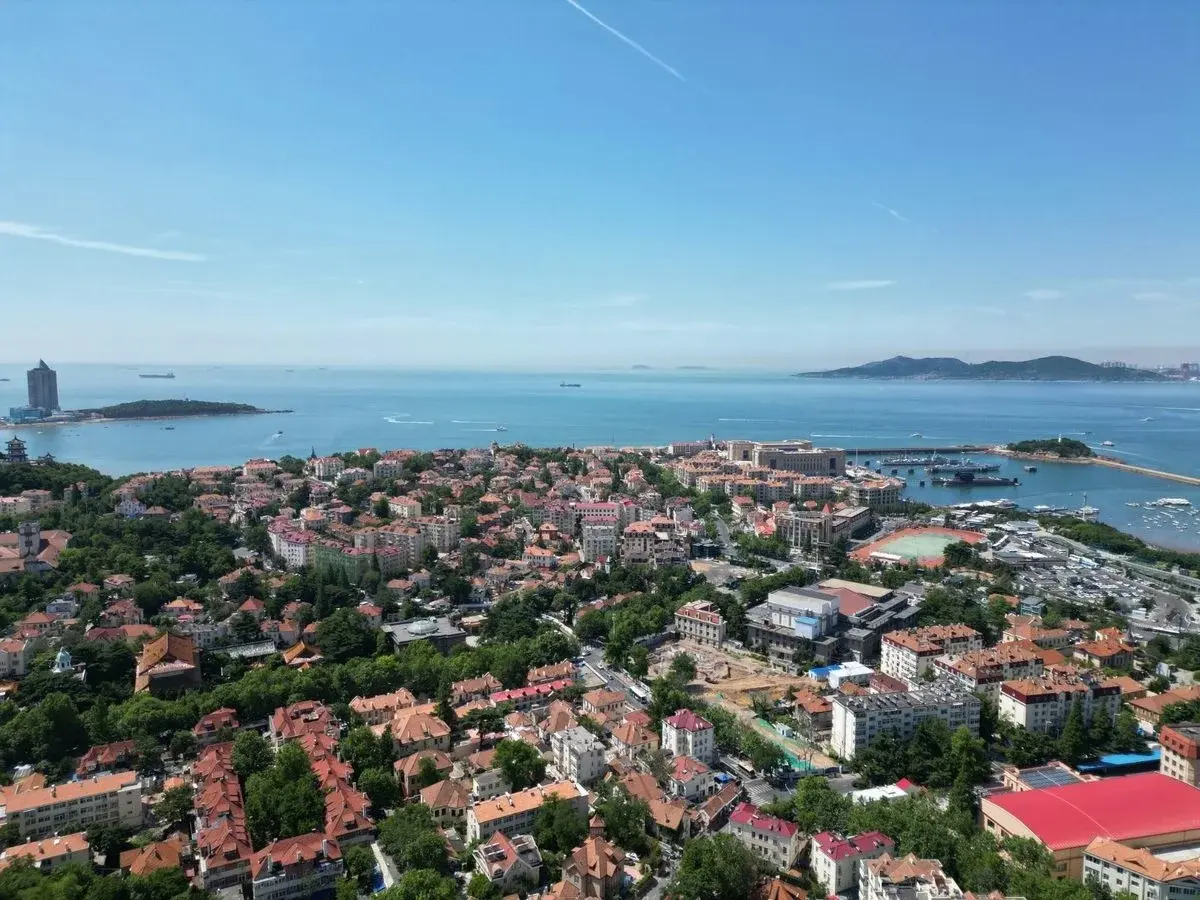
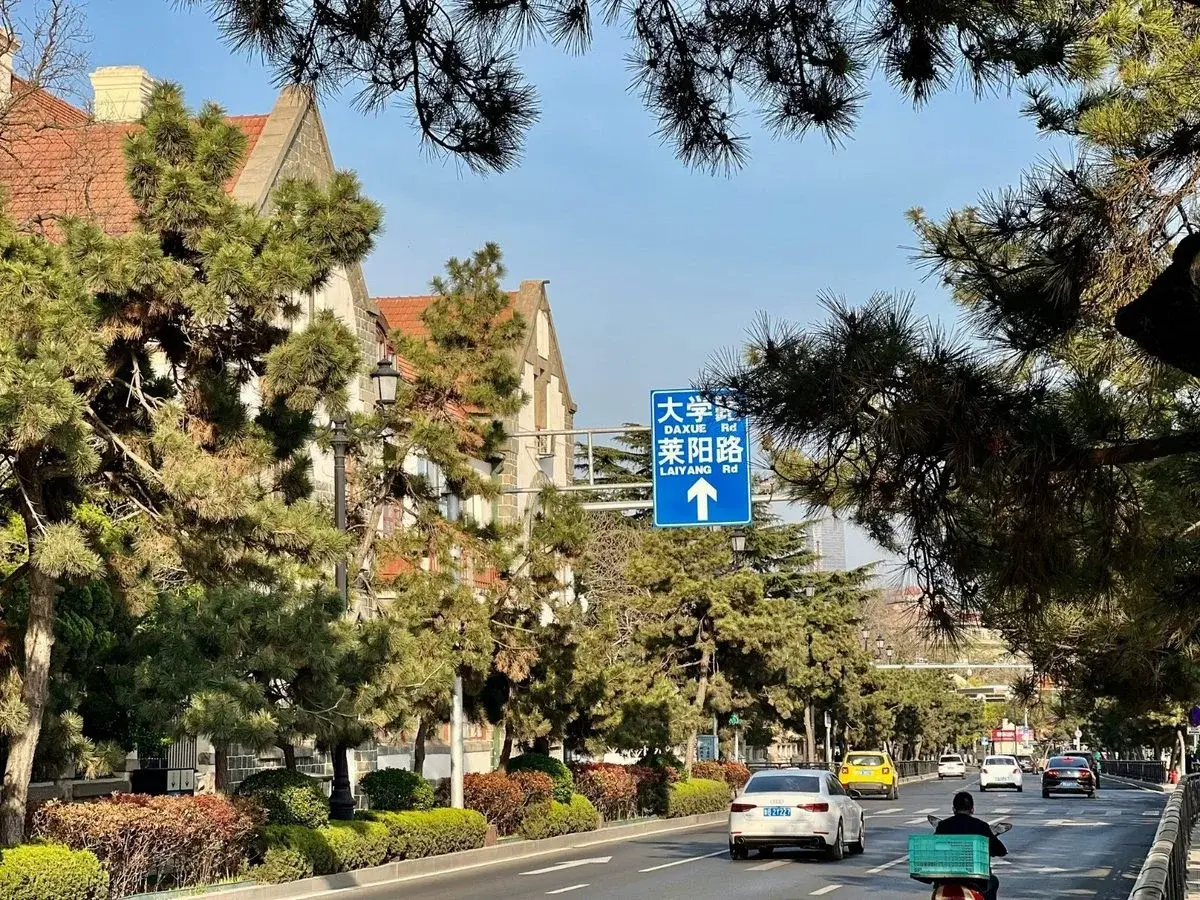
St. Michael's Cathedral, the twin-spired Catholic cathedral that anchors the old town's skyline today, was actually finished in 1934 — two decades after German rule ended. But it was built squarely within the architectural tradition the Germans established, by a later Chinese administration that inherited the town's colonial-era planning conventions rather than replacing them.
The other detail from that same afternoon: Qingdao's central beaches ran fine, soft sand — a real contrast to the coarse, stony beaches I'd grown up with in Dalian, and close enough to the train station to reach on foot. A coastal city built compactly enough that its best asset sits in walking distance of its own transit hub is itself a cost-of-living fact, even if it never shows up in a rent table.
03 — Where the postcard ends and the port begins
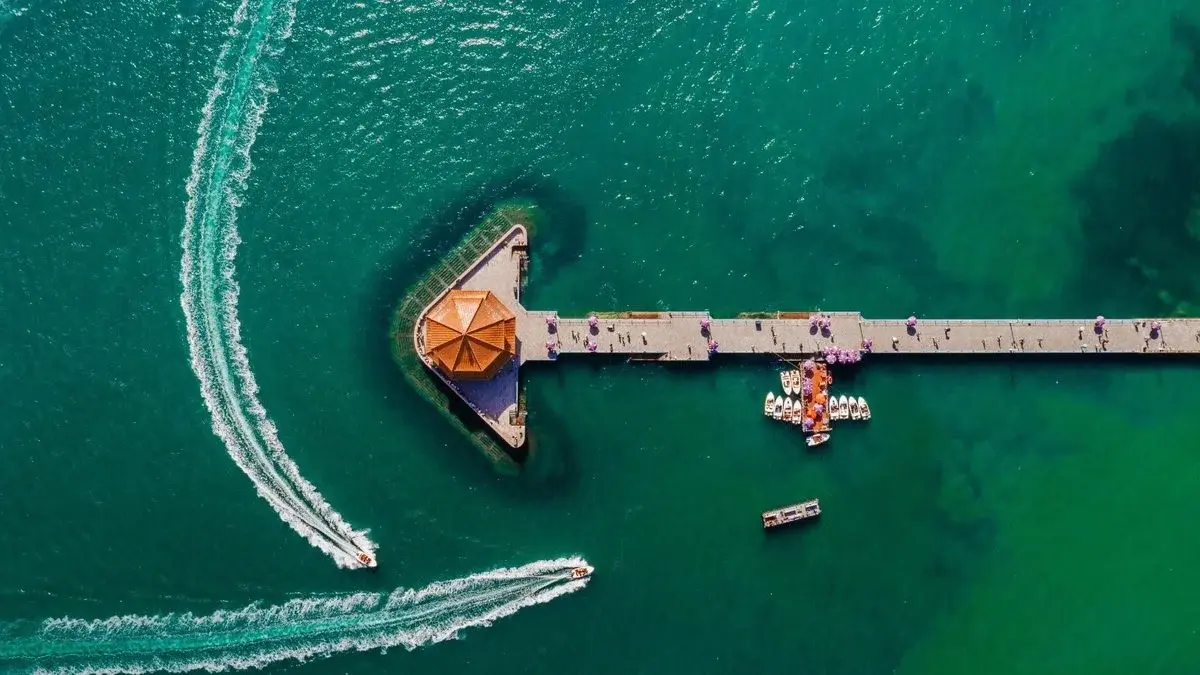
Old town and new CBD: two Qingdaos, one city.
Two stretches of Qingdao's coastline, a few kilometers apart, explain how the city pays its bills without living entirely inside its own postcard.
Zhan Qiao & Badaguan
The pier, the old concession streets, the red-tile villa district — genuinely beautiful, genuinely historic, and thoroughly built for tourism today. This is the Qingdao every postcard and every one-day visitor, myself included, actually sees.
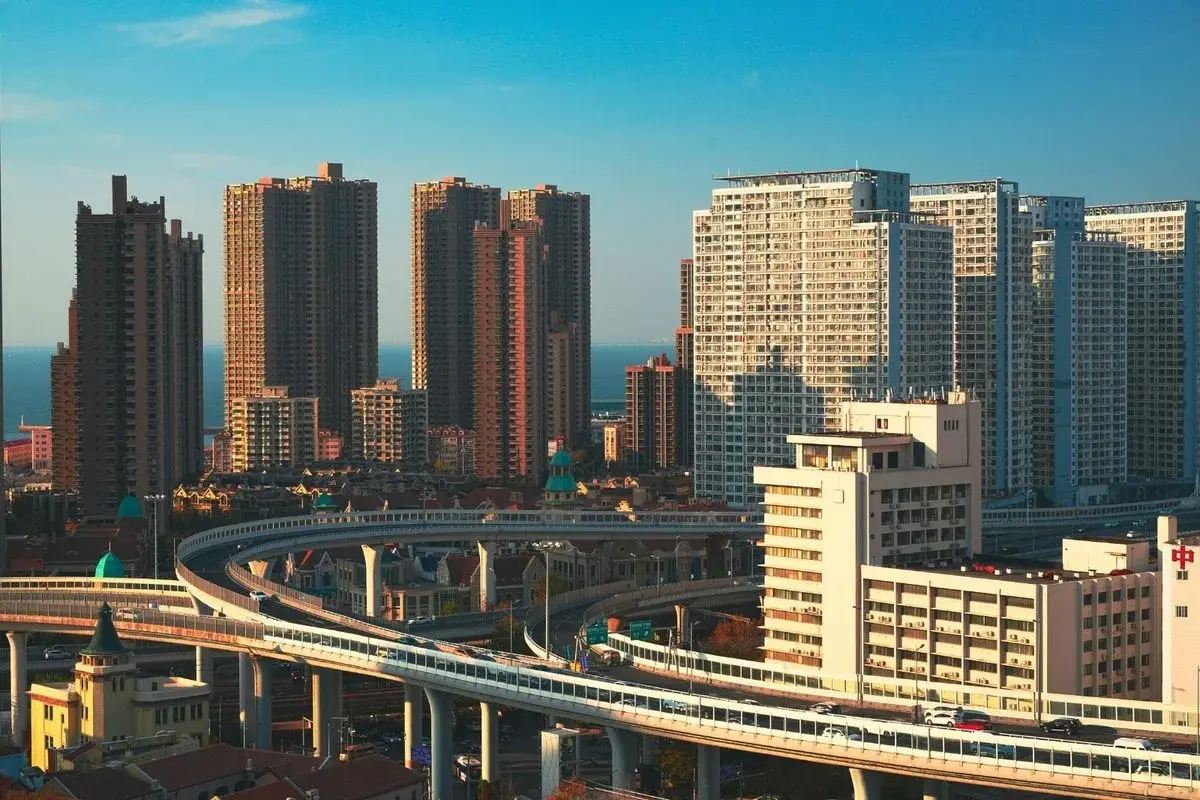
Old concession · heritage tourismFushan Bay / Shinan CBD
A cluster of glass towers along the newer stretch of coastline, anchoring Qingdao's finance, shipping, and ocean-economy sectors. It's the skyline in most of the drone photography the city uses to sell itself as a modern metropolis, not just a colonial relic.
Finance · shipping · ocean economy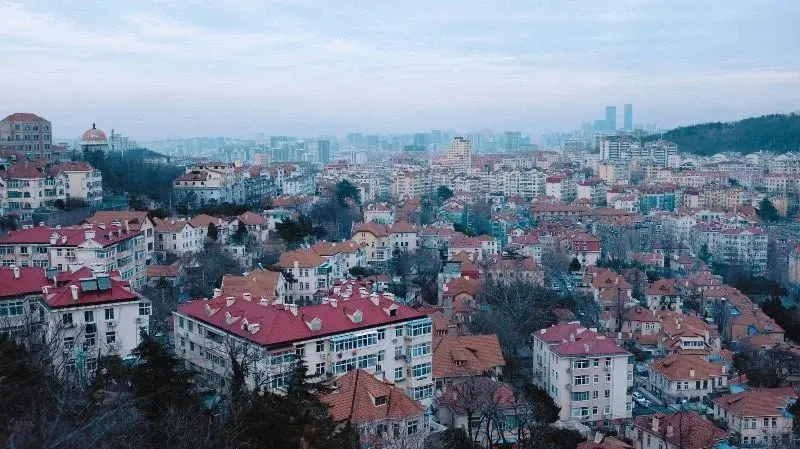
The way I'd put it: Zhan Qiao and Badaguan sell you Qingdao's past. Fushan Bay is betting on an economy the Germans never saw.
Qingdao is also home to the headquarters of Haier and Hisense, two of China's largest appliance and electronics manufacturers. That's a genuinely significant industrial base. It has nothing to do with beer, beaches, or German architecture, and rarely makes it into the city's own tourism marketing.
04 — Who's actually here, if you're arriving from North America
Where North Americans live and work in Qingdao.
Qingdao's foreign presence has real institutional depth, not just a colonial-era backstory. Between 1906 and 1949, fourteen countries kept a consulate, representative office, or trade mission in the city — a number the §02 territory implies but doesn't quite state. That history broke entirely in 1949 and stayed broken for four decades; it only restarted in 1994, when Japan, South Korea and Thailand each opened a new consulate here.
| Area | Why here | Who you'll find |
|---|---|---|
| Fushan Bay / Shinan CBD | The modern-economy district named in §03 — Japan's Consulate General sits inside the Qingdao International Finance Center here, alongside South Korea's and Thailand's consulates | Consular staff, corporate executives, finance professionals |
| Laoshan, Huangdao & Chengyang | Not the CBD — these three outer districts hold roughly two-thirds of Qingdao's international schools between them, including several that enroll foreign-passport students exclusively | International-school families and teachers |
That second row corrects an assumption worth naming out loud. The obvious guess is that a city's foreign-family infrastructure clusters around its old colonial core or its shiny new CBD. In Qingdao, it doesn't — international schools have mostly moved to the outer districts, not stayed downtown with the consulates. Anyone actually relocating a family here on a corporate assignment is likely commuting between a Shinan office and a Laoshan or Huangdao school run, not living entirely inside either one.
This section describes where Qingdao's foreign professional, consular, and international-school population is known to concentrate — compiled from consular records and international-school directory listings, not a formal nationality-specific census. Treat the figures as directionally right rather than a precise headcount.
05 — What the everyday food and beer actually cost
What food and beer cost in Qingdao: shellfish, seafood, and ¥15 bags of draft.
Haier and Hisense are where the wage in that first table gets earned. What it actually buys, day to day, is easiest to see on a dinner table.
I don't have a personal food story from my one afternoon here — we never sat down for a proper meal — so this section leans entirely on researched, sourced local pricing rather than memory. Qingdao's everyday food culture runs on two things: cheap shellfish and unfiltered draft beer sold, famously, in plastic bags. Locals call it sanpi (散啤) — beer trucked straight from the brewery that same day, sold by the bag with a straw, and treated as a normal grocery-run item in summer rather than a novelty.
A typical small-shellfish spread — clams, scallops, farmed shrimp, a whole yellow croaker — runs roughly ¥95 in raw ingredients, plus a ¥55 processing fee at a seafood-market stall or neighborhood beer house, plus two bags of draft beer at around ¥15 each. Total for two people: roughly ¥185 (about $26), for what would be a genuinely generous seafood dinner in most other cities. Individual clams run as little as ¥5–8 a pound.
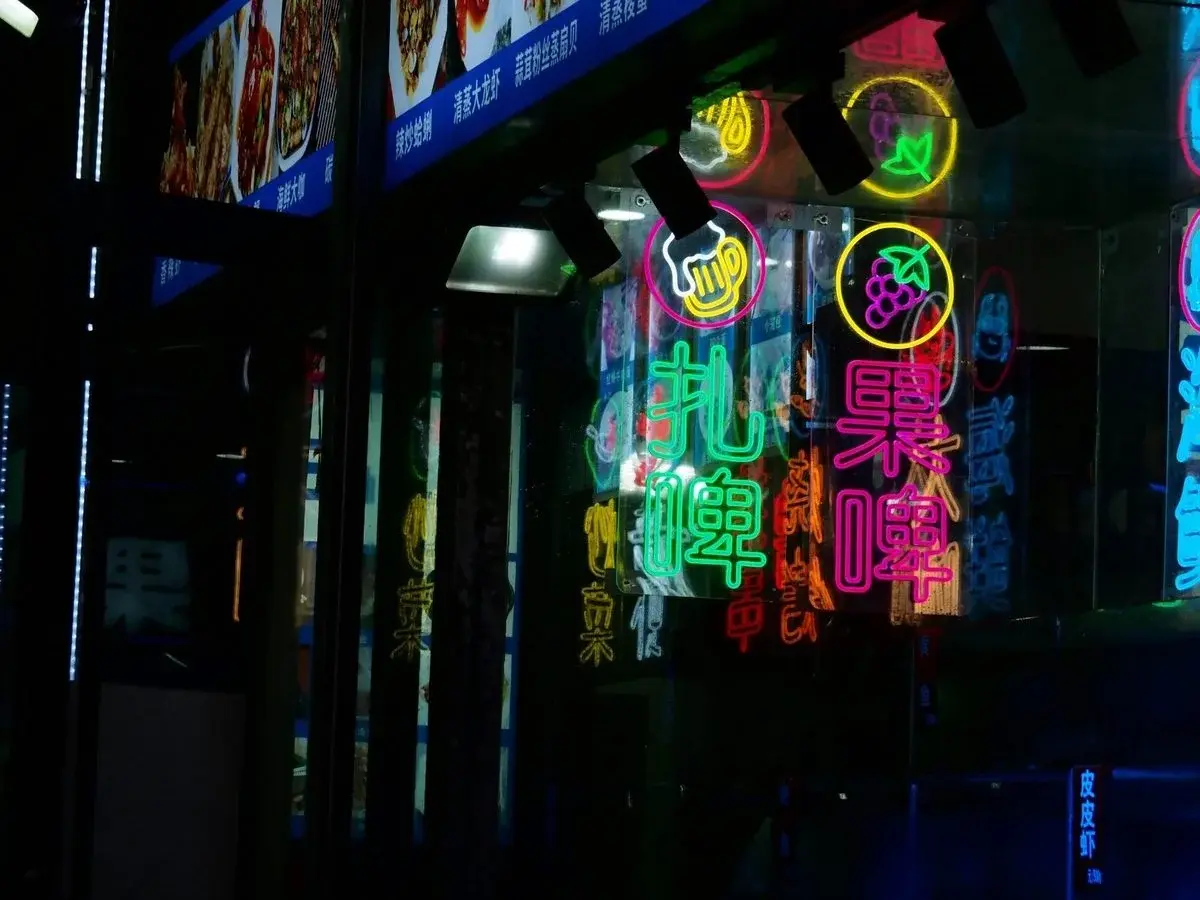
The honest caveat: buying seafood at a wet market and having a nearby beer house process it typically runs 40–50% cheaper per person than ordering the same dishes at a sit-down restaurant, according to local guides. But it only makes sense for groups of four or more, since market seafood is mostly sold by weight rather than in single portions.
Getting to that market, or anywhere else in the city, is the part of my own visit I can document least — and the part the city itself has changed the most since.
06 — Getting around
Qingdao Metro: 8 lines, 171 stations, and a network built after my visit.
I have no personal transit routine to report — my one afternoon here was entirely on foot, from the train station to the beach to the old German quarter. What I can report is the network itself. As of December 2024, Qingdao Metro runs 8 lines across 171 stations, covering roughly 352 kilometers of track. It's a system built almost entirely after my visit, with several of those lines — including express lines out to Jiaozhou Bay and the Blue Silicon Valley area — still under active expansion. The airport transits I have made since all ran through Jiaodong International, which has its own underground metro station built into the terminal complex. That's the kind of unglamorous, everyday infrastructure covered in this project's look at China's air-rail hubs, not anything I saw myself.
For the current network layout, fares, and first/last train times, the operator's own site is the right source: Qingdao Metro Group — official site →
The real cost behind cheap metro fares →
Network stats: Chinese Wikipedia's Qingdao Metro entry, citing Qingdao Metro Group figures current to December 2024. Full national picture: Getting Around a City.
That's the network inside the city, built almost entirely after I'd already gone home. The more honest transit story I can actually tell is the one about getting here in the first place.
07 — A visitor's ledger
Getting to Qingdao in 2003: ferry, train, and a 22-hour detour.
I've never lived in Qingdao, so there's no household budget to hand you here — only the one trip I actually made, and what it cost. In 2003 or thereabouts, getting from Harbin to a single afternoon in Qingdao meant an overnight ferry to Yantai, a same-day train transfer down to Qingdao, and a night train onward to Beijing. The whole detour was built around not letting a friend's business trip pass without me showing up for it.
Fares and durations from memory, approximate — this predates any digital record I can check against. Treated as illustrative, not precise.
High-speed rail has since collapsed a route like this into a fraction of the time — Qingdao now sits within a few hours of most of Shandong and neighboring provinces by HSR. I haven't personally tested the new version of that trip, so I won't quote a current fare here. The honest comparison is simply that the version I lived was built entirely around slow boats and overnight trains. That version of China's transportation map barely exists anymore.
The number that matters more than the fare
For a one-day detour like mine, the real cost was never the ticket price — it was the two nights of sleep I gave up to make the schedule work. That's a cost this site's usual ledgers don't have a column for, and it's the only one I can honestly report from Qingdao.
Getting there cost me sleep. Once I arrived, the weather was the one thing that cost nothing at all.
One practical note for anyone planning a summer visit or stay: Qingdao's mild season is exactly why the city's rental market spikes in July and August, when summer-escape migrants arrive from inland furnace cities. Short-term furnished rents can run 35–70% above the 12-month baseline during that window — worth knowing before you book, and worth budgeting for rather than discovering on arrival.
08 — The cost the brochures oversell, in reverse
Qingdao's climate: mild summers, moderate winters, and modest savings.
Where Nanjing's climate section on this site is about a genuine "furnace city" cost, Qingdao's is closer to the opposite case. Its coastal, oceanic climate keeps summers notably cooler and more humid-mild than inland Shandong or the Yangtze basin cities. Winters are milder than its northern latitude would suggest, too, moderated by the Yellow Sea. Qingdao sits north of the Qinling–Huai line, so it does get municipal winter heating — unlike Nanjing or Shanghai — but doesn't need to run it as hard or as long as truly cold northern cities like Harbin.
The honest framing: Qingdao's weather is a genuine, modest cost advantage — lower air-conditioning load in summer than almost anywhere else in this series, heating that exists but doesn't have to fight a Harbin-grade winter. It's not a dramatic story like Nanjing's furnace heat or Shanghai's damp cold. It's just quietly one of the more comfortable climates on this site, and comfort at this scale is exactly the kind of thing that never shows up in a rent table. It also makes Qingdao one of China's major summer-escape destinations — pulling residents out of the furnace cities to the south and west for June through August. Heating, AC, and the other monthly drains hidden from the spreadsheet →
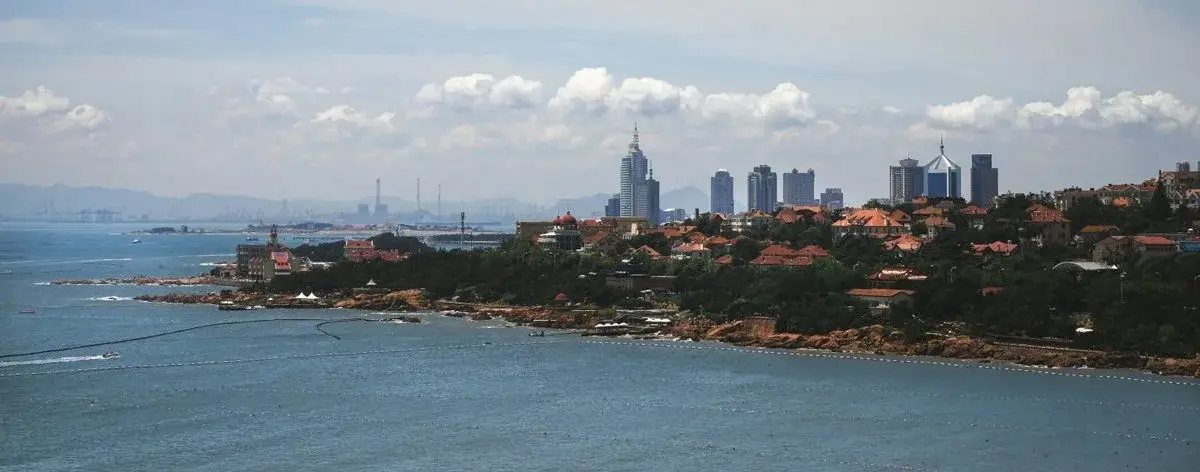
What I can't responsibly report on is Qingdao's actual naval significance — the city hosts a genuine People's Liberation Army Navy base, and this is a cost-of-living guide, not a defense-analysis piece. I'll note it exists, the way any honest visitor's account of the harbor would, and leave it there.
09 — The honest brake
What the brochure leaves out
Three things keep the tidy story honest. First, "romantic seaside city" is a real reputation but a curated one. It describes the postcard districts — Zhan Qiao, Badaguan, the old concession — far better than it describes the Haier/Hisense industrial base, the naval harbor, or the ordinary residential blocks most Qingdao residents actually live in. Don't let the brochure image stand in for the whole city.
Second, my own connection to this city is genuinely thin — a single afternoon roughly two decades ago, plus a company training years later that never actually reached the city itself, plus a handful of airport transits. I have never rented an apartment here, never had a Qingdao landlord, never done a weekly grocery run. Everything above the rent-and-wage table is a visitor's honest impression from one day, clearly labeled as such.
Third: the German colonial history is genuinely charming from a distance — the architecture, the beer, the street grid — but it began with a forced 99-year lease extracted under threat after a manufactured pretext. This page treats that history factually rather than nostalgically; the city's own tourism marketing tends to romanticize it more than a full account probably should.
Qingdao sells you a seventeen-year German lease as its whole identity. The other hundred-plus years — the navy base, the appliance factories, the ordinary residential blocks — are where most of the city's actual life happens.
10 — Questions people actually ask
Quick answers
How much does rent cost in Qingdao?
A one-bedroom in the city center runs about ¥2,800/month (≈$389); outside the center it drops to roughly ¥1,260 (≈$175). Rent eats about 39% of the median wage — genuinely affordable by this site's standards.
Why does Qingdao look German in places?
Germany held a lease over Qingdao from 1897 to 1914 — seventeen years, shorter than most careers — and the city has been selling that colonial-era architecture and beer-brewing legacy ever since.
Does Qingdao's mild climate actually save money?
Modestly, yes. It's one of China's mildest big-city climates, which trims heating and cooling costs somewhat compared to cities with harsher winters or summers. The page frames this as a real but modest saving, not a dramatic one.
What does a two-bedroom cost in Qingdao?
About ¥4,510/month (≈$626) in the city center, or ¥2,540 (≈$353) outside it, sourced separately from the one-bedroom figures above.
Is Qingdao's seafood as cheap as its reputation suggests?
A typical small-shellfish spread — clams, scallops, farmed shrimp, a whole yellow croaker — runs roughly ¥95 in raw ingredients plus a ¥55 processing fee at a restaurant that cooks it for you.
If you're thinking of going
Qingdao, for someone visiting or considering the move
- The old concession commands a real premium. Badaguan and Zhan Qiao-adjacent rents run well above the citywide average; districts further from the coast undercut them meaningfully.
- The climate is a genuine, quiet advantage. Milder summers and winters than most of this series — worth factoring into any honest cost comparison, even though it never appears on a rent listing.
- High-speed rail has closed the distance. Qingdao sits within a few hours of most of Shandong and neighboring provinces by HSR — a different world from the overnight-ferry-plus-two-trains version of the trip I once made.
- The postcard isn't the whole city. Haier, Hisense, a working naval harbor, and ordinary residential Qingdao all exist well outside the old German quarter's frame.
- The first-week bill: Deposit, agent fees, visa medicals, and kitting out a flat stack up before you earn a yuan. See what move-in really costs →
- Still deciding? Answer seven questions to find a city that matches your priorities → Or browse the city match tool →
The bottom line
Should you visit — or live in — Qingdao?
Visit, easily — few Chinese cities pack this much architectural distinctiveness, genuine beach access, and a globally recognized export brand into one compact, walkable old town, and the cost of doing so is modest by this project's standards. Live there, and the honest answer is that Qingdao looks like a comfortable, moderately priced, climate-advantaged mid-tier coastal city for the people who actually live in it — which is a good answer, just a quieter one than the postcard suggests. I've only ever spent one deliberately-engineered day here. I'd engineer another one in a heartbeat.