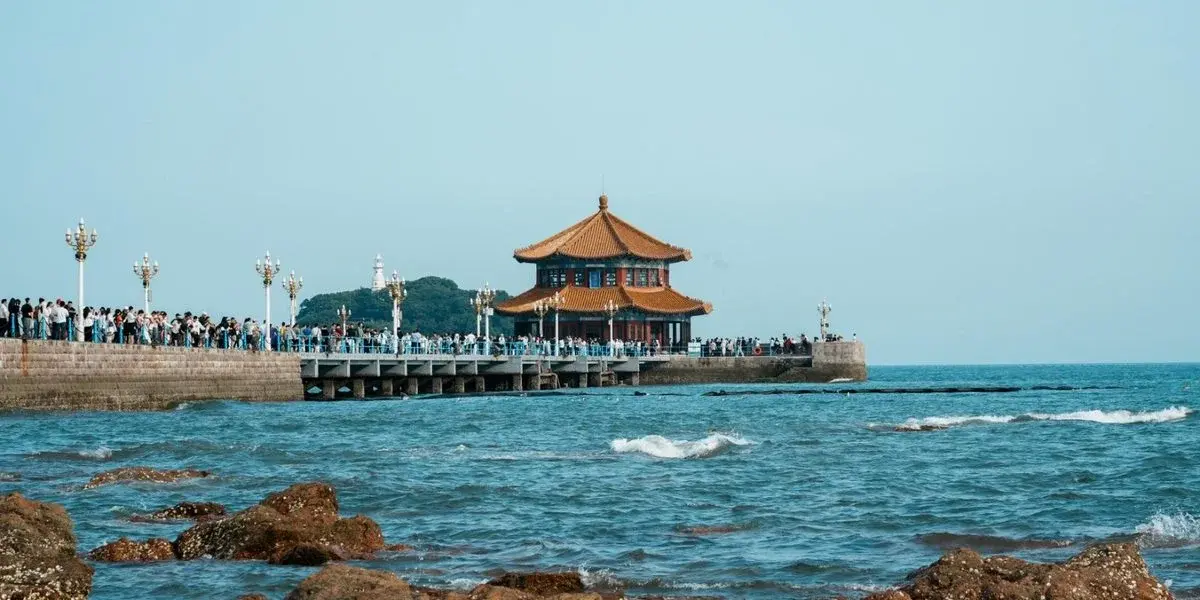
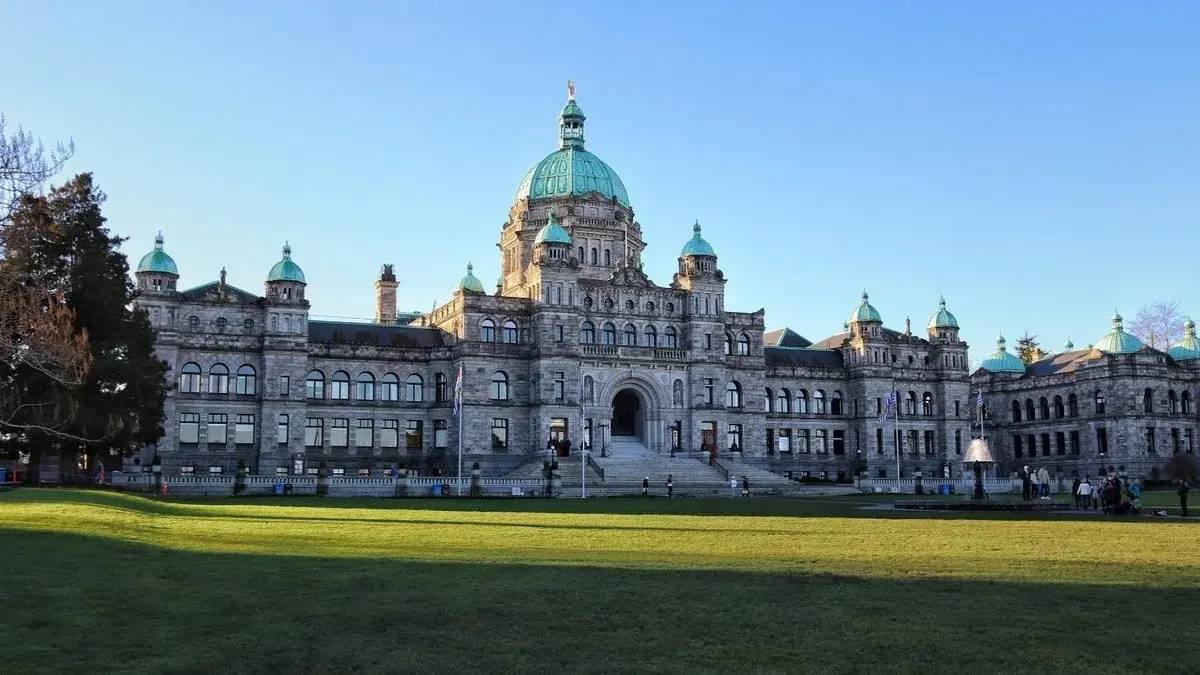
Both cities are famous for the same trick: a colonial power built a European-style town on a Chinese or Indigenous coastline, and the town outlived the empire that built it by keeping the buildings, the port, and the reputation for being "more foreign than the foreign country itself." Qingdao is sometimes called China's most German city; Victoria has been calling itself "more British than Britain" for over a century. Neither claim is actually about the present-day politics of Germany or Britain. Both are about architecture and marketing outliving occupation.
The colonial timelines couldn't be more different. Germany held Qingdao for seventeen years; Britain's Vancouver Island colony and its successor governments have run continuously since 1843. But the cities that resulted are oddly similar: mild coastal climate, a naval base, a heritage core sold hard to tourists, and a genuinely comfortable, unhurried pace underneath.
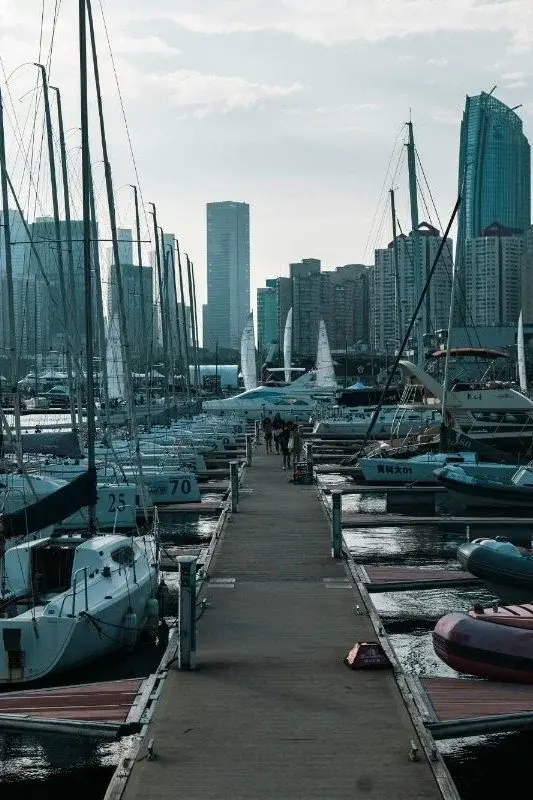 Qingdao
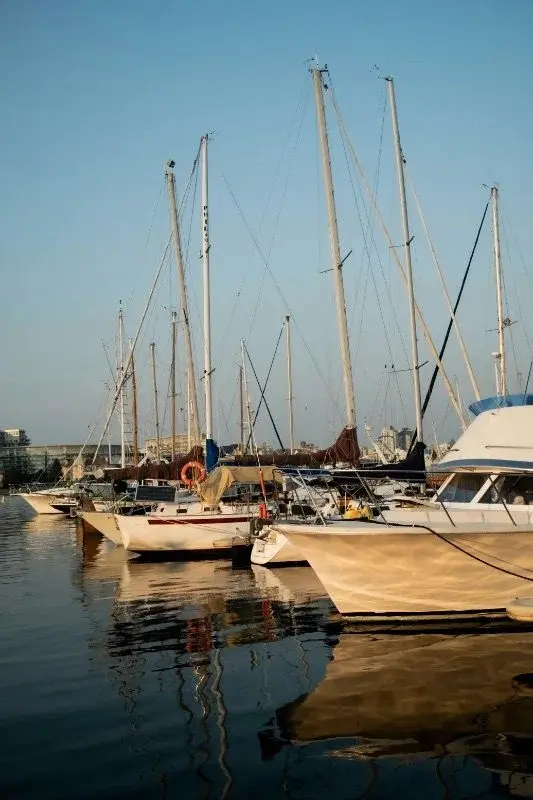 Victoria
01 — Genuinely different price tags, similar burden
Qingdao vs Victoria: 39% vs 51% of wages on rent.
A city-center one-bedroom in Qingdao runs about ¥2,800 (≈$389) per month. The same apartment in Victoria runs about C$2,222 (≈$1,577) per month. After-tax pay runs about ¥7,200 (≈$1,000) in Qingdao and about C$4,343 (≈$3,083) in Victoria. That leaves Qingdao with a rent-to-income ratio near 39% and Victoria near 51%. Both are mild coastal port cities with naval bases and colonial architecture — but one costs a fraction of the other in raw dollars, and the ratios tell a different story. This page is built from public data on both sides, with Qingdao drawn from the site's own deep-dive and a single afternoon visit, and Victoria researched entirely from a distance.
*Paper figures. Qingdao at ¥7.2 = $1, see the Qingdao deep-dive for sourcing. Victoria rent and average net salary are a fresh Numbeo pull, July 2026, converted at C$1 = $0.71 — this page previously carried older, lower estimates for both; see the footer for the full note on that update. Sources below.
Qingdao's raw dollar figures are a fraction of Victoria's — rent about four times lower, income about triple. But the burden a local actually carries is a different, less extreme story than the raw currency gap would suggest. Victoria's ratio is still worse, but by about twelve points, not the wider gap this page's numbers implied before this refresh. Vancouver Island's geography — an island, hemmed in by water and park reserve — squeezes housing supply in a way Qingdao's mainland sprawl simply doesn't deal with. If you're actually weighing a move between two cities like these, the move calculator will run this same rent-to-wage math against your own numbers instead of the average.
The full rent picture, standardized to the North American 1-bed/2-bed convention
Qingdao's four rows are the same figures already established and sourced on the Qingdao deep-dive (Anjuke/58.com anchor, Wise-derived outside-center, Wise-midpoint 2-bed — see how the renting process itself actually works for the mechanics behind these numbers). Victoria's 1-bed rows are a fresh Numbeo pull (Jul 2026); Victoria's 2-bed rows are the midpoint of Numbeo's own 1-bed and 3-bed figures — the same interpolation method used on the Qingdao side, applied here because Numbeo tracks 1-bed and 3-bed for Victoria but not 2-bed independently. Converted at ¥7.2 = $1 and C$1 = $0.71 (Jul 2026 market rate — a genuine update from an older ≈$0.73 rate this page previously carried).
Same city, different lifestyle — the monthly bill gap can be larger than the gap between cities →
02 — The everyday layer
Qingdao vs Victoria: utilities, groceries, and telecom.
The rent-to-wage ratio above is the headline number. What actually fills the gap between "affordable on paper" and "affordable in practice" is everything below it: the meter, the market stall, the phone bill.
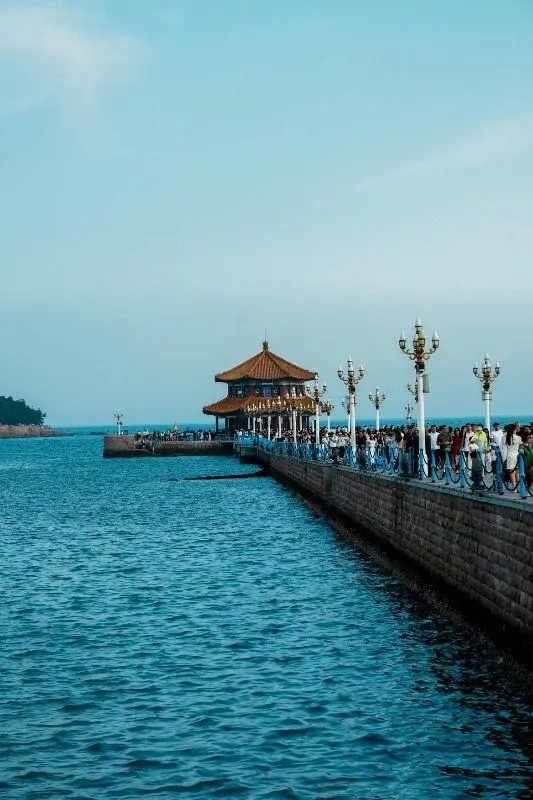 Qingdao
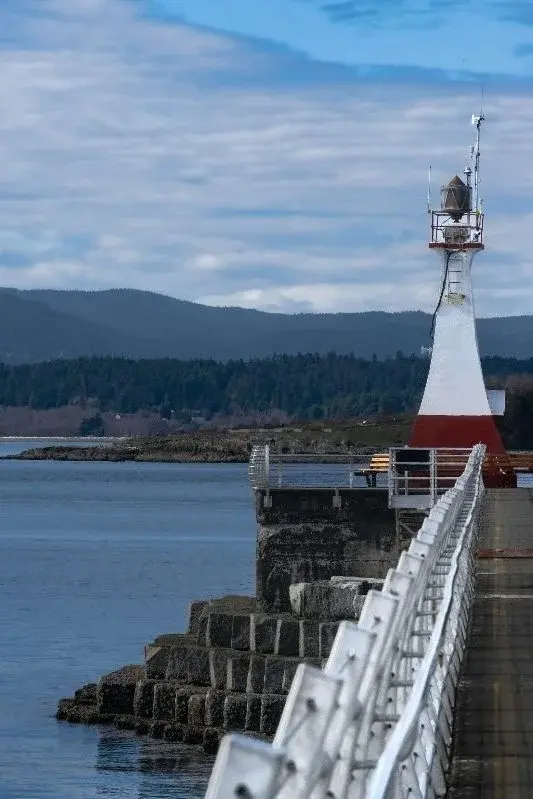 Victoria
Utilities: two structures that converge in a surprising place
Qingdao's electricity is tiered and settled monthly; BC Hydro's is tiered too, but settled roughly every two months, and it's regulated by a provincial utilities commission rather than a municipal one.
Qingdao: Shandong provincial tiered residential schedule, per the Qingdao deep-dive. Victoria: BC Hydro's own Rate Schedule 1101, current as of April 2026 rate change, plus a $0.2253/day basic charge not shown above. Converted at ¥7.2=$1 and C$1=$0.71.
The surprise in this section
Bottom tier to bottom tier, the two cities' electricity is priced within a few cents of each other. But heavy Qingdao users on the top tier actually pay more per kilowatt-hour than Victoria's own top-step rate — a rare place in this whole comparison where "China is cheaper" simply isn't true.
Water tells a similar story from the opposite direction. Qingdao's water is tiered by annual household usage; the City of Victoria charges a flat, untiered rate regardless of volume.
Qingdao: municipal residential schedule, per the deep-dive. Victoria: City of Victoria's own consumption rate, $5.49 per 100-cubic-foot unit (2.832 m³), effective Jan 1, 2026 — a flat rate, not tiered. Converted at ¥7.2=$1 and C$1=$0.71.
A light Qingdao household pays a fraction of Victoria's flat rate for water. A heavy Qingdao household, on the top tier, ends up paying almost exactly Victoria's flat rate — $1.39 versus $1.38 per cubic meter. Two completely different rate-setting philosophies — usage-tiered versus flat — landing on nearly the same number at the extreme.
Groceries: a real, if imperfect, comparison
The meter is one thing; what actually shows up in a shopping bag is another. Neither city's grocery data comes from one common source, so the match is close but not exact.
Qingdao eggs: converted from the deep-dive's own wet-market figure (¥4.85/500g) to a dozen-equivalent at 60g/egg — ¥4.85 × (60/500) × 12 ÷ 7.2. Qingdao produce: the deep-dive's own vegetable-basket average (¥3.47/500g), converted to per-lb at 453.6g/lb. Victoria eggs and produce (apples, tomatoes, potatoes, onions, averaged): Numbeo, Jul 2026. Qingdao has no confirmed city-specific pork figure (left blank on the deep-dive too); no pork/beef row is shown here rather than force a substitution.
The wider gap is in produce, not eggs — Qingdao's own wet-market monitor prices vegetables at under half a dollar a pound; Victoria's grocery-store produce runs three to four times that.
Dining out and staying connected
None of that touches the one bill that arrives whether you cook or eat out, or the two bills that arrive no matter what you eat. (For what the mobile/broadband side of this actually involves signing up for in China, see how getting connected works.)
Both sides: Numbeo, Jul 2026. Converted at ¥7.2=$1 and C$1=$0.71.
Dining runs 4–6× more in Victoria; telecom runs 7–8× more — a wider gap than either rent or wages. It's the same story rent already told: Chinese food-service and telecom pricing sit on a completely different cost base than North American labor and commercial-rent pricing. This isn't just a currency difference.
03 — Getting around
Qingdao vs Victoria: 8 metro lines vs bus-only.
Everything above is what you pay once you're settled somewhere. Getting to that somewhere, day to day, is its own story — and it's where these two mild, coastal, naval cities split the hardest anywhere on this page.
As of December 2024, Qingdao Metro runs 8 lines and 171 stations across roughly 352 kilometers, with distance-based fares — ¥2 for the first 5 km, rising in steps to a ¥12 maximum on the network's longest routes. There's no flat monthly pass; a stored-value card gives a volume discount instead (spend under ¥100 or over ¥300 in a calendar month and every ride is 10% off; the middle bands get smaller discounts) — see how city transit actually works day to day for the mechanics of that discount system. Victoria has none of that. Greater Victoria's entire public transit system is buses — 300-plus of them, on dozens of routes — run by BC Transit, with a single bus-rapid-transit corridor (launched 2023) standing in for anything faster. Light rail has been studied, debated, and shelved in Victoria since at least 2011; as of 2026 it's back under discussion, again, with no funded line yet.
Qingdao: Qingdao Metro's own fare rules and Chinese Wikipedia's network-stats entry, current to December 2024. Victoria: BC Transit's published fares (Numbeo, Jul 2026) and Wikipedia's Victoria Regional Transit System entry. Converted at C$1=$0.71.
The inversion is the point: Qingdao invested in rail and never built a flat monthly product to go with it; Victoria has a flat monthly product and has never built the rail. Neither gap is really about money — Victoria's transit authority has openly discussed light rail for over fifteen years. It's about which infrastructure each city's politics actually built.
04 — What buying in, or opting out, actually costs
Qingdao vs Victoria: property prices and school fees.
Getting around is one kind of infrastructure choice. Buying a home, or opting a child out of the local default, is a bigger one. And here the two cities' politics produced results that only make sense side by side — not on either city's own page alone.
Both sides: Numbeo, Jul 2026. Converted at ¥7.2=$1 and C$1=$0.71.
Buying in the core costs more everywhere, as expected. But the outside-center row doesn't follow the same pattern — it moves in the less obvious direction. Qingdao's center-to-outside gap is actually the wider one: outside-center runs about 40% cheaper than the core. Victoria's gap is narrower — outside-center is only about 18% cheaper than downtown. That's the opposite of what an American suburbs mental model would predict. Victoria's supposed escape valves, Langford and Sooke, are still stuck inside an island-wide housing crunch that new construction hasn't caught up with. So they don't drop much below the core. Qingdao's periphery, on a land-abundant mainland, drops off in price the way outer districts of a sprawling city are supposed to — non-local-purchase restrictions and scarcity still apply everywhere in Qingdao, but they don't erase the basic fact that there's simply more room to build once you leave downtown.
The preschool and tuition rows look like the same "exit fee" story this project has found in other city pairs — a family paying to route around whatever the default local option is. But the two defaults aren't the same thing at all. A Qingdao family without local hukou is often paying private tuition to route around a residency-tied assignment to public school. A Victoria family paying international-school tuition is usually opting out of a public system it could use for free, for reasons of preference rather than eligibility. Similar price tag, genuinely different transaction.
Every number so far has been about what living in either city costs today. The rest of this page is about how each city ended up looking the way it does — which starts with two very different colonial timelines.
05 — One colonial era ended. The other never really did.
Qingdao vs Victoria: 17 years vs 180 years of colonial rule.
The asymmetry here is the whole point of the comparison. Qingdao's German period was a brief, forcibly extracted lease — 1897 to 1914 — ended by Japanese seizure at the start of the First World War, after which Qingdao passed through Japanese, then Chinese Nationalist, then Chinese Communist administration. The German architecture, the brewery, the street grid all survive as inherited artifacts of a regime that hasn't existed in China for over a century.
Victoria started as a Hudson's Bay Company trading post in 1843. It went on to become the capital of the Colony of Vancouver Island, then of British Columbia — and that lineage was never actually interrupted by anyone seizing it back. British political and cultural influence never had to survive as a memory the way Qingdao's German influence did — it simply kept governing, generation after generation, inside what became a self-governing Canadian province still nominally under the British Crown. "More British than Britain" isn't nostalgia for Victoria. It's a description of an unbroken lineage.
 Qingdao
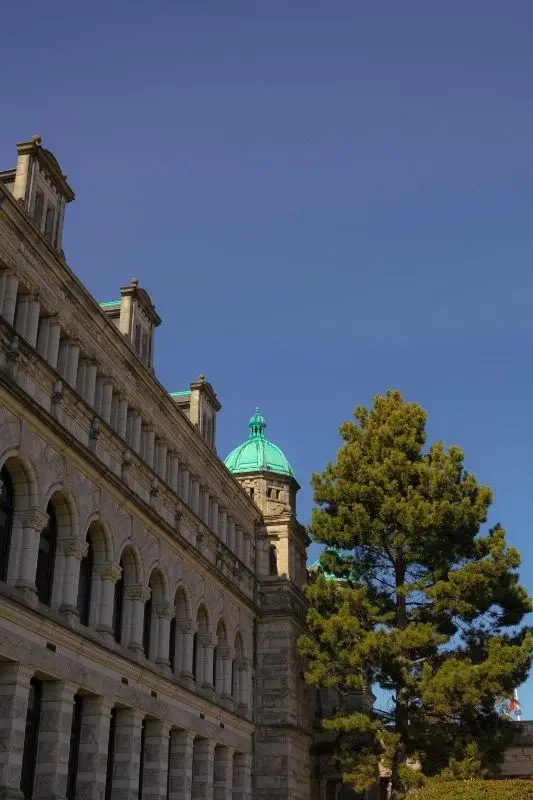 Victoria
06 — Two very different relationships with Chinese immigration
Qingdao vs Victoria: two Chinatowns, two histories.
The buildings each colonial power left behind are one part of the story; who those powers actually let live near them is a harder, less flattering part, and it's worth stating plainly rather than glossing over.
Victoria's Chinatown, dating to the 1858 Fraser Canyon gold rush, is the oldest in Canada and the second-oldest in North America. It's a real, if historically fraught, story of a Chinese immigrant community that built and sustained its own neighborhood for over a century and a half — including the atmospheric, lantern-strung Fan Tan Alley tourists still walk through today.
Qingdao's German administration ran the opposite policy: colonial planners deliberately zoned Chinese residents into a separate, lower-infrastructure district outside the European town, a standard practice across German and other colonial concessions of the era. The picturesque German quarter tourists photograph today was, by design, built without its Chinese residents living inside it.
Put simply: Victoria's Chinatown is a story of a Chinese community building something that endured despite discrimination. Qingdao's old German quarter is a story of a colonial administration building something beautiful specifically by excluding the Chinese residents who made up most of the city's actual population. Both facts belong in an honest account of either city's colonial architecture.
Qingdao has its own surviving foreign-culture landmark, but it runs the opposite direction from Victoria's Chinatown. St. Michael's Cathedral, the twin-spired Catholic church that still anchors Qingdao's old-town skyline, was built by German missionaries to serve the colonizers' own community, not the Chinese residents excluded from living around it. It's still an active parish today — a foreign culture that outlasted the colonizers who imported it, but one imposed from above rather than one a minority community built for itself, the way Victoria's Chinatown was.
 Qingdao
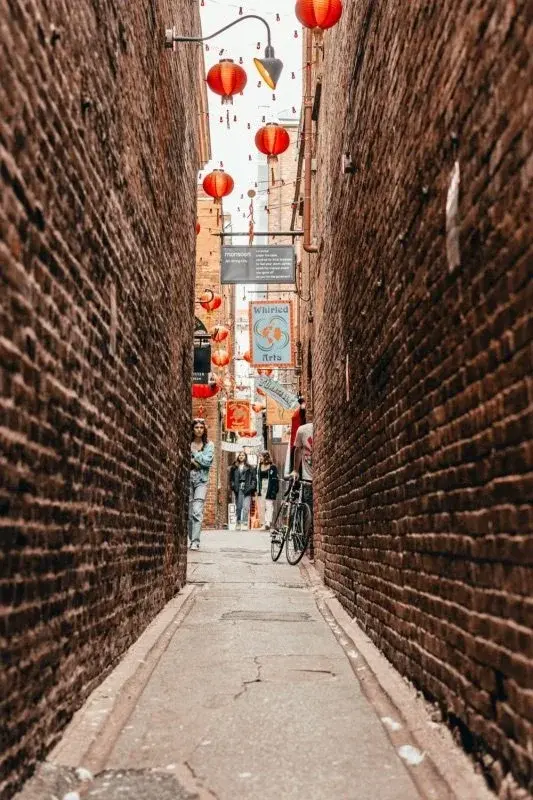 Victoria
07 — The honest brake
Qingdao vs Victoria: three honest caveats.
First, the "more foreign than the foreign country" branding in both cities is a curated tourist image, not the whole city. Qingdao is also Haier, Hisense, a working naval harbor, ordinary residential blocks with nothing to do with Germany, and a Jiaodong Airport underground metro station built into the terminal complex — the unglamorous, everyday infrastructure that never makes the postcard. Victoria is also a working provincial capital, a retiree-heavy housing market straining under genuine affordability pressure, and a Canadian Armed Forces base — not a permanent Victorian theme park, however hard its horse-carriage tourism trade tries to sell that image.
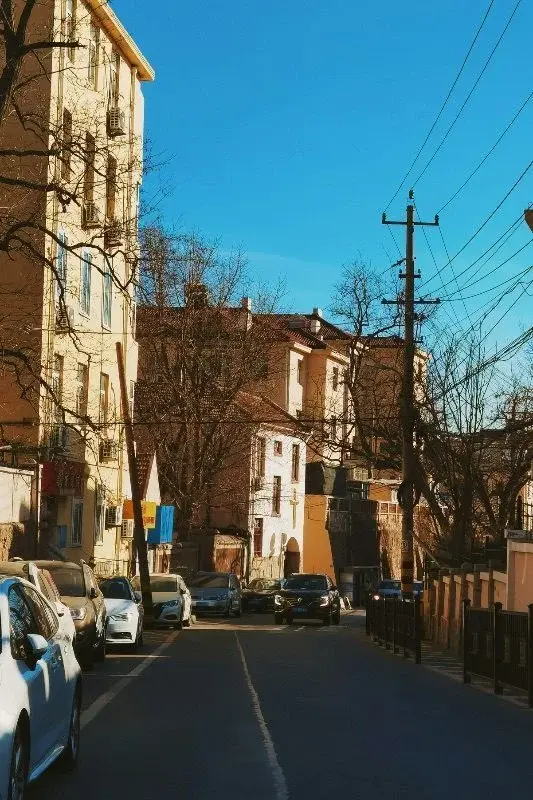 Qingdao
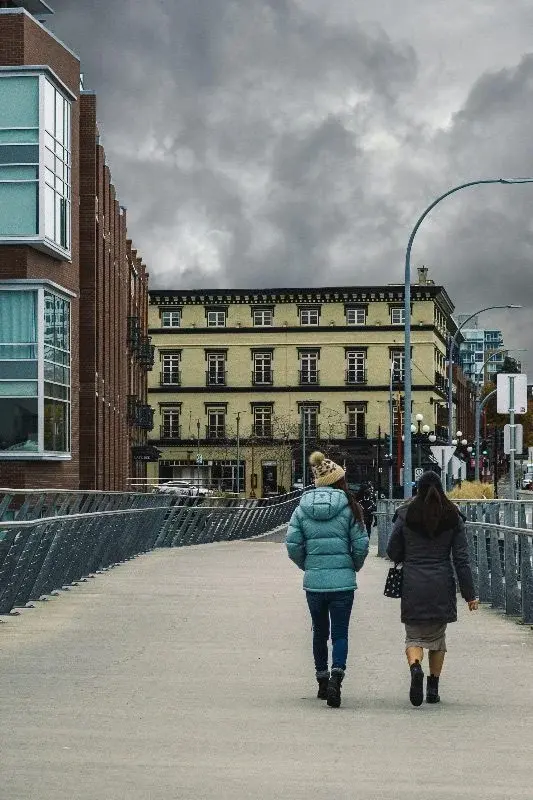 Victoria
Second, this comparison is lopsided on the author's side in the same way the Nanjing–Richmond page was: I've spent one afternoon in Qingdao and have never set foot in Victoria at all. Everything on the Victoria side of this page comes from public data and general reference sources, not a sidewalk. Weigh that column accordingly.
Both cities sell you a foreign power's leftover architecture as their whole identity. Neither one actually is that — they're just very good at the postcard.
If you're choosing between them
Deciding on more than the number
- The dollar figures aren't comparable, but the burden is. Qingdao is cheap by Chinese standards; Victoria is expensive by Canadian standards. Look at the rent-to-income ratio, not the raw currency numbers, if you're actually weighing the two.
- Know which colonial story you're buying into. Qingdao's is a brief, forcibly extracted lease with a segregated colonial town. Victoria's is a continuous, self-mythologizing British lineage with a genuinely old Chinatown alongside it. Neither is simply "quaint."
- Both reward showing up for the mild weather. Neither city's climate section will scare you — that's a real, shared advantage over most of the cities in this series.
- Don't assume "developed" means "has rail transit." Qingdao's eight-line metro is newer and more extensive than anything Victoria has ever built — a genuine reversal of the assumption a North American reader might bring in.
08 — Questions people actually ask
Quick answers
How do Qingdao and Victoria compare on cost of living?
Qingdao is cheap by China's standards and Victoria is expensive by Canada's standards, but the two cities' cost-to-income ratios end up landing close to each other.
Were Qingdao and Victoria both colonial port cities?
Yes — Qingdao under a German lease and Victoria under British colonial rule, each left with a permanent architectural signature and a naval base.
Which lasted longer — Qingdao's German lease or Victoria's British lineage?
Victoria's British lineage has run uninterrupted since 1843; Qingdao's German lease lasted only seventeen years by comparison.
How do the two cities' relationships with Chinese immigration compare?
Very differently — Victoria has the oldest Chinatown in Canada, while Qingdao's own Chinese residents were segregated out of the German-built town entirely during the colonial period.
How does public transit compare between Qingdao and Victoria?
Qingdao has built eight metro lines; Victoria has never built one.