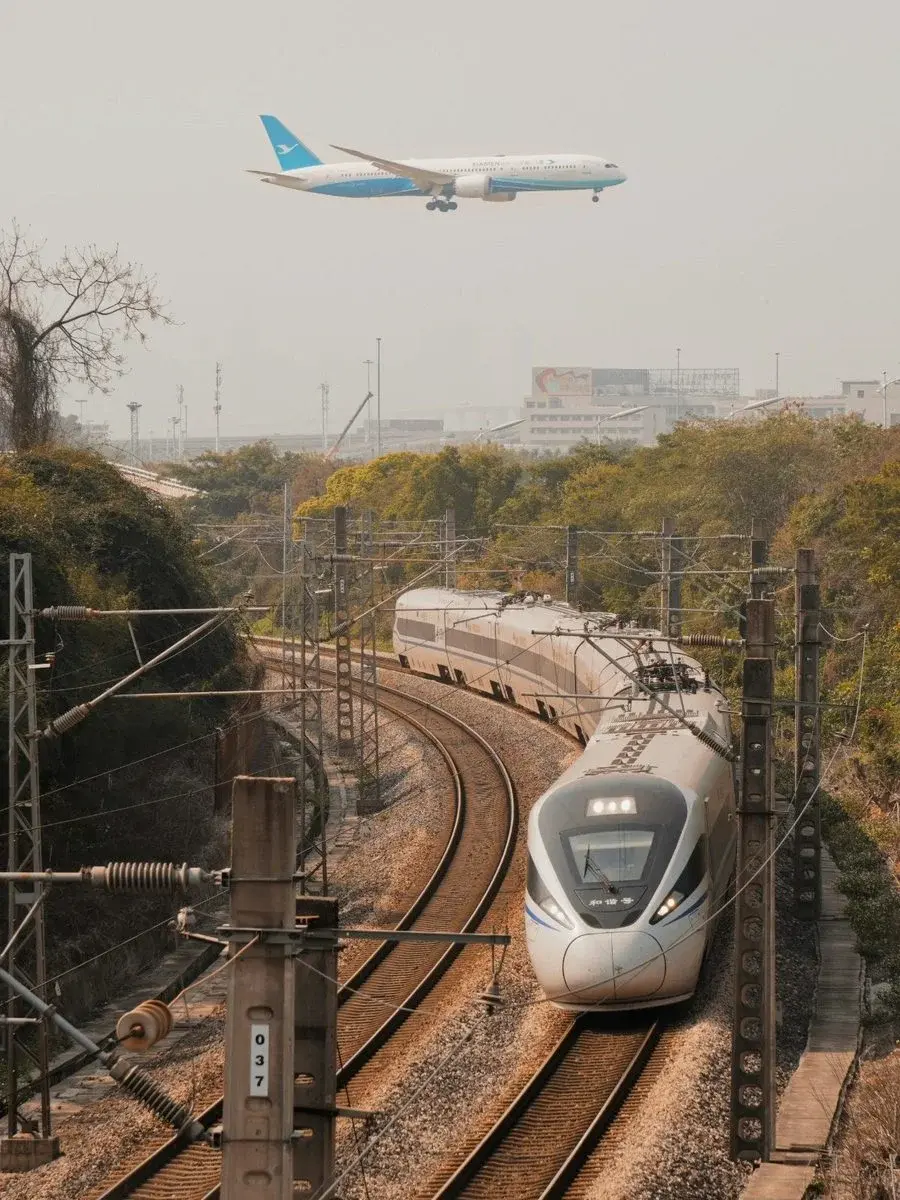
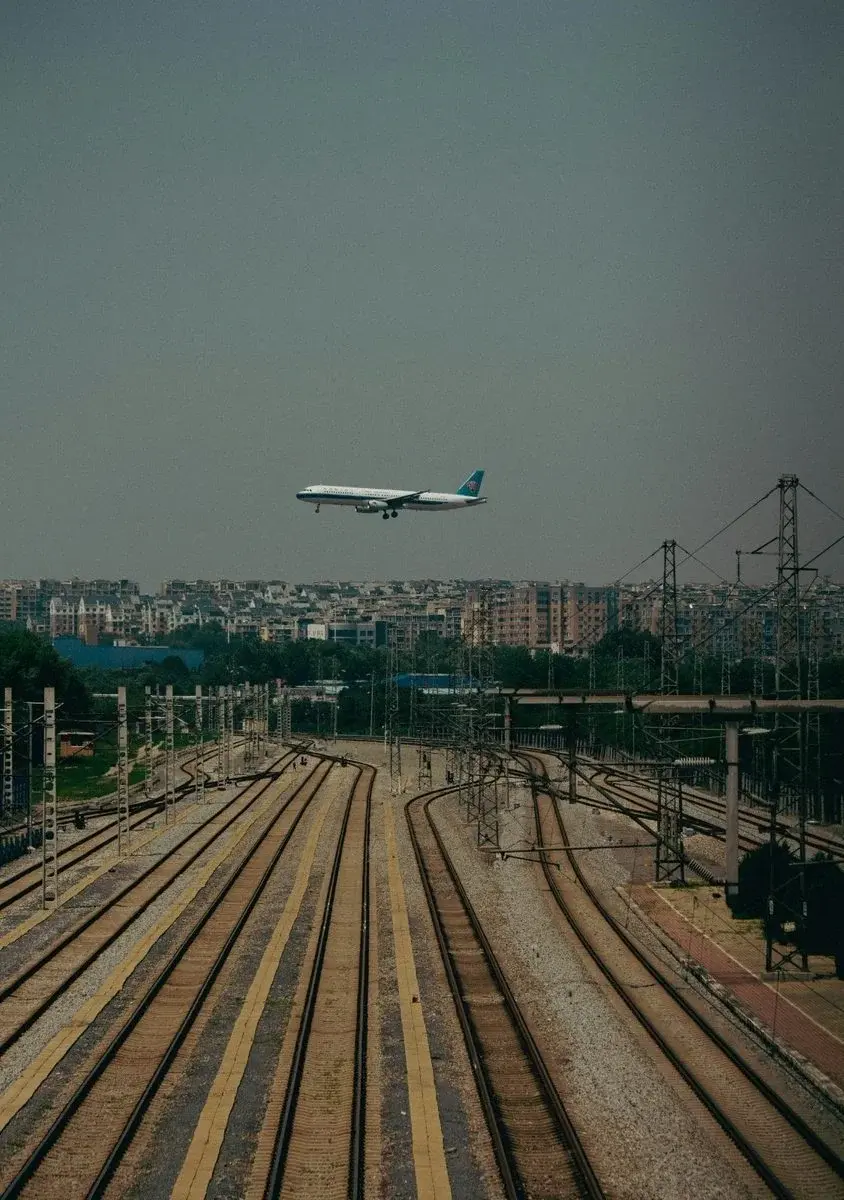
If the train station were built directly under the airport, would you call that convenient?
That's not hypothetical anymore in China. In a growing number of cities, the high-speed rail platform sits close enough to the terminal that walking between them barely counts as a transfer — no shuttle bus, no taxi queue, sometimes not even a trip outside.
01 — How big this is, and where
22 integrated hubs: the full list and what 'integrated' actually means.
As of the latest count, China has 22 airports where the airport terminal and a rail station are either built into one structure or close enough that passengers can walk between them directly. Another 19 airports use a "linked" model instead: a metro line, express rail, or shuttle bridges the gap. Add the two categories together and the majority of China's busiest airports now have some kind of direct rail connection.
China has 22 airports with integrated rail connections and 19 more with shuttle links, covering the majority of the country's busiest airports.
Those two national totals (22 and 19) come from a single official count and aren't broken down airport-by-airport in public reporting. The table below is a separate, smaller list — the specific airports that do get named individually in Chinese aviation and transit coverage, some of which fall into the 22, some into the 19. It's a working list of confirmed examples, not the complete 41.
| Airport | City | Connection type |
|---|---|---|
| Hongqiao | Shanghai | Integrated (walk transfer) |
| Chaoshan (Jieyang Airport Station) | Jieyang, Guangdong | Integrated (walk transfer, underground) |
| Tianhe | Wuhan | Integrated (underground station, 3-min walk to T3, 45-min gate-to-gate) |
| Jiaodong | Qingdao | Integrated (underground station) |
| Baiyun | Guangzhou | Integrated (TOD hub, 30M+ riders since late 2023) |
| Xiaoshan | Hangzhou | Integrated (phase 3, 2026) |
| Yaoqiang | Jinan | Under construction, due late 2026 |
| Binhai | Tianjin | Linked (shuttle/metro) |
| Zhengding | Shijiazhuang | Linked (nearby station, bus feeder) |
| Baita | Hohhot | Linked (shuttle/metro) |
| Hedong | Yinchuan | Linked (rail line routed near airport) |
02 — The model, and a small station that proves the point
Hongqiao set the standard; Jieyang shows how far it's spread.
Shanghai Hongqiao pioneered the integrated hub in 2010; today even small airports like Jieyang have underground rail stations 200 meters from the terminal.
Shanghai's Hongqiao is still the gold standard — the airport's T2 terminal and the Beijing-Shanghai high-speed rail station were built as one integrated complex back in 2010, sharing parking, city rail access, and long-distance bus terminals under one roof. It's the project that started this whole way of thinking about airport design in China.
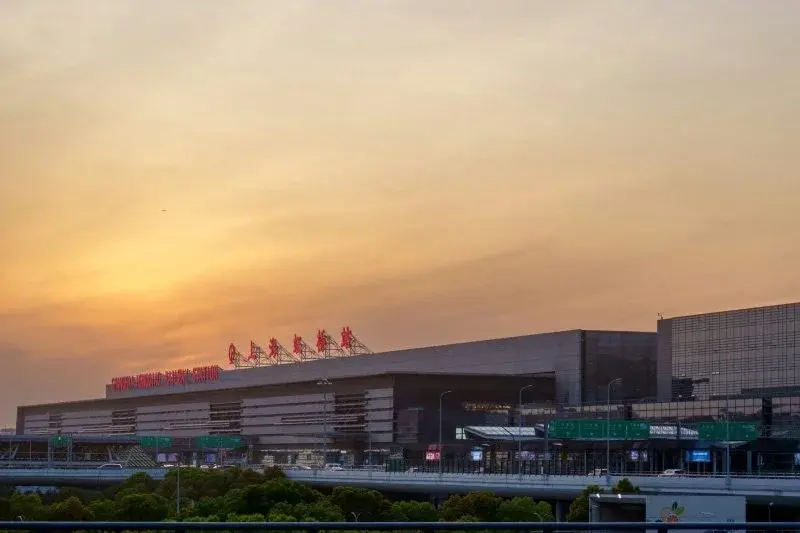
A much smaller station makes the same point differently: Jieyang Airport Station, serving Chaoshan International Airport in Guangdong, sits about 200 meters from the terminal. What stood out on a recent visit wasn't just the distance. It was realizing trains start there, running straight to Shenzhen, rather than just passing through. It's underground — the only one on its line — and it's Guangdong's first real air-rail integrated hub.
03 — Where to check before you fly
How to check if your airport has a direct rail connection?
No need to memorize the table above before a trip — the easiest way to check is the same map app you use for everything else. Open Amap (高德地图) or Baidu Maps, enter the airport and the city center as start and end points, and select public transit as the mode. If a high-speed rail or metro option shows up starting right at the terminal — not after a shuttle-bus leg — that's your sign the airport has a direct rail connection.
The major airline apps — China Eastern, Air China, China Southern — also have this built in now. Search a flight and an "air-rail through-ticket" option often pops up if the arrival airport connects to the rail network. That lets you book the connecting train segment in the same transaction as the flight.
04 — What it means day to day
Why this matters daily: metro from airport to hotel in 20 minutes?
You don't need one of these standout projects to feel the difference. In most cities I visit for work — Shanghai, Chengdu, Tianjin, among others — when time isn't the issue, skipping the taxi line and taking the metro straight from the airport to the hotel is the norm in urban China, not the exception.
It isn't just faster. A taxi from an airport like Guangzhou's Baiyun into the city center commonly runs ¥80–150, depending on distance and time of day. The metro? Same few yuan an ordinary ride costs anywhere else in the system.
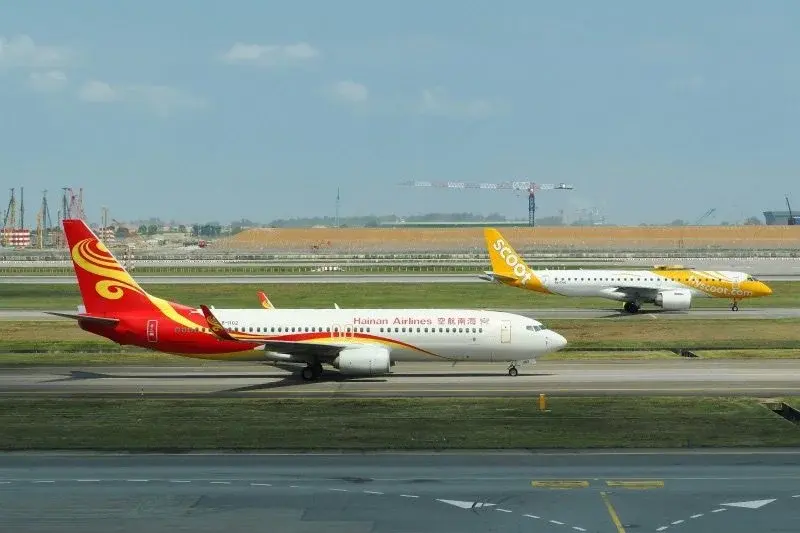
For a traveler used to landing and then facing a taxi queue, a rental counter, or a shuttle bus timetable before actually reaching the city, this is probably the hardest thing to translate: in much of urban China, the trip from wheels-down to hotel room can be measured in twenty minutes — not because of luck, but because someone designed it that way.
China's cities are still literally under construction — and that includes this kind of infrastructure. More airports will keep adding their own integrated rail stations in the years ahead. More high-speed lines will keep threading closer to terminal doors. And getting from a plane to wherever you're actually going will keep getting a little faster and requiring a little less planning on the traveler's part. Come see it while it's still being built, and there's a decent chance the country you find won't quite match the one you pictured before you landed.
05 — Questions people actually ask
Quick answers
What is an “integrated transit hub” in China?
An airport with a high-speed rail station built right inside or next to it, so travelers can walk from their flight to a train platform instead of waiting in a taxi queue between two separate facilities.
How many Chinese airports have this integrated rail-air setup?
22 airports currently have this kind of direct rail integration, led by the model set at Shanghai Hongqiao.
Is airport-rail integration only found at major hub airports in China?
No — even a small station like Jieyang's shows how far the concept has spread beyond flagship hubs like Hongqiao, Wuhan Tianhe, and Guangzhou Baiyun.
How do I check if my destination airport in China has this feature?
The page includes a section specifically on how to check whether your airport is one of the 22 — worth doing before assuming you'll need a taxi between terminals.
Does this integration only matter for travelers switching between flights and trains?
No — it shapes day-to-day convenience even for people who never personally use the connection, since it changes how a city's whole transport system is organized around the hub.