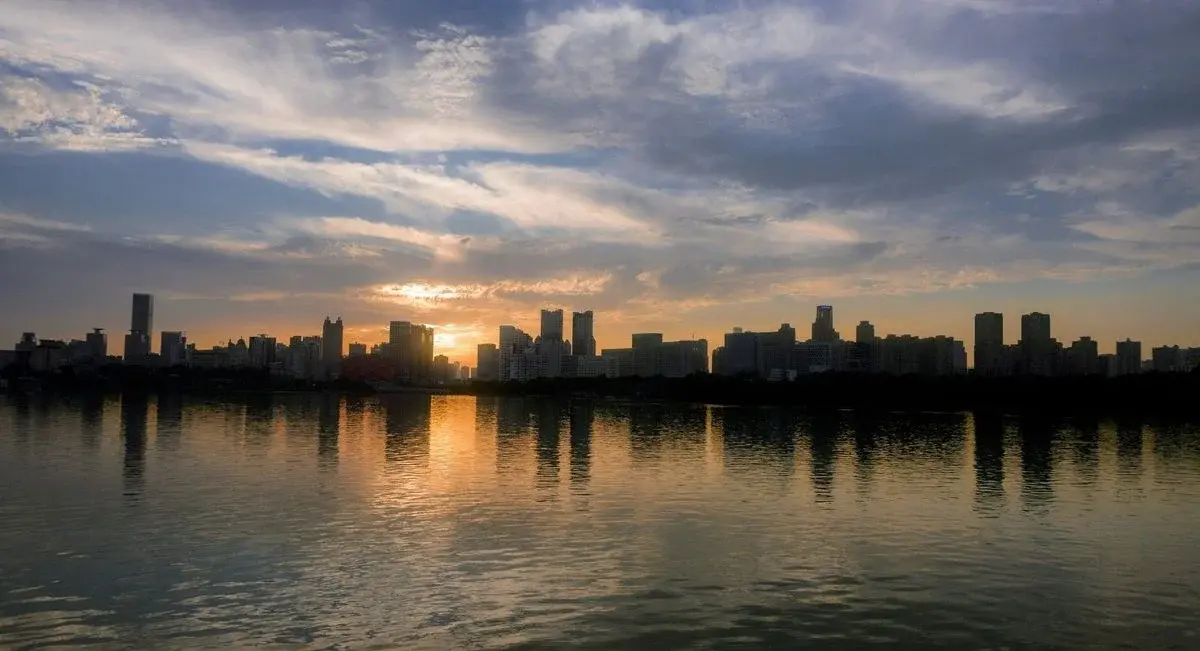
Living cost, at a glance
≈$383/mo
≈$229/mo
≈$513/mo
≈$896/mo
≈$742/mo
Rent from the §01 ledger. The non-rent line is Numbeo's own compiled "estimated monthly costs, excluding rent" for Wuhan (single person, pulled Aug 2026) — but as §01 already flags, Wuhan's own cross-source spread is unusually wide; another current tracker puts this same non-rent figure closer to $764. Treat this total as one reasonable read, not a precise number. Converted at ¥7.2 = $1.
My college roommate was from Hubei. Years later, in Shenzhen, I stayed three nights in the apartment of another Hubei native — a Foxconn colleague, sharp enough that I'd nod every time I heard the old saying: nine-headed birds in the sky, Hubei people on the ground — a compliment about cunning dressed up as a joke about birds. I never once asked either of them the question I'm about to spend a whole article circling: do you actually eat hot-dry noodles?
Every Hubei colleague I've ever worked with eats rice at home, not wheat. No steamed buns, no flower rolls. And yet re gan mian — hot-dry noodles, sesame paste over thick alkaline noodles — is one of the most recognized regional foods in China, and one I genuinely love; on late shifts in Shanghai I'd walk to a street stall for a cheap bowl more nights than I can count. I never closed that loop with a single person who could have answered it in one sentence. This piece is, among other things, my attempt to close it secondhand — alongside the arithmetic of what it costs to live in the city that produced the question.
01 — The number, and why it moves depending on who's counting
Wuhan's rent-to-wage ratio is 45%, and the sources disagree more than anywhere else
Numbeo puts a one-bedroom in Wuhan's city center at ¥2,760 a month (about $383), against an average net salary of ¥6,095 (about $847) — a rent-to-wage ratio near 45%, squarely between Chengdu and Harbin in this series.
| City | 1-bed, center | After-tax median | Rent ÷ wage |
|---|---|---|---|
| Xi'an | $311 | $1,089 | 29% |
| Chengdu | $374 | $1,050 | 36% |
| Wuhan | $383 | $847 | ~45% |
| Harbin | $423 | $857 | 49% |
| Shanghai | $972 | $1,391 | ~70% |
Rent and salary: Numbeo, mid-2026, converted at ¥7.2 = $1. See sources below.
But Wuhan is where the sources disagree more than anywhere else I've researched. One tracker puts the median after-tax salary near $1,151, nearly 40% higher than Numbeo's figure. Another puts full-package single-person living costs, rent included, as low as $546 a month; a third puts it above $1,200. Every city's numbers wobble a little between aggregators. Wuhan's wobble is unusually wide, and that's a real fact about the city, not just noisy data. Wuhan's "cheap" is mostly a label — see how it fits the full framework →
Wuhan is one of China's ten largest cities. It's a national transport hub where the Yangtze meets the Han River, with a huge floating population of students, migrant labor, and short-term workers layered over a resident base of roughly 13–14 million. A city that size, with that much churn, doesn't have one median income. It has several. Which one an aggregator happens to sample changes the answer more than in a smaller, more settled city.
What those monthly rent figures hide is the first-week wall: one month's deposit plus three months' prepaid rent, agent fees, and visa medicals can swallow an entire month of savings before you sleep a night here. See what the real first-week bill looks like →
The rest of the rent picture — and why it's the shakiest table on this page
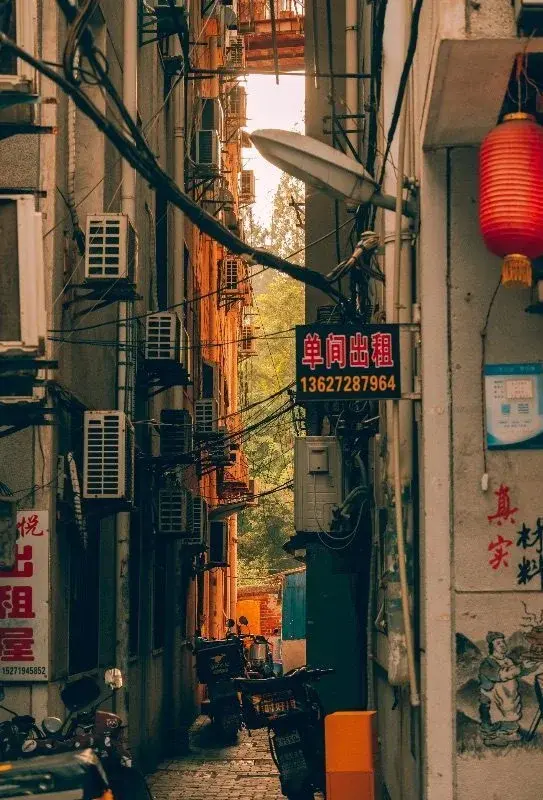
The 1-bed city-center figure is the same Numbeo number used above. Wise's own reading for Wuhan runs noticeably higher across the board (1-bed center $486 against Numbeo's $383) — the same cross-source spread the rest of this section is already about — so the outside-center row applies Wise's own city-to-suburb ratio to the Numbeo anchor rather than Wise's absolute figure, and the 2-bed rows are the midpoint of Wise's own 1-bed and 3-bed readings, presented as Wise's view of the city rather than Numbeo's. Don't average these two sources together; treat the spread itself as the honest answer for Wuhan. Meal and transit figures are Numbeo's "Meal, Inexpensive Restaurant" and "One-Way Ticket, Local Transport" for Wuhan, read early August 2026 — the same benchmark used across every city on this site. Converted at ¥7.2 = $1.
What the rest of the bill looks like: electricity, water, and gas
Electricity and gas settle annually. Water bills monthly.
| Tier | Annual usage | Rate |
|---|---|---|
| 1 | 0–2,160 kWh/yr≈180 kWh/month equivalent | ≈¥0.558/kWh |
| 2 | 2,161–4,800 kWh/yr≈181–400 kWh/month equivalent | ≈¥0.608/kWh |
| 3 | 4,800+ kWh/yr≈400+ kWh/month equivalent | ≈¥0.858/kWh |
| — | Shared-meter buildings — one meter for the whole building | ≈¥0.58/kWh flat |
| Tier | Monthly usage | Rate |
|---|---|---|
| 1 | 0–25 m³ | ≈¥2.47/m³ |
| 2 | 26–33 m³ | ≈¥3.08/m³ |
| 3 | 33+ m³ | ≈¥3.84/m³ |
Households of 5+ get a per-person volume basis instead (6.25m³/month per person at tier 1) rather than a flat household number. Wuhan's tier-1 rate is among the lowest of the 36 cities the national water-price survey tracks — one of the few figures in this piece where Wuhan comes out unambiguously cheap.
| Tier | Annual usage | Rate |
|---|---|---|
| 1 | 0–276 m³ | ≈¥2.48/m³ |
| 2 | 277–480 m³ | ≈¥2.98/m³ |
| 3 | 480+ m³ | ≈¥3.58/m³ |
These figures come from local reporting citing the schedule as of early 2025 rather than a primary government notice we could verify directly — a longer-standing schedule (0–360/360–600/600+ m³ at ¥2.53/2.78/3.54) is also widely cited and may still be current in some districts. Treat the tier volumes and prices here as directional, consistent with how noisy Wuhan's numbers have been throughout this piece.
Electricity: Hubei provincial tiered residential schedule, in effect since 2015, annually settled. Water: Wuhan central-districts residential schedule; Wuhan's tier-1 rate is separately confirmed by a national 36-city water-price comparison. Gas: local Wuhan reporting, schedule cited as of early 2025. Converted at ¥7.2 = $1.
Standardized comparison figure, applied the same way across every city on this site: 220 kWh electricity + 15 m³ water + 25 m³ gas per month, a single-occupant baseline that excludes winter heating, run against the tiers above. At Wuhan's rates that's ¥123 electricity + ¥37 water + ¥62 gas ≈ ¥222 (≈$31)/month. These low utility rates rest on decades of capital investment and permanent subsidy — the real cost is hidden upstream →
What the everyday basics cost, at the market
| Item | RMB | USD |
|---|---|---|
| PorkLeg cut, retail average | ≈¥12.5/500g | ≈$1.74 |
| EggsRetail average | ≈¥5.6/500g | ≈$0.77 |
| Vegetables34-item basket, retail average | ≈¥4.0/500g | ≈$0.56 |
| Beef | Not shown — see note | |
Pork, eggs, and vegetables: Wuhan Municipal Bureau of Commerce's own weekly necessities report, week of April 20–26, 2026 — city-specific, all three items the same week. We couldn't find a comparably sourced Wuhan-specific retail beef figure and left it blank rather than substitute a provincial number. Converted at ¥7.2 = $1.
Those are the groceries a household cooks with. The dish Wuhan is famous for isn't one of them — which is exactly the question this piece has been circling since the first paragraph.
02 — What's cheap, and the noodle question
Wuhan's famous hot-dry noodles were never a dinner food
Wuhan calls its breakfast culture guo zao, "passing the morning," and treats it as close to a civic institution: a dense street economy of stalls selling noodles, doupi (a savory rice-and-glutinous-rice pocket), mianwo (fried rice-flour rings), and hot soy milk, eaten standing up or walking, on the way to somewhere else. Re gan mian belongs to that layer of the day. It's a fast, cheap, portable breakfast, not a dish anyone's mother cooks for dinner. My Hubei colleagues eating rice at home and never mentioning the noodle weren't contradicting the noodle's fame. They were describing two entirely different meals that happen to share a city.
A bowl at a street stall runs somewhere in the ¥6–10 range for this style of food, cheap-eats pricing, consistent with Numbeo's ¥25 benchmark for a basic meal in Wuhan. Cook at home and shop at a wet market, and Wuhan sits close to the national baseline for a second-tier city. As in most of this series, staying fed is the cheap part; the money goes to everything layered on top of the breakfast stall.
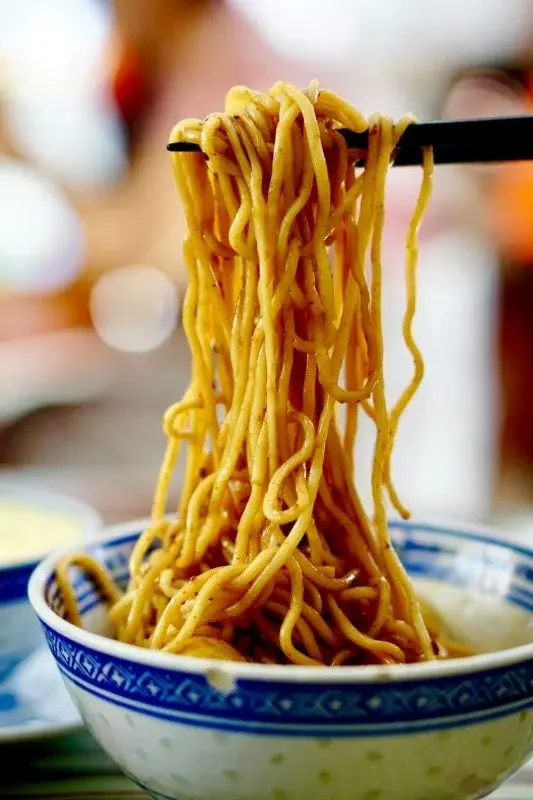
I still don't have a single Hubei colleague's direct answer to "do you eat re gan mian." What I have instead is a structural one: it was never a household-food question to begin with.
Breakfast is cheap here for the same reason almost everything is cheap here: the city built two separate economies, and neither one prices its everyday life like a capital.
03 — Where the wage split comes from
Steel mills and Optics Valley: Wuhan's two economic layers
Wuhan's economy runs on two very different engines, old and new, sitting a few subway stops apart.
Wuhan Iron & Steel / Qingshan
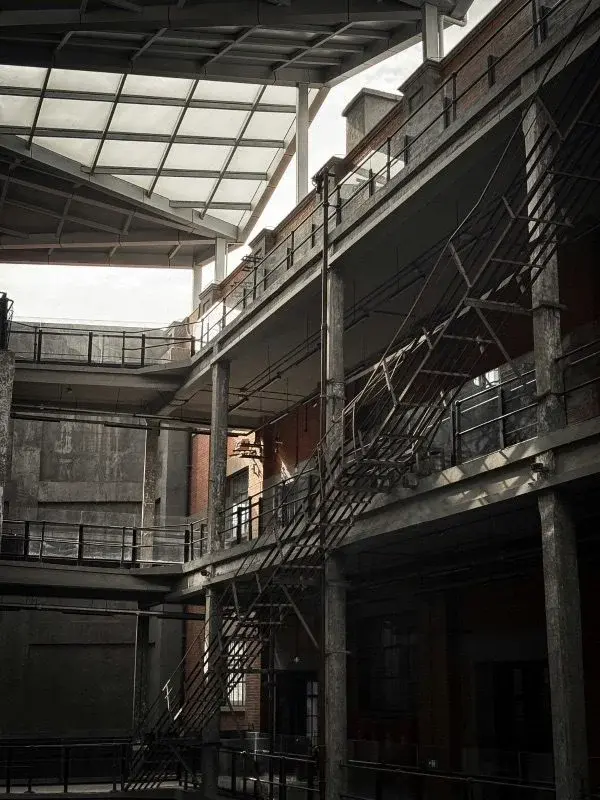
Wuhan grew into a modern industrial city on steel and heavy manufacturing, anchored by one of China's oldest large steel complexes and, later, a major Dongfeng Motor automotive base. This is the city's "workshop of the country" identity: real production, real blue-collar wages, the layer that sets the floor under the citywide median.
Heavy industry · the floorEast Lake Hi-Tech Zone ("Optics Valley")
A national-level tech zone built around optoelectronics, semiconductors, and software. It's fed by one of the largest concentrations of university students of any city in the world — Wuhan hosts dozens of universities, including Wuhan University and Huazhong University of Science and Technology. This is where the top of the wage split gets earned.
Tech & research · the ceilingAn old production base sets the floor, and a newer knowledge economy stretches the ceiling upward, with an unusually large student population feeding both.
Wuhan is sometimes described as having more university students than any other city in China. At any given time, a huge share of the population isn't earning a Wuhan wage at all yet. That's one more reason the "median income" figure is such a moving target: a city this full of people between educations and careers doesn't average out cleanly.
04 — Who's here, if you're arriving from North America
Optics Valley is building Wuhan's international community
§03 named Optics Valley, the East Lake Hi-Tech Zone, as the newer half of Wuhan's dual economy. It's already drawn a real international layer, with thousands of high-level overseas workers recruited into the zone. There's also an annual startup competition that's pulled in over 10,000 project entries from more than 60 countries and regions, including Silicon Valley, London, Tokyo, Berlin and Tel Aviv. What's newer is that the zone is now building a purpose-made place to house that population.
Construction broke ground in late 2021 on Optics Valley's first genuine international community — high-end housing alongside international schools (elementary through high school), an international kindergarten, an international medical center, and dedicated foreign-national service infrastructure. It's sized to eventually house around 4,000 international high-level talents. Diplomatic representatives from the UK and French consulates in Wuhan attended the groundbreaking. That's a small, concrete sign that Wuhan's foreign-resident infrastructure, while nowhere near Beijing's or Shanghai's scale, is a real and growing thing rather than an afterthought.
What this doesn't give you, on a page already built almost entirely on secondhand research, is a North American-specific figure. The reporting counts "international talent" broadly, by skill and project, not by passport. Given how much of Optics Valley's own outreach explicitly targets Silicon Valley, it's a reasonable guess that a real share of that population is American. But it's a guess, consistent with §08's honest brake about what secondhand research can and can't establish.
This section describes Optics Valley's foreign-talent infrastructure and community-building effort as best it can be documented, compiled from local and provincial government reporting, not a formal nationality-specific census. Treat the figures as directionally right rather than a precise headcount.
05 — The bridges got an underground successor
Wuhan's three towns stitched together by metro
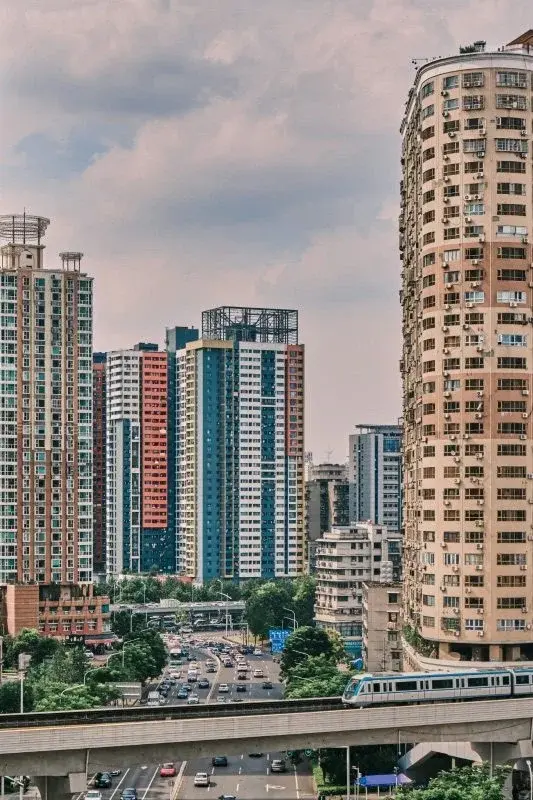
Wuhan's identity as a city of bridges has a modern, underground sequel: the city is three old towns (Wuchang, Hankou, Hanyang) split by the Yangtze and the Han River. For most of the 20th century a bridge was the only way to make that geography feel like one city. Line 2, opened in 2012, was Wuhan's first metro line to tunnel under the Yangtze itself, the underground version of the same problem the 1957 bridge solved above ground. By the end of 2025 the network had grown to 12 lines, roughly 518 kilometers, and 312 stations, carrying over 100 billion cumulative rides. Only the seventh Chinese system to cross that mark.
| Distance | Fare |
|---|---|
| 0–4 km | ¥2 |
| 4–12 km | +¥1 / 4 km |
| 12–24 km | +¥1 / 6 km |
| 24–40 km | +¥1 / 8 km |
| 40 km+ | +¥1 / 10–20 km |
We haven't been able to source a metro map for Wuhan that we're confident redistributing. For the current network layout, go straight to the operator: Wuhan Metro — official site →
Network size, station count, and ridership: Wuhan Metro Group / Wuhan Municipal Transportation Bureau reporting, as of December 2025. Fare schedule per Wuhan Metro's published fare rules (max single fare ¥12, as of late 2024). Converted at ¥7.2 = $1.
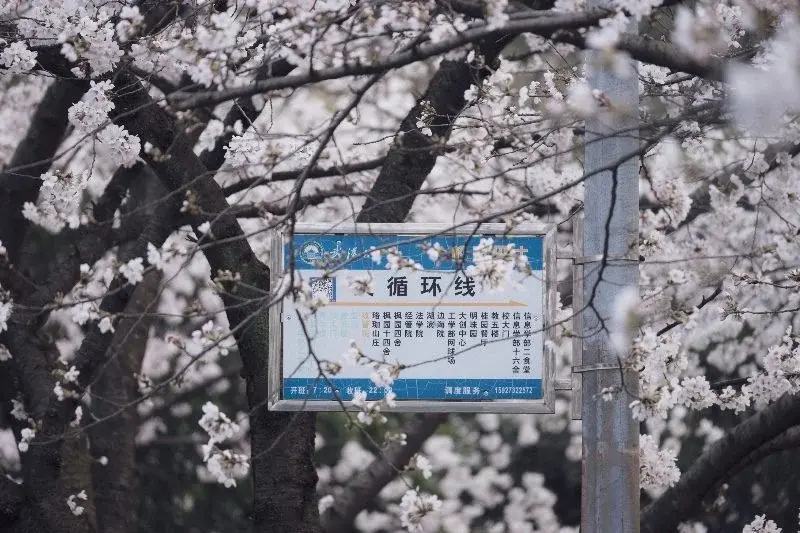
Outside the rail, the national trio of shared-bike apps and ride-hailing cover the rest of the city the way they do everywhere else in urban China. Plus one strictly local option the three-towns geography makes possible: seven surviving cross-river ferry routes. They're a slower, cheaper way to do what the bridges and Line 2 also do, for anyone who'd rather cross the Yangtze by boat than by tunnel.
Getting around is one thing I can price with real confidence. What a whole ordinary week costs, breakfast stall included, is the harder number — and the one I have to build secondhand.
06 — A researched week, not a lived one
What a week of Wuhan breakfast costs, reconstructed from public menus
This table isn't my budget, I've never stood at a Wuhan breakfast stall. It's a reconstruction from published street-food prices and Numbeo's restaurant benchmarks, the closest I can get to the daily-life ledger this site usually builds from a lived year.
Reconstructed from Numbeo restaurant and transport benchmarks, mid-2026. Not a personal budget — flagged as researched, per this site's policy on cities the author hasn't lived in.
The number that matters here isn't the total. It's how small the noodle line is next to everything else. A famous dish can be a city's whole international reputation and still be a rounding error in its own cost of living. Your daily choices shape the bill more than the city itself →
That week's ledger has a column for breakfast and a column for the metro. It doesn't have one for the weather, and Wuhan's weather is expensive in a way no receipt ever shows.
07 — The costs that never hit the ledger
Wuhan's furnace summers and unheated winters
Wuhan sits south of the Qinling–Huai River line, the same boundary that leaves Shanghai without municipal winter heating. Its winters are a damp, bone-level cold with no citywide heat to answer it. The cost isn't in yuan. It's in however many extra blankets and space heaters a household can afford. Summer runs the other way: Wuhan is traditionally named alongside Chongqing and Nanjing as one of China's historic "three furnace cities." Long stretches of high-humidity heat make the season a genuine physical cost, not just a discomfort.
It's an inversion worth flagging: the city with the harsher-sounding climate on paper (freezing Harbin) isn't the one that makes you suffer indoors. Harbin buys a warm winter with a fixed heating bill. Wuhan buys neither season any relief, and the bill for that shows up as higher electricity use, not a single clean line item. The costs that never show up in the spreadsheet — heating, AC, climate-driven spending →
08 — The honest brake
What secondhand research can't tell you about Wuhan
Three things keep this honest. First, I've never been to Wuhan. Every sensory claim here is secondhand or reconstructed, and I've said so throughout rather than borrowing confidence I haven't earned. Second, the wage figures disagree across sources more than in any other city in this series. Wuhan's enormous student population and heavy in-migration make "the median resident" a harder thing to pin down than in a smaller, more settled city. Treat the 45% ratio as a reasonable estimate, not a precise fact.
Third, a piece of the city's commercial history is a quiet cautionary tale rather than a boast: Hanzheng Street was once one of China's earliest and largest small-commodity wholesale markets, a starting point for countless small fortunes. Much of that role has since migrated to Yiwu, which built a more specialized, purpose-built version of the same business and simply out-competed it. Wuhan's discount comes partly from what the city is still cheap at, and partly, in at least one documented case, from a market it used to win and no longer does.
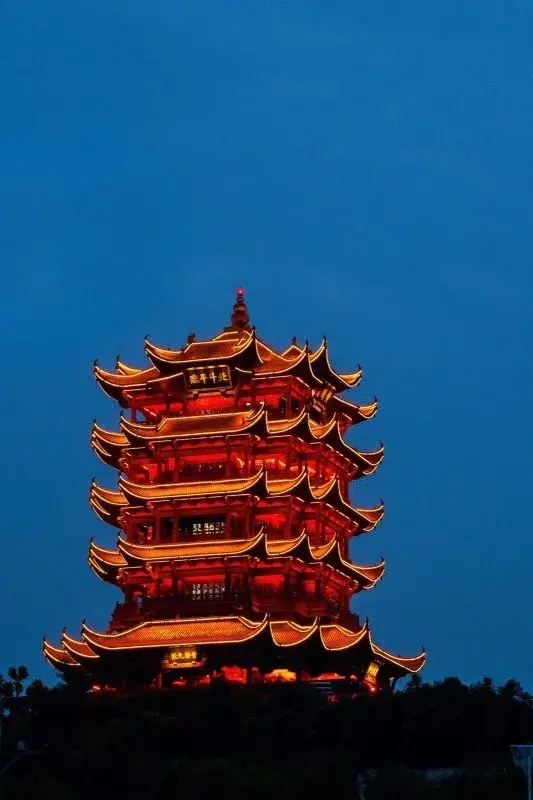
And there's a layer of the city I haven't touched at all in the numbers above: the Yellow Crane Tower that gave Mao Zedong's poetry its image of the "tortoise and snake locking the great river"; the Red Cliffs of the Three Kingdoms era, downriver; and, in nearby Huangzhou (present-day Huanggang, less than 60 miles out, close enough that Numbeo lists it as a Wuhan-adjacent cost-of-living comparison), the place where Su Dongpo, one of my favorite writers in any language, spent his first exile after the "Crow Terrace Poetry Trial," took the pen name "Dongpo," and wrote the poem that's stayed with me since I first read it: Dingfeng Bo, "don't listen to the rain beating the leaves in the woods." None of that shows up in a rent-to-wage ratio. It's part of why I wanted to write about this city at all, long before I ever worked out the noodle question.
09 — Questions people actually ask
Quick answers
How much does rent cost in Wuhan?
A one-bedroom in the city center runs about ¥2,760/month (≈$383); outside the center it's roughly ¥1,650 (≈$229). Rent eats about 45% of the average wage, though different sources give meaningfully different answers on that exact number.
Has the author of this Wuhan page actually lived there?
No, it's explicitly written by someone who has never been, cross-checked against Hubei natives who know the city, and labeled that way rather than presented as firsthand.
What's the deal with Wuhan's hot-dry noodles?
They were never a dinner food to begin with — re gan mian is a breakfast dish, which resolves a common outsider confusion about why it doesn't show up on Wuhan dinner menus.
Is Wuhan a manufacturing city or a tech city?
Both, in layers — steel mills built the city's economic floor historically, while the Optics Valley tech district is building its current ceiling. The wage gap between those two economies is part of why cost-to-income ratios vary so much depending who you ask.
Does Wuhan get winter heating like northern Chinese cities do?
No — despite being one of China's traditional "three furnace cities" with brutal summer heat, Wuhan sits just south of the geographic line that qualifies a city for centralized winter heating. So residents don't get the same seasonal heat-cost balance northern cities do.
If you're thinking of going
Wuhan, based on the numbers, not on having lived there
- Cross-check the median before you plan around it. Wuhan's wage figures move more between sources than almost any city in this series — pin your own budget to the low end of the range, not the optimistic one.
- Budget for both seasons. No municipal heat in winter, historic "furnace city" summers — a Wuhan apartment's real comfort cost shows up on the electricity bill, not the rent.
- Treat the student population as a market signal. A huge share of the city's population is transient and young; that keeps a specific layer of food, housing, and transport cheap, and it isn't necessarily the layer a working professional will live in.
- Don't take my word for the food. This is the one section of this article that's entirely secondhand. Ask someone who's actually eaten breakfast on a Wuhan street corner — I still haven't.
- Not sure Wuhan is the right fit? Browse cities by what you care about → or answer seven questions for a personalized recommendation →
The verdict
Should you live in Wuhan?
I can't answer that the way I could for Shanghai or Harbin — I have no lived texture to offer, and I've tried not to fake any. What the numbers say is that Wuhan sits in the honest middle of this whole series: not the cheapest, not close to Shanghai's extremes, a rent-to-wage ratio you could actually live inside if the job is real. What the numbers can't say is whether a city built around a question I still can't fully answer — famous for a dish almost nobody eats at home — is a place you'd want to live. English-language sources have had a shorthand for this city for decades, one Wuhan never asked for. That's where the next piece picks up.