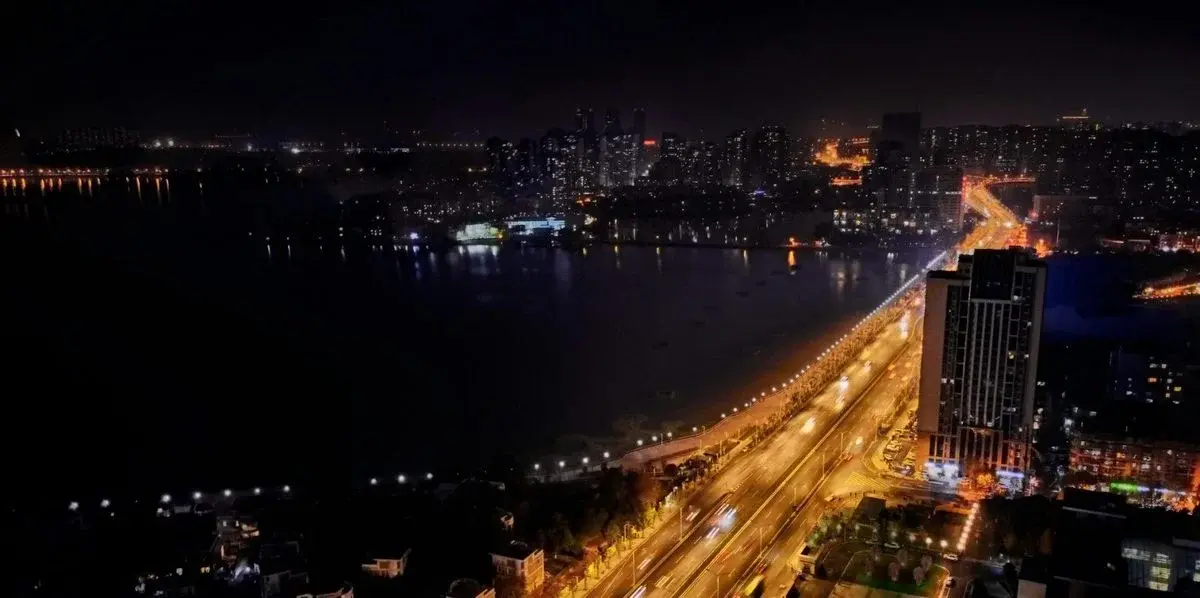
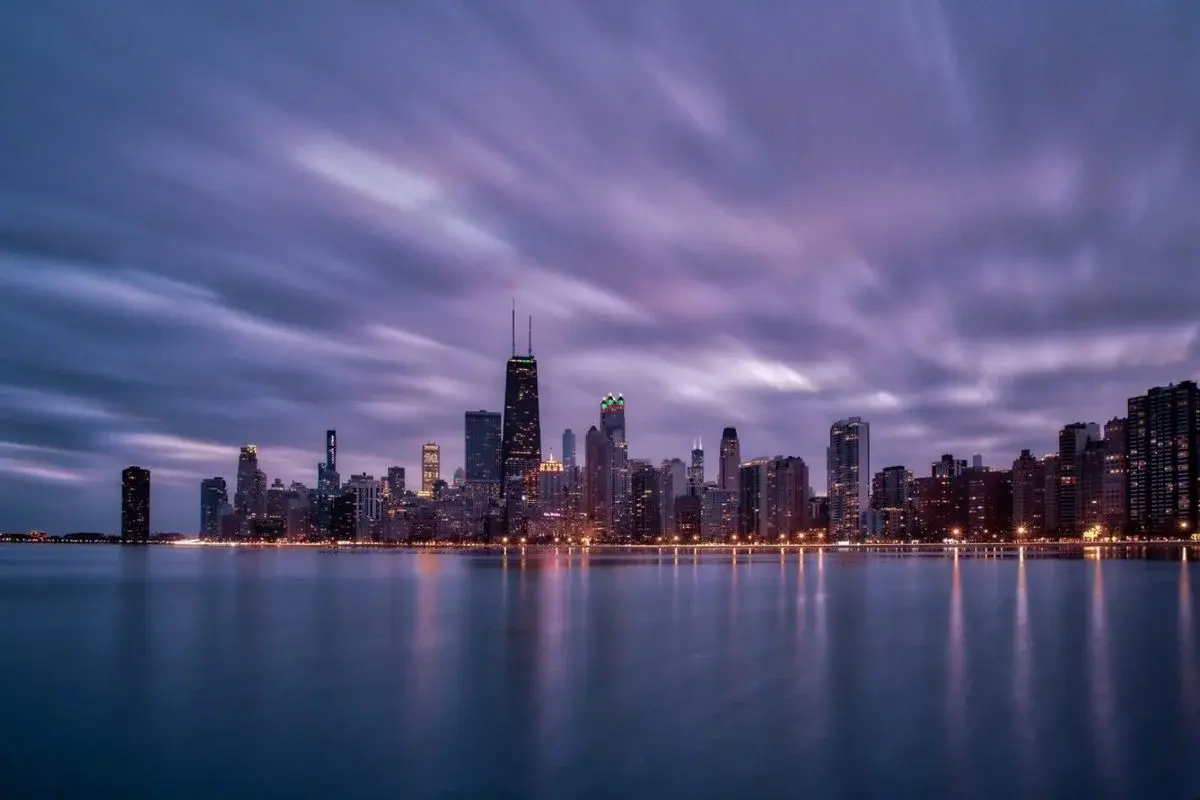
"The Chicago of China" isn't my line — it's a nickname foreign-trade writers and diplomats have hung on Wuhan for decades, for reasons that are almost embarrassingly literal: a city where two rivers meet, a historic freight-and-rail crossroads, an old heavy-industry base (steel, in Wuhan's case, alongside Chicago's stockyards and steel mills) now groping for a second act in tech and research. One U.S. State Department posting even suggested Wuhan looks more like Chicago's own smaller cousin, Pittsburgh — a manufacturing city trying to turn itself into a knowledge city.
I've never been to either place. This page exists because the comparison was sitting in the research, fully formed, before I ever went looking for an angle — which is rarer than you'd think.
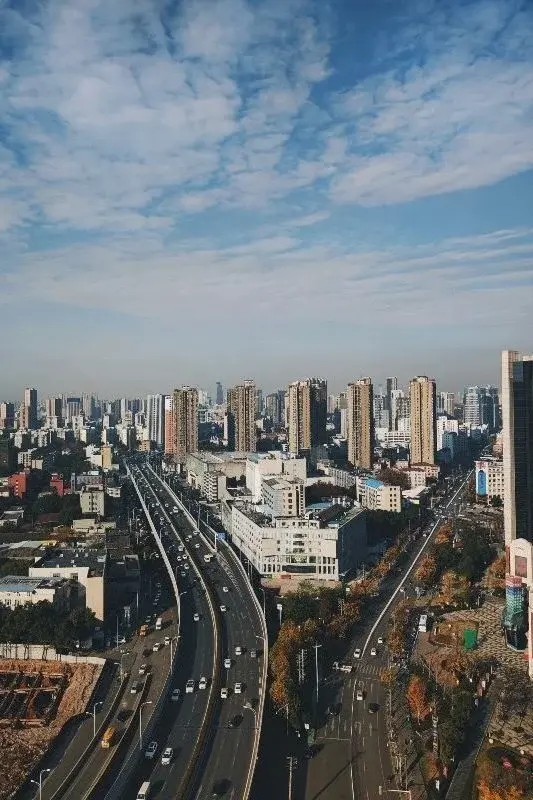
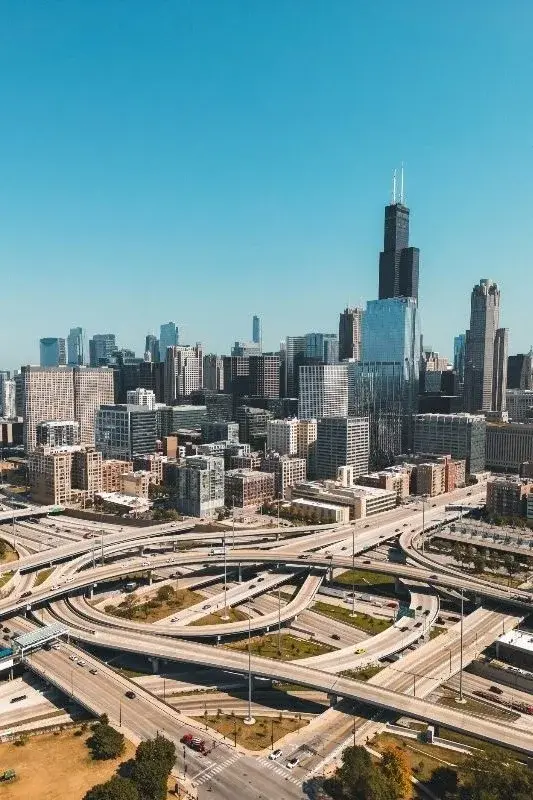
01 — The money nearly cancels, again
Wuhan vs Chicago: rent is about 45–49% of wages in both cities.
Wuhan vs Chicago: $383 vs $2,443 for a 1-bedroom in the city center — about 45% vs 49% of average take-home pay. The money nearly cancels out once you account for the wage gap. Here are the headline numbers, in each city's own currency and converted to dollars for comparison.
Wuhan and Chicago figures: Numbeo, mid-2026, ¥7.2 = $1. See sources below.
Chicago's rent runs about 6.4 times Wuhan's; its wages about 5.9 times. The multiple is almost the same on both sides of the ledger. So the felt experience rhymes even though the currencies don't: a rent-to-wage ratio in the mid-to-high 40s in both cities, close enough that neither one is meaningfully more "affordable" than the other once you're actually earning the local wage. If you want to check that ratio against your own numbers rather than the local average, the move calculator uses the same figures. Neither city fits neatly into this site's own Five Kinds of Cheap framework, for what it's worth — both sit too close to their own national mid-table to count as any of the five distinct kinds of cheap covered there.
One flag worth raising here, since the headstat bar above raised it: Wuhan's own salary and cost-of-living figures shift more than most cities in this series when you check different sources. Numbeo's own single-person estimate without rent has ranged from roughly $535 to $626 across recent pulls. Other full-package trackers have put a single person's total monthly cost anywhere from about $546 to over $1,200. That spread is wide enough that the headstat's $700–1,050 range should be read as a genuinely unsettled number, not a tight, confident estimate the way Chicago's range is. Cross-check any Wuhan figure you're planning around against a second source before treating it as solid.
But remember: the city is only one variable in your monthly spend. The same city, different lifestyle — the bill gap can be even larger →
02 — Same structure, different language
Wuhan vs Chicago: old industry floor, new tech ceiling in both cities.
Wuhan's wage split runs on Wuhan Iron & Steel and Dongfeng Motor holding the floor, while the East Lake Hi-Tech Zone — "Optics Valley" — stretches the ceiling upward. It feeds off one of the largest university-student populations of any city in the world, a claim Wuhan University alone does a lot to justify. Chicago's version of the same story is older and more mythologized: the stockyards and steel mills that built the city's "hog butcher for the world" identity in the Carl Sandburg sense. They gave way over the 20th century to a finance, trade, and now tech-and-biotech economy centered on the Loop and Fulton Market.
Neither city fully shed its industrial floor. Both still carry it as an identity, even as the ceiling above it does the actual wage-growing. That's the real structural rhyme here — not the nickname, but the economics underneath it.
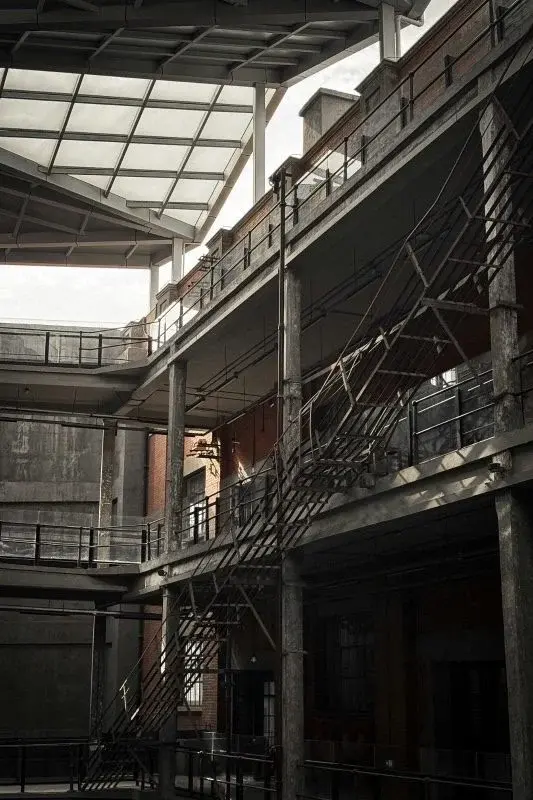
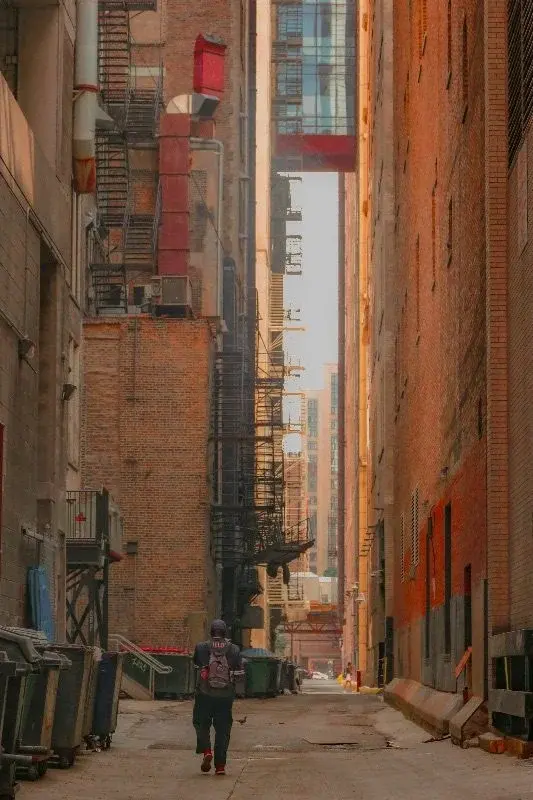
Neither photo is the postcard shot, and neither is the steel plant or the rail yard itself — that's deliberate. This is the layer just behind those: the raw ironwork and repurposed concrete a manufacturing city leaves lying around once the factories move on or move up. Wuhan's actual industrial floor still runs on steel plants and auto-parts suppliers strung along the Yangtze's banks. Chicago's runs on one of the densest freight-rail networks in North America — six of the seven major U.S. Class I railroads still converge in and around the city today. That's a direct descendant of the same 19th-century rail-hub role that got Wuhan its nickname in the first place. What the two photos actually show is smaller and more honest: the fire-escape ironwork and bare structure both cities still build in, long after the factories they were built for have changed hands.
03 — What the transit actually looks like
Wuhan vs Chicago transit: elevated L vs river-crossing metro.
Chicago's most photographed piece of infrastructure isn't a building — it's the "L," the elevated rail system whose oldest sections date to 1892. Iron trestles run directly over downtown streets, close enough to the sidewalk that riders and pedestrians share the same sightline. It's loud, visibly old, and still the backbone of how the city actually moves.
Wuhan's equivalent achievement is newer and less visible from street level, which is part of the point. Wuhan Metro Line 2, opened in 2012, was the first underground metro line in China to cross the Yangtze River — a tunnel bored beneath one of the world's major waterways, connecting Hankou and Wuchang without either side seeing the crossing happen. Chicago put its defining piece of transit infrastructure in the air, over 130 years ago, and left it visible. Wuhan put its defining piece of transit infrastructure underwater, just over a decade ago, and hid it completely. Both cities solved the same problem — get people across a divided, river-split downtown — in opposite directions, literally.


The street-level economies rhyme too, in a smaller way. Chicago's sidewalks run on hot dogs, Italian beef stands, and deep-dish counters — a whole tier of inexpensive, fast, single-item food built for people moving between the L and an office. Wuhan's morning version of the same idea is re gan mian, sold from stalls exactly like the one above, eaten standing up, on the way to somewhere else. Neither city's defining food is a sit-down meal. Both are built for a workforce that doesn't have time to sit down.
04 — What it actually costs, day to day
Wuhan vs Chicago: what rent, utilities, and schools actually cost.
None of the transit or the street food shows up on a bill. Below it sits the layer that actually piles up every month — rent's full four-row picture, the utility meter, and the price of buying in or opting out of the local default.
The rent picture, in full
The vs-table above shows only the headline row. Here's the full four-row picture, city center and outside it, for both bedroom counts.
| City | 1-bed, center | 1-bed, outside | 2-bed, center | 2-bed, outside |
|---|---|---|---|---|
| Wuhan | ¥2,760 · $383 | ¥1,650 · $229 | ¥5,285 · $734 | ¥2,865 · $398 |
| Chicago | $2,443 | $1,691 | $3,811 | $2,599 |
Wuhan's four rows are the same ledger already published on the Wuhan deep-dive: 1-bed center from Numbeo; the outside-center row applies Wise's own city-to-suburb ratio to that anchor; the 2-bed rows are the midpoint of Wise's own 1-bed/3-bed readings for Wuhan, a different source than the anchor and not blended with it — see the Wuhan piece for the full note on why the spread itself is the honest answer here. Chicago's 1-bed-center figure is this page's own already-published anchor ($2,443); the other three rows are a fresh Numbeo pull (outside-center $1,786.10, 3-bed center $5,040.62, 3-bed outside $3,410.94) — the outside-center row uses Numbeo's own figure directly, and the 2-bed rows are the midpoint of Numbeo's 1-bed and 3-bed readings, the same method used on the Wuhan side. Converted at ¥7.2 = $1.
Utilities: three tiers versus one flat rate
Wuhan settles electricity and gas annually against three usage tiers, water monthly. Chicago's utility, ComEd, runs an essentially flat residential rate — its "Price to Compare" shifts with wholesale and capacity costs, but there's no tier structure to stack against Wuhan's three bands.
| City | Structure | Effective rate |
|---|---|---|
| Wuhan | 3 tiers, annual | ¥0.558–0.858/kWh≈$0.078–0.119 |
| Chicago | Flat, monthly | ≈14.7–17¢/kWhComEd all-in average, EIA/BLS; no tiers |
| City | Structure | Effective rate |
|---|---|---|
| Wuhan | 3 tiers, monthly | ¥2.47–3.84/m³≈$0.34–0.53 |
| Chicago | Flat, monthly | ≈$4.13/1,000 gal≈$1.09/m³ water + a separate, equal sewer charge — see note |
Wuhan: Hubei provincial tiered schedule (electricity) and Wuhan's central-districts schedule (water) — see the Wuhan deep-dive for full sourcing, including its own flagged uncertainty on the gas schedule. Chicago electricity: ComEd's own "Price to Compare" combined with EIA/BLS all-in residential averages, July 2026 — a representative average, not a single quoted tariff line, since ComEd's rate moves with wholesale costs rather than sitting on a fixed schedule. Chicago water: City of Chicago's own water-sewer tax structure, where sewer is billed as 100% of the water charge on top of it — effectively doubling the per-gallon cost once both are counted, a structure with no equivalent on Wuhan's bundled schedule. Converted at ¥7.2 = $1.
Both cities have a shared-meter footnote, and it's worth pairing them. Wuhan's older buildings not yet converted to individual meters pay a flat, non-tiered rate (≈¥0.58/kWh). Chicago's version is bigger and stranger — 52% of single-family homes and 42% of two-flats in the city have no water meter at all. They pay an estimated flat fee based on building width and fixture count instead of actual usage. Different mechanisms, same underlying fact: a meaningful share of both cities' housing stock isn't actually billed on what it uses.
Buying in, and the exit fee from the local default
The meter is the small, recurring gap. Two bigger, less frequent numbers close out this section: what it costs to actually own property in each city's center versus its outer ring, and what it costs a family to buy out of the local school assignment — Wuhan's international-school circuit for non-local and foreign-passport families, Chicago's well-known private-day-school tier for everyone else.
| City | Center | Outside center |
|---|---|---|
| Wuhan | ≈¥18,000≈$2,500 | ≈¥10,300≈$1,431 |
| Chicago | ≈$4,000Downtown/Central, premium stock | ≈$2,850Citywide median, converted from $/sq ft |
Wuhan: local listing aggregators (Fang.com, Anjuke), core-district (Wuchang/Jianghan riverside) resale average vs. citywide resale average, both mid-2026. Chicago: Redfin's citywide median sale price per square foot (≈$280–295, March–July 2026) for the outside-center figure; Redfin's Central/Downtown Chicago neighborhood figure (≈$371–372/sq ft) for the center figure. Converted at 1 sq ft = 0.0929 m², and ¥7.2 = $1.
The multiple is the useful number here, not the raw price. Wuhan's center runs about 1.7× its own outer ring; Chicago's runs about 1.4×. Wuhan's steeper premium follows the same story as its rent spread — a huge floating population competing for a comparatively fixed stock of central, well-connected units. Chicago's century of sprawl gives it much more buildable land close to downtown than Wuhan's river-hemmed geography allows.
| City | Typical annual tuition |
|---|---|
| WuhanWuhan Yangtze International School, a representative elementary-grade year | ≈¥200,000≈$27,778 |
| ChicagoFrancis W. Parker School, Pre-K–5 | ≈$45,570 |
Wuhan Yangtze International School's own published 2025–26 fee schedule (¥86,000–219,000 by grade); ≈¥200,000 is the published Elementary (Grades 1–5) rate. Chicago figures from Francis W. Parker School's own published schedule, via Wikipedia and the school's financial-aid materials (Pre-K–5: $45,570; 6th–12th: $49,900). Converted at ¥7.2 = $1.
Unlike the Nanjing/Richmond version of this comparison, these two numbers don't converge. Chicago's elite private-school tuition runs about 1.6 times Wuhan's international-school rate, even before you factor in Chicago's much higher wage base. That's consistent with the rest of this section: Wuhan comes out cheaper on almost every line here, the "Chicago of China" nickname notwithstanding. The nickname was never really about price.
05 — The nickname neither city asked for
Wuhan vs Chicago: both are the biggest city nobody quite calls the biggest.
Here's where the comparison pays off. Look at how each city's own reputation sits, officially and unofficially, next to its country's most glamorous metropolis.


Chicago
3rd
largest U.S. city by population
behind New York and Los Angeles
Chicago was the United States' second-largest city for most of the 20th century, and picked up the nickname "the Second City" to match. Los Angeles overtook it in population by the 1980s — but the nickname never updated. Chicago is now America's third city, still known, reflexively, by a rank it no longer holds.
The name outlived the fact.
Wuhan
"New Tier-1"
Never one of China's actual Big Four
China's most-cited annual ranking of major cities (published by Yicai/CBNData) places Wuhan consistently among the 15 "New Tier-1" cities — bigger and more consequential than any ordinary second-tier city, but permanently shut out of the real First Tier: Beijing, Shanghai, Guangzhou, Shenzhen. Population, GDP, and university enrollment don't move it into that club. The category itself is built to keep it out.
Big enough to rank. Not big enough to count.
Neither city picked its own label. Both have been living inside someone else's ranking for a very long time.
06 — The honest brake
Wuhan vs Chicago: what this comparison doesn't cover?
First, a disclosure that applies to the whole page: I have never set foot in Wuhan or in Chicago. Every claim above is sourced, not witnessed — treat this comparison as a research exercise, not a travelogue, on both sides of the ledger.
Second, most readers outside China who've heard of Wuhan at all know it for one thing: the city's name became globally attached to the start of the COVID-19 pandemic in early 2020. This page is deliberately about something else — the ordinary arithmetic of rent, wages, and industrial history — and doesn't try to adjudicate that period. It's mentioned here once, plainly, because pretending a reader wouldn't be thinking about it would be its own kind of dishonesty.
Third, the "Chicago of China" label is a real, repeated phrase in English-language sources about Wuhan — but it's a comparison made by outside observers, not a name Wuhan uses for itself the way Chicago's "Second City" nickname is at least partly self-aware (there's a comedy theater literally named after it). One side of this comparison chose its own nickname. The other had it assigned.
If you're weighing either one
Deciding on more than the number
- The rent-to-wage math is close enough to call a wash. Both cities land in the mid-to-high 40s percent — pick based on climate, industry, and language, not on which one is "cheaper."
- Both cities' median wage figures move more than you'd expect between sources. Cross-check any number you're planning around, in either currency.
- Both are "second" cities in name only. Chicago and Wuhan are each, in their own country, genuinely major economic centers — the "second" framing says more about which city gets the international spotlight than about which one actually runs the region.
07 — Questions people actually ask
Quick answers
Is Wuhan cheaper than Chicago?
The money nearly cancels — both cities charge about the same share of the local wage for a room in the city center.
Why is Wuhan called “the Chicago of China”?
The West has used that nickname for about a century, pointing to Wuhan's role as a river-confluence transport hub with an old industrial floor and a newer tech ceiling — much like Chicago's own economic history.
Has the author of this comparison actually visited Wuhan or Chicago?
No — it's explicitly researched from a distance on both sides, not written from firsthand residence in either city.
How does public transit compare between Wuhan and Chicago?
Chicago's elevated train dates to 1892; Wuhan's newer metro system includes a line that crosses the Yangtze River underground.
Are Wuhan and Chicago considered their countries' biggest cities?
No — both carry the specific nickname of being the biggest city nobody quite calls the biggest, overshadowed by Shanghai/Beijing on one side and New York/LA on the other.