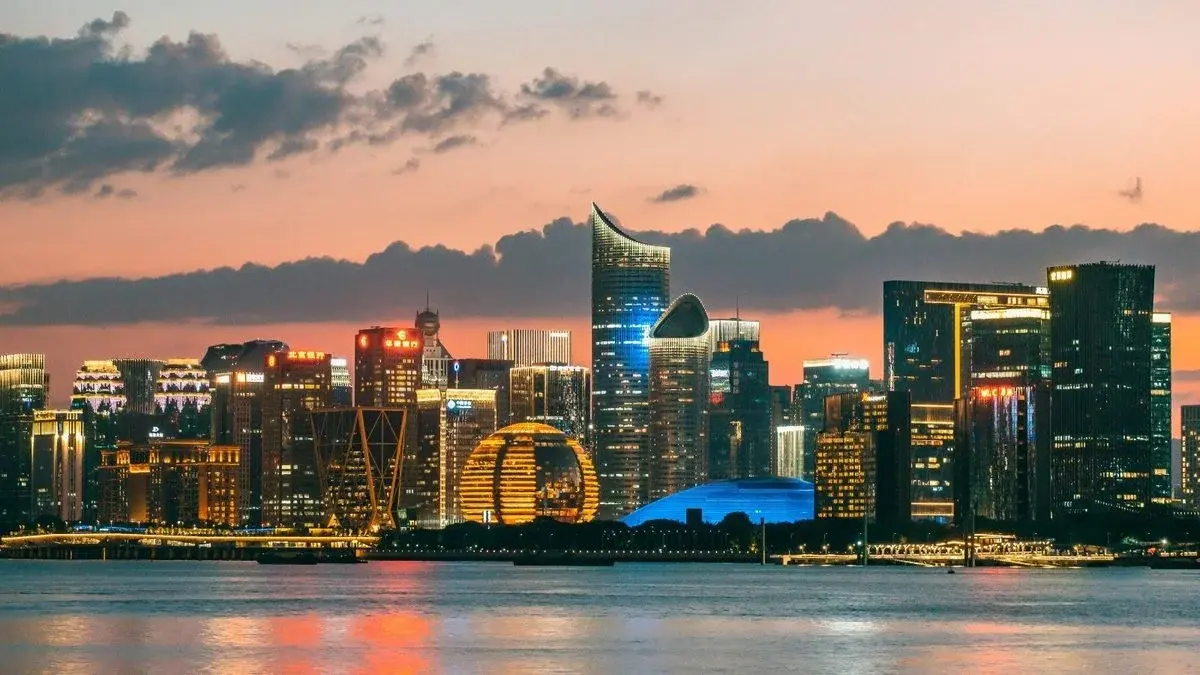
Living cost, at a glance
≈$534/mo
≈$319/mo
≈$538/mo
≈$1,072/mo
≈$857/mo
Rent from the §01 ledger. The non-rent line is Numbeo's own compiled "estimated monthly costs, excluding rent" for Hangzhou (single person, pulled Aug 2026) — it already folds in food, transport, utilities and everyday extras as one figure. Converted at ¥7.2 = $1.
I couldn't tell you how many times I've been to Hangzhou. Not because it blurs together — it doesn't — but because none of the trips were ever about Hangzhou. They were about an OTIS factory, a cost workshop, a client's books that needed closing before New Year. The city was always the venue, never the reason. Twenty-some years of that, and I still don't know if I've ever seen it as anything other than a place I was working.
This isn't a piece about falling in love with West Lake, then. I've walked around it maybe four times in two decades, always at the edge of a work trip, never at the center of one. What follows is the math of living in Hangzhou, the real numbers with my own fragments dropped in where they're honest, and left out where they're not.
01 — The number
A mid-tier salary, a first-tier rent
A one-bedroom in Hangzhou runs about $534 a month, roughly 41% of the median after-tax wage of $1,291. That is a first-tier rent sitting on a mid-tier salary. The city's top salaries come from its tech and e-commerce sector, Alibaba's home turf, which pulls rent up citywide even though the median wage doesn't rise at the same pace. Move outside the center and the same one-bedroom drops to $319, the number most locals actually live with.
Numbeo puts Hangzhou's average net monthly salary at ¥9,298 (≈$1,291). A one-bedroom apartment in the city center runs ¥3,843 (≈$534), put those two together and rent alone eats roughly 41% of the average paycheck before anything else is spent. Move outside the center and the same one-bedroom drops to ¥2,294 (≈$319), the number most locals actually live with, not the downtown figure. Which kind of "cheap" this city belongs to →
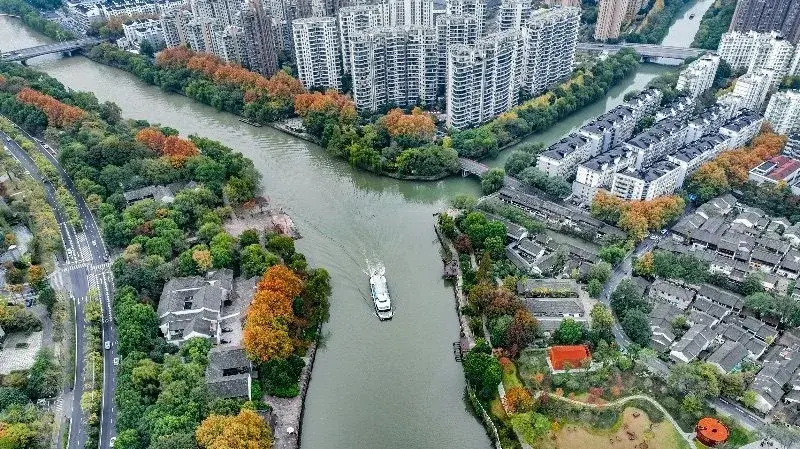
What the table above doesn't capture: the deposit, agency fee, visa medical, and household kit that hit before month one. The real bill in week one goes well beyond rent →
Salary and 1-bed rent: Numbeo, city-contributed data, April 2026. The 2-bed figures aren't tracked by Numbeo or Wise for Hangzhou. They're this site's own estimate, pulled from a local rental-market guide's published ranges for the central and outer districts. Weaker sourcing than the 1-bed figures above, and flagged as such. Converted at ¥7.2 = $1.
Numbeo commenters push back hard on that salary. The usual complaint is that it skews toward the kind of person who bothers to submit data at all, and a fresh graduate from one of Hangzhou's second-tier universities is closer to ¥7,000–8,000 before tax. That gap between the platform average and the graduate-entry reality is worth sitting with. It's the gap that decides whether this city is actually affordable to the person moving here, or only on paper.
What that basic monthly figure buys: electricity, water, and gas
All three are tiered, use more, pay more per unit. And like Beijing, Shanghai, Chongqing, and Dalian, Zhejiang settles them annually rather than month to month.
| Tier | Annual usage | Rate |
|---|---|---|
| 1 | 0–2,760 kWh/yr≈230 kWh/month equivalent | ¥0.538/kWh |
| 2 | 2,761–4,800 kWh/yr≈231–400 kWh/month equivalent | ¥0.588/kWh |
| 3 | 4,800+ kWh/yr≈400+ kWh/month equivalent | ¥0.838/kWh |
| — | Shared-meter buildings | ¥0.558/kWh flat |
| Tier | Annual usage | Rate |
|---|---|---|
| 1 | 0–216 m³ | ¥2.90/m³incl. ¥1.00/m³ sewage |
| 2 | 217–300 m³ | ¥3.85/m³incl. ¥1.00/m³ sewage |
| 3 | 300+ m³ | ¥6.70/m³incl. ¥1.00/m³ sewage |
| — | Shared-meter buildings | ¥2.95/m³ flat |
| Tier | Annual usage | Rate |
|---|---|---|
| 1 | 0–276 m³ | ¥3.10/m³ |
| 2 | 277–1,280 m³ | ¥3.72/m³ |
| 3 | 1,280+ m³ | ¥4.65/m³ |
That unusually wide second tier isn't an accident — Hangzhou is one of the rarer Chinese cities where individual households sometimes heat with gas rather than nothing at all, and the 2021 tier revision was explicitly widened to keep those households out of the top bracket.
Those tiered rates are the visible part. The annual settlement, the heating season, and the charges that don't show up in a monthly ledger are the rest. The monthly costs you won't find in the table →
Electricity: Zhejiang provincial tiered residential rate〔2021〕#377, applied citywide, annually settled. Water and sewage: Hangzhou central-districts residential schedule, current 2026 policy. Gas: Hangzhou municipal residential schedule, central districts, in effect since the 2021 tier revision. Converted at ¥7.2 = $1.
Standardized comparison figure, applied the same way across every city on this site: 220 kWh electricity + 15 m³ water + 25 m³ gas per month, a single-occupant baseline that excludes winter heating, run against the tiers above. At Hangzhou's rates that's ¥118 electricity + ¥44 water + ¥79 gas ≈ ¥241 (≈$33)/month, about 6% of the ¥3,902 "basic monthly costs" figure in the ledger above.
For the same cross-site comparison point used on every city page here: Numbeo puts an inexpensive restaurant meal in Hangzhou at ¥25 (≈$3.47) and a one-way transit ticket at ¥4 (≈$0.56), read early August 2026.
What the everyday basics cost, at the market
| Item | RMB | USD |
|---|---|---|
| PorkLeg cut, retail average | ≈¥11.4/500g | ≈$1.58 |
| EggsRetail average | ≈¥5.6/500g | ≈$0.78 |
| Vegetables28-item basket, retail average | ≈¥5.2/500g | ≈$0.72 |
| Beef | Not shown — see note | |
| Norwegian salmonWholesale, dated — see note | ≈¥60–75/500g | ≈$8.33–10.42 |
Pork, eggs, and vegetables: Hangzhou Municipal Bureau of Commerce weekly necessities-market report, week of May 11–17, 2026 — city-specific, all three items the same week. We couldn't find a Hangzhou-specific retail beef figure and left the row blank rather than substitute a number that didn't answer the question. Salmon is national wholesale pricing (April 2024, still the commonly cited range), confirmed present at Hangzhou's own main wholesale market — the seafood hall at Nongfa (农发, the Hangzhou Agricultural Products Logistics Center) was reported carrying Norwegian salmon as of February 2026. Converted at ¥7.2 = $1.
Zhejiang isn't just importing this fish anymore. In 2024, a land-based recirculating-aquaculture salmon farm opened in Xiangshan, Ningbo — the first facility of its kind in Asia — and brought in the province's first domestically farmed Atlantic salmon harvest. It's a small operation next to the country's roughly 90,000-tonne annual salmon appetite. But it's a genuine local footnote to a fish that, until recently, this province only ever received.
02 — What's cheap, and what isn't
The lake is free, and almost nothing near it is
West Lake itself charges no admission. It never has, and that's part of the city's civic identity, a rare Chinese scenic landmark left fully open. But the restaurants that ring it are a different economy entirely. I remember one, famous enough that everyone in the group already knew its name, where we ordered Dongpo pork and West Lake vinegar fish because you're supposed to. I can't tell you the restaurant's name today. I never wrote it down, and I've never bothered looking it up since. That isn't a gap I could close by researching harder; it's the honest shape of what two decades of work trips leave behind: a strong memory of the pork, no memory at all of the address.
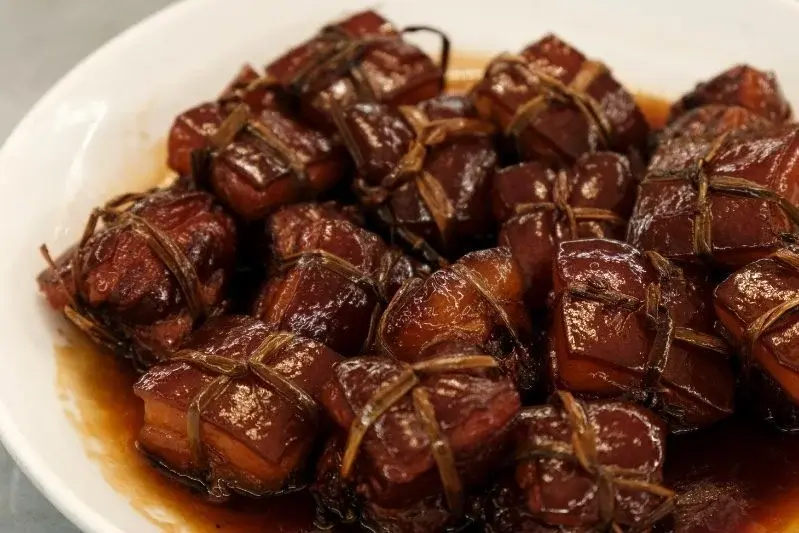
Everyday food and transport in Hangzhou sit close to the national mid-tier baseline. What pulls the average up is the price of being near the lake, and the price of being near the money that clusters around it.
But the city is only half the story. How you live day to day moves the final number more than the city itself →
There's a reason a work-trip visitor with no palate for it still ends up ordering Dongpo pork and West Lake fish on autopilot: Hangzhou cuisine is the lead representative of Zhejiang cuisine, one of China's Eight Great Culinary Traditions. A real, recognized cuisine in a way Beijing's food scene, by contrast, never quite managed to be. The style leans on freshness and a light hand with seasoning rather than heat or heavy sauce. That's most of the reason a coffee-drinking outsider could eat well here for two decades without ever noticing he was in the middle of one of the country's defining food traditions.
Back then I didn't drink tea at all. I was a coffee drinker, and had no honest opinion on whether the Longjing served in the teahouses near the lake was the real thing or the version priced for people who wouldn't know the difference. I've come around since. Somewhere in the years between that first OTIS trip and now, I picked up a real fondness for Chinese tea culture, which makes it almost funny that all my Hangzhou trips predate the part of me that would have appreciated what was in the cup.

03 — Getting around, an outsider's-eye view
Getting around Hangzhou without ever having commuted here
I've never commuted in Hangzhou, so I can't tell you what it feels like from a resident's seat, every trip on this page ran hotel-to-office-to-airport, not station-to-station. What I can give you is the shape of the system I passed through for two decades without examining. As of mid-2026, Hangzhou's rail network runs 12 lines, roughly 516 kilometers, and 262 stations. It ties into Shaoxing's own metro and the Hangzhou–Haining intercity line under one ticketing system, covering a combined 620 kilometers across three cities.
| Distance | Fare |
|---|---|
| 0–4 km | ¥2 |
| 4–12 km | +¥1 / 4 km |
| 12–24 km | +¥1 / 6 km |
| 24 km+ | +¥1 / 8 km |
We haven't been able to source a metro map for Hangzhou that we're confident redistributing. For the current network layout, go straight to the operator: Hangzhou Metro — official site →
Network size and station count: Hangzhou Metro, as of mid-2026. Fare schedule per Hangzhou Metro's published fare rules. Converted at ¥7.2 = $1.
Outside the rail, the national trio of shared-bike apps,such as Meituan, Hello, Didi's Qingju, covers the flat lakeside city easily, ride-hailing is as ordinary here as anywhere else in urban China, and buses fill in the routes the newer outlying lines haven't reached. The ¥2 base fare and the low utility rates don't happen by accident. They're the visible tip of decades of capital investment and permanent maintenance subsidy. The real cost behind these low prices → None of it made it into my own trips, which is exactly the point of this section: the system was there the whole time, running underneath twenty years of taxis I never thought twice about. Taxis paid for, like everything else on this page, by someone else's expense account.
04 — Where the top salary comes from
An e-commerce capital with a research campus attached
That expense account existed because of a specific economy, and it's worth naming. Hangzhou's economy runs on a pairing that will look familiar to anyone who's read the Shanghai piece on this site, just rebuilt around different institutions. A platform economy that makes cash today, and a research push to fund what comes next.
Yuhang & the Xihu tech belt
Alibaba's headquarters sit in Yuhang. The platform economy it built, live-streaming commerce, logistics, payments, is the engine that put Hangzhou on the national map as something more than a scenic second-tier capital. It's also why a former colleague of mine, after a stint in Shanghai, chose to come back here to start her own company rather than stay in a bigger city.
Platform economy · cash flowHangzhou's tech corridor
Zhejiang University anchors a research base, AI, biotech, advanced manufacturing, that the city has leaned on hard since the platform boom matured. It's the same logic Shanghai runs between Jinqiao and Zhangjiang: today's commerce paying for tomorrow's lab.
R&D · the next betThe city I kept flying into for cost workshops was the output of that first engine. The manufacturing and logistics partners downstream of the platforms, not the platforms themselves.
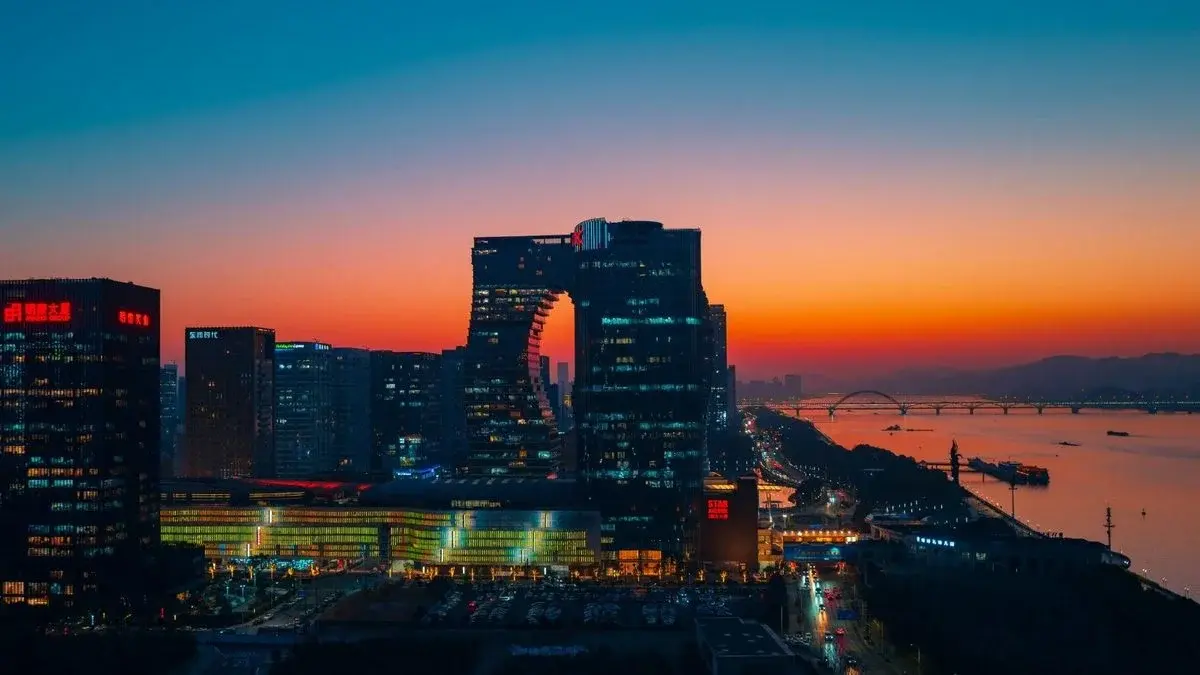
My old Shanghai colleague's move is a small but useful data point. She wasn't chasing Hangzhou the way outsiders supposedly do — she's from here. Shanghai was the posting; Hangzhou was home. When the posting ended, she didn't look for the next bigger city. She quit and came back to start her own company. I went to see the office once, on my way out of the city after a project wrapped, and bought her a large, gaudy horse statue from a shopping mall as a launch gift. A pun on mǎdào chénggōng, "may the horse arrive at success." I don't remember the brand, or even exactly what the horse looked like anymore. I never photograph things I buy on impulse. But the gesture, and what it meant, I remember fine.
05 — Who else the platform economy pulled in
The two districts where Hangzhou's foreign talent concentrates
The two engines behind those top salaries, Xihu/Yuhang's platform economy and the Zhejiang University-anchored tech corridor, are also where the city's foreign-talent programs concentrate. Hangzhou has repeatedly been named one of the country's "most attractive cities for foreign talent," and the infrastructure behind that claim is real — not just a slogan on a government press release:
| Area | Why here | Who you'll find |
|---|---|---|
| West Sci-Tech Corridor Xihu District, near Alibaba's Xixi campus | A dedicated high-level talent service center serving both domestic and international professionals, visa processing and permanent-residence applications make up a significant share of its caseload | Tech and R&D professionals, entrepreneurs |
| Binjiang District Hangzhou High-Tech Zone | Runs its own dedicated "foreign talent" track as part of the city's annual overseas-talent innovation competition | Recruited tech talent, startup founders |
What's missing from that table is anyone who looks like me. Twenty years of expense-account work trips never once put me in either district for longer than a meeting. The foreign talent these programs are built for is a resident population, people staying to build something, not passing through to close someone else's books. If Hangzhou has a North American community with any real depth, it's much younger and thinner than Beijing's or Shanghai's. It's built almost entirely around this platform-and-research economy rather than any older diplomatic or trading history. Hangzhou never had a Guangzhou-style trade-port past to leave a foreign quarter behind.
This section describes where Hangzhou's foreign professional and tech-sector population is known to concentrate. Compiled from municipal talent-program reporting, not a formal census specific to nationality. Treat the figures as directionally right rather than a precise headcount.
06 — The commuter's ledger
The plane got narrower before the city ever did
I don't have a Hangzhou household budget to show you, because I've never run one, every trip was paid on a project's dime, in and out inside a week. What I do have is a smaller, stranger data point, and it's the one that stuck with me: the aircraft.
A body's-eye view of a slowdown
In the early 2000s, the Dalian–Hangzhou route ran on a wide-body, the kind of plane you'd expect on an international long-haul, not a domestic hop. Today, the same route runs almost entirely on narrow-body A320s and 737s.
I don't know for sure whether that's because flight frequency went up and each plane simply needed to carry less, or because the passenger count itself dropped. I haven't found a clean public number that settles it either way. I'd rather say so than guess with confidence I don't have. What I can say is what it felt like, seat by seat, over twenty years. A route that used to move like a mainline is now flown like a shuttle. Whatever the precise mechanism, it reads to me as one visible thread of a broader economic slowdown.
It's a strange thing to spot in a country's economy from an airplane seat rather than a spreadsheet. But that's the honest shape of my Hangzhou data: not a ledger of rent and salary, but a fleet chart I never asked to keep.
07 — The costs that never hit the ledger
What twenty years left me with
My first trip was 2003: three of us, newly assigned to a just-formed department, sent to an OTIS elevator factory to learn how a mature operation ran its costs. We went out to a bar by West Lake that night, the way you do when you're young and the trip still feels like an occasion rather than a routine. The one that stayed with me longest wasn't that trip, though. It was a solo visit, years later, exact year long gone from memory, that happened to land on Mid-Autumn Festival. The hotel gave me a mooncake. I walked the lake alone that evening, work done for the day, nobody to report to until morning. I couldn't tell you what year. I can tell you exactly how it felt to be the only person at that table.
Another trip, a cost workshop, moved partway through to a hotel built out on the water, genuinely beautiful, one of the only times the scenery was the point rather than the backdrop. We toured West Lake and Lingyin Temple together as a group that time, the closest any of my Hangzhou trips came to being a vacation.
My family visited Hangzhou once, without me, my wife took our kids while I was tied up elsewhere for work. I've never walked this city as a father. Every version of Hangzhou I have is a working one.
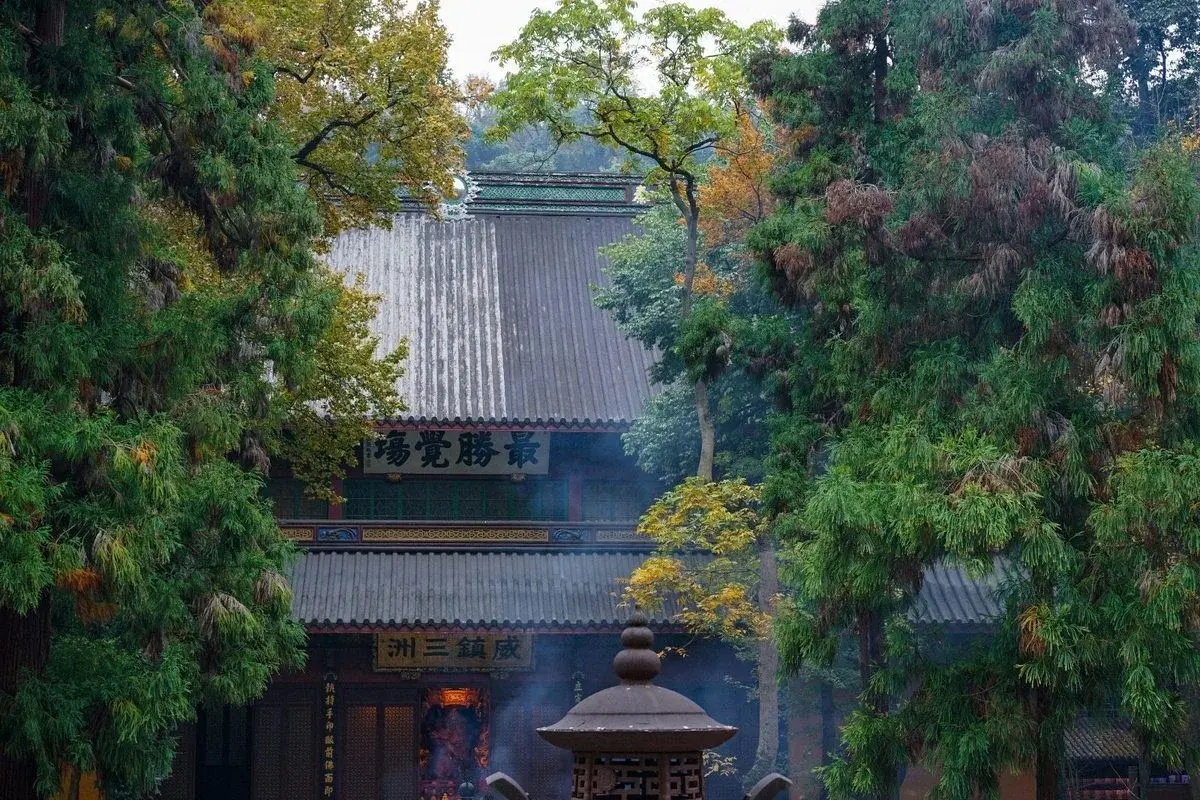
The eating, drinking, and sightseeing that should anchor twenty years of memory barely register. A university friend once treated me to snails here. The famous restaurant's pork and fish stayed. The restaurant's name did not, and I've never once gone back to look it up.
08 — The honest brake
Where a frequent visitor's view runs thin
First, the salary figure at the top of this page is contested by the people who actually live under it. Treat the ¥9,300 average as a ceiling for a certain kind of employee, not a floor for the whole city. Second, and more directly: I'm not a Hangzhou resident, and never have been. Every trip on this page was a work trip, in and out on a schedule set by someone else's calendar. That's a specific, narrow lens. This piece is honest about rent, salary, and the industries that fund them, and much thinner on the daily texture, the neighborhoods, the school queues, the slow Tuesday, that only living somewhere gives you.
Third: my clearest Hangzhou memories are almost all edge-of-frame. A colleague's new office, a hotel mooncake, a horse I can't picture anymore. That isn't false modesty; it's what two decades of task-focused travel produces: a city you've been to constantly and lived in never.
09 — Questions people actually ask
Quick answers
How much does rent cost in Hangzhou?
A one-bedroom in the city center runs about ¥3,843/month (≈$534); outside the center it drops to about ¥2,294 (≈$319).
Is Hangzhou's cost of living driven by rent or everyday spending?
Both pull in different directions. This is a mid-tier salary city carrying first-tier rent. Basic monthly costs excluding rent run about ¥3,902 (≈$542). What's free — West Lake itself — sits right next to what isn't: almost everything around it.
Why is rent so high in Hangzhou relative to local wages?
The city's top salaries come from its tech and e-commerce sector — Alibaba's home turf, paired with a research-campus ecosystem, which pulls rent up citywide even though the median wage doesn't rise at the same pace.
What does a two-bedroom cost in Hangzhou?
In the city center, roughly ¥6,000–10,000/month (≈$833–1,389); outside the center, about ¥3,600–6,500 (≈$500–903).
Is Hangzhou affordable for someone not working in tech?
It's tighter than the headline salary numbers suggest. The wage that gets reported is the platform-economy one, not the citywide median, so budget against the lower figure unless you're working in that sector.
If you're thinking of going
Hangzhou, for someone earning here
- The center-vs-outside gap is the whole game. Rent nearly halves once you move away from West Lake and the CBD — decide early which Hangzhou you're pricing.
- Don't anchor to the platform-economy salary. Alibaba and its peers set a visible ceiling, not the citywide floor; a graduate outside that ecosystem is likely earning meaningfully less than the average this page quotes.
- The lake is free. It's one of the few big-city scenic landmarks in China with no admission gate — budget your splurging for the restaurants around it, not the water itself.
- If home is here, coming back isn't a downgrade. Hangzhou pulls people home from bigger cities as much as it pulls outsiders in — worth knowing if you're weighing it against a first-tier posting.
- Still deciding? Try the city match tool → or answer seven questions for a personalized recommendation →
The verdict
Should you live in Hangzhou?
I can't answer that the way I answered it for Shanghai, because I never lived the question myself. What twenty years of arriving and leaving taught me is narrower: Hangzhou runs two economies a couple of subway stops apart, and which one you're in decides what the city costs you. If you're moving here for the platform-economy jobs, price your rent against the center. If you're moving here because, like my old colleague, it's already home, you probably don't need this page at all.