Living cost, at a glance
≈$694/mo
≈$431/mo
≈$479/mo
≈$1,173/mo
≈$909/mo
Rent from the §01 ledger. The non-rent line is Numbeo's own compiled "estimated monthly costs, excluding rent" for Nanjing (single person, pulled Aug 2026) — it already folds in food, transport, utilities and everyday extras as one figure. Converted at ¥7.2 = $1.
Nanjing has opened and closed as China's capital more times than almost any city alive — six dynasties by the local count, the founding Ming empire, the 1912 Republic — and lost the title every single time. What's left, once the title moves on, is a strong provincial capital still carrying the architecture, the museums, and the price tag of a much bigger job it hasn't held for most of the last six centuries.
This is not a travel piece. What follows is the math and history of living in a second-tier provincial capital that used to be the whole country's capital — today's numbers, honestly sourced. My own visits are here only as texture: a 1999 arrival by hard-seat train from Harbin, a handful of returns since, never a resident. Where that limits the view, the text says so.
01 — The number, and what it's missing
Nanjing rent: ¥5,000/mo in the center, 59% of the median wage.
The headline numbers for Nanjing are clear: a city-center one-bedroom runs about ¥5,000 (≈$694) per month. The blended after-tax median wage is about ¥8,500 (≈$1,181) per month. That rent-to-income ratio — roughly 59% — places Nanjing mid-table among cities in this series: more expensive than Chengdu or Xi'an, cheaper than Shanghai. This page is built from public data and reporting, with the author's own visits to Nanjing woven in as texture, not as the primary source.
Start with what the listings say. A modern one-bedroom in the central districts — Xinjiekou, Gulou, the lanes around the Confucius Temple — runs ¥4,200–5,800 a month, call it ¥5,000 (about $694) right in the middle. Nanjing's own statistics bureau puts the average nominal wage for non-private units at ¥13,759 a month before tax for 2025; private-sector employees, who are most of the workforce, average closer to ¥6,949 pretax. Blend the two the way an ordinary household actually experiences income, and a reasonable after-tax median lands near ¥8,500 (about $1,181). Against that median, rent comes to roughly 59% of income — worse than Chengdu, better than Shanghai, and a long way from what the city's résumé would suggest.
| City | 1-bed, center | After-tax median | Rent ÷ wage |
|---|---|---|---|
| Xi'an | $311 | $1,089 | 29% |
| Chengdu | $374 | $1,050 | 36% |
| Harbin | $423 | $857 | 49% |
| Nanjing | $694 | $1,181 | ~59%* |
| Shanghai | $972 | $1,391 | ~70% |
*Paper figure. Rent range: Anjuke/Ke.com and independent trackers, mid-2026. Wage: Nanjing Municipal Bureau of Statistics, 2025 annual wage bulletin, published June 2026, blended across non-private and private sectors and estimated after-tax. Converted at ¥7.2 = $1. See sources below.
That mid-table rent ratio is the first honest correction. Nanjing is not a cheap city, and it's not a scary one either. It sits exactly where its economic tier says it should — a strong sub-provincial capital, not a national one. That's the whole story, because Nanjing's historical tier keeps insisting it should rank higher than its current one does. Nanjing is the historical-residue kind of cheap — read how it fits the full framework →
Every other city in this series earns its cost story from what it makes or sells today. Nanjing is the first one that earns a chunk of its story from a job it no longer holds — capital of China, on and off, across roughly 1,800 years.
The full rent picture, in the center and outside it
The 1-bed city-center figure is the same Anjuke/Ke.com-derived number used above. Wise doesn't independently track a 1-bed outside-center figure as high as local listings would suggest, so the outside-center row here applies Wise's own city-to-suburb ratio for Nanjing to the local-listing center figure — a derived number, not an independent reading. The 2-bed rows come directly from Wise (the midpoint of their own 1-bed and 3-bed figures for Nanjing), a different source from the anchor above; Wise's own 1-bed center reading for Nanjing runs lower than the Anjuke/Ke.com figure ($507 vs. $694), so treat the 2-bed numbers as a different data source's view of the city, not a number on the same footing as the anchor. Meal and transit figures are Numbeo's "Meal, Inexpensive Restaurant" and "One-Way Ticket, Local Transport" for Nanjing, read early August 2026 — the same benchmark used across every city on this site. Converted at ¥7.2 = $1.
Your daily choices shape the bill more than the city itself →
What the rest of the utility bill looks like
Electricity, water, and gas are all tiered, and — like most cities in this series — settled annually rather than month to month. Nanjing residents can also opt into time-of-use electricity pricing, a wrinkle most cities on this site don't offer.
| Tier | Annual usage | Rate |
|---|---|---|
| 1 | 0–2,760 kWh/yr≈230 kWh/month equivalent | ¥0.5283/kWh |
| 2 | 2,761–4,800 kWh/yr≈231–400 kWh/month equivalent | ¥0.5783/kWh |
| 3 | 4,800+ kWh/yr≈400+ kWh/month equivalent | ¥0.8283/kWh |
Households can opt into time-of-use pricing instead: ¥0.5583/kWh peak (8am–9pm), ¥0.3583/kWh off-peak (9pm–8am), applied on top of the tiered structure rather than replacing it. Once selected, a household is locked in for a year.
| Tier | Annual usage | Rate |
|---|---|---|
| 1 | 0–200 m³ | ¥3.42/m³ |
| 2 | 201–270 m³ | ¥4.32/m³ |
| 3 | 270+ m³ | ¥7.02/m³ |
These prices are the same across the whole city as of a January 2025 reform, including the outlying districts (Jiangbei New Area, Liuhe, Gaochun) that used to run on separate schedules. Shared-meter households pay the tier-1 rate. Households of 4+ get an extra 65m³/year (tier 1) and 85m³/year (tier 2) per additional person.
| Tier | Annual usage | Rate |
|---|---|---|
| 1 | 0–400 m³ | ¥3.03/m³ |
| 2 | 401–1,100 m³ | ¥3.64/m³ |
| 3 | 1,100+ m³ | ¥4.24/m³ |
Households of 4+ get an extra 125m³/year (tier 1) and 285m³/year (tier 2) per additional person — a 4-person household's tier-1 ceiling rises to 500m³/year, for instance.
Electricity: Nanjing Municipal Development and Reform Commission, 南京民生价格手册 (2026 edition), effective since October 2021, annually settled. Water: Nanjing Municipal Development and Reform Commission notice effective January 1, 2025, citywide unified pricing. Gas: Nanjing Municipal Development and Reform Commission notice effective July 1, 2023, still current. Converted at ¥7.2 = $1.
Standardized comparison figure, applied the same way across every city on this site: 220 kWh electricity + 15 m³ water + 25 m³ gas per month, a single-occupant baseline that excludes winter heating, run against the tiers above. At Nanjing's rates that's ¥116 electricity + ¥51 water + ¥76 gas ≈ ¥243 (≈$34)/month.
These utility rates are low because the pipes, wires, and decades of capital behind them were subsidized long before you arrived. The real cost of cheap water, power, and transit →
What the everyday basics cost at the market
| Item | RMB | USD |
|---|---|---|
| PorkBoneless leg meat, retail | ≈¥11.6/500g | ≈$1.61 |
| BeefShank, retail | ≈¥44.9/500g | ≈$6.24 |
| EggsRetail average | ≈¥5.7/500g | ≈$0.80 |
| Vegetables25-item basket, retail average | ≈¥3.7/500g | ≈$0.51 |
Pork, beef, eggs, and vegetables: Nanjing Municipal Development and Reform Commission's own weekly wet-market price survey, week of June 1–5, 2026 — genuinely city-specific, all four items the same week, already reported per 500g. This is about as clean a source as this site finds for any city. Converted at ¥7.2 = $1.
02 — The job the city kept losing
Nanjing's capital history: six dynasties, one republic, and the title never stuck.
Nanjing markets itself as the "ancient capital of six dynasties" — a claim so central to local identity it's stamped on tourist maps and hotel brochures. Historians differ on exactly which six regimes count. The label is best read as civic branding rather than a precise ledger.
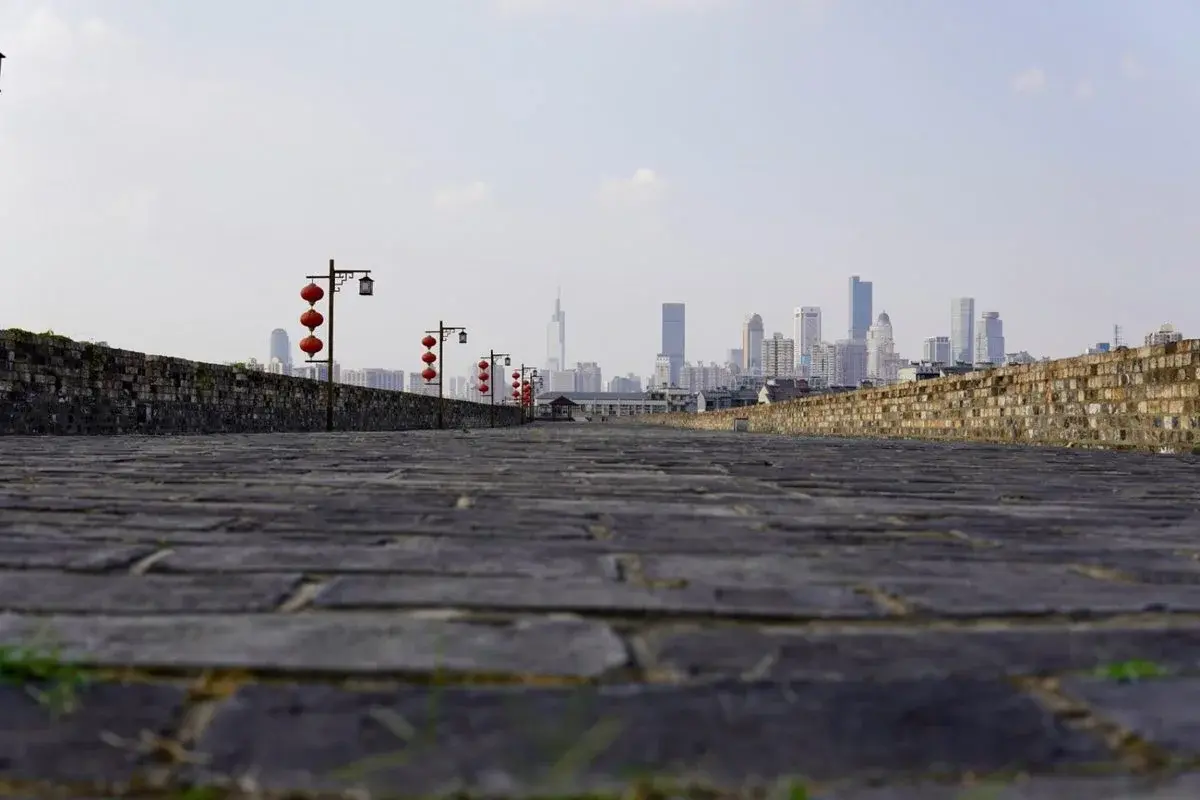
What isn't in dispute: Nanjing anchored the south during the long division after the Han dynasty fell. Centuries later the first Ming emperor built his capital here and raised the city wall that still stands today — at roughly 25 kilometers the longest surviving city wall in the world, thick enough in places to drive a car along the top. The Ming court moved north to Beijing within decades. Nanjing kept the title of secondary capital, but the emperor, and the gravity, had already left.
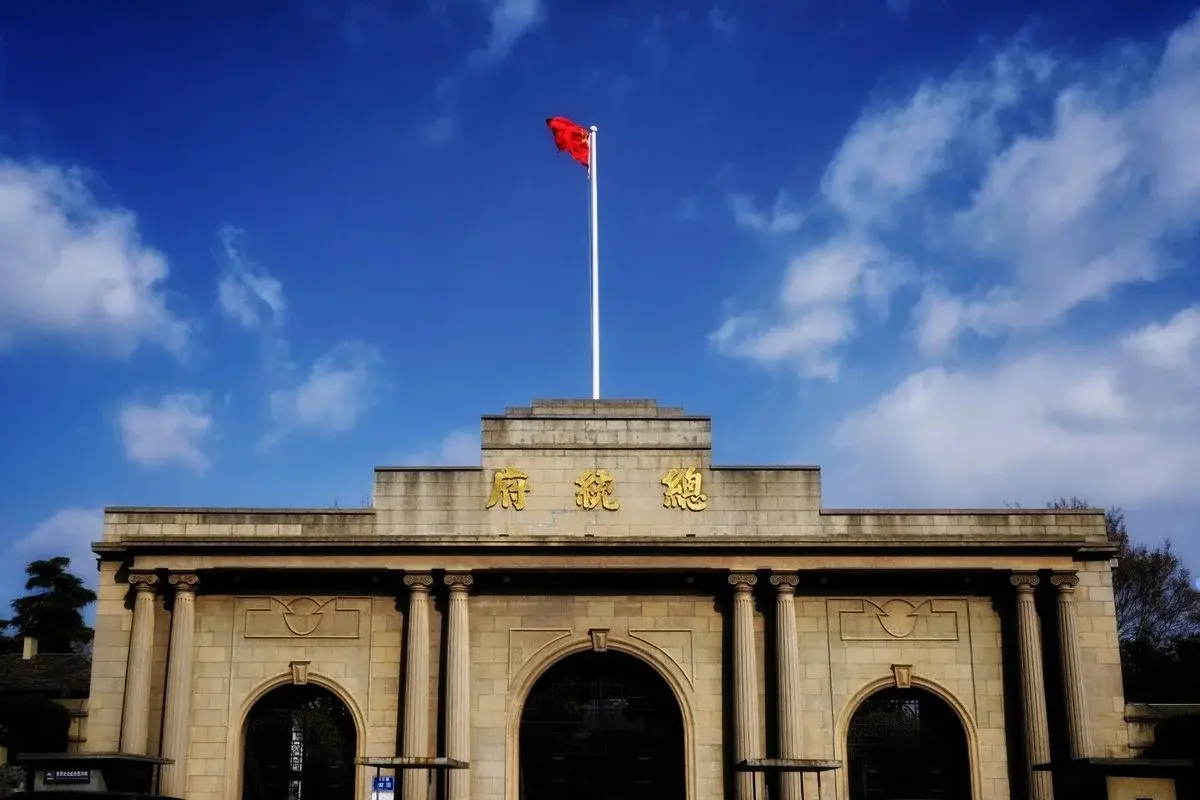
The pattern repeated in 1912, when Sun Yat-sen was inaugurated provisional president of the new Republic of China at the Presidential Palace here in Nanjing. It repeated again through the Nationalist government's Nanjing decade in the 1920s–30s — cut short by war and occupation. Every one of these openings ended the same way: the capital function moved on, and Nanjing was left holding the monuments — the wall, the Presidential Palace's colonnaded gate, Sun Yat-sen's mausoleum at Zhongshan Ling, the wide avenues laid out for a government that no longer sits in them.
That's the frame the rest of this piece sits in: a city built, more than once, at the scale of a national capital, now priced and paid like the strong provincial capital it actually is. The gap between the two is where a lot of Nanjing's character — and its comparison-page twin — lives.
03 — What's old money and what's new money
Old town and new district: two Nanjings, one city.
Two places, a few kilometers and about six centuries apart, explain how the city carries its history without living inside it full-time.
Fuzimiao
The Confucius Temple quarter along the Qinhuai River — the most "Nanjing" place in Nanjing. Lantern-lit at night, packed with snack stalls and boat rides, genuinely beautiful and thoroughly commercialized. This is where I went, twice, twenty-eight years apart, and chose it again on purpose the second time.
Old town · heritage economyJiangbei New Area
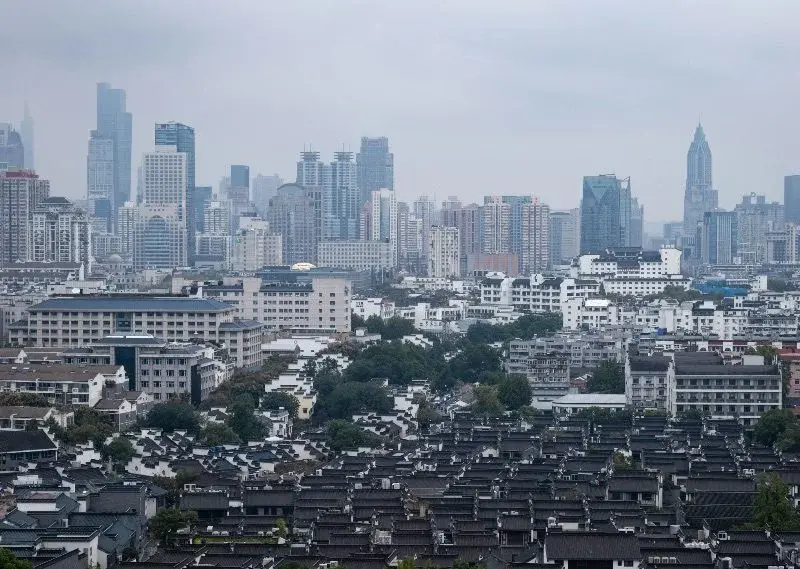
A state-level new area across the Yangtze from the old center, built out since 2015 for chip manufacturing, biotech and finance — Nanjing's bet that its future economy doesn't have to sit inside the Ming-era footprint at all.
New district · the next bet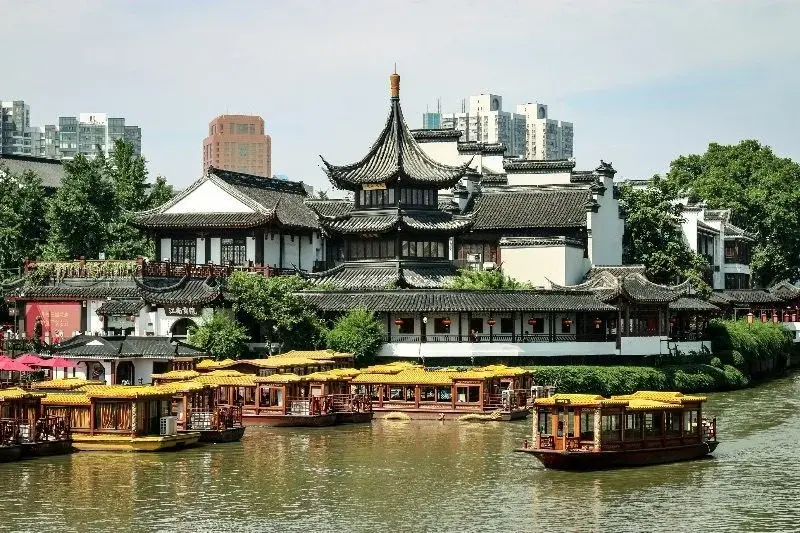
The way I'd put it: Fuzimiao sells you Nanjing's past. Jiangbei is betting on a future the wall was never built to hold.
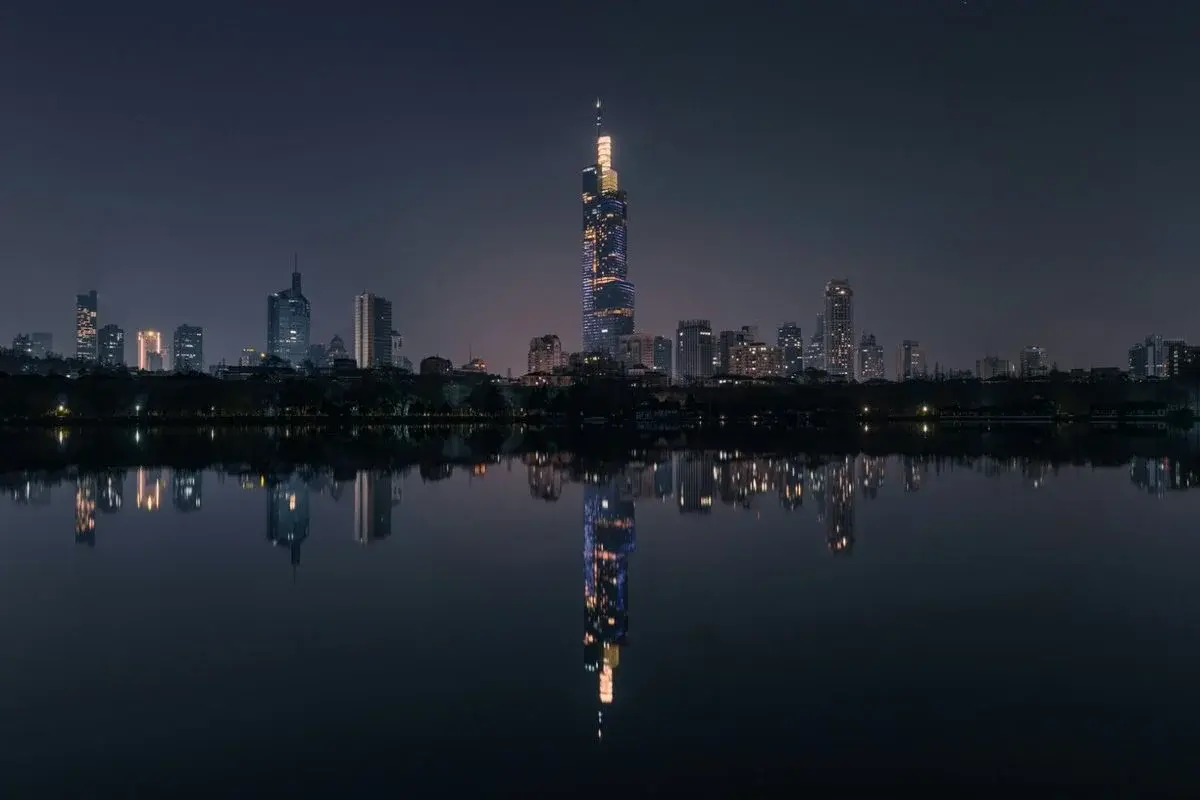
Most visitors, myself included on every trip so far, only ever meet the first Nanjing. The second one is where the after-tax median wage in that table above is actually being earned — and, increasingly, where a foreign population earns and studies alongside it.
04 — Who's actually here, if you're arriving from North America
Where North Americans live and study in Nanjing.
Nanjing has been named one of the country's "most attractive cities for foreign talent" eight separate times, and ranked 7th nationally in a 2025 city talent-attractiveness survey. That's not just a marketing line — the two halves of §03's "two Nanjings" each pull in a distinct foreign population, for distinct reasons:
| Area | Why here | Who you'll find |
|---|---|---|
| Gulou & Xianlin Nanjing University, Southeast University | Nanjing's own university district — NJU alone reports 1,432 international students across its four campuses; citywide, foreign-degree students at Nanjing's universities now exceed 10,000 a year, growing roughly 15–20% annually | International students, visiting faculty, exchange students |
| Jiangbei New Area | The state-level new district named in §03 — hosted a World Young Scientist Forum drawing Nobel laureates and global tech talent, backed by a dedicated youth-and-foreign-talent incentive package; actual foreign investment used grew 44.7% in 2024 | Chip, biotech, and finance professionals; recruited young researchers |
The pattern splits cleanly along the same old-town/new-district line §03 already drew: the university-district population is mostly here to study or teach, drawn to the old city's academic gravity; the Jiangbei population is mostly here for the same reason Jiangbei itself exists — the newer economy the city is betting on, not the six-dynasty one.
This section describes where Nanjing's foreign student and professional population is known to concentrate — compiled from university enrollment reporting and Jiangbei New Area's own investment figures, not a nationality-specific census. Treat the figures as directionally right rather than a precise headcount.
05 — What the everyday food actually costs
What eating in Nanjing actually costs: duck, noodles, and wet-market prices.
I'll say upfront what I can't say about the other cities in this series: I don't know Nanjing's food scene well enough to have real opinions about it. What I can offer is the local saying and the pricing behind it, not a personal food tour. Nanjing residents have a phrase for it — wu ya bu cheng xi, "no banquet is complete without duck" — and the city leans into the "duck capital" label without embarrassment. Salted duck (yanshui ya) and Nanjing roast duck are the two headline dishes; the everyday one, sold from streetside counters city-wide, is duck-blood vermicelli soup (yaxue fensi tang) — duck blood, gizzard, liver and intestine simmered in a duck-bone broth with glass noodles. It's cheap by design: a bowl runs from around ¥10 at a plain corner shop up to several times that at the well-known chains near Fuzimiao, depending entirely on how much offal goes in the bowl.
That spread — one dish, a 5x-plus price range depending only on which counter you're standing at — is a smaller-scale version of the same lesson the rent table teaches: in Nanjing, as everywhere in this series, the same-named thing at a tourist counter and a local one is rarely the same product.
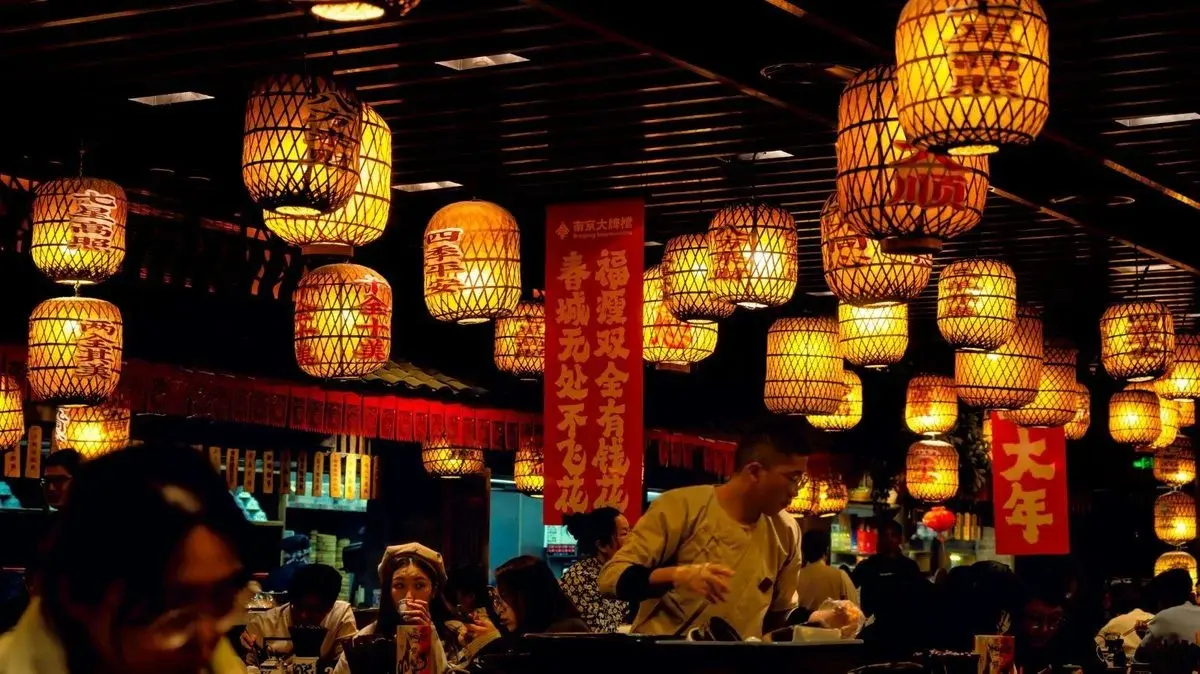
My own contribution here is smaller and less flattering: on that first 1999 trip, the noodles I tried in Nanjing were genuinely bad — thin on flavor, nothing like the chew of a good northern bowl. What did impress me, on that same trip, was a pomelo, a fruit I'd simply never had growing up in the northeast.
That's the food. Getting to it, and around the rest of the city, is a different kind of gap in my own account — one worth naming before the numbers.
06 — Getting across town
Nanjing Metro: 15 lines, 277 stations, and a network I never used.
I have no personal transit routine to report here — every one of my visits to Nanjing has been short enough to cover on foot or by taxi, from the 1999 job fair to the 2007 sightseeing day to the 2015 factory trip. What I can report is the network itself, which has grown into one of the busier systems in the country. As of April 2026, Nanjing Metro runs 15 lines across 277 stations, covering roughly 625.7 kilometers. By the most recent published ridership figures, it ranks among the busiest in mainland China by daily passenger volume.
For the actual current network layout, fares, and first/last train times, the operator's own site is the right source: Nanjing Metro Group — official site →
Network stats: Chinese Wikipedia's Nanjing Metro entry, citing Nanjing Metro Group figures current to April 2026. Full national picture: Getting Around a City.
That's the network inside the city. The more interesting transit story, for someone who's only ever passed through, is the one that gets you here in the first place.
07 — A visitor's ledger
High-speed rail to Nanjing: the 1999 trip vs. the 2015 day trip.
I've never lived in Nanjing, so I can't hand you a resident's monthly budget the way I could for a city I called home. What I can hand you is a comparison I've actually lived through twice: the same Harbin–Nanjing distance, thirty years apart, plus a same-day round trip I made from Shanghai in 2015 for a factory visit — a day when I first tapped my ID card straight through a turnstile instead of showing a paper ticket.
1999 fare and duration from memory, approximate. 2015 and current HSR fares and durations: 12306.cn schedules and standard second-class pricing, mid-2026. Converted at ¥7.2 = $1.
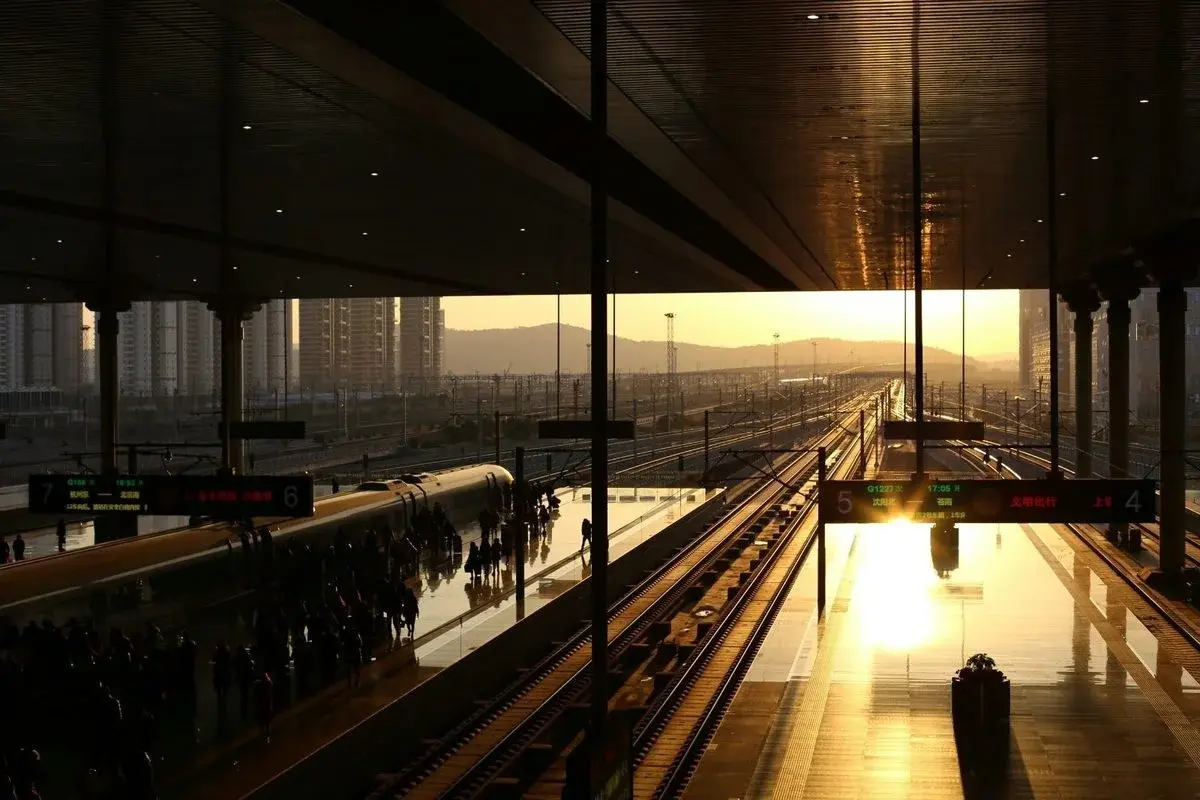
That 2015 trip is the one that stuck with me for a reason that has nothing to do with the factory. It was the first time I used my national ID card to scan straight through the gate — no paper ticket, no queue at the window. I went to Nanjing in the morning and was back in Shanghai for dinner. Compressed against the 1999 memory of a waiting-room floor at dawn, it's the clearest single measure I have of what twenty-eight years of rail investment actually bought ordinary travelers: not a cheaper trip, but a trip small enough to fit inside a single working day.
The number that matters more than the fare
For a business traveler, the real price of a trip was never the ticket. It was the day it used to cost you. Nanjing went from a multi-day commitment to a lunch meeting, and that shift changed who bothers to visit — and who bothers to work there.
Rail can compress the trip in. It can't do anything about what the city feels like once you've arrived in July.
08 — The cost the brochures leave out
Nanjing's summer: the furnace-city heat and what it costs.
Nanjing sits on the popular, informally-drawn list of China's "three (or four) furnace cities" — a title it shares with Wuhan and Chongqing, and one every candidate city half-disputes and half-embraces, because no city wants the label and every city wants to have survived it. The Yangtze basin traps summer heat and humidity together; Nanjing regularly sees stretches of 35°C+ days through July and August, with humidity that makes the number feel worse than it reads.
Unlike Harbin, where a fixed municipal heating season buys a specific, budgetable winter, Nanjing's summer heat is the kind of cost that never appears on a single bill. It shows up instead in higher electricity use from air conditioning run flat-out for two months, and in the slower, indoor pace the whole city adopts once the afternoon heat sets in. The monthly drains hidden from the spreadsheet →
Winter, by contrast, is the milder half of the Nanjing bargain — south of the Qinling–Huai line, so no municipal heating, but nowhere near Harbin's cold either. It's the same north-south heating gap that makes Shanghai and Wuhan colder indoors than the thermometer suggests, just less severe here than in either of those.
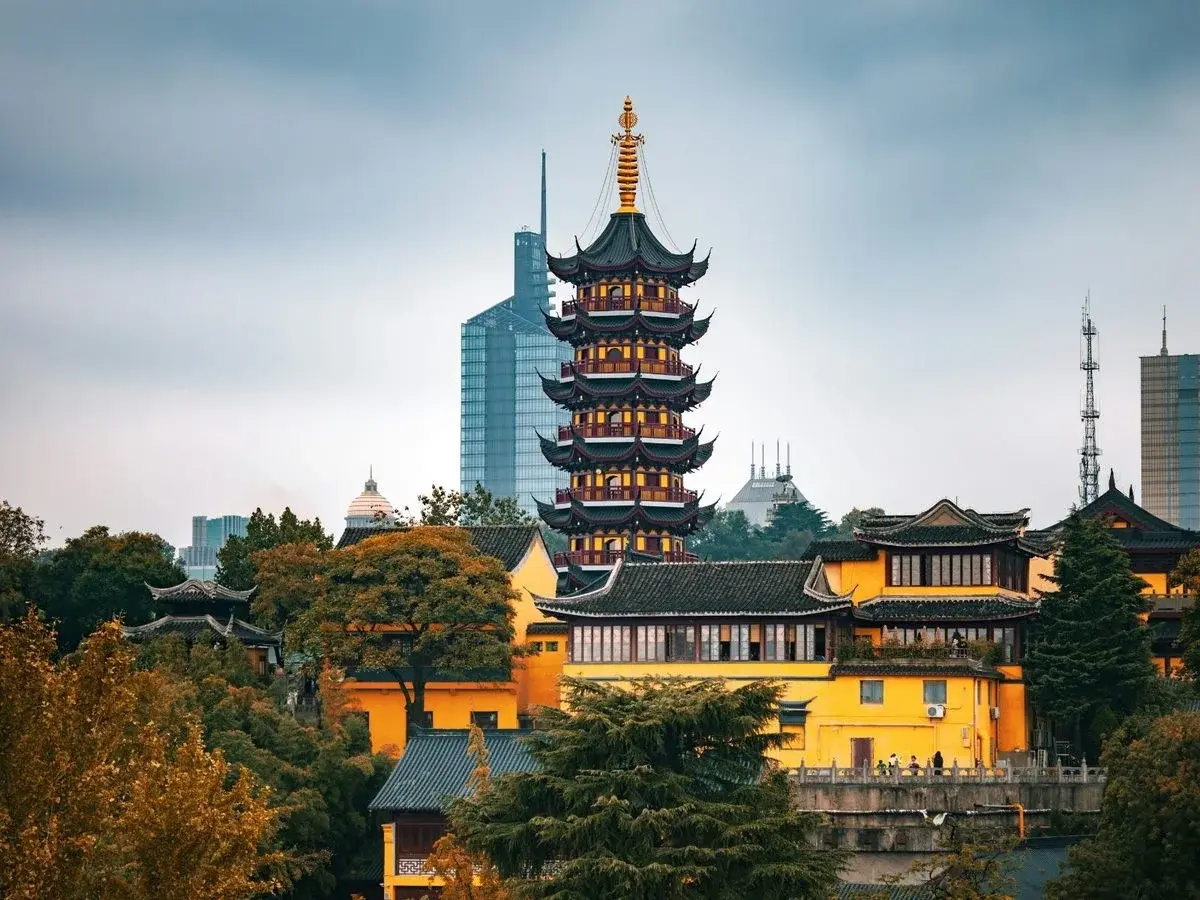
The Ming city wall carries a specific historical detail worth knowing on its own terms: individual bricks are stamped with the names of the workers who made them — a Ming-dynasty quality-control system where failures could be traced back to a person, centuries before anyone called it accountability.
09 — The honest brake
Three honest limits to this guide.
Three things keep the tidy story honest. First, don't let the six-dynasties, Ming-capital, republican-capital résumé inflate your read of Nanjing's present-day economic weight. It's a strong sub-provincial capital and a genuine Yangtze River Delta heavyweight, not a rival to Shanghai or even, on most measures, to its own provincial neighbor Suzhou. Jiangsu's odd-numbered rivalry between Nanjing (the capital) and Suzhou (long the province's largest economy) is a running local joke worth knowing before you assume the provincial capital is automatically the province's biggest city.
Second, my own view of the city is genuinely shallow. I've been back to Nanjing more than a few times since 1999 — I've lost the exact count — but nearly all of those later trips were business travel, car-to-car, handled by someone else's itinerary from the airport or station straight to a meeting and back. Only two visits were ever really mine to spend as I liked: the 1999 job fair and a 2007 trip with my wife. I have never rented an apartment here, never done a weekly grocery run, never had a Nanjing landlord. Everything above the rent-and-wage table is a visitor's honest impression, clearly labeled as such, not a resident's ledger.
Third: Nanjing carries a twentieth-century history — the 1937 Nanjing Massacre — that this piece, being a cost-of-living guide, deliberately doesn't try to carry. It matters enormously to how the city understands itself and how it's memorialized; it just isn't the subject of a rent-and-wage article, and it would be dishonest to gesture at it in a paragraph and move on.
Nanjing's price tag looks unremarkable. Its résumé looks imperial. The honest read of the city sits in the gap between those two, not at either extreme.
10 — Questions people actually ask
Quick answers
How much does rent cost in Nanjing?
A one-bedroom in the city center runs about ¥5,000/month (≈$694); outside the center it's roughly ¥3,100 (≈$431). Rent eats about 59% of the median wage — a mid-table number for a city with a much bigger history.
Was Nanjing always a secondary city?
No — it served as the capital of China more times than almost any other city (six dynasties by local count, plus the founding Republic), and lost the title every time. Its current cost profile reflects a city living with that history rather than currently holding that status.
Is Nanjing's summer really that hot?
Yes — Nanjing is one of China's traditional “furnace cities,” and the heat bill genuinely comes due in July and August, a real seasonal cost the brochures tend to leave out.
What does a two-bedroom cost in Nanjing?
About ¥5,760/month (≈$800) in the city center, or ¥3,090 (≈$429) outside it — though these figures come from a different source than the one-bedroom numbers, so treat them as directionally consistent rather than perfectly comparable.
How do you get around Nanjing?
The metro network has grown to fifteen lines, in a city the author originally only ever crossed on foot.
If you're thinking of going
Nanjing, for someone visiting or considering the move
- Rent scales hard by district. Jianye, the newer, high-end riverside district, runs well above the historic core; Gulou, Xuanwu and Qinhuai sit in the middle; the outer districts like Liuhe undercut all of them. Ask which Nanjing a listing is actually in.
- Pack for a furnace, not a mild river city. July–August humidity is the real cost of a Nanjing summer, even if it never shows up on a single bill.
- High-speed rail has collapsed the map. Nanjing sits under 1.5 hours from Shanghai and Hangzhou by HSR — close enough that a day trip is a normal way to see it, not a commitment.
- The old town is a museum piece with a price tag. Fuzimiao is genuinely worth seeing and genuinely built to sell it back to you; budget for that the way you would any heritage district anywhere.
- The first-week bill: Deposit, agent fees, visa medicals, and kitting out a flat stack up before you earn a yuan. See what move-in really costs →
- Still deciding? Answer seven questions to find a city that matches your priorities → Or browse the city match tool →
The bottom line
Should you visit — or live in — Nanjing?
Visit, without hesitation. Few cities in China let you stand this close to thirteen centuries of on-and-off national history for the price of a mid-tier Chinese rent and a short HSR ticket. Live there, and the honest answer is the same one that applies to most strong-but-not-top-tier Chinese capitals: it's a good, livable, moderately priced city that will never quite let you forget how much bigger a job it used to hold. I've only ever passed through. But I've chosen to pass through twice on purpose, and I'd do it again.