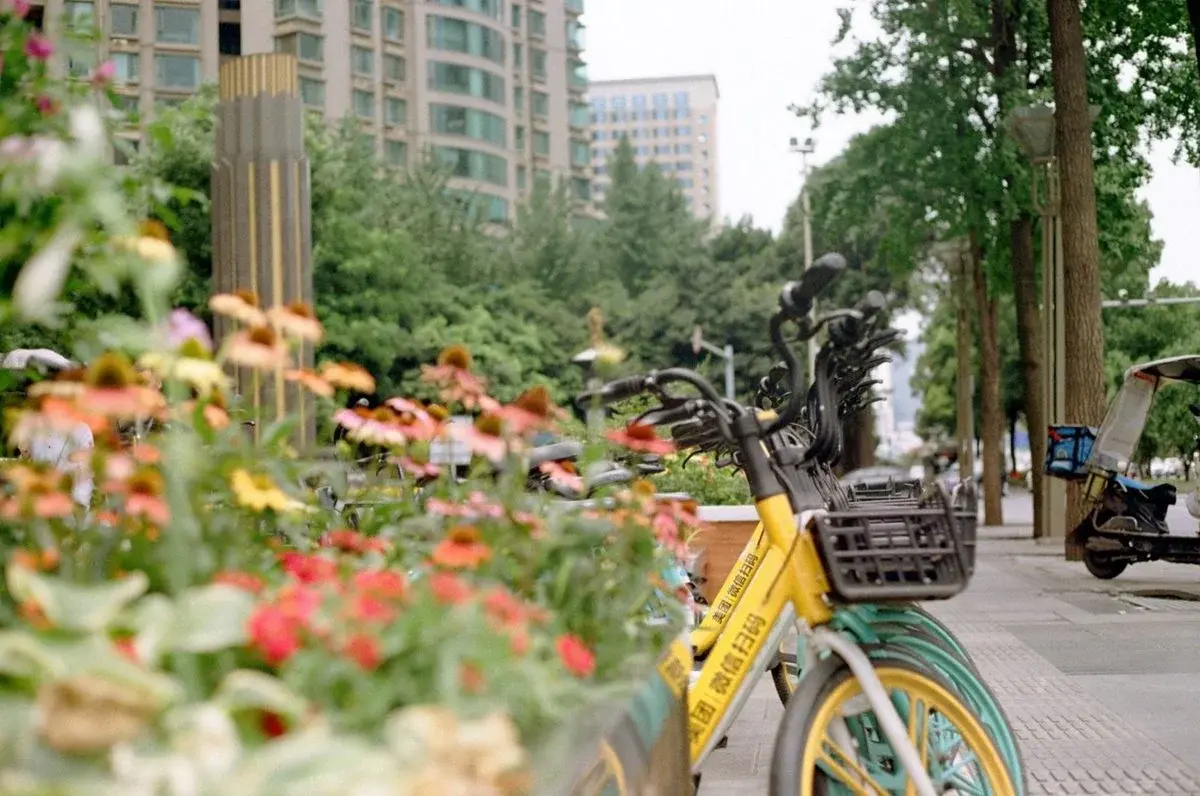
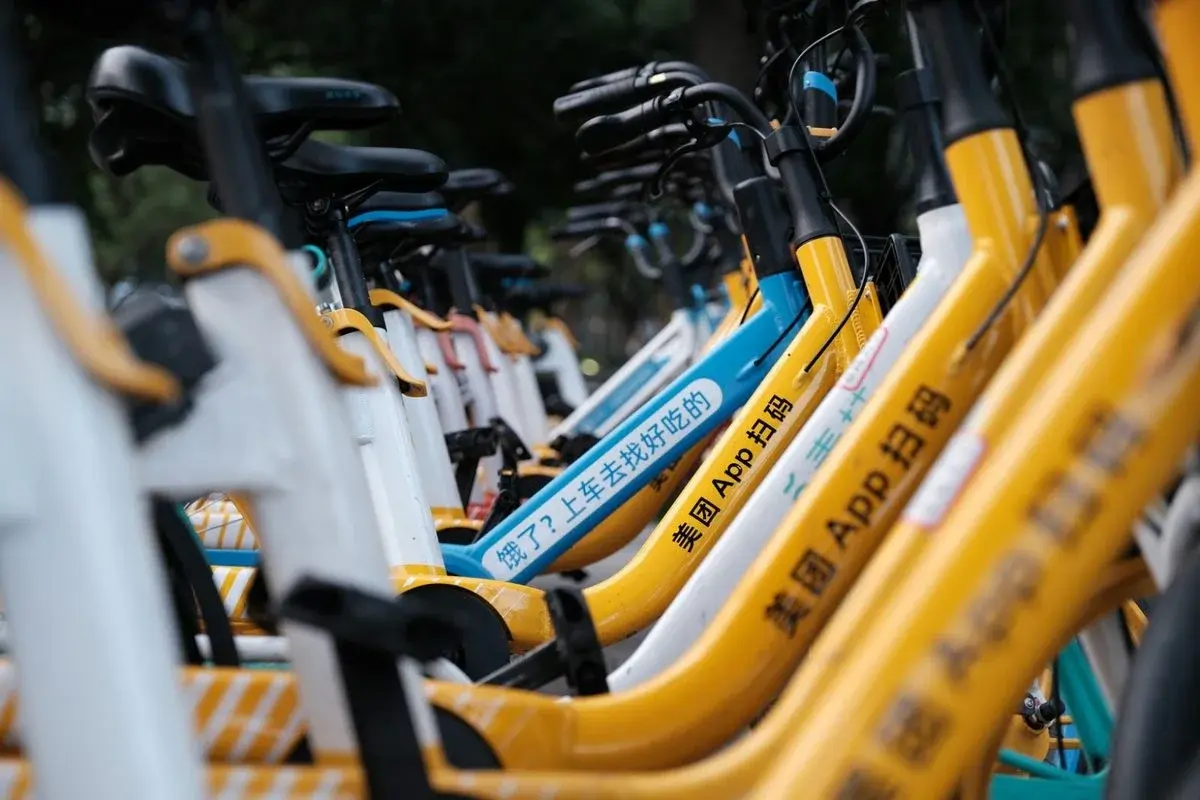
17,000 students rode shared bikes 50 km for soup dumplings: why that was even possible?
That's what Zhengkai Avenue looked like for a few nights in November 2024, when more than 17,000 college students rode shared bikes from Zhengzhou to Kaifeng in a single month — all for a plate of soup dumplings.
What comes to mind? Youthful impulsiveness? Curiosity? A taste for the bold and reckless? Something else entirely? But here's the better question: why could they even choose a shared bike over a high-speed train or an intercity bus in the first place? Because the bike was there — cheap, unlocked in seconds, parked on nearly every corner. That made this particular act of impulsive, go-your-own-way travel possible at all. And once it was possible, the imitators followed.
01 — Cheap. Fast. Parked right where you need it.
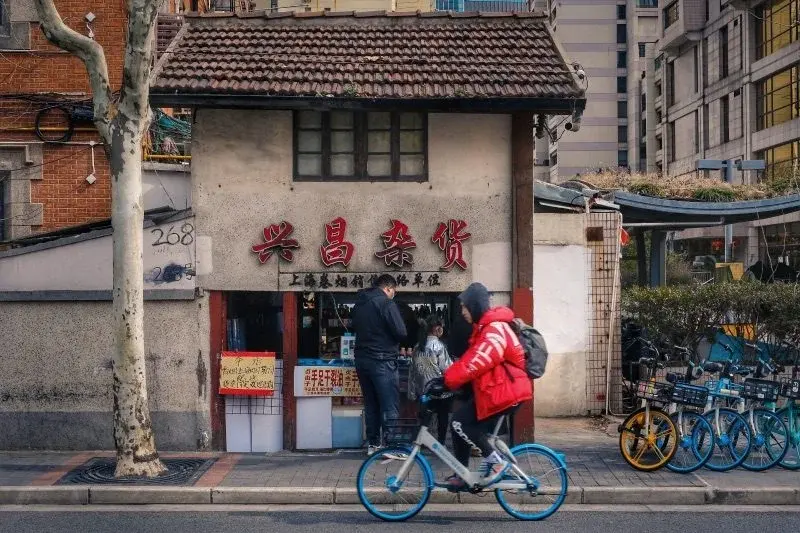
Four things a shared bike solves: last mile, rush hour, exercise, and late nights.
Scan a QR code, unlock, ride, leave it wherever the trip ends — no docking station, no schedule to check, usually about 1.5 yuan for the first half hour. That simplicity is the whole point. It solves a handful of very specific problems that the metro and bus, for all their reach, simply don't.
01
The last stretch
A metro exit or bus stop rarely drops you exactly where you're going. A shared bike closes that final half-mile in a couple of minutes instead of a ten- or fifteen-minute walk.
02
Skipping the crush
At rush hour, a packed subway car or standing-room-only bus is its own kind of cost. A bike sidesteps the crowd entirely — slower than the train, but nobody's elbow is in your ribs.
03
Exercise, and a different view
For a local, it's a built-in bit of daily movement. For a visitor, it opens up what the metro and bus simply can't reach: a lakeside path, an open plaza, a narrow lane through a water-town's back streets, a Beijing hutong too tight for anything with four wheels.
04
Filling the gaps in the schedule
Before the first metro train or after the last bus, a shared bike is often the only thing still running — cheap enough that it barely matters, and available at almost any hour.
02 — When hills beat convenience
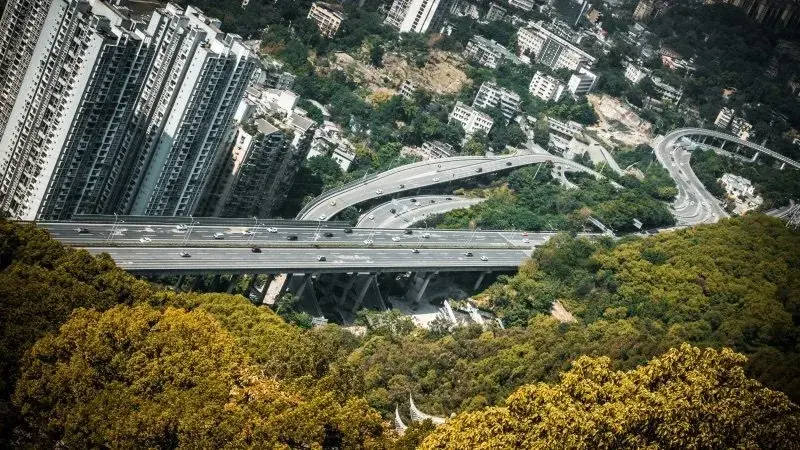
Three hilly cities where shared bikes never took off: Dalian, Qingdao, Chongqing.
Shared bikes are common enough in most Chinese cities to fade into the background — except in a few places where they're conspicuously scarce. The reason is the same each time: hills.
Dalian, Qingdao, and Chongqing are the clearest examples. All three sit on hilly, uneven terrain, and none of them ever built dedicated bike lanes to compensate.
Dalian
Shared bikes never reached any real scale here in the first place. What little presence they have is confined to Lüshun and the Dalian Development Zone — the rare flatter, newer districts.
Qingdao
Nearly identical story: rolling hills, no bike lanes, same result. One of the few major northern cities where shared bikes never really took hold.
Chongqing
Takes it furthest — mountainous streets earned the city a reputation in the industry as close to unworkable. The bikes that do exist cluster in a few flat districts like the university town, leaving the hillside core almost bike-free.
Outside this short list, a shared bike is close to a default option in almost every Chinese city — flat ground is really the only requirement. Kunming proves the rule from the other direction: its central basin is notably flat, and the city runs roughly 120,000 shared bikes and e-bikes citywide as a result. No hills, no holdouts.
03 — How it works, and what it costs
Scan, ride, lock: how shared bikes work for ¥1.9 per hour?
| Step | What to do |
|---|---|
| 1 | Open Alipay, WeChat, or the bike operator's own app (Hellobike, Meituan, or Didi's Qingju) |
| 2 | Spot a bike parked nearby and scan the QR code on the frame to unlock it |
| 3 | Ride wherever the trip takes you |
| 4 | Park anywhere reasonable — a marked bike zone if one's nearby, but not strictly required — and lock the rear wheel manually to end the ride |
| — | Payment is automatic through the linked account; no cash or card handling involved |
| Fare type | Price |
|---|---|
| Standard bike, pre-2026 | ~¥1.5 / 30 min |
| Standard bike, mid-2026 onward | ~¥1.9–2.0 / 60 min |
| Premium geared bike (e.g. Hellobike "Windchaser") | ~¥15 / 30 min |
| Monthly / seasonal pass | ~¥10–20 / month |
Shared bike rides in China cost about ¥1.9 per hour as of mid-2026, down from ¥1.5 per 30 minutes under the older pricing structure.
(2026 rates from Meituan, Qingju/Didi, and Hellobike; broadly consistent city to city, not shown by city. Longer rides cost less under the new structure, short trips cost more. Pass pricing has risen alongside per-ride rates.)
04 — Why there's always one nearby
77 companies, 20 failures, and the surviving giants that blanket flat cities.
China's shared bike boom saw 77 companies enter the market in 2016-2017; more than 20 eventually folded. What survived is blanket coverage in nearly every flat city.
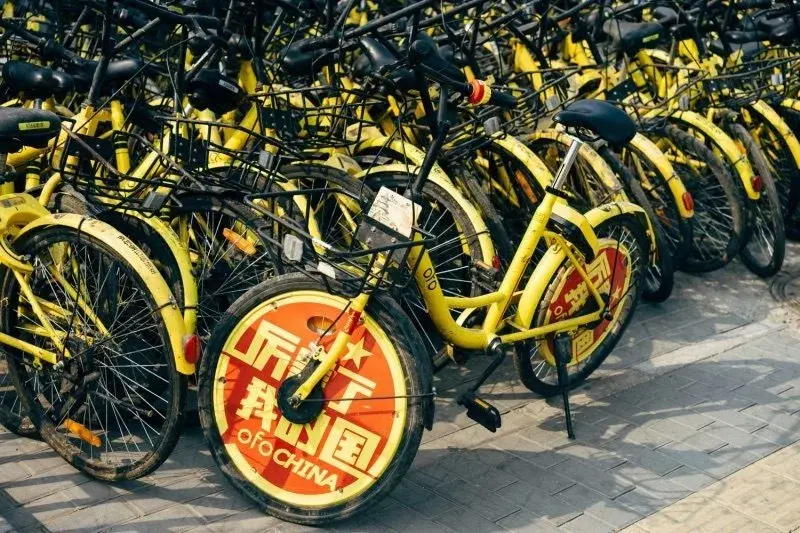
Part of why a shared bike is reliably parked nearby is sheer scale. Around 2016 and 2017, the industry expanded so fast that people joked it was running out of colors — Mobike in orange, ofo in yellow, Bluegogo in blue, Hellobike in white and blue, each new entrant grabbing whatever shade was left. Officials later put a number on it: 77 companies entered the market over that period, and more than 20 eventually folded once the market shook out. What survived is what you see on the street today — fewer brands, but blanket coverage in nearly every flat city. That's exactly what makes the four uses above practical in the first place.
05 — The full story behind the opening
The night 17,000 students rode 50 km: Zhengzhou to Kaifeng, November 2024.
That same scale, six years later, got pushed into a scenario nobody in 2016 could have predicted.
The mechanics of how it built are worth walking through. What started with four students on June 18, 2024 spent the summer as a quiet, slow-building trend before November turned it into something else — a bandwagon numbering in the tens of thousands. Not because the soup dumplings got any better. Because a shareable story, once it catches on, is hard for anyone young to resist.
At the peak, on November 1st and 2nd alone, roughly 2,000 shared bikes were checked out on that route through Meituan's platform alone. That's just a snapshot of the more than 17,000 riders across the month.
Tourism & safety
Kaifeng's tourism bureau, traffic police, and city management coordinated to open a dedicated safe corridor for the riders. Police stayed out overnight through morning to keep the route orderly.
Free admission
Major attractions — Millennium City Park and Wansui Mountain among them — announced free entry for all college students nationwide, not just the riders, and opened before dawn to receive them.
Rest stops
Volunteer stations appeared along the route offering hot water, breakfast, and a place to rest.
The bike-logistics problem
Because the ride was almost entirely one-directional, bikes piled up in Kaifeng while Zhengzhou's metro exits ran short. The mismatch was big enough that operators had to actively figure out how to redistribute the fleet back to where it started.
It wasn't all triumph — the ride is close to 50 km each way and takes four to six hours. Plenty of students gave up partway through, and some Kaifeng residents complained about the crush of bikes left blocking doorways. But the shape of the whole thing — a spontaneous student idea that a city government, several tourist attractions, and a bike-share company all scrambled to accommodate rather than shut down — is what happens when cheap, flat, and available run into one good reason to ride.
Cheap bikes, flat road, one good reason — and for a few months in 2024, that was enough to move seventeen thousand college students fifty kilometers overnight.
Strip away the soup dumplings and the viral headlines, and what's left is the same thing this whole system was built for from the start: something cheap enough to grab without thinking, fast enough to close the gap the metro and bus leave behind, and available in numbers large enough that it's rarely more than a glance away. Most days, that just means a shorter walk from a metro exit. For a few nights in November 2024, it meant fifty kilometers of highway lit up by seventeen thousand people who decided, on a whim, that this was worth doing.
06 — Questions people actually ask
Quick answers
What problem do shared bikes actually solve in China?
The last-mile gap — getting from a metro station or bus stop to where you're actually going, cheaply, quickly, and without needing to own a bike.
Do shared bikes work in every Chinese city?
No — hilly terrain has kept shared bikes from catching on in several cities, where the convenience trade-off just doesn't work the way it does on flat ground.
How much does a shared bike ride cost in China?
Roughly ¥1.9–2.0 per 60 minutes for a standard bike as of mid-2026, up from about ¥1.5 per 30 minutes before the pricing structure shifted to favor longer rides.
How many companies competed in China's shared-bike boom?
77 companies entered the market during the 2016–2017 boom years, with more than 20 eventually folding once the market shook out.
What happened on the Zhengzhou-to-Kaifeng shared-bike route?
A trend that started with four students on June 18, 2024 grew into a mass phenomenon. At its November 2024 peak, roughly 2,000 shared bikes were checked out on that single route in just two days — part of over 17,000 riders across the month.