Living cost, at a glance
≈$421/mo
≈$180/mo
≈$553/mo
≈$975/mo
≈$733/mo
Rent from the §02 ledger. The non-rent line is Numbeo's own compiled "estimated monthly costs, excluding rent" for Suzhou (single person, pulled Aug 2026). Converted at ¥7.2 = $1.
There are two Suzhous, and they barely recognize each other. One is the city on the postcard: whitewashed walls, black-tile roofs, canal boats under stone bridges, a garden tradition old enough to have its own UNESCO listing. The other is the city on the industrial-output tables: an electronics-manufacturing cluster dense enough to rank among the most productive in China, anchored by a county-level city — Kunshan — that most tourists never hear mentioned.
The second Suzhou is newer than it looks, and mostly built by outsiders. A 1994 state-to-state joint venture with Singapore laid the groundwork; European and American manufacturers built on top of it; Taiwanese electronics contract manufacturers filled in the rest, concentrated overwhelmingly in Kunshan (§06 walks through this properly). That's also why, in short, the city has a real foreign professional population today — not diplomats or students, mostly, but factory and supply-chain management posted here by employers with a direct stake in it, which is where §01 picks up.
None of what follows is a travel piece, in other words — it's mostly the arithmetic of a city built twice, thirty years apart, today's numbers honestly sourced. I've visited Suzhou more times than I can count since 1999, for work, for family trips, for the crab alone; those visits show up here only where they pin something real down, not as the point of the piece.
01 — Who actually lives here, if you're arriving from North America
Suzhou's foreign population didn't come for the gardens — it came for the supply chain
Most cities on this site pull their North American residents toward one center — an embassy district, a university, a single CBD. Suzhou splits that pull in two, and the split lines up almost exactly with the two Suzhous described above:
| Area | Why here | Who you'll find |
|---|---|---|
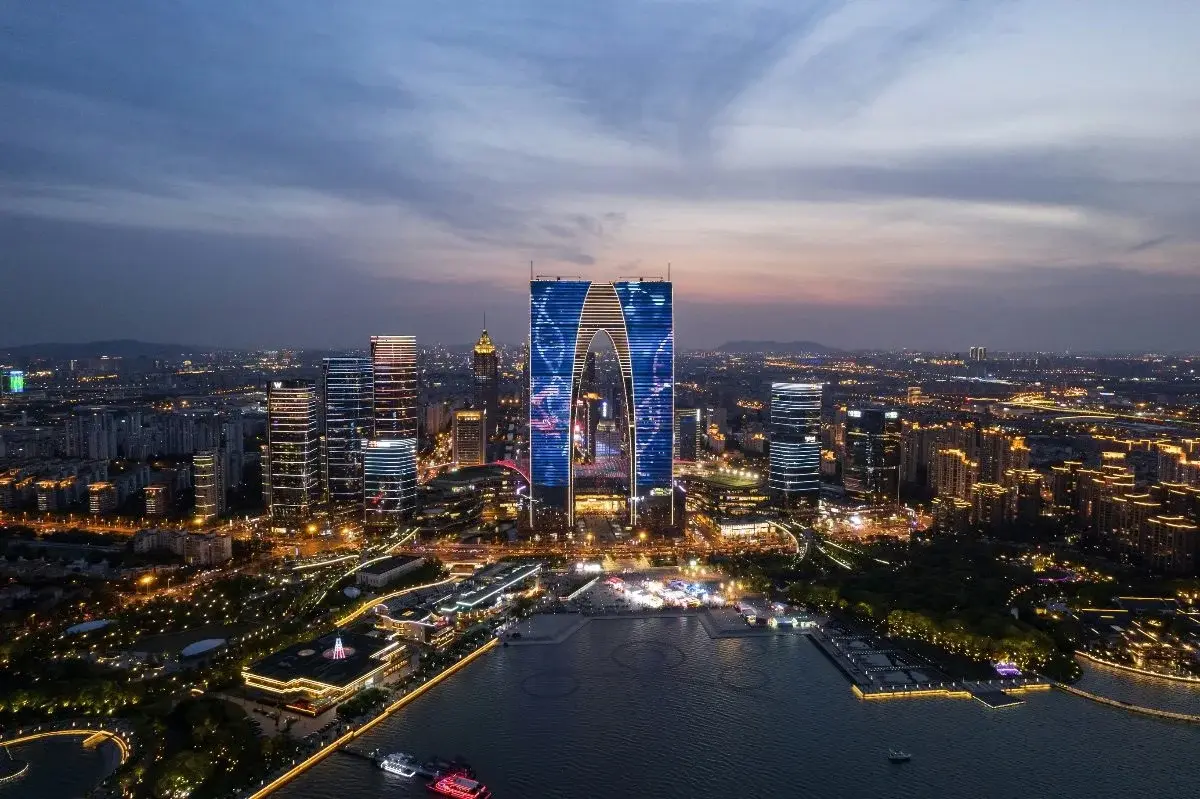
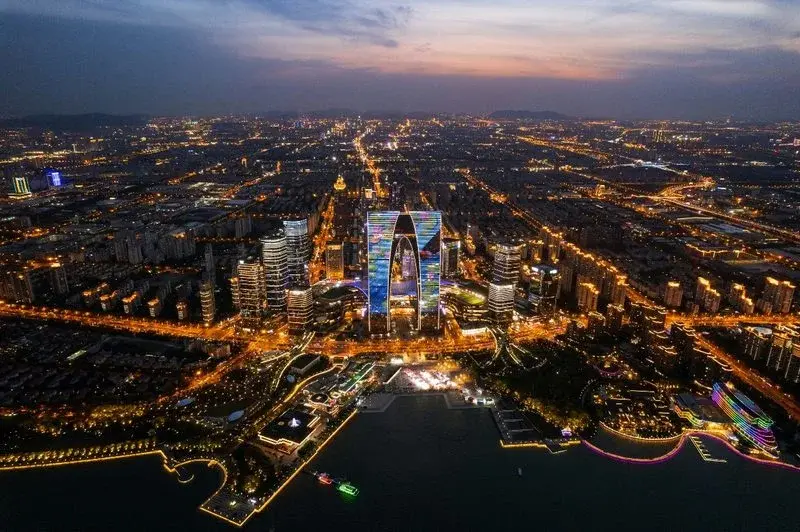
| Suzhou Industrial Park (SIP) | The China–Singapore joint-venture district — planned housing, international schools, the CBD around the "Gate of the Orient" | Management and technical staff at multinational and foreign-invested manufacturers, plus a smaller diplomatic-adjacent consular presence |
| Kunshan | A county-level city under Suzhou's administration, and the single densest concentration of Taiwanese-invested electronics manufacturing in the Yangtze Delta | Taiwanese and other foreign manufacturing management, engineers, and supply-chain staff — a working population more than a leisure one |
| Suzhou Old Town / SND | The historic core and the New District to its west — closer to the university and garden circuit | University-affiliated foreign faculty and students, a smaller long-stay expatriate population drawn by cost relative to Shanghai |
SIP and Kunshan aren't arbitrary — each grew up around a specific industrial-policy call (the 1994 Singapore joint venture; Kunshan's decades-long courtship of Taiwanese electronics investment), and the foreign population in each place is overwhelmingly there for work, not for the postcard.
Add it up and Suzhou's North American and broader foreign population skews corporate and technical, not diplomatic or academic — people posted here by an employer with a factory or regional office nearby, often commuting into Shanghai on weekends rather than living the reverse. The city's real pitch to that crowd isn't romance. It's Shanghai-adjacent infrastructure and labor market at meaningfully lower cost, with the high-speed rail squeezing the physical gap to under half an hour. The practical side of landing here — setting up a phone plan and home internet, chief among the first-week errands — works the same way it does in any Chinese city, whichever Suzhou you end up in.
This section maps where a foreign, largely North American, professional population tends to cluster and roughly why — compiled from general reporting on Suzhou and Kunshan's foreign-investment geography, not a formal census. Treat it as directionally right, not a headcount.
02 — What rent actually costs
A city-center one-bedroom eats about a third of the median wage — the lowest rent-to-wage bite of any Yangtze Delta city on this site
Before the numbers: a small story about how negotiable prices in Suzhou can get. My first visit was January 1999, straight off a recruiting fair in Nanjing with a college friend. Outside the Tiger Hill tourist strip, a vendor was hawking silk neckties at ¥20 each. We were students — no use for a necktie — but he wouldn't let it go, chasing us down the block dropping the price with every step: ¥15, ¥10, ¥5, finally settling at ¥2. We still didn't buy one. I've never been sure whether he actually thought we'd bite, or just enjoyed the chase. Almost thirty years later, that scene is a pretty good shorthand for what's changed and what hasn't — the hustle is still there, but the numbers behind it have moved a lot.
Here's what renting actually costs today, in the center and outside it:
Rent, meal, transit and salary figures: Numbeo, read early August 2026, converted at ¥7.2 = $1. Numbeo's 3-bedroom figures are used here in place of a directly comparable 2-bedroom range, which Numbeo does not separately track for Suzhou; treat the 3-bed numbers as broader, less precise reference points than the 1-bed figures above them.
Stack it next to Shanghai and the gap is real — it's the whole reason a Shanghai-based company can staff a Suzhou factory floor and a Shanghai headquarters from the same regional labor pool without paying Shanghai rent twice:
| City | 1-bed, center | Avg. net salary | Rent ÷ wage |
|---|---|---|---|
| Suzhou | $421 | $1,273 | ~33% |
| Shanghai | $972 | $1,391 | ~70% |
Shanghai figures from the Shanghai city page, sourced the same way (Numbeo/Wise, mid-2026, ¥7.2 = $1). Treat as indicative ranges, not precise quotes.
Suzhou is the clearest example on this site of a city priced by its neighbor rather than its own economy. Its rent sits well below Shanghai's, but its job market — especially in manufacturing management and engineering — is priced against Shanghai's cost of living because so many employers run both cities at once. That's a genuinely good deal for the renter, for now. Suzhou's "cheap" is structural — built by the city next door, not by low local wages → For the mechanics of actually signing a lease here — deposits, agent fees, and the first-week costs most lists leave out — see our guide to renting an apartment in China and the up-front setup cost breakdown →.
03 — What it costs to keep the lights on, and getting around
Tiered by the year, priced by the district, same as most of Jiangsu
Electricity, water, and gas in Suzhou's core districts are billed on annual usage tiers, not flat monthly rates — the more you use over the year, the higher the marginal rate climbs. One quirk worth knowing before you sign a lease: rates and even suppliers are set district by district (the Industrial Park, the High-Tech Zone, and Wujiang each run their own water utility, for instance), so the figures below are the市区 (urban-district) baseline, not a guarantee for every address. Your daily choices shape the bill more than the city itself →
Households with 5 or more registered residents get the tier thresholds raised, not a price cut. Source: Jiangsu/Suzhou Development and Reform Commission published tiers, current as of 2026. The costs that never show up in the spreadsheet — seasonal tiers, climate-driven spending, visa renewals →
Rates shown are for Suzhou's urban core (not Wujiang, Kunshan, or the other county-level cities, which set their own local tariffs through district-level suppliers). Source: Suzhou Municipal Development and Reform Commission.
Tiers are set per household (4-person baseline, +80 m³/yr per additional registered resident), not per person. Source: Suzhou Municipal Development and Reform Commission, effective October 2023 pricing, current as of 2026.
Standardized comparison figure, applied the same way across every city on this site: 220 kWh electricity + 15 m³ water + 25 m³ gas per month, a single-occupant baseline that excludes winter heating, run against the tiers above. At Suzhou's rates that's roughly ¥116 electricity + ¥51 water + ¥76 gas ≈ ¥243 (≈$34)/month. These low utility rates rest on decades of capital investment and permanent subsidy — the real cost is hidden upstream →
Getting around
Suzhou's metro prices by distance, not by station count — fares climb the "further you go, the more you pay" way most Chinese metro systems now use, rather than a flat per-ride fee:
Line 11 extends the network across the city boundary into Kunshan on the same distance-based schedule — the ¥8 network-maximum fare is the one quoted for the longest through-trips. Tap-to-ride discounts (9.5% off standard fare on most cards) and monthly/multi-ride passes are also available. For the current route map and station-by-station planner, see the Suzhou Rail Transit official site. Source: Suzhou Rail Transit ticketing rules, 2026; converted at ¥7.2 = $1.
The bigger transit story for anyone commuting to Shanghai is the high-speed rail — Suzhou station sits under 30 minutes from Shanghai Hongqiao on the fastest services, and that's the entire reason a meaningful slice of Suzhou's foreign professional population treats the two cities as one labor market rather than two.
Within the city, Suzhou is also one of the better shared-bike cities on this site's roster — flat terrain, a canal-and-alley old town that cars often can't reach anyway, and dedicated bike lanes along most of the newer Industrial Park boulevards. A short ride is often faster than the metro for that last stretch between a station and somewhere like Shantang Street or the Museum.
04 — Silk, opera, and a park you can't quite buy your way into
The handicraft tradition is older than the factories by about six hundred years
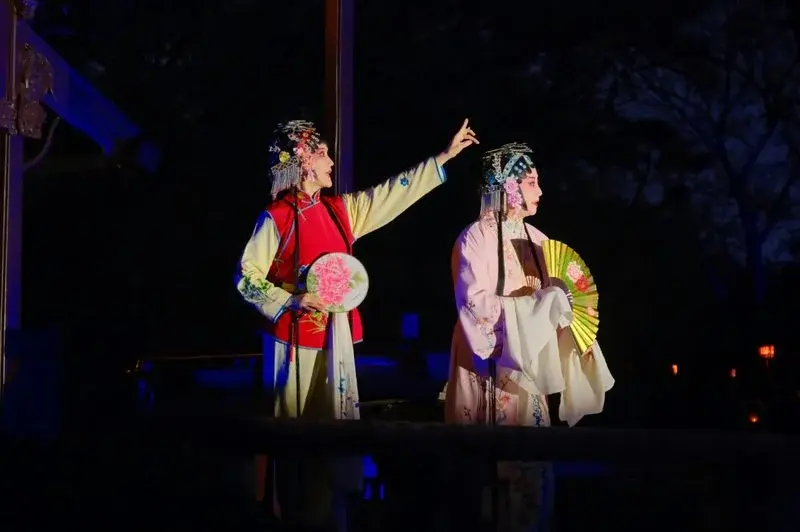
The high-speed rail in §03 closes the distance to Shanghai; it also opens straight onto a version of Suzhou that has nothing to do with commute times or fare schedules. Suzhou's reputation as a craft center predates its reputation as a manufacturing center by centuries — by the Ming and Qing dynasties, Suzhou was already one of the wealthiest cities in the country, and that wealth built out a handicraft economy precise enough to become a national byword: Suzhou embroidery (su xiu, 苏绣), Kunqu opera, Suzhou pingtan storytelling-and-song, sandalwood fans, and classical garden design all go back to this period. The city currently holds seven UNESCO-recognized intangible-heritage items and dozens more at the national level — among the densest concentrations of any city in China.
Kunqu opera is the oldest of the three performing arts still staged regularly — a roughly 600-year-old tradition sometimes called the "ancestor of a hundred operas," known for its water-polished (shuimo) vocal style. Pingtan is younger and more intimate: a spoken-and-sung storytelling form performed in the Suzhou dialect, usually just one or two performers with a three-stringed lute and pipa, sometimes translated as "the most beautiful sound." Suzhou embroidery, the visual counterpart to both, is fine enough at its best that a finished piece can look printed rather than stitched.
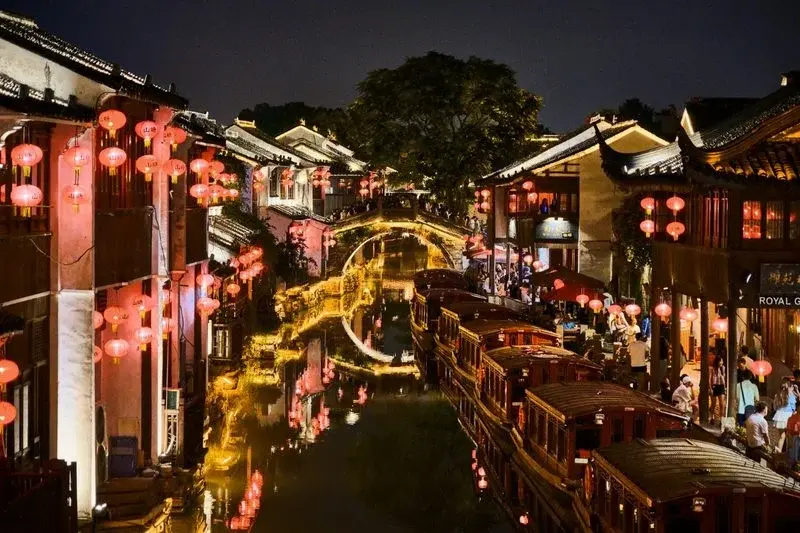
Shantang Street and the Pingjiang historic district are where this concentration of craft is easiest to actually find — both are officially recognized as living heritage zones, with embroidery workshops, pingtan houses, and old-style confectioners' shops operating alongside the canal-and-lantern scenery rather than staged separately from it.
05 — What Suzhou eats
A sweet-and-delicate palate, one seasonal star, and one dish I never warmed to
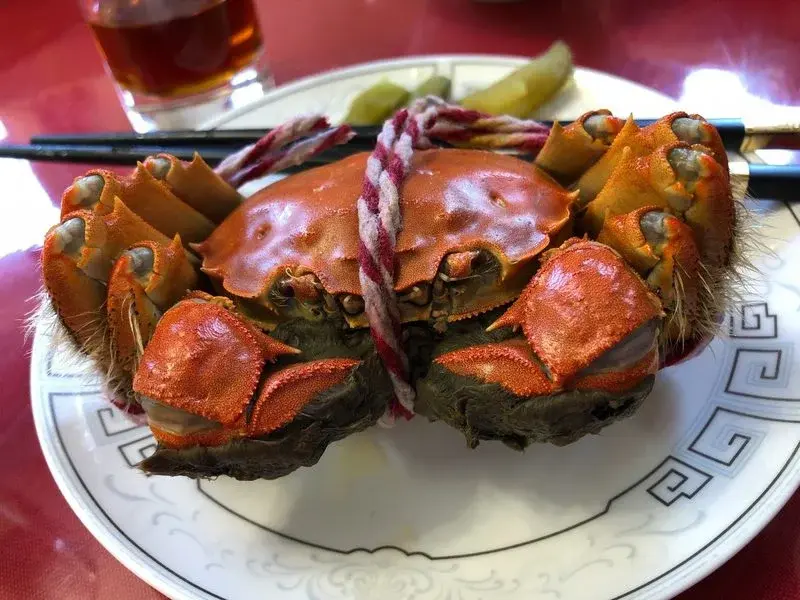
The same handicraft streets from §04 — Shantang, Pingjiang — are also where Suzhou's food culture is easiest to run into, old-style confectioners sitting between the embroidery shops and the pingtan houses. Suzhou cuisine sits at the sweeter, more delicate end of Jiangsu cooking — a contrast to the punchier flavors further north and west in the province. But the dish everyone actually travels for is seasonal: Yangchenghu (阳澄湖) hairy crab, in season roughly September through December, served simply — steamed, tied with string, eaten by hand with vinegar and ginger, nothing getting in the way of the roe.
Beyond the crab and the noodles, Suzhou's everyday table runs on a handful of sweeter staples worth knowing: songshu guiyu (松鼠桂鱼, "squirrel" mandarin fish, fried into a crisp, curled shape and finished with a sweet-sour sauce), plus a wide range of Suzhou-style pastries and confections — many of the same shops selling them on Shantang Street today have been at it for generations.
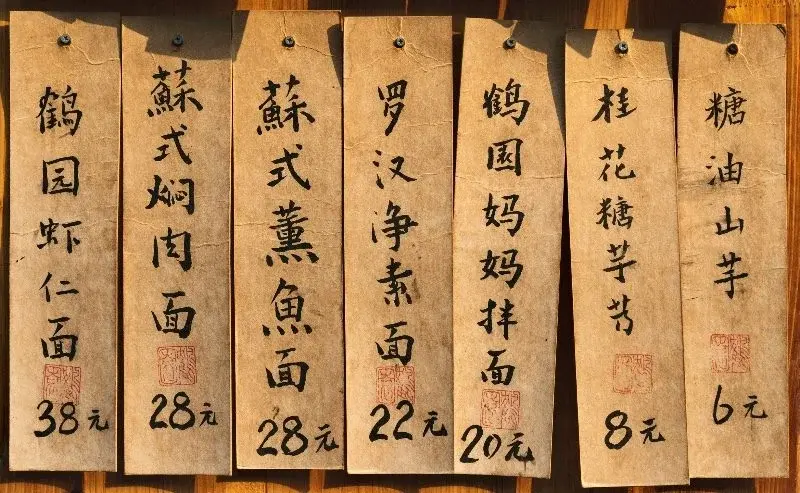
None of that is expensive, and a real noodle-shop price board makes the point better than any description. This one, hand-lettered on wooden tags, is fairly typical of a mid-range Suzhou noodle house:
| Dish | Price |
|---|---|
| Heyuan shrimp noodles 鹤园虾仁面 | ¥38 |
| Suzhou-style braised pork noodles 苏式焖肉面 | ¥28 |
| Suzhou-style smoked fish noodles 苏式熏鱼面 | ¥28 |
| Luohan vegetarian noodles 罗汉净素面 | ¥22 |
| Heyuan "mama" mixed noodles 鹤园妈妈拌面 | ¥20 |
| Osmanthus sweet taro 桂花糖芋艿 | ¥8 |
| Candied sweet potato 糖油山芋 | ¥6 |
Prices from a single price board, not a citywide average — treat as illustrative of the range rather than a benchmark. Even the pricier toppings here stay under $5.50 at ¥7.2 = $1.
06 — Why this is a factory town, and why that's a specific kind of story
Suzhou's manufacturing base wasn't grown here. It was assembled here, in three waves, mostly from outside
The Summary above sketched this in outline; here's the fuller sequence. What separates Suzhou from most Chinese industrial cities isn't decades of gradual local development — it's a specific, traceable sequence of outside capital and outside institutions landing on an existing city, one layer at a time.
The foundation went down in 1994, when the State Council approved the China–Singapore Suzhou Industrial Park — a genuine government-to-government joint venture, the first of its kind in China, built around a wholesale transplant of Singapore's own planning and management playbook: "plan first, build second; underground infrastructure before street level." Singapore's motivation was concrete — a small country running out of room for its own industrial base and looking for an offshore extension. Jiangsu's motivation was equally concrete: the province's older township-and-village enterprise model (the so-called "Sunan model") had run out of steam by the early 1990s, just as Guangdong's export-oriented economy was pulling ahead in the national growth rankings. The park gave Jiangsu a new institutional foundation to build on, borrowed rather than homegrown.
European and American manufacturers built on top of that foundation through the following decade, pushing the value chain up. Then came the third and heaviest layer: Taiwanese electronics contract manufacturing, concentrated overwhelmingly in Kunshan — the county-level city under Suzhou's administration that now houses one of the densest clusters of Taiwanese-invested electronics production in China, with electronics-sector output alone reported above ¥500 billion. Together, electronics and information manufacturing form the single largest pillar in Suzhou's "1030" modern industrial framework.
This is a genuinely different story from either of China's other two most-cited manufacturing and tech success stories. Shenzhen grew from a first-mover special-economic-zone advantage and a homegrown technology sector. Hangzhou's newer economy runs on capital generated by Alibaba's rise, which pulled a cluster of robotics, e-commerce and big-data firms in behind it. Suzhou's path is closer, in spirit, to the Pearl River Delta's earlier export-manufacturing boom — except transplanted into the Yangtze Delta, and built on a foundation with a far higher institutional starting point: a state-level bilateral joint venture rather than a special economic zone experiment. It's also a genuinely different story from its two upstream neighbors: Shanghai's economy is built around corporate headquarters and financial services, and Beijing's around political and administrative allocation. Suzhou's isn't headquarters-driven or politically allocated. It's factory-floor driven, and the factory floor was substantially built by capital and institutions that didn't come from here.
A one-of-a-kind label among China's non-tier-one cities
Outside the four first-tier cities, Suzhou is arguably the only prefecture-level city in China whose modern industrial base traces back to a single, state-level bilateral planning transplant rather than either indigenous development or a special-economic-zone designation. That specific origin story — not just the scale of the manufacturing output — is what makes Suzhou's economic identity harder to squeeze into one sentence than most cities on this site.
07 — Quick answers
Suzhou, quickly
How much does a one-bedroom apartment cost in Suzhou?
A city-center one-bedroom runs about ¥3,035/month (≈$421); the same size outside the center drops to about ¥1,293 (≈$180). A three-bedroom in the center runs about ¥7,044 (≈$978).
Is Suzhou cheaper than Shanghai?
Yes, noticeably — rent alone eats about a third of the median wage in Suzhou versus roughly 70% in Shanghai, even though the two cities sit under 30 minutes apart by high-speed rail and draw from much the same labor and consumer pool.
Why is Suzhou's economy built around electronics manufacturing?
The 1994 China–Singapore Suzhou Industrial Park transplanted Singapore's planning and management model as an institutional foundation. European and American manufacturers built on top of it, and Taiwanese electronics contract manufacturers — concentrated in the county-level city of Kunshan — later turned the region into one of China's densest electronics-manufacturing clusters.
What is Suzhou known for besides manufacturing?
Classical gardens (the Humble Administrator's Garden among them), Suzhou embroidery, Kunqu opera, and Suzhou pingtan storytelling-and-song — a handicraft and performing-arts tradition that predates the city's industrial economy by centuries.
Is Suzhou worth living in for someone moving from North America?
For many, yes — Suzhou offers Shanghai-adjacent infrastructure and an international employer base (particularly around Kunshan and the Suzhou Industrial Park) at meaningfully lower cost, with high-speed rail keeping Shanghai under 30 minutes away.
If you're thinking of going
Suzhou, for someone actually moving there
- Decide which Suzhou you're moving to. The Industrial Park / Kunshan corridor and the historic old town are genuinely different places to live, with different rents, different neighbors, and different reasons to be there. Don't assume the postcard and the paycheck are in the same district.
- Price it against Shanghai, not just against itself. A meaningful share of Suzhou's job market — especially foreign-invested manufacturing and management roles — is priced with Shanghai's cost of living as the reference point, even though Suzhou rent runs far below it. That gap is the actual value proposition.
- The high-speed rail changes the math. Under 30 minutes to Shanghai Hongqiao makes a Suzhou address genuinely compatible with a Shanghai-facing career, in a way few other satellite cities in China can match.
- Don't skip the county-level cities in your research. Kunshan, Changshu, Zhangjiagang, and Taicang are administratively part of Suzhou but operate with their own local character, cost structure, and (for utilities) even their own tariff schedules. "Suzhou rent" isn't one number.
- Not sure Suzhou is the right fit? Browse cities by what you care about → or answer seven questions for a personalized recommendation →
The bottom line
Should you live in Suzhou?
If what you want is Shanghai-adjacent infrastructure and career options at a real discount, with an old-town cultural depth most satellite cities can't offer — yes, and it's one of the stronger cases on this site. The high-speed rail link genuinely closes the distance to Shanghai, and the rent-to-wage math here is the best of any Yangtze Delta city covered.
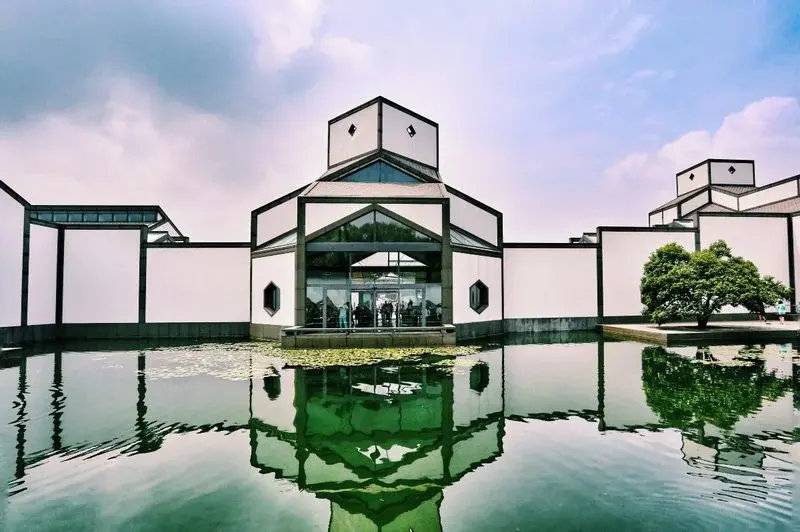
But go in with the two Suzhous clearly separated in your head. The city that shows up in the tourism photos — Shantang Street, the gardens, the Museum, the crab — coexists with, rather than explains, the city that actually pays most of its foreign residents' salaries: a manufacturing base assembled from outside capital and outside institutions, three waves deep, over thirty years. Neither version is the "real" Suzhou. They're both real, running side by side, and most people who move here end up living mostly inside just one of them.