

For 85 years, Guangzhou was the only Chinese port a foreign ship could legally touch, and almost all of what left through it was tea. For roughly a decade in the 1770s, a handful of British colonial ports — Boston loudest among them — were expected to buy their tea from a single legally privileged supplier, the East India Company, on terms set in London. Two cities, two governments, the same drink used as a tool of control. Both monopolies ended. Neither city got to choose how its own ended.
That's where the resemblance splits. Guangzhou's monopoly was undone from the outside, by a war it didn't start and a treaty it didn't negotiate. Boston's was undone from the inside, by roughly sixty of its own residents, in one night, with an axe.
 Guangzhou
 Boston
01 — The money doesn't quite cancel — it favors Guangzhou
Guangzhou vs Boston: 44% vs 50% of wages on rent.
Guangzhou's city-center one-bedroom runs $595 a month, roughly 44% of the median after-tax wage of $1,350. Boston's center one-bedroom runs $3,100 a month, about 50% of its median after-tax wage of $6,248. On rent alone, Guangzhou is the gentler city to live in — but the gap is smaller than the headline multiple suggests. The real story is what both cities lost: each once held a monopoly on the same commodity, tea. One monopoly was undone by treaty, from outside. The other was undone in a single night, by the people who lived there. Same crop. Opposite endings. One door reopened by treaty. The other kicked in by its own residents.
estimated both sides — see note¥6,850 · $952≈$3,900
estimated both sides — see note¥2,960 · $411≈$2,950
Guangzhou at ¥7.2 = $1, mid-2026 — 1-bed rows and after-tax pay directly sourced from Wise/Numbeo; the 2-bed rows are this site's own estimate, interpolated at the midpoint between Wise's 1-bed and 3-bed figures for the same location, not an independently tracked number (same convention as the Guangzhou deep-dive's own rent ledger). Boston's 1-bed city-center figure is a current market average (Zumper/RentCafe/Uhomes, cross-checked against Numbeo); the 1-bed outside-center and both 2-bed rows are derived from the same trackers' neighborhood-level spread rather than independently tracked — treat those three cells as directional, not as precise as the two directly-sourced numbers above them.
Unlike some comparisons on this site, neither city's average take-home pay falls short of its own all-in monthly estimate. Guangzhou's $1,350 clears its $1,100–1,170 range comfortably; Boston's $6,248 clears its $4,550–4,650 range by an even wider margin. For the mechanics of actually finding and signing a Guangzhou lease, see Renting an Apartment in China.
Boston's rent runs about 5.2 times Guangzhou's; its after-tax pay about 4.6 times. The multiples almost cancel, the way they nearly do in every comparison on this site — but not quite. Boston's higher cost slightly outpaces its higher pay, so on rent-to-income alone, Guangzhou is the gentler city to live in. Neither is cheap by its own country's standards. Guangzhou is the more forgiving of the two — run your own numbers to see how a real salary changes that.
Same city, different lifestyle — the bill gap can outrun the city gap →
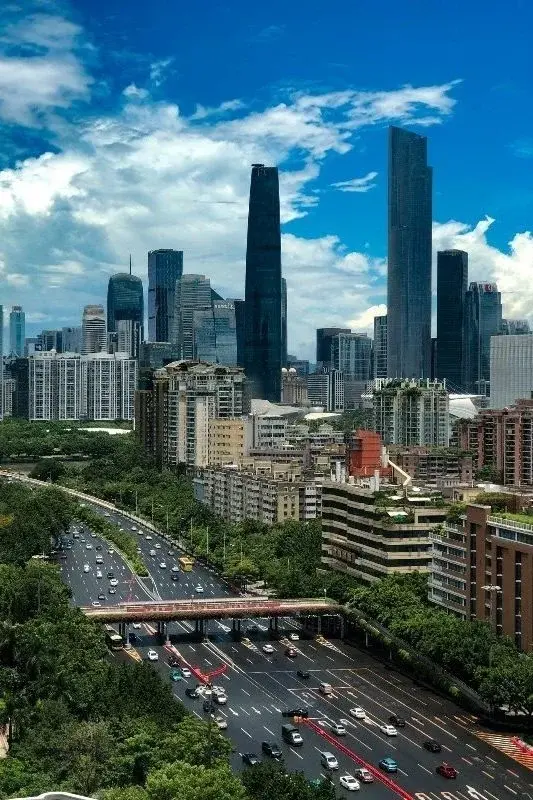 Guangzhou
 Boston
02 — An odd coincidence, not a forced one
Guangzhou vs Boston: both built their defining moment around tea.
Rent and wages are the top layer, and they nearly cancel. Underneath both cities sits something older and stranger that doesn't cancel at all — a shared crop, and two entirely different endings.
This isn't a comparison built by reaching for a shared theme and forcing two cities to fit it. It's the opposite: both cities' single most-told historical story happens to be about tea, and neither needed help getting there. Guangzhou's Thirteen Factories (十三行) shipped Chinese tea to the entire Western world for 85 years under the Canton System — the sole legal channel through which it could leave the country. Boston's most famous night, December 16, 1773, was a direct response to the Tea Act. That law gave the East India Company privileged, near-monopoly terms to sell its tea in the colonies, undercutting local merchants who'd been trading it on the side. One city's whole economy depended on exporting the commodity. The other's most-remembered act of defiance was destroying it, in the harbor, rather than let it be sold under those terms.
Put plainly: Guangzhou built a fortune legally exporting tea, and Boston built a legend illegally destroying it. The crop is the same. The relationship to it is close to opposite.
03 — Two monopolies, two endings.
Guangzhou vs Boston: two tea monopolies, two endings.
Both trade arrangements were imposed from above, by a government that wasn't asking the merchants underneath it for permission. What really differs is how each one stopped.
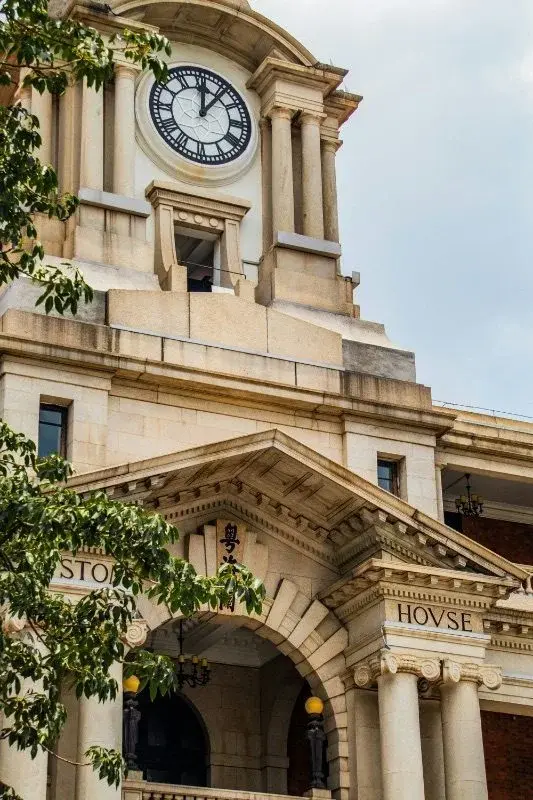 Guangzhou
 Boston
Guangzhou
85 years
1757–1842 · the Canton System
Qianlong's court closed every port but this one, funneling the country's entire foreign trade through the Thirteen Factories. It ended the same way it began: not by Guangzhou's own choice, but by the Treaty of Nanjing, signed after a war fought and lost elsewhere. The city didn't build the door, and it didn't get to reopen it either.
A door closed by decree. Reopened by treaty.
Boston
Dec 16, 1773
The Boston Tea Party
Parliament's Tea Act gave the East India Company a privileged path into the colonial market. Boston didn't wait for a treaty. Roughly sixty residents boarded three ships and dumped 342 chests of tea into the harbor in a single night — and the arrangement that had guaranteed the monopoly was effectively dead by morning.
A door forced open, by the people who lived there.
One city's monopoly was undone for it. The other undid its own.
04 — What neither city gets to be anymore
Guangzhou vs Boston: both important, neither singular.
Guangzhou today is one of four Chinese cities routinely called "first tier," not the only one that matters. By the numbers in section 01, it's the most livable of the four, not the most dominant. Boston is a major American city with an outsized reputation in education and biotech, but it isn't the country's financial capital, its political capital, or its largest city by any measure. It's a strong regional anchor, not a singular center the way it briefly was for the tea trade in the 1770s. Both cities carry the physical memory of having once been the exception. Neither one still is.
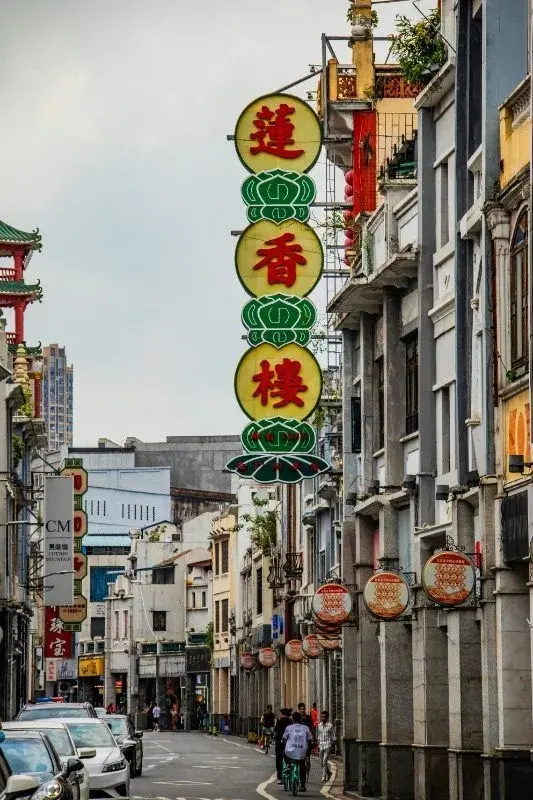 Guangzhou
 Boston
That preserved-in-amber quality is part of what Boston sells today: walkable, historic, dense with universities and hospitals rather than trading houses. Guangzhou's old commercial fabric — the qilou arcades covered in the deep-dive on this site — survives more unevenly, threaded through a much larger and faster-changing city. Neither city chose to stop being the exception. Both found a second identity after the first one ended.
05 — The everyday layer
Guangzhou vs Boston: utilities, groceries, and transit costs.
History explains why each city looks the way it does. It doesn't explain what an ordinary week costs once you're living there — and on that ledger, the two cities split in a way that has nothing to do with the rent gap.
Utilities and groceries
Guangzhou tiered/monthly; Eversource effective all-in¥0.589–0.889 · $0.082–0.123≈$0.30
Boston converted from $/HCF¥2.93–6.81 · $0.41–0.95≈$4.84 + flat fees
Boston: Northeast regional average, not city-specific¥18.3 · $2.54≈$4.39*
Boston: US national average, not city-specific≈¥8.9 · $1.24≈$2.50*
Guangzhou electricity, water, and wet-market figures are the same directly-sourced numbers already published on the Guangzhou deep-dive — Guangdong provincial tiered rate for electricity, Guangzhou's central-districts schedule for water/sewer, and the city's own weekly retail-price monitor for pork and eggs (week of May 11–17, 2026). Boston electricity is a 2026 effective all-in residential average across Eversource's twice-yearly-reset supply rate plus delivery charges (EIA/NuWatt); Boston water and sewer is the MWRA's own annual comparative rate survey, standardized at 120 HCF, with the city's separate flat stormwater fee (≈$8.98/month per ERU) layered on top and not folded into the per-m³ figure shown. *Boston's pork and egg rows are regional or national BLS averages, not Boston-specific retail prices — flagged in the row itself, not just here; Guangzhou's egg figure is converted from the deep-dive's own per-500g sourcing to a rough dozen-equivalent at roughly 60g per egg, and should be read as directional. Boston dining and telecom are compiled from multiple current cost-of-living guides rather than one single tracked figure; for what a Guangzhou mobile plan and broadband actually involve day to day, see Getting Connected in China.
The surprise in this layer
The pattern that held on some other city pairs on this site — utilities converge, private markets diverge — doesn't hold here. Wet-market pork and eggs do converge (under 2× apart), and electricity is a moderate 3.7×. But water is the single widest gap on this entire page at nearly 12× — wider than telecom (≈11.7×), wider than rent (5.2×), wider than the wage gap itself. That's not really a story about Guangzhou being cheap; Boston's water and sewer rates are exceptionally high even by American standards, a symptom of aging Northeast infrastructure more than anything China-specific.
Getting around
Metro fares run on a different logic than water bills — and this is where the "most breathable" pattern from §01 shows up a layer down. (For the national picture on fares, ride-hailing, and shared bikes beyond just the rail network, see Getting Around a City.)
sources disagree, both shown≈3.0–3.4 billion (2025)≈143 million (2025)
Guangzhou Metro route length, station count, and fare schedule: Guangzhou Metro Corporation / municipal transit reporting, current as of early 2026, per the Guangzhou deep-dive's own §02. Annual ridership sources disagree for 2025 (Wikipedia cites 3.02 billion; Railway Journal cites 3.4 billion, both citing official Guangzhou Metro data) — both figures are shown rather than picking one. MBTA route length, station count, and 2025 annual ridership (heavy rail + light rail) are from Wikipedia's MBTA subway entry; fare and LinkPass price are MBTA's own published 2026 fare schedule. Guangzhou's monthly spend is a rough calendar-month estimate built from its own tiered single-fare structure; Boston's LinkPass is a genuinely different kind of product — an unlimited monthly subscription rather than a summed per-ride estimate.
Guangzhou's network is roughly seven times longer than Boston's and carries in a year what Boston's does in about twenty — but the monthly cost gap (≈2.9×) is actually one of the narrower gaps on this whole page, closer to the electricity gap than to the water or telecom gap. A subway ride, in both cities, is one of the more deliberately subsidized things either government sells.
06 — The honest brake
Guangzhou vs Boston: three honest caveats.
None of the numbers above change the shape of the history this page is built on — and that history needs a couple of caveats before this comparison is done.
First, scale: Guangzhou's city proper holds somewhere around 18–19 million people; Boston's holds roughly 675,000, with a wider metro area of about 4.9 million. This is a comparison of historical mechanism and present-day cost of living, not a claim that these are cities of comparable size, density, or civic character. Second, and this is a limit on me rather than on the cities: I spent three unplanned days in Guangzhou in 2005 and have never set foot in Boston. Everything on the Boston side of this page — the rent figures, the wage data, the historical account — is researched from public sources, not walked. I've said which side I know and which I only researched, because that's the standing rule on this site. Weigh the Boston column accordingly.
Both cities were shaped by tea they didn't get to control the terms of. Only one of them decided to end that on its own timeline.
If you're choosing between them
Deciding on more than the number
- The money leans Guangzhou, modestly. The multiples nearly cancel, and where they don't, Guangzhou's rent-to-income ratio is the gentler of the two. Don't expect a dramatic gap either way.
- They're not substitutes for each other. Guangzhou is a manufacturing-and-trade megacity of some 18 million; Boston is a mid-sized, university-and-hospital-anchored city of under a million. Picking between them on cost alone misses how different the actual day-to-day would be.
- History explains character more than it explains price. Neither city's 18th- or 19th-century trade status shows up directly in today's rent — but it shows up in the built environment, the civic self-image, and what each city still chooses to preserve.
07 — Questions people actually ask
Quick answers
Is Guangzhou or Boston more expensive?
Boston costs about five times more than Guangzhou — but it doesn't pay five times more, so the gap doesn't fully close on local wages.
What historical connection do Guangzhou and Boston share?
Both cities built their defining historical moment around the same crop — tea — and both once held a legal monopoly on their nation's tea trade, each losing it in a single decisive event.
How did Guangzhou and Boston each lose their trade monopoly?
Guangzhou's door was reopened by treaty after the Opium Wars; Boston's was kicked in by its own residents, in the event American history remembers as the Boston Tea Party.
Is Guangzhou still China's most important trading city?
No — like Boston, it's still an important city, but neither is singular anymore; both have been overtaken in relative importance by other cities in their own countries.
What actually decides everyday cost of living in Guangzhou vs Boston?
Not the tea history or the historic architecture — the utility meter and the wet market are what decide what an ordinary week actually costs in each city.