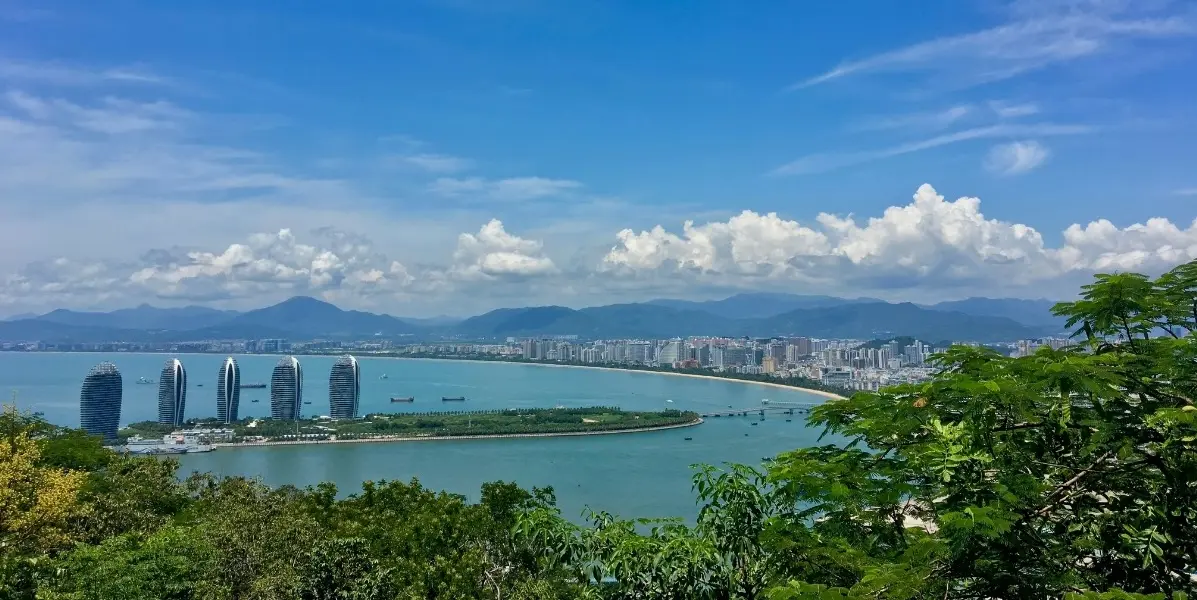
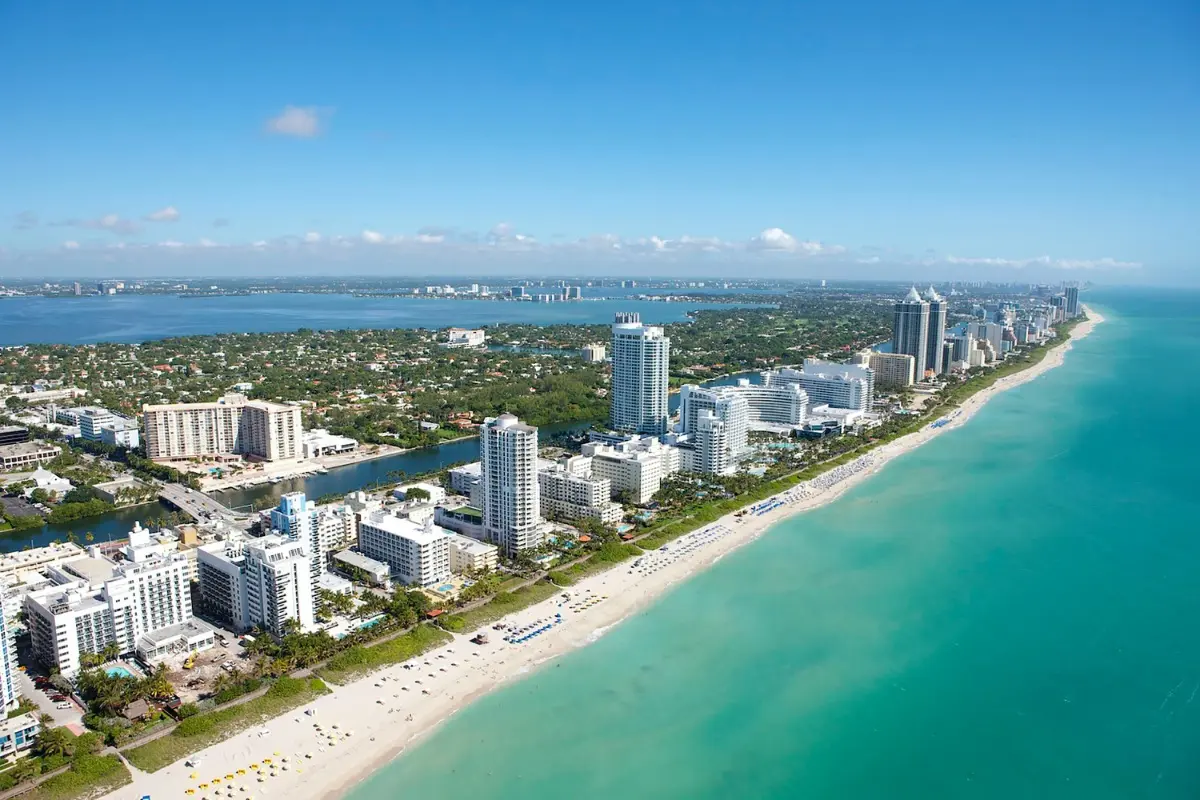
Drop a Miamian onto Sanya's waterfront and much would feel oddly familiar. The salt air. Mountains meeting the sea. Yachts and freighters on the horizon. Fresh seafood as a way of life, not a treat. Even the coffee culture – Seattle invented the modern café, but Sanya's seaside coffee shops are packed every weekend.
The two cities rhyme in space. What doesn't rhyme is the price tag. A comfortable single life runs about $1,200 a month in Sanya and somewhere between $4,500 and $7,000 in Miami. But the story behind the numbers is far more complex than a currency conversion.
Both sit on the 18°–25° North "global winter-sun belt" – not a strict isotherm, but a zone where January–February temperatures stay between 18–28°C with no real cold days. Sanya lies on the eastern edge of this belt in East Asia; Miami on the western edge in North America. Both are essentially "national winter-sun destinations" for their respective high-latitude populations – not just generic tropical coastal cities. That framing alone answers the obvious question: "why compare cities 7° apart?"
01 — Geography & climate
Sanya vs Miami: same latitude, same winter sun.
Sanya and Miami both sit on the world‑famous 18°–25° North tropical belt. Sanya's official tourism monitoring system has long listed Miami as a core benchmarking city, and Sanya's Phoenix Island was built with one explicit goal: to become an "Asian Miami".
Seven degrees of latitude apart, yet winter feels the same – that's the deep similarity most people miss.
02 — History & trajectory
Sanya and Miami: from fishing villages to resort paradises.
Both are "young" cities – Sanya was only upgraded to prefecture-level city status in 1987, its modern form almost entirely shaped by tourism. Miami was incorporated in 1896 but didn't really take off until the 20th century. Both went through real-estate bubbles, and both were energised by outside populations.
03 — Position & industry
Sanya vs Miami: domestic tourism vs global tourism.
Both cities have tourism as their core industry, but Miami has already made the leap from "retirement haven" to "international financial centre". Sanya is still climbing out of "low-end sightseeing" toward "high-end resort" – and it's a steep climb.
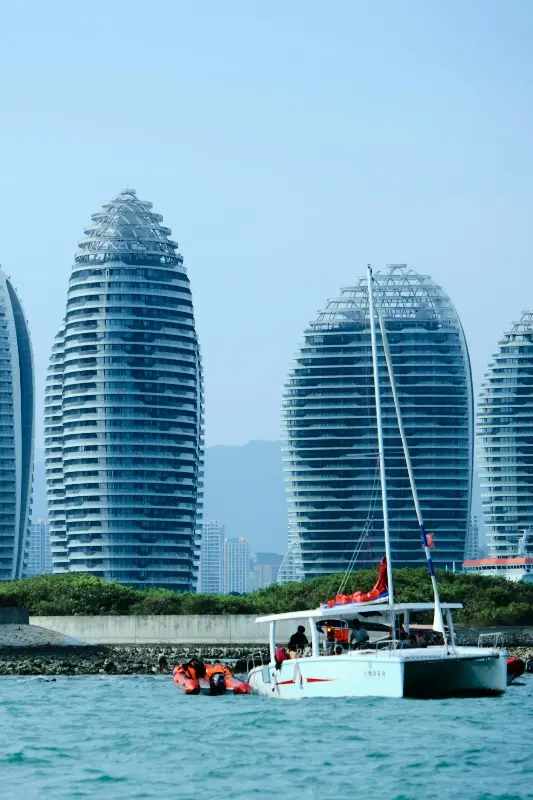 Sanya · Phoenix Island Cruise Port
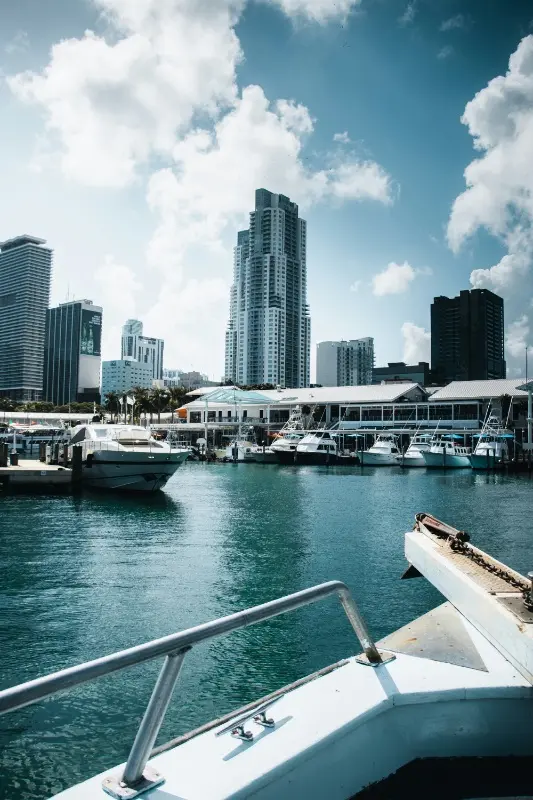 Miami · Port of Miami
Left: Sanya Phoenix Island International Cruise Port – built explicitly as an "Asian Miami". Photo by Krzhck
Right: Port of Miami, the world's largest cruise hub, handling over 5 million passengers a year. Two port cities directly benchmarked against each other in cruise economy. Photo by Roland Denes
From "Asian Miami" to "Chinese characteristics"
Sanya's Phoenix Island was explicitly modelled on Miami – the goal was a world-class cruise hub. But Sanya's path is policy-driven: national International Tourism Island strategy, offshore duty-free, state-owned enterprise money. Miami's is market-driven: Latin American capital, Cuban immigrant entrepreneurship, private-sector urban renewal. Same latitude, different paths – Sanya learned from Miami, but in the end it's a distinctly Chinese model.
04 — Ecology & environment
Sanya vs Miami: rainforest vs Everglades.
Sanya has pristine tropical rainforest and coral reefs. Miami backs onto the Everglades, one of the most unusual wetland ecosystems on the planet. Both face the same "development vs conservation" trade-off – Phoenix Island's land reclamation and Miami's swamp drainage are both classic examples of humans reshaping nature, for better or worse.
Sanya's Phoenix Island reclamation and Miami's swamp drainage are both classic cases of humanity reshaping nature – and both are permanent controversies that these cities can never fully escape.
05 — Cost of living: rent, food & transit
Sanya vs Miami: rent, food, and transit costs
A city-center one-bedroom in Sanya runs about $450 per month in low season. The same apartment in Miami runs about $2,500 per month. Rent is roughly 5.5–6× higher in Miami. Take-home pay runs about $1,100 in Sanya and about $5,200 in Miami — a 4.7× gap that does not close the rent difference. A monthly transit pass in Sanya costs $14; in Miami, $120 — an 8.6× gap. This page is built from public data on both sides, with Sanya drawn from the site's own city deep-dive and the author's family visits since 2016, and Miami researched entirely from public data.
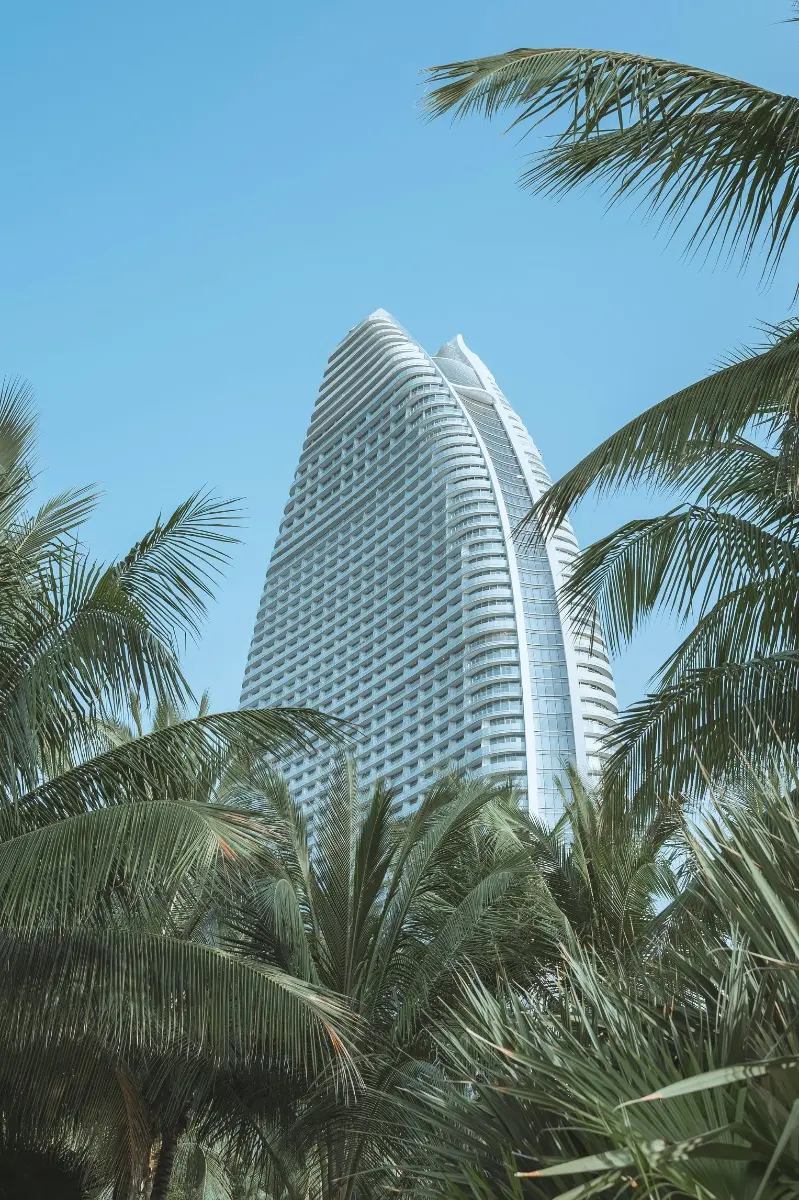 Sanya · Resort‑oriented architecture
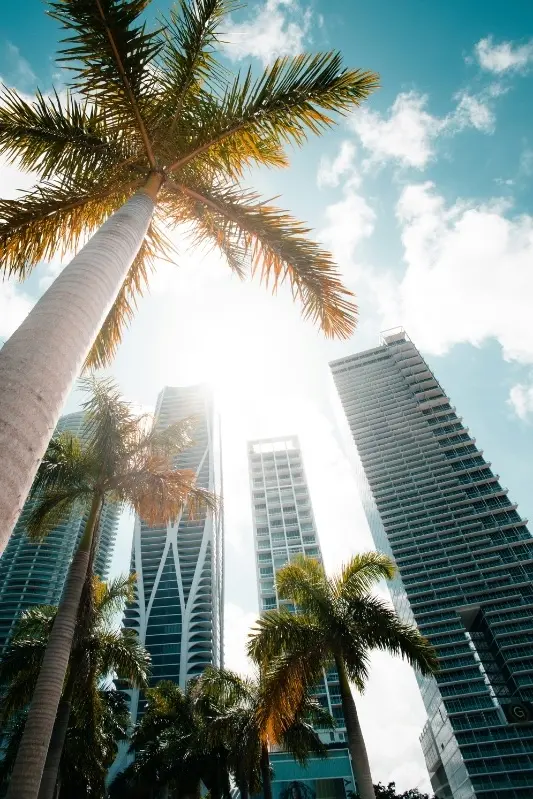 Miami · Financial district buildings
Left: Sanya Resort‑oriented architecture — Soft curved resort‑style building language reflects Sanya’s tourism‑and‑shopping‑driven urban fabric, designed for holiday visitors. Photo by Tao Yuan
Right: Miami Financial district buildings — Sharp‑edged downtown high‑rises embody Miami’s identity as a Latin‑American‑facing global financial hub. Photo by Adam Thomas
Rent
Eating out & groceries
In Sanya, $25 buys you a meal with a sea view. In Miami, it buys you a sandwich and an iced tea – and they still expect a tip. Cooking at home tilts the scales even further. Sanya's wet markets are a sensory overload – live crabs, clams, and fish you point at and they scoop out. A bag of vegetables costs pocket change. Miami's supermarkets are cleaner, quieter, and about four times the price. The trade-off is choice: Sanya's produce is local and seasonal; Miami's is global and consistent. Neither is wrong – they're just different ways to feed yourself.
Getting around
Sanya's transit system is a mix of bus and light rail – the tram line along the coast is genuinely pleasant, if a bit slow. Miami's Metrorail and Metromover are more extensive, but the city is famously car-dependent. The real difference isn't just price – it's the shape of the city itself. Sanya is long and narrow, hugging the coast; you can get from one end to the other in under an hour. Miami sprawls. A lot.
In Sanya, a taxi from the airport to the beach costs about $8. In Miami, that same ride runs you $35 – before you tip the driver.
06 — Culture & society
Sanya vs Miami: snowbirds vs Latin exiles.
Sanya is jokingly called "the fourth province of Northeast China" – a reference to the winter snowbirds who descend in droves. Miami is known as "the capital of Latin America" – a nod to the Cuban exile community that reshaped the city. Both are cities shaped by migrants, and in both cases, the newcomers didn't just join the existing culture – they remade it entirely.
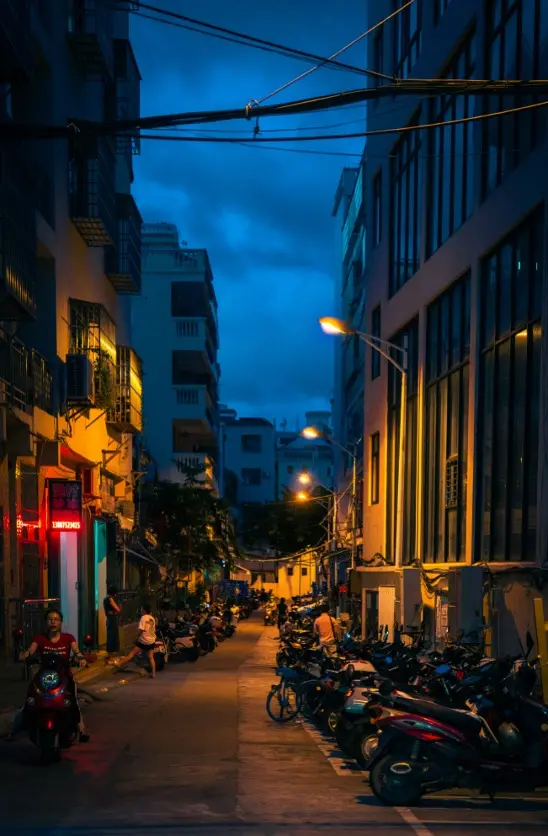 Sanya · Northeast cuisine & Li motifs
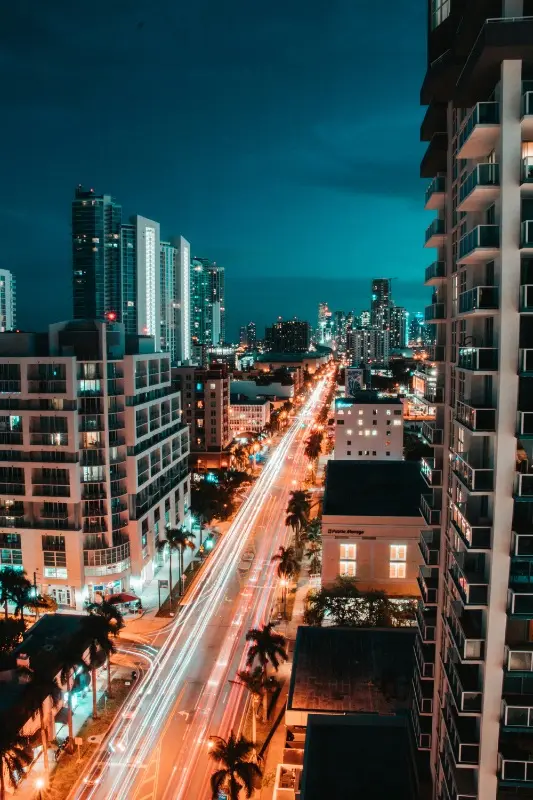 Miami · Little Havana
Left: Sanya Local street scene — Quiet evening streets with Northeastern‑style restaurants reflect the snow‑bird influenced local fabric, calm laid‑back tropical urban rhythm. Photo by Weichao Deng
Right: Miami Downtown night scene — Bright, bustling downtown streets embody Miami’s exuberant Latin‑infused nightlife and global‑city energy. Photo by Roland Denes
07 — Controversies & pain points
Sanya vs Miami: tourism dependency and housing pressure.
Beneath the glossy surface, Sanya and Miami share a common "resource-city transition dilemma" – economic fragility from over-reliance on tourism, housing priced out by outside capital, and seasonal emptiness that hollows out local industry. These controversies turn the comparison from scenery and prices into a deeper dialogue about two development models.
"Snowbirds" vs "exiles" – the same migration logic, different outcomes
Sanya's snowbirds are predominantly retired people from Northeast China. Miami's early "snowbirds" were wealthy US Northeast retirees, later joined by Latin American elites buying second homes. Same "south-for-winter" logic, same population flow – but different borders, different degrees of openness, and completely different class structures. Sanya's domestic-demand-driven snowbird economy versus Miami's global-capital-driven exile economy. That story is far more vivid than vague talk of "immigrant culture".
08 — Who each city is for
Sanya vs Miami: who each city is for?
Sanya makes sense if…
You want a slow‑paced beach life, warm weather, fresh seafood and rainforests. If your income comes from elsewhere – remote work, a pension, cross-border earnings – Sanya's value is remarkable. You're comfortable with a "policy-driven" city, one where development depends on national strategy rather than market energy.
Miami makes sense if…
Your career, network or industry is rooted in Latin America, finance or tech. You're willing to pay a premium for "global city" diversity, nightlife and business access. You can accept the long‑term risk of sea‑level rise and a "market-driven" city – where opportunity and uncertainty go hand in hand.
Sanya is not Miami, nor should it be. But both cities answer the same question in their own way: how does a tropical coastal city build a future beyond tourism?
09 — Quick answers
Frequently asked questions
How similar are Sanya's and Miami's climates?
Annual average temperatures differ by only about 1.7°C, and winter averages are almost identical – both around 21°C. Sanya has a tropical monsoon climate, Miami tropical/subtropical humid – but both have dry, warm winters and humid summers. Both are the warmest winter destinations in their respective countries.
How much cheaper is Sanya than Miami?
For one person including rent, Sanya costs about $1,200/month against Miami's $4,500–7,000 – a gap of roughly 3.5 to 5.5 times. But average take-home pay also differs by about 4.7 times ($1,100 vs $5,200), so the local purchasing-power pressure is actually quite similar.
Is Sanya really "Asia's Miami"?
Sanya's government has long listed Miami as a benchmark, and Phoenix Island cruise port was explicitly modelled on Miami's port. But Sanya follows a policy‑driven path – International Tourism Island, duty-free – while Miami is market‑driven – Latin capital, immigrant entrepreneurs. Same latitude, different paths. Sanya learned from Miami, but the final model is distinctly Chinese.
What do Sanya and Miami have in common?
Both are coastal resort cities on the 18°–25° North tropical belt. Both are winter-sun destinations for cold-climate populations. Both are shaped by migration – snowbirds in Sanya, Latin exiles in Miami. Both face tourism dependency, housing pressure from outside buyers, and seasonal boom-bust cycles.
What challenges do Sanya and Miami share?
Both suffer from "tourism dependency" – narrow industry base, difficulty retaining talent. Both face housing inflation from outside buyers. And both are ruled by seasonal cycles – winter boom, summer lull. These shared pain points make the comparison much more than a surface-level scenery or price-tag contest.
What's the real cost of eating out and getting around in each city?
An inexpensive meal in Sanya runs about $8, while Miami charges $25. A mid-range dinner for two is $25 in Sanya versus $85 in Miami. A monthly transit pass is $14 in Sanya and $120 in Miami – an 8.6× gap. Taxi flagfall is $1.40 vs $6.50. The seafood market gap is about 4× across the board.
Before you go
Get the next city comparison, as soon as it's ready
One short email when a new guide goes live – the real numbers, and the life behind them. Written by someone who lives in China and does the math in yuan.
No spam. One‑click unsubscribe.